Oxygen vs. Chlorine Bleach: Which to Use and When
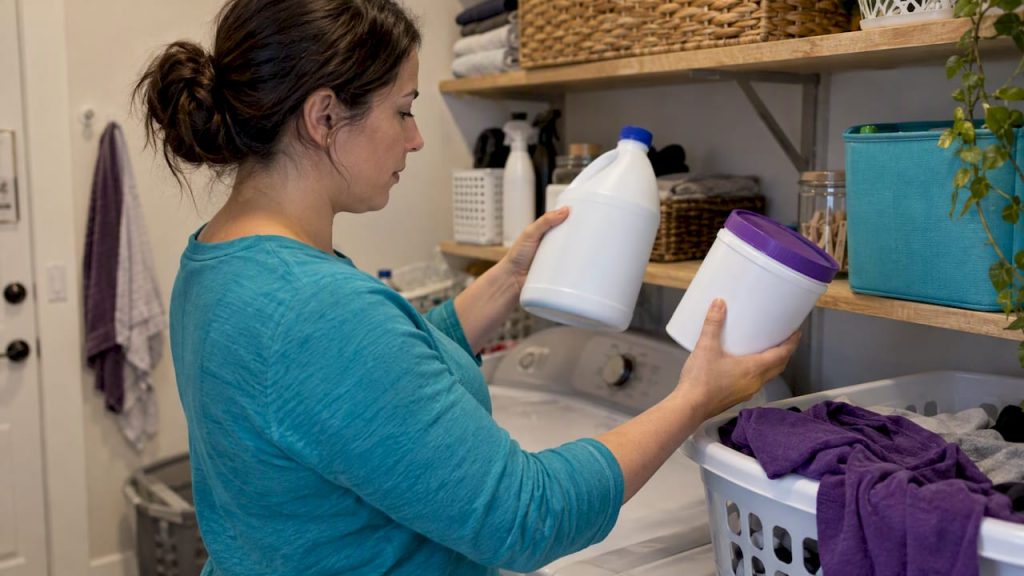
Oxygen bleach (sodium percarbonate or hydrogen peroxide) is a gentle stain lifter. Chlorine bleach (sodium hypochlorite) is a harsh, fast disinfectant and whitener. For everyday stains, brightening and delicate or colored materials, oxygen bleach is the safer default. Chlorine bleach is a specialist tool for true disinfection, and only on surfaces that can take it. It never belongs in the same bucket as another cleaner.
That is the short version. The details matter, because the wrong choice can fade a shirt, scorch a lawn or put toxic gas in your bathroom. They matter outside the laundry room too. Homeowners reach for the same two products on siding, decks, patios and windows, and the results there are less forgiving.
TL;DR
- Oxygen bleach lifts organic stains and brightens without the harsh fumes. It is gentler on colors and fabrics, and it is the better all-purpose pick.
- Chlorine bleach is the stronger disinfectant and whitener, but it damages many fibers and surfaces, and it irritates lungs.
- Never mix chlorine bleach with ammonia, vinegar or other acids. The mix releases toxic chlorine gas.
- Bleach does not fix mold by itself. The mold source and the moisture behind it have to be dealt with.
- Outdoors, the right choice depends on the surface. When in doubt, a professional should test a small area first.
Table of Contents
- What each product actually is
- Side-by-side comparison
- Where chlorine bleach wins
- Where oxygen bleach wins
- What chlorine bleach can ruin
- Safety: fumes, mixing and storage
- Does bleach fix mold?
- Outdoors: siding, roofs, decks and windows
- How to choose: a quick decision guide
- Our perspective
- When to hand it to a professional
- FAQ
- Sources
What each product actually is
Both are oxidizers: they break apart the molecules that give stains their color. They do it in different ways, with different strengths.
Chlorine bleach is diluted sodium hypochlorite. Maytag describes it as a powerful cleaning and disinfecting agent that removes stains, whitens fabrics and tackles germs. It is the liquid in the typical jug under the sink.
Oxygen bleach is usually sodium percarbonate, a powder that releases hydrogen peroxide and oxygen when dissolved in water, or hydrogen peroxide in liquid form. Whirlpool explains that it releases oxygen to break down organic stains. It is often sold as color-safe bleach or non-chlorine bleach. Many laundry and deck-cleaning powders are built on sodium percarbonate.
So the search for “sodium percarbonate vs sodium hypochlorite” is the same question in chemistry terms. Percarbonate is the oxygen type. Hypochlorite is the chlorine type.
Side-by-side comparison
| Oxygen bleach | Chlorine bleach | |
|---|---|---|
| Active ingredient | Sodium percarbonate or hydrogen peroxide | Sodium hypochlorite |
| Best at | Lifting organic stains, brightening, general cleaning | Disinfecting, drastic whitening |
| Speed | Slower, works better with time and warm water | Fast |
| Colored fabrics | Generally safe | Strips color |
| Delicate fibers (wool, silk) | Much gentler | Damaging, and the damage builds up |
| Fumes | Mild | Strong, irritating to lungs |
| Shelf life | Powder keeps well when dry | Degrades quickly |
| Environmental profile | Biodegradable, generally considered septic-safe | Releases volatile chlorine species |
| Danger if mixed | Low | Toxic gas with ammonia or acids |
The table is a rule of thumb, not a guarantee for every product. Read the label on whatever you buy.
Where chlorine bleach wins
Chlorine bleach earns its place in one area: killing germs fast. Whirlpool notes that chlorine bleach is a powerful, fast-acting disinfectant, while oxygen bleach is primarily a stain remover that does not have the same antimicrobial strength as an EPA-registered disinfectant.
If you need to sanitize after a sewage backup or flood, chlorine is the traditional choice, and the guidance that goes with it is strict about protective gear. EPA flood cleanup guidance says to limit contact with flood waters and wear protective gear such as rubber gloves, boots and goggles.
It also whitens white cotton aggressively, which is why it still turns up in laundry rooms. Even there, it is a tool for specific jobs, not a weekly habit.
Where oxygen bleach wins
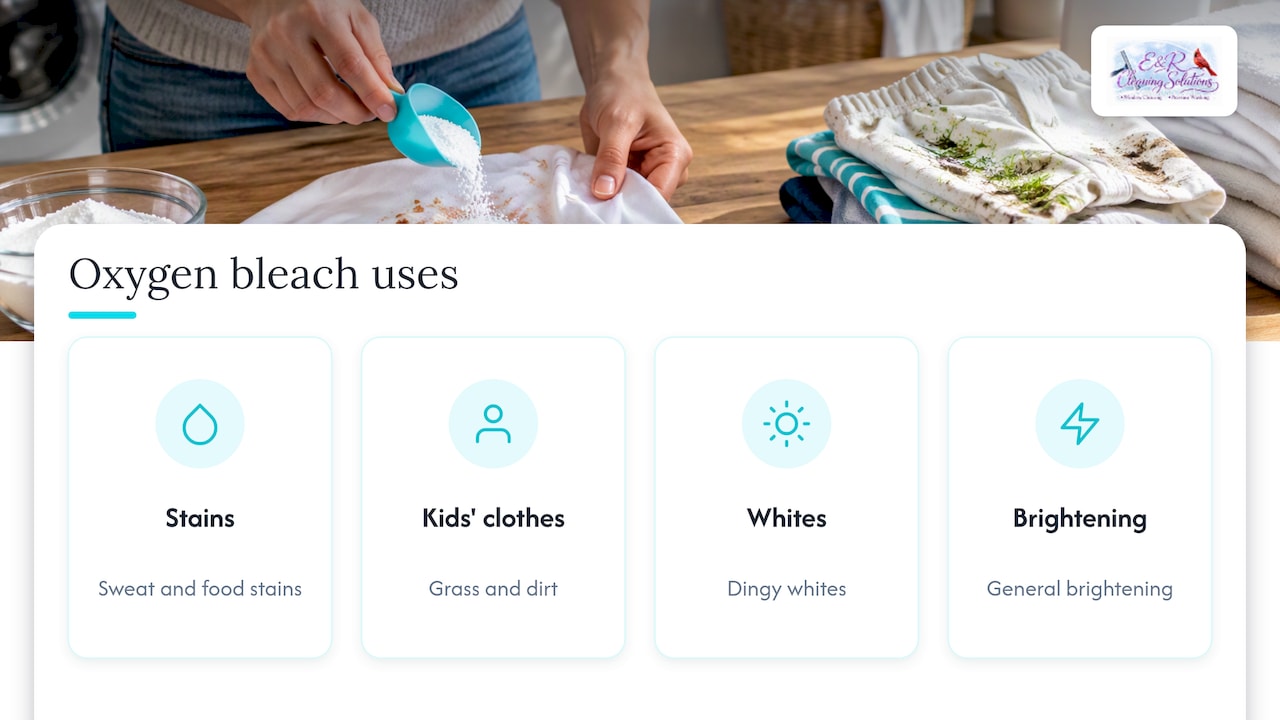
Oxygen bleach is the better all-rounder for the jobs most households have: sweat and food stains, grass and dirt on kids’ clothes, dingy whites, and general brightening. It is generally safe for colored fabrics, and it does not carry the same fume problem.
It is also easier on the planet and your pipes. According to the research behind this article, oxygen bleach is generally considered more eco-friendly because it is biodegradable and safe for septic systems. If you are on a septic system and want to understand how household chemicals interact with it, plumbing professionals in septic country cover related issues, for instance in this look at why bleach only buys time with sulfur smells in hot water.
The trade-off is speed and strength. Oxygen bleach works best with patience: a soak, warm water and a little time. If you want a stain gone in thirty seconds, you will be tempted by chlorine. Resist that when the material is valuable.
What chlorine bleach can ruin
Fabric is the clearest case, and it has been measured. A 2025 study of three commercial bleaching agents on wool compared hydrogen peroxide, sodium percarbonate and sodium hypochlorite. The wool treated with hypochlorite was severely damaged, while the oxygen-based agents left it slightly damaged or undamaged. Chlorine bleach also harms silk, and with repeated use the fiber damage accumulates.
Outside the laundry, the same logic applies:
- Colored or patterned materials: chlorine strips dye, often unevenly.
- Metals and fittings: hypochlorite is corrosive. A product safety data sheet for a hypochlorite-based cleaner lists severe skin burns and eye damage among its hazards.
- Plants and lawn: runoff from chlorine solutions can kill what it touches.
- Wood: chlorine can bleach out the color and leave a dull, fuzzy surface.
Oxygen bleach is not harmless either. It can lighten some dyes and finishes when left too long or used too strong, and it should be rinsed. The point is that its failure modes are milder and slower, so mistakes are easier to catch.
Safety: fumes, mixing and storage
Breathing it in
The fumes are the part people underestimate. The EPA’s fact sheet, What’s the problem with bleach?, says exposure to bleach can make asthma worse in people who already have it, and that workers exposed to bleach can develop new asthma. The same document reports that in 2011 bleach caused 34,000 calls to U.S. poison control centers, 12,000 of them involving children under age 5.
Spraying makes it worse, because it puts fine droplets into the air you breathe. If you have asthma, young children or pets at home, that is a strong reason to pick oxygen bleach for routine cleaning, and to ventilate well on the rare days you do use chlorine.
Never mix
Chlorine bleach reacts with ammonia, vinegar and other acids. The result is toxic chlorine gas. A safety data sheet for a hypochlorite product is one of many that warns against contact with acids. Treat chlorine bleach as a single-purpose chemical: no other cleaner in the bucket and none on the surface. If you cleaned a bathroom with a vinegar or ammonia product earlier, rinse thoroughly first.
If you breathe fumes and develop coughing, chest tightness or trouble breathing, get to fresh air and call Poison Control at 1-800-222-1222. For severe symptoms, call 911.
Storage and freshness
Chlorine bleach loses strength. Per the EPA fact sheet, diluted solutions should be mixed daily, and even concentrated bleach should only be bought in amounts you will use within about three months. An old jug that has been in a hot garage may not disinfect as well as you think, which is a quiet problem if you were counting on it.
Does bleach fix mold?
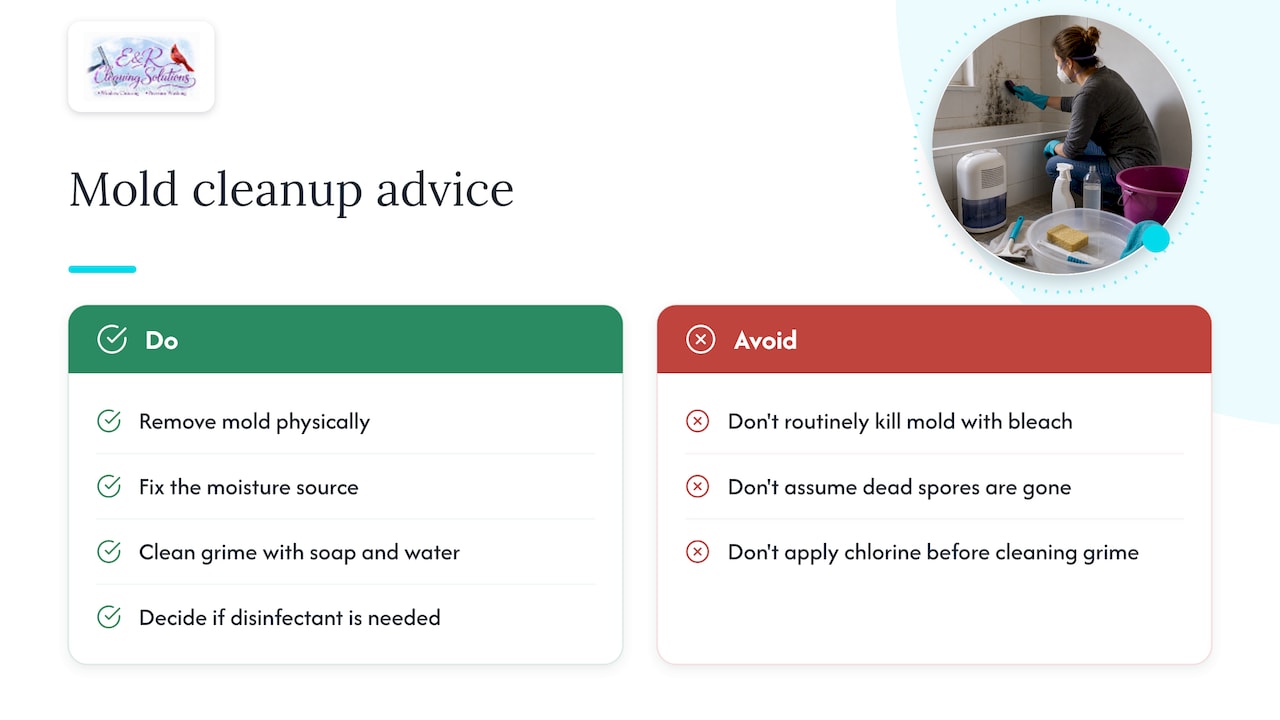
This is the question that leads many homeowners to the wrong product. Chlorine bleach seems like the obvious mold killer. The EPA says otherwise. In its guidance on using bleach to clean up mold, the agency does not recommend killing mold with a biocide such as chlorine bleach as routine practice. Dead spores are not gone, and they can still trigger allergic reactions. Removing the mold and fixing the moisture that feeds it is what counts.
Dirt is another trap. Chlorine is used up by organic matter, so on a grimy surface much of it is wasted before it reaches the mold. Clean the surface with soap and water first, then decide whether a disinfectant is needed at all.
For mold inside the home, an environmental specialist’s description of the black mold removal process reinforces the same point: physical removal and the moisture source come first. That guide is written for Ontario, Canada, so check local rules where you live. On exterior surfaces, our own guide to removing mold on siding safely covers when a small patch is a DIY job and when to call a professional.
Outdoors: siding, roofs, decks and windows
The oxygen-versus-chlorine decision gets higher stakes outdoors, because you have landscaping, runoff, painted trim and expensive materials in play.
- Vinyl siding with green or black growth: algae and mildew are living organisms, which is why some professionals use a chlorine-based solution at low pressure. That is a method to leave to people with the training to rinse plants, protect trim and control the dwell time. See our notes on stopping algae on siding with a soft wash.
- Chalky vinyl siding: that dull, powdery film is oxidation, not dirt. Bleach of either type is not the first fix. Our walkthrough on chalky oxidation on vinyl siding explains the chemistry.
- Roofs: black streaks are algae, and the wrong mix or too much pressure can shorten shingle life. We cover safer soft wash steps for black roof streaks and roof washing chemical mixes.
- Brick and mortar: harsh chemicals and high pressure both hurt mortar. See how to clean brick without damage.
- Windows: hard water spots and film are mineral and residue problems. Bleach is the wrong tool for glass, and it can harm frames, seals and screens. Hard water marks call for a proper stain-removal approach and the right tools, as in our guide to window cleaning tools homeowners need.
Notice a pattern: oxygen-based cleaners tend to suit dirt, gray wood and general brightening, while chlorine-based solutions are used where living growth is the target. Neither is a free pass. Both are chemistry you apply to something that cannot be undone.
How to choose: a quick decision guide
- Is it a stain or a germ problem? Stains (food, grass, sweat, dinginess): oxygen bleach. A disinfecting need such as sewage or flood contamination: chlorine, with protective gear and ventilation.
- What is the material? Wool, silk, colored fabric, painted or finished surfaces: oxygen bleach, after a spot test. If you cannot identify the material, do not use chlorine.
- Who is in the space? Asthma, small children, pets, enclosed rooms: avoid chlorine, and never spray it.
- Is it dirty? Wash first with soap and water. Disinfectants do their job on clean surfaces.
- Is it living growth outdoors? Mold, mildew and algae on siding or roofs are where a trained pro picks a method, and where overspray and runoff need managing.
- Is anything else around? Check that no ammonia, vinegar or acidic cleaner has touched the area.
When the answer is unclear, start with the gentlest option that could work. You can always escalate. You cannot un-fade a fabric.
Our perspective
We are a family-run window cleaning and pressure washing company, and we see the aftermath of bleach decisions more than most people. The most common one is a homeowner who reached for the strongest product first. The siding is streaky, the plants next to the foundation are burned, or the stain is still there because the surface was dirty and the chemical never had a chance.
Our view is plain. Stronger is not better. The right product is the mildest one that solves the actual problem, applied to a surface that has been cleaned first, with attention to what is nearby. A lot of exterior grime is a mechanical problem, dirt and buildup, and it needs proper rinsing and technique more than harsher chemistry. Where the problem is living growth, the method, dwell time and rinse matter as much as the product.
We also think honest advice beats upselling. If your issue is a few spots of mildew on a small area, we will tell you what is safe to try yourself. If it is the whole north side of the house, or a roof, or anything that needs a ladder, that is when a pro earns the fee.
— Richard
When to hand it to a professional
Buying a jug of bleach is cheap. Fixing damaged siding, dead landscaping or a fall from a ladder is not. Consider calling a professional when:
- the area is larger than a small patch, or it is on a second story or the roof;
- you are not sure what the material is;
- the growth keeps returning, which points to moisture or shade that needs a different fix;
- you manage a rental or commercial property and need consistent results across several visits.
E and R Cleaning Solutions provides professional window cleaning, including hard water stain removal, screens and frames, and pressure washing for driveways, sidewalks, patios, siding, roofs and building exteriors, for both residential and commercial properties. Pricing is custom per project and scheduling is flexible. Tell us what you are dealing with and we will recommend the gentlest approach that gets the job done.
FAQ
Does chlorine bleach work better than oxygen bleach?
It depends on the job. Chlorine bleach is the stronger, faster disinfectant and whitener. Oxygen bleach is better for everyday stain lifting and is gentler on fabrics and colors. For most household cleaning, oxygen bleach is the safer starting point.
Is OxiClean just oxygen bleach?
OxiClean is a well-known oxygen-based cleaner, and products like it are built on sodium percarbonate, which releases hydrogen peroxide and oxygen in water. Formulas include other ingredients such as detergents, so check the label for your exact product. It is not a chlorine bleach.
What should you not use oxygen bleach on?
Test first on wool, silk, leather and unsealed or delicate finishes, and anything with dyes you are not sure are colorfast. Oxygen bleach is gentler than chlorine but can still lighten some materials, so follow the label’s contact time and rinse well. Avoid mixing it with other cleaners.
Can I use chlorine and oxygen bleach together?
It is best not to. Combining cleaners removes the predictability of both, and chlorine bleach in particular should never be mixed with another cleaning product. Use one at a time, rinse the surface thoroughly between them, and never combine chlorine with ammonia or acids such as vinegar.
Is oxygen bleach a disinfectant?
Not in the same way. Oxygen bleach is mainly a stain remover and cleaner, and it does not have the antimicrobial strength of an EPA-registered disinfectant. If you need to disinfect, look for a product that states the germs it kills on its label.
Sources
- Whirlpool: Chlorine Bleach vs. Oxygen Bleach
- Maytag: Oxygen Bleach vs. Chlorine Bleach
- Effect of bleaching treatments on wool fabrics (Coloration Technology, 2025)
- EPA: What’s the problem with bleach?
- EPA: Should I use bleach to clean up mold?
- EPA: Cleaning Up After a Flood FAQs
- Safety data sheet for a sodium hypochlorite product (EPA repository)