Stop Algae On Siding: Soft Wash, 5–15 Min Dwell for Homeowners
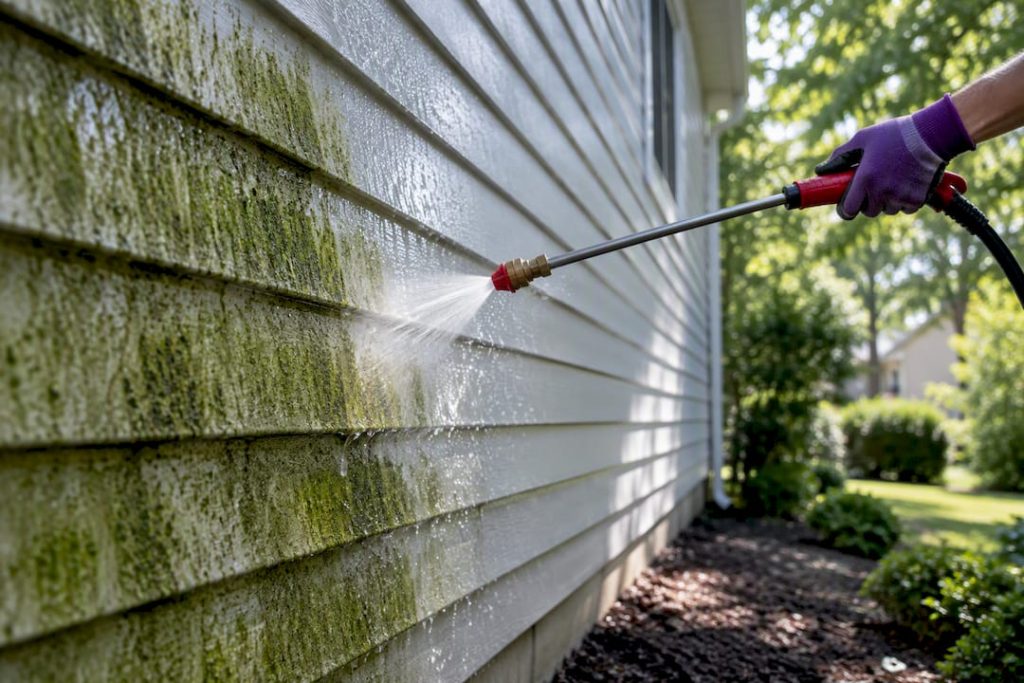
The fastest reliable fix for algae on siding is a soft-wash approach: a low-pressure application of the right cleaner, given time to work before rinsing. For light growth, dish soap and water often does the job. For heavier patches, a diluted bleach solution following EPA guidance works well when left to sit for several minutes. Skip the pressure washer, and call a pro like E&R Cleaning Solutions if the area is large or hard to reach.
TL;DR:
- Soft washing with a low-pressure application and a suitable cleaner is the safest and most effective method for algae removal from siding.
- Light algae can often be removed with dish soap and water, while moderate growth requires a diluted bleach solution left to sit for several minutes.
- Avoid pressure washing, as high pressure can trap water behind siding, causing rot and mold growth over time.
- Regular maintenance, including annual cleaning and proper drainage, is essential to prevent algae from returning, especially in shaded or humid areas.
- Professional services are recommended for large, damaged, or hard-to-reach areas to prevent accidental damage and ensure thorough cleaning.
Table of Contents
- How to tell algae apart from mold, mildew, and dirt
- Step-by-step DIY methods that actually work
- Why pressure washing can quietly damage your siding
- Routine habits that keep algae from coming back
- When it’s time to call in a professional
- What five years of pressure washer calls taught me about algae
- Get a professional soft wash without the guesswork
- Sources
- FAQ
How to tell algae apart from mold, mildew, and dirt
Algae shows up as a greenish, sometimes slimy film that clings to siding, especially on north-facing walls or spots shaded by trees and fences. It tends to stay damp longer than the surrounding surface and often follows water paths from gutters or sprinklers. Mold and mildew, by contrast, usually appear darker, fuzzier, or blotchy and often show up near window seals or in areas with poor airflow rather than direct sun exposure.
The causes are almost always environmental. Shade slows drying time, nearby shrubs and trees trap moisture against the wall, and clogged gutters or misdirected downspouts keep siding wet longer than it should be. Sprinkler overspray and soil splashback add another moisture source at the base of a house.
A few signs to watch for before you start cleaning:
- Green, fuzzy film in shaded or north-facing areas usually points to algae rather than mold.
- Persistent dampness after the rest of the house has dried suggests a drainage or airflow problem, not just surface grime.
- Soft, bubbled, or discolored siding underneath the growth can mean water has already gotten behind the panels, which calls for inspection beyond simple cleaning.
Step-by-step DIY methods that actually work
Soft washing works because it combines a cleaner that kills algae at the root with enough dwell time to loosen it before a gentle rinse washes it away. No scrubbing marathon required, and no risk of blasting water into seams.
- Test a small, hidden patch first. Apply your chosen cleaner to a few square feet and wait 10 minutes to check for discoloration or damage, a step Iowa State University Extension recommends before treating the whole house.
- Protect plants and metal fixtures. Wet down nearby shrubs and cover metal trim, since bleach-based cleaners can scorch foliage and corrode certain finishes.
- Choose your mix based on severity. For light algae, dish soap mixed with water handles the job. For moderate staining, an oxygen-based bleach (sodium percarbonate) product applied per its label is generally gentler on landscaping, as AskTheBuilder notes. For stubborn or widespread growth, a household bleach solution of about three-quarters of a cup of bleach per gallon of water, left wet for roughly 5 to 15 minutes, matches EPA’s guidance on exterior mold and algae removal.
- Apply with a pump sprayer at low pressure, working from the bottom up to avoid streaking, and avoid direct sun so the solution doesn’t dry before it works.
- Rinse thoroughly with a garden hose, never a pressure washer nozzle, and let runoff drain away from storm drains where possible.
Gear up with a pump sprayer, a soft-bristle or soft-wash brush for stubborn spots, rubber gloves, and eye protection, since even diluted bleach can irritate skin and eyes. Never mix bleach with ammonia or other cleaners: the combination produces toxic fumes, a hazard the EPA flags directly in its mold cleaning guidance.
Pro Tip: Work in the shade or on an overcast day so your cleaner has time to dwell before it evaporates.
Why pressure washing can quietly damage your siding
High pressure does more than strip algae. It can force water behind siding panels, where it gets trapped against sheathing, insulation, and framing, setting up conditions for rot and hidden mold growth, a risk the Washington Post has detailed in reporting on siding cleaning.
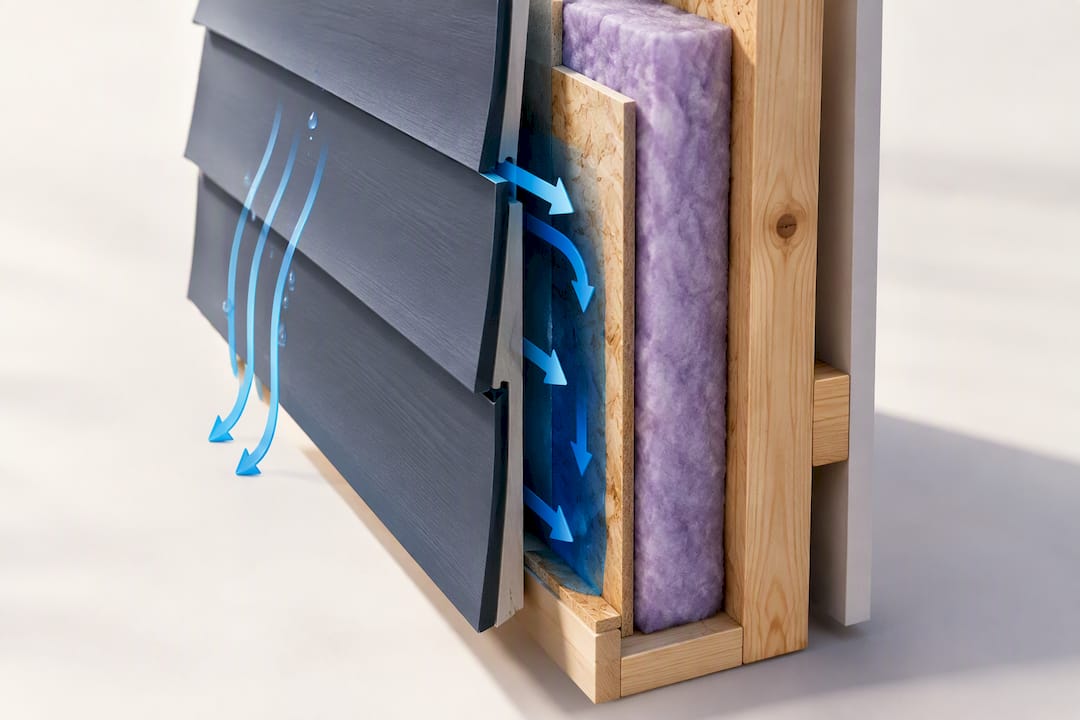
Vinyl seams, lap siding edges, and window and door trim are especially vulnerable because water finds the smallest gap and doesn’t always show damage right away.
Safer options include:
- Soft washing with low pressure and the right chemical mix, which our soft-wash siding guide explains in more detail.
- A wide fan tip and reduced PSI if you do use a pressure washer, following the technique outlined in our pressure washing siding resource.
- Hiring a professional when the siding is old, has visible seams, or covers a large or multi-story area.
Routine habits that keep algae from coming back
Algae returns fast when the conditions that caused it in the first place don’t change. A few scheduled tasks make a bigger difference than another round of scrubbing.
- Wash siding once a year, or more often in shaded, humid areas, since extension research points to annual cleaning as the most cost-effective way to prevent long-term staining and material damage.
- Keep gutters and downspouts clear so water drains away from the house instead of running down the siding.
- Trim back trees, shrubs, and vines touching the walls to cut down on shade and trapped moisture, and improve airflow around the foundation.
- Redirect sprinklers away from walls and check that soil grading slopes away from the house rather than toward it.
- Inspect caulk and trim each spring for gaps that let water sneak behind the siding.
- Choose mildew-resistant paint or coatings if you’re repainting or replacing siding, applied per the product label.
When it’s time to call in a professional
Some jobs are better left to someone with the right equipment and experience. A few situations where hiring out makes sense:
- Algae covering more than a few square feet, since scrubbing large areas by hand rarely gets consistent results.
- Growth that keeps coming back within a season or two of DIY cleaning, which often points to a drainage issue a homeowner missed.
- Multi-story homes where reaching upper siding safely requires ladders or lift equipment.
- Siding or trim that’s already damaged, where the wrong cleaner or pressure setting could make things worse.
A professional job typically starts with an assessment of the siding material and growth pattern, followed by a siding-safe soft-wash mix applied at low pressure, plant and fixture protection, and a controlled rinse. Most residential jobs wrap up in a few hours depending on house size and access. E&R Cleaning Solutions handles this kind of work directly, using low-pressure house washing methods built for exactly this problem, and can also advise on smaller jobs under 10 square feet where a homeowner might still handle it themselves, as outlined in our mold on siding removal guide.
What five years of pressure washer calls taught me about algae
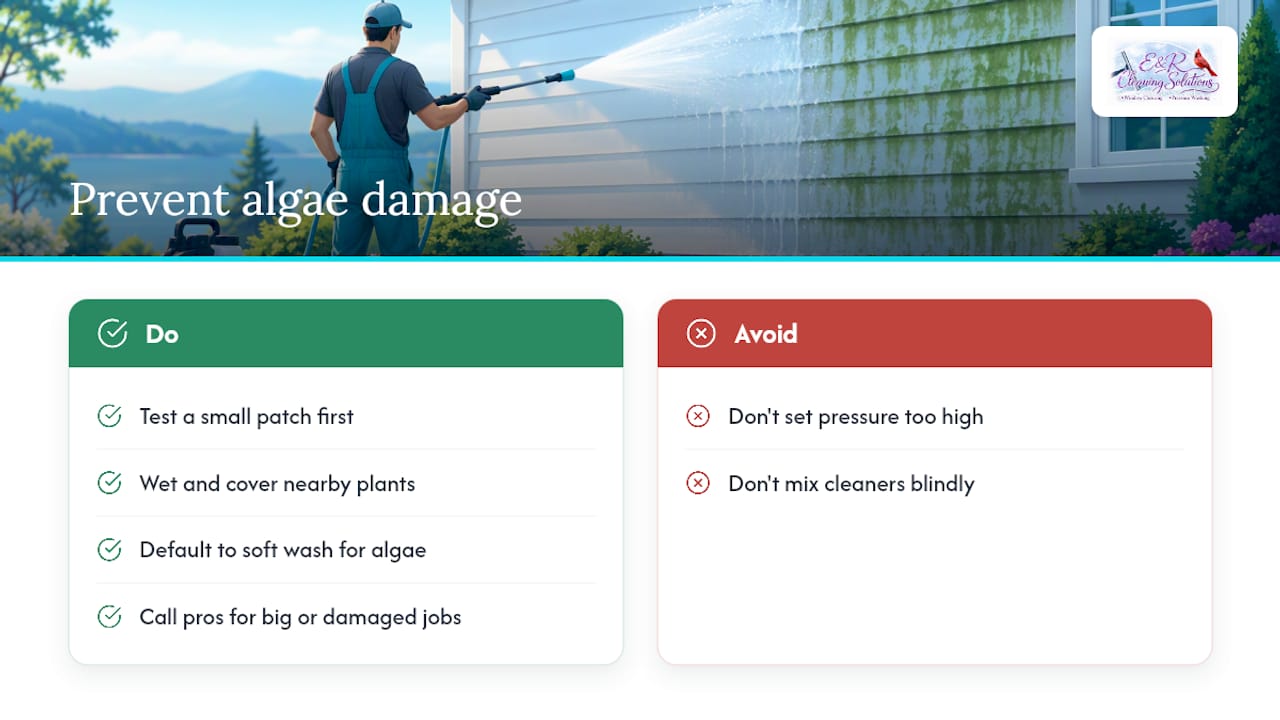
The most common mistakes I see are homeowners grabbing a pressure washer set too high, or mixing cleaners without checking what’s in them. Both can turn a simple cleaning job into a repair bill. A few habits separate a good result from a damaged one: always test a small patch first, always wet down and cover nearby plants, and always default to soft washing over high pressure when biological growth is involved.
If a job looks bigger than a weekend project, or the siding has any existing damage, it’s worth a quick call before you start. Check our service page for details on what we cover.
— Richard
Get a professional soft wash without the guesswork
Siding algae removal is best done with low-pressure soft washing, plant protection, and a thorough rinse, performed by experienced professionals with several years in the business. Professional window cleaning services are also available for homeowners who want the whole exterior looking sharp at once, not just the siding.

A soft-wash siding job for an average home typically wraps up in a single visit, sparing you a weekend of scrubbing and the risk of pressure-washer damage. If your siding needs more than a hose and dish soap can handle, get in touch through our main services page for a custom quote, or check availability for your area today. If you’d rather line up a broader cleanup crew first, Bridges Bros. Movers also coordinates home cleaning services worth considering.
Sources
- Should I Use Bleach to Clean Mold? | U.S. EPA
- How to clean your house siding | Iowa State University Extension
- How to clean algae off the siding of your house and other surfaces | The Washington Post
- Clean algae off siding | AskTheBuilder
FAQ
Does dish soap kill algae on siding?
Dish soap doesn’t kill algae outright, but it lifts light surface growth and grime when scrubbed with water, making it a reasonable first try for mild cases. For thicker or recurring algae, an oxygen-based bleach cleaner or a diluted bleach solution following EPA guidance works more reliably.
What kills algae immediately on contact?
Diluted household bleach acts quickly on contact and is effective when left wet on the surface for the time the label specifies before rinsing, per EPA directions. Oxygen-based bleach products work more gradually but are gentler on nearby plants.
Why does green algae grow on vinyl siding?
Algae grows where moisture lingers and sunlight is limited, commonly on shaded or north-facing walls, under trees, or near clogged gutters. Poor drainage and sprinkler overspray add extra moisture that keeps the surface damp long enough for algae to take hold.
Is bleach or vinegar better for killing algae on siding?
Diluted household bleach is the more proven option for exterior algae and mildew, backed by EPA product guidance on dilution ratios and contact time. Vinegar is a milder, less reliable choice that tends to work only on very light growth and lacks the same level of documented guidance for siding use.