
Remove Mold on Siding Safely: DIY Under 10 Square Feet, When to Call a Pro
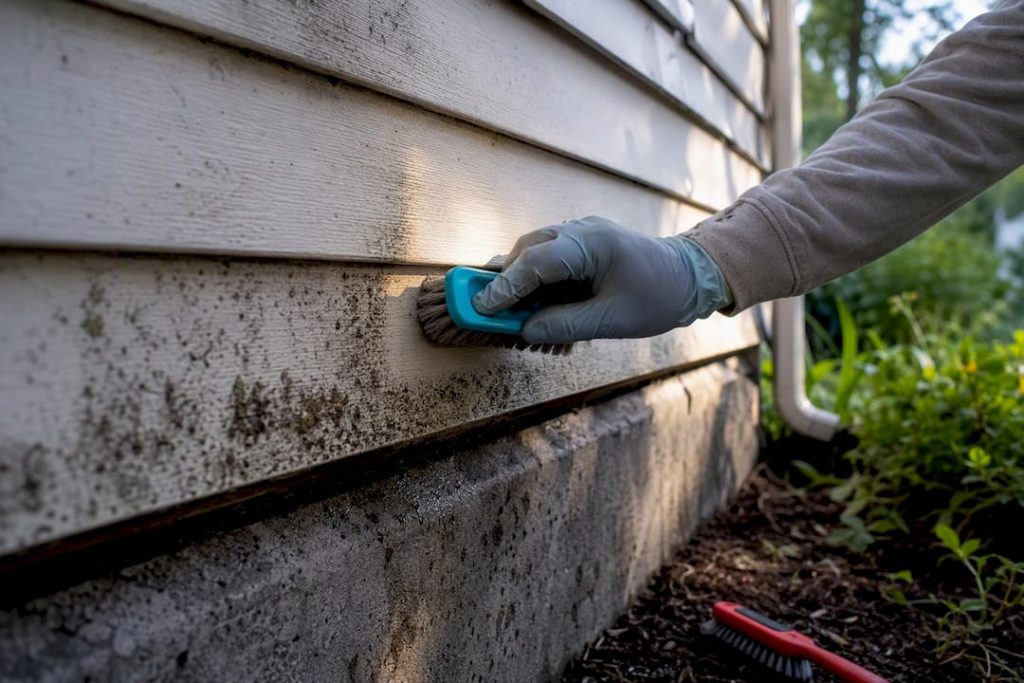
The safest routine starts with the gentlest cleaner that will actually work: white vinegar or dish soap for light growth, oxygen bleach for stains that won’t budge, and diluted chlorine bleach only as a last resort on stubborn black mold. Wear gloves and eye protection, never mix cleaning chemicals, and stop cleaning if the moldy area exceeds 10 square feet, the EPA’s cutoff for DIY jobs. Past that point, or if you smell mold indoors, call a professional.
TL;DR:
- Cleaning mold on siding should be limited to areas under 10 square feet with no signs of moisture behind the wall, otherwise a professional is necessary.
- Use gloves and eye protection for light mold, but switch to a respirator if applying bleach or dealing with heavy growth to avoid airborne spores.
- Start with gentle cleaning solutions like dish soap or vinegar, reserving oxygen bleach and chlorine bleach for persistent or stubborn mold cases.
- Pressure washing can be risky, and low-pressure, soft-wash methods with chemical cleaners are safer and often more effective for most homes.
- Prevent mold regrowth by fixing moisture sources such as gutters, sprinklers, and landscaping, and avoid DIY attempts beyond the 10 square feet threshold or recurring mold issues.
Table of Contents
- What Causes Mold on Siding, and How Big Is the Problem?
- How Do You Protect Yourself and Your Landscaping First?
- What’s the Right Order for Cleaning Mold Off Siding?
- Should You Pressure Wash Siding With Mold, or Clean by Hand?
- How Do You Stop Mold From Coming Back?
- When Should You Call a Professional Instead of DIY?
- How Do Professionals Handle Stubborn or Risky Mold Jobs?
- What Homeowners Get Wrong About Mold on Siding
- Thinking About Hiring Instead of DIY-ing Your Siding?
- Sources
- FAQ
What Causes Mold on Siding, and How Big Is the Problem?
Mold and algae grow on siding wherever moisture lingers longer than it should. Shade from trees, high humidity, sprinkler heads that spray the wall instead of the lawn, and clogged gutters dumping water down the siding all create the damp, low-light conditions mold needs. Poor grading around the foundation makes it worse by keeping the base of the wall wet.
Most of what you see is surface-level, either black mold or green algae feeding on dirt and pollen film. InspectApedia notes that many siding stains are algae rather than true mold, and the real diagnostic question is whether the problem stops at the surface. Signs it doesn’t: musty odors inside the house, warped or bulging panels, or paint bubbling near the stain. Any of those point to moisture trapped behind the siding, not just sitting on top of it.
Before you grab a scrub brush, measure the affected area. That number determines your next move:
- Under 10 square feet with no interior symptoms: safe to clean yourself.
- Over 10 square feet, or any sign of moisture behind the wall: bring in a professional.
How Do You Protect Yourself and Your Landscaping First?
Before any cleaner touches the siding, gear up. For light mold, gloves and eye protection cover you. Heavier growth or any bleach use calls for an N95 or better respirator, since scrubbing dry mold can send spores airborne.
Your plants need protection too. Soak garden beds and shrubs near the work area with plain water before you start. Wet soil absorbs far less runoff chemical than dry soil, which limits scorching. Cover anything delicate with plastic sheeting and rinse foliage immediately if overspray hits it.
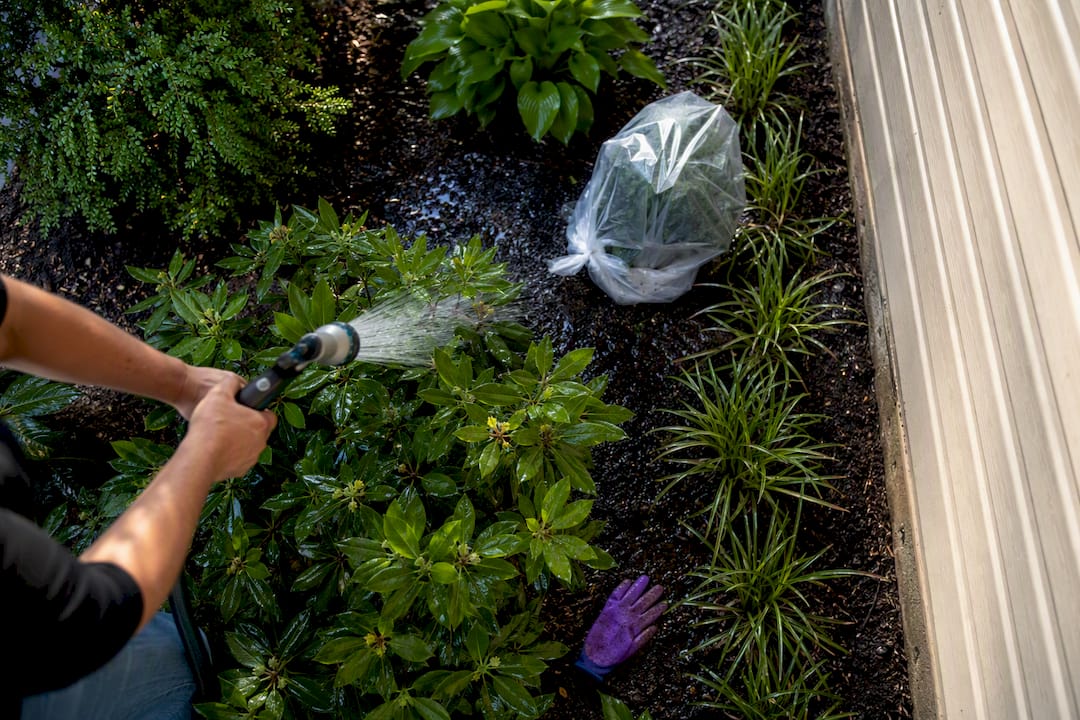
The single biggest safety rule: never mix bleach with ammonia or acidic cleaners. That combination releases toxic gas, and the CDC warns it can happen fast in an enclosed space like a covered porch. Read every product label before combining anything.
Pro Tip: Test your cleaning solution on a hidden section of siding first, wait 10 minutes, and check for discoloration before treating the whole wall.
What’s the Right Order for Cleaning Mold Off Siding?
Work from gentle to aggressive, and never skip a step to save time. Escalating too fast risks discoloring vinyl or stripping paint off wood siding for a problem soap would have solved anyway.
- Prep the area. Close windows and doors, cover nearby plants, and hose down the wall with a light pre-rinse. Work in small, manageable sections rather than tackling the whole house at once.
- Start gentle. Mix dish soap with water, or blend white vinegar and water at roughly a 3:7 ratio. Apply with a soft brush or garden sprayer, let it sit 10 to 15 minutes, then scrub lightly and rinse thoroughly.
- Step up if needed. If mildew persists, mix an oxygen-bleach concentrate according to the label. This Old House recommends oxygen bleach over chlorine bleach for most siding jobs because it cleans effectively without the harsh runoff risk. Apply, give it time to dwell, scrub, and rinse.
- Last resort only. For black mold that survives both previous steps, mix chlorine bleach with water at about 1:4. Apply with heavy PPE, keep plants soaked and covered, and test a small patch first. This step should be the exception, not your starting point.
- Rinse top to bottom so runoff doesn’t redeposit dirty water on sections you already cleaned. Let the siding dry fully, then inspect. Repeat cautiously if any patches remain.
Applying cleaner from the bottom up and rinsing from the top down reduces streaking, since it keeps solution from drying on hot, sun-exposed panels before you can rinse it off.
Should You Pressure Wash Siding With Mold, or Clean by Hand?
Pressure washing works, but it’s the step most likely to cause damage if you rush it. High-pressure water can drive moisture behind vinyl panels or strip paint off wood trim, turning a cosmetic problem into a repair bill. Advanced DRI and other professional cleaners recommend soft-wash techniques, low pressure paired with the right chemistry, over blasting siding at full force.
If you do pressure wash, keep these limits in mind:
- Stay in the 1,200 to 1,600 PSI range for vinyl and painted wood siding.
- Hold the nozzle at least 12 inches from the surface using a wide fan tip, angled slightly downward rather than straight into seams.
- Test a small, inconspicuous section before treating the full wall.
For most homeowners, hand-cleaning with a soft-wash chemical approach at roughly a 1 to 1.5% surface concentration beats brute-force pressure washing, especially on older or lower-grade vinyl.
Pro Tip: If you’re unsure whether your siding can take pressure washing, hand-cleaning first and rinsing with a garden hose is the safer default.
How Do You Stop Mold From Coming Back?
Cleaning solves today’s problem. Preventing regrowth means fixing the moisture source that created it, since mold returns fast on a wall that’s still damp for hours after every rain.
- Extend downspouts so water drains at least several feet from the foundation, and clean gutters at least twice a year to stop overflow down the siding.
- Trim shrubs and trees back to give siding 12 to 18 inches of clearance, which lets sunlight and airflow dry the wall faster.
- Redirect or adjust sprinkler heads so irrigation hits the lawn, not the house.
- Schedule a light rinse or cleaning once or twice a year, more often on shaded, north-facing walls that stay damp longer.
A drainage and yard-maintenance checklist is worth reviewing if your property has grading issues feeding water toward the foundation.
When Should You Call a Professional Instead of DIY?
The EPA’s 10 square foot rule is the line, but a few other signs mean it’s time to stop scrubbing and start calling. Musty odors indoors, warped or bulging siding panels, and mold that keeps returning to the same spot despite correct cleaning all point to hidden moisture that surface cleaning can’t fix.
- Coverage larger than 10 square feet.
- Any interior odor or visible water damage near the affected wall.
- Repeated regrowth in the same location after proper cleaning.
- Siding on a second story or otherwise hard to reach safely.
Professionals bring tools most homeowners don’t have: moisture meters to check for wetness behind the panel, containment setups for larger jobs, and HEPA-grade cleanup for anything approaching a health concern. When you call one, ask how they inspect for hidden moisture, what containment they use, and whether their cleaning method is safe for your siding’s warranty. A vague answer to any of those is a red flag.
How Do Professionals Handle Stubborn or Risky Mold Jobs?
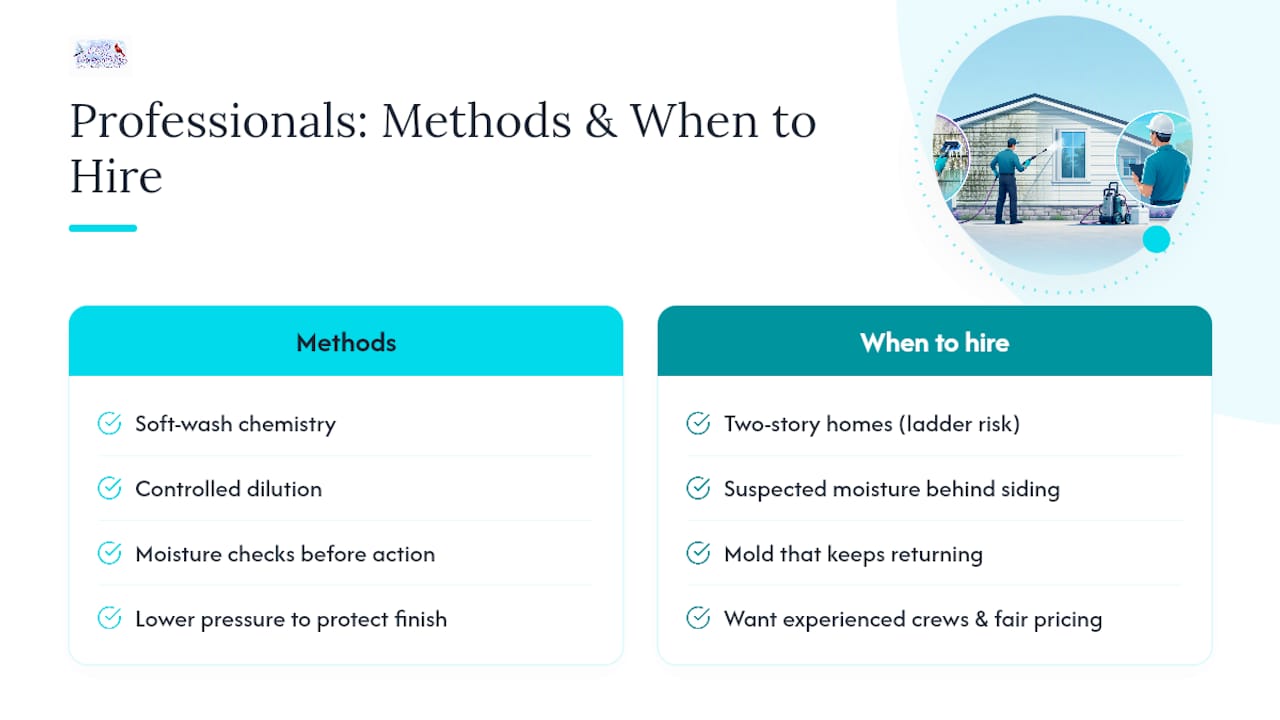
Trained crews lean on soft-wash chemistry and controlled dilution rather than raw pressure, which protects both the siding finish and the manufacturer’s warranty terms. Some professional cleaning services apply that same approach on residential and commercial pressure washing jobs, pairing the right chemical concentration with moisture checks before deciding how aggressive to get.
Hiring makes the biggest difference on two-story homes where ladder access is a real risk, on siding with suspected moisture behind it, and on mold that keeps returning despite correct DIY steps. Some family-run businesses with several years of experience handling exterior cleaning focus on honest pricing and warranty-safe methods rather than the fastest, highest-pressure fix.
What Homeowners Get Wrong About Mold on Siding
Most people treat mold on siding as a cleaning problem. It’s usually a moisture problem wearing a cleaning problem’s disguise. Scrub the mold off without fixing the gutter overflow or the sprinkler hitting the wall, and it comes back within a season, often worse.
The other mistake is reaching for chlorine bleach first because it feels like the strongest option. Strongest isn’t the same as best for the job. Gentle cleaners handle most cases, and jumping straight to bleach just adds risk to your siding and your yard for no real gain. Save it for the cases that actually need it, and don’t hesitate to bring in a professional once the area or the moisture signs exceed what a garden hose and a soft brush can fix.
— Richard
Thinking About Hiring Instead of DIY-ing Your Siding?
Some cleaning services offer homeowners a lower-risk alternative to guessing with bleach ratios on a ladder: a soft-wash approach built around controlled chemical concentrations instead of brute-force pressure that can push water behind your panels.

A visit typically starts with a walk-around inspection to check for moisture behind the siding and identify whether you’re dealing with surface algae or something deeper. From there, the crew applies a soft-wash treatment at safe surface concentrations suited to your siding material, rather than a one-size-fits-all pressure blast. Pricing is quoted upfront and custom to the job, no guessing on what you’ll owe after the fact.
If your mold coverage is past the 10 square foot mark, or you’ve already tried cleaning it yourself twice with no luck, request a quote and let a trained crew handle the rest.
Sources
- How To Remove Mildew From Siding Safely and Effectively – This Old House
- Vinyl siding stains and algae – InspectApedia
- How To Clean Mold from Vinyl Siding – Advanced DRI
FAQ
How Can I Remove Black Mold From Vinyl Siding?
Start with dish soap and water or a diluted vinegar mix, scrub gently, and rinse well. If black mold persists, switch to an oxygen-bleach product before considering diluted chlorine bleach as a last resort.
Which Is Better for Killing Mold, Bleach or Vinegar?
Chlorine bleach kills mold more aggressively but carries higher risk to plants, painted surfaces, and your lungs if mishandled. This Old House recommends trying vinegar or oxygen bleach first, since they clean effectively on most siding without the same damage risk.
Does Dawn Dish Soap Kill Black Mold?
Dish soap breaks down the grime and mildew film that mold feeds on and works well for light growth, but it doesn’t sterilize mold spores the way oxygen bleach or diluted chlorine bleach does. It’s a good first step, not a guaranteed fix for heavy black mold.
What Causes Mold on House Siding?
Shade, high humidity, sprinkler overspray, clogged gutters, and poor drainage all keep siding damp long enough for mold and algae to take hold. Fixing those moisture sources matters as much as the cleaning itself, since unresolved moisture is the main reason mold returns after cleaning.
When Should I Hire a Professional Instead of Cleaning It Myself?
Call a professional once the affected area exceeds 10 square feet, or if you notice musty odors indoors, warped siding, or mold that keeps returning despite correct cleaning.