Without Muriatic Acid: Homeowners Remove Rust Stains From Concrete
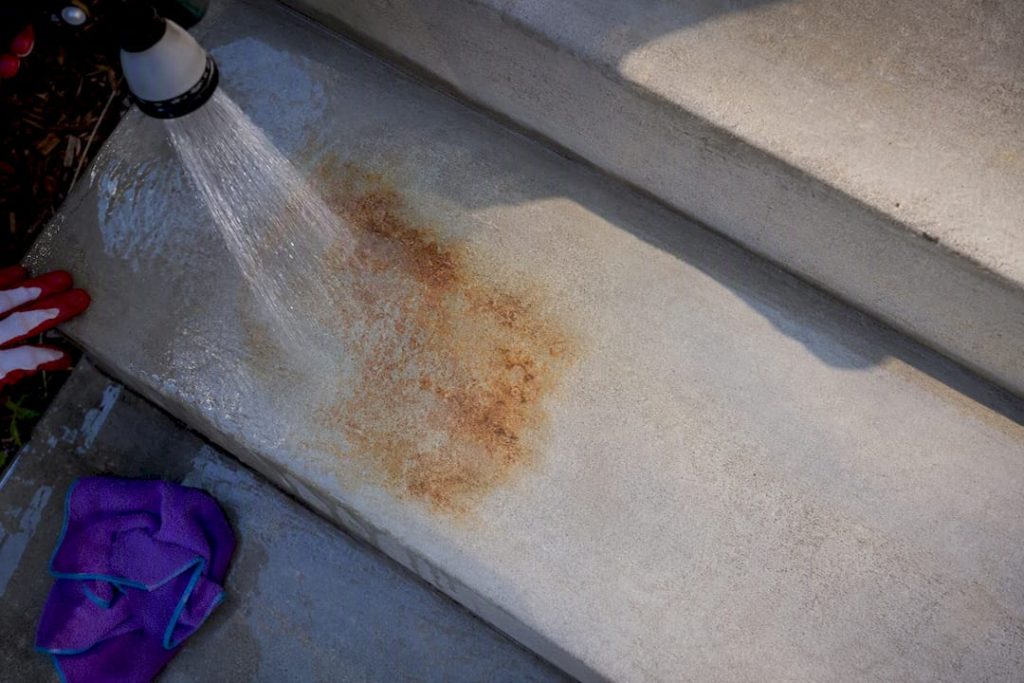
Start by pulling the metal source off the surface, then test a small patch before treating the whole stain. Fresh, light rust often lightens with vinegar or lemon juice. Older or embedded stains usually need a chelating cleaner like oxalic acid. Wear gloves and eye protection, keep the acid off nearby plants, and rinse thoroughly. If the stain keeps coming back or covers a large area, call a pressure-washing or concrete-stain contractor instead of reaching for muriatic acid.
TL;DR:
- Household acids like vinegar and lemon juice can lighten fresh, surface rust stains if applied within a few weeks, but they are ineffective on older or embedded stains.
- Chelating cleaners containing oxalic or citric acid outperform manual scrubbing on moderate stains and are recommended before considering strong acids like muriatic acid.
- Muriatic acid should be used only as a last resort due to its potential to etch or damage the concrete surface and must be handled with strict safety precautions.
- Removing the rust source, protecting plant life, and neutralizing acid runoff are essential steps to prevent re-staining or environmental damage.
- For large, deep, or sensitive-area stains, professional cleaning offers more effective and safer results with proper containment, tailored chemical treatment, and thorough rinsing.
Table of Contents
- What Causes Rust Stains on Concrete and Are They Surface or Embedded?
- Safe DIY Methods for Light or Recent Rust Stains
- Commercial Rust Removers and Stronger Acids: How They Work and What They Risk
- Step-by-Step: Removing Rust Stains From Concrete Safely
- Preventing Rust Stains From Coming Back
- Safety Checklist and Mistakes That Make Things Worse
- When a Professional Rust Stain Removal Is the Better Call
- A Contractor’s Honest Take on Rust Removal
- Get Rust Stains Handled Without the Guesswork
- Sources
- FAQ
What Causes Rust Stains on Concrete and Are They Surface or Embedded?
Rust shows up on concrete for one simple reason: iron meets water and oxygen long enough to bleed into the pores. The usual suspects are patio furniture legs, metal planters, sprinkler heads, fertilizer with iron additives, and well water high in dissolved iron. Sometimes the source is inside the slab itself, where rebar or iron-bearing aggregate sits close enough to the surface to bleed through.
Telling the two apart matters, because it decides which methods will actually work.
- A surface stain usually looks orange-brown with a defined edge, and a wet cloth wiped across it picks up some color.
- An embedded stain has a fuzzy, spreading edge and returns almost immediately after cleaning, even when you scrub hard.
- Light scrubbing with a nylon brush on a test patch tells you fast: if the stain fades noticeably, it’s shallow; if it barely budges, iron has worked into the concrete’s pores.
Skipping the source check is the single biggest reason homeowners fail. If you clean around a rusting bolt or sprinkler head without removing or sealing it, the stain reappears within weeks, sometimes days.
Safe DIY Methods for Light or Recent Rust Stains
For a stain less than a few weeks old, household acids can do real work. Vinegar and lemon juice work on very fresh, surface-level rust, but they lose effectiveness fast against anything older or thicker.
Here’s a sequence worth trying before you buy anything stronger:
- Soak the stain with undiluted white vinegar and let it sit for a short period, typically around a quarter of an hour.
- Sprinkle baking soda directly over the wet area. It will fizz. That reaction helps loosen bonded rust particles.
- Scrub with a stiff nylon brush, working in small circles, then rinse with a hose.
- For a second approach, mix lemon juice with salt into a coarse paste, spread it over the stain about a quarter inch thick, and let it dwell for an hour before scrubbing and rinsing.
- Repeat once or twice if the stain visibly lightens each time. If a third attempt shows no change, stop. You’re dealing with something deeper than these acids can touch.
A wire brush or steel wool will scratch and roughen the concrete surface, which actually gives future stains more texture to grip. Stick with nylon or a stiff plastic bristle brush instead.
Pro Tip: Cover the paste with plastic wrap during the dwell time on hot or windy days. It slows evaporation so the acid keeps working instead of drying into a useless crust after ten minutes.
Set your expectations honestly. On a moderate, month-old stain, vinegar and lemon might fade it by a shade or two, not erase it. That’s normal, and it’s exactly the signal to move up to a stronger chelating cleaner rather than dumping on more vinegar and hoping.
Commercial Rust Removers and Stronger Acids: How They Work and What They Risk
Once household acids stall out, the next tier is chelating cleaners built around oxalic acid, citric acid, or phosphoric acid. Chelators pull iron out of concrete through a controlled chemical reaction rather than brute-force scrubbing, which is why they outperform elbow grease on anything more than a light surface stain. A consumer product like Bar Keepers Friend uses this same oxalic/phosphoric chemistry on a smaller scale and gives a decent sense of what to expect before stepping up to a full-strength concrete rust remover.
Muriatic (hydrochloric) acid sits at the far end of the spectrum. It doesn’t chelate, it etches, dissolving a thin layer of the concrete surface along with the rust. That makes it a genuine last resort, not a first move, because it can leave the slab lighter, rougher, or blotchy if diluted wrong or left on too long.
A few things to lock in before opening any bottle:
- Try a chelating cleaner first. Reserve strong mineral acids for stains that survive repeated chelator treatments.
- Read the safety data sheet, not just the front label. Dilution ratios and dwell times vary by product and concrete porosity.
- Wear chemical-resistant gloves and splash-proof eye protection every time, no exceptions for “just a small patch.”
- Contain runoff so acid doesn’t drain into soil, storm drains, or a neighbor’s yard, and neutralize with a baking-soda-and-water solution before disposal.
The GSA’s preservation guidance treats poulticing with reagents like oxalic acid, sodium thiosulfate, and hydrogen peroxide as the standard for deep-set iron stains, and it specifically flags harsher chemicals like ammonium hydrogen fluoride as unnecessary risks for most homeowner jobs.
Step-by-Step: Removing Rust Stains From Concrete Safely
- Remove the source. Relocate the metal furniture, cap the sprinkler head, or bag the fertilizer bag causing the drip. Clear leaves and debris from the stained area.
- Protect the surroundings. Wet down nearby plants, cover drains with plastic, and put on gloves and eye protection.
- Test a patch. Apply your chosen cleaner to a small, inconspicuous corner and wait the full recommended dwell time before judging the result.
- Apply and monitor. Spread the cleaner or paste over the stain, cover with plastic wrap if it’s hot or breezy, and check every 10 to 15 minutes rather than walking away for hours.
- Agitate gently. Work a nylon brush over the area in small circles once the dwell time is up. Don’t grind or use metal bristles.
- Rinse thoroughly, then neutralize. Flood the area with water. If you used an acid-based product, follow with a baking-soda-and-water rinse to stop any lingering reaction.
- Inspect and decide. If the stain is lighter but not gone, repeat once more. If it hasn’t moved at all after two honest attempts, that’s your cue to escalate to a stronger chelator or call in a professional.
Preventing Rust Stains From Coming Back
Cleaning a stain and never addressing why it formed is a losing game. A few low-effort habits keep it from returning:
- Swap metal furniture feet for rubber or plastic pads, or move anything metal off concrete before rain.
- Check sprinkler heads and irrigation lines for overspray hitting driveways or patios, and adjust the angle.
- Rinse fertilizer granules off concrete immediately if they land there, since iron-fortified blends are a common culprit.
- Seal exposed concrete in areas prone to moisture, and inspect for rebar or wire mesh peeking through cracks near the surface.
If the staining traces back to embedded rebar or iron-rich aggregate inside the slab, no amount of surface cleaning fixes it permanently. That’s a structural issue, and it usually calls for a concrete repair specialist rather than another bottle of rust remover. Our guide on what causes staining on concrete surfaces breaks down other stain sources worth ruling out at the same time.
Safety Checklist and Mistakes That Make Things Worse
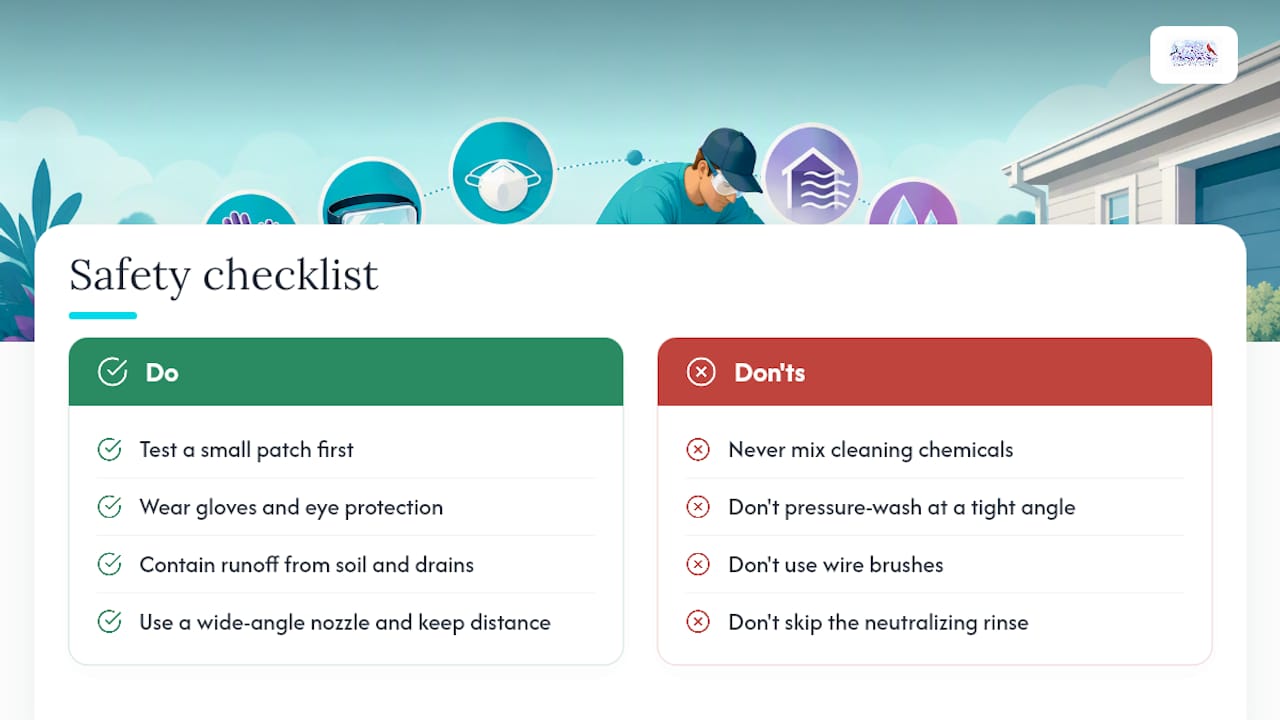
Test a patch first, every time. Wear gloves and eye protection, never mix cleaning chemicals together, and contain runoff so it doesn’t reach soil or storm drains. If you pressure wash, keep the nozzle at a wide angle and a safe distance, since tight-angle blasting can gouge concrete that acid has already softened. The most common damage comes from wire brushes, over-applying muriatic acid, and skipping the neutralizing rinse after acid treatment.
When a Professional Rust Stain Removal Is the Better Call
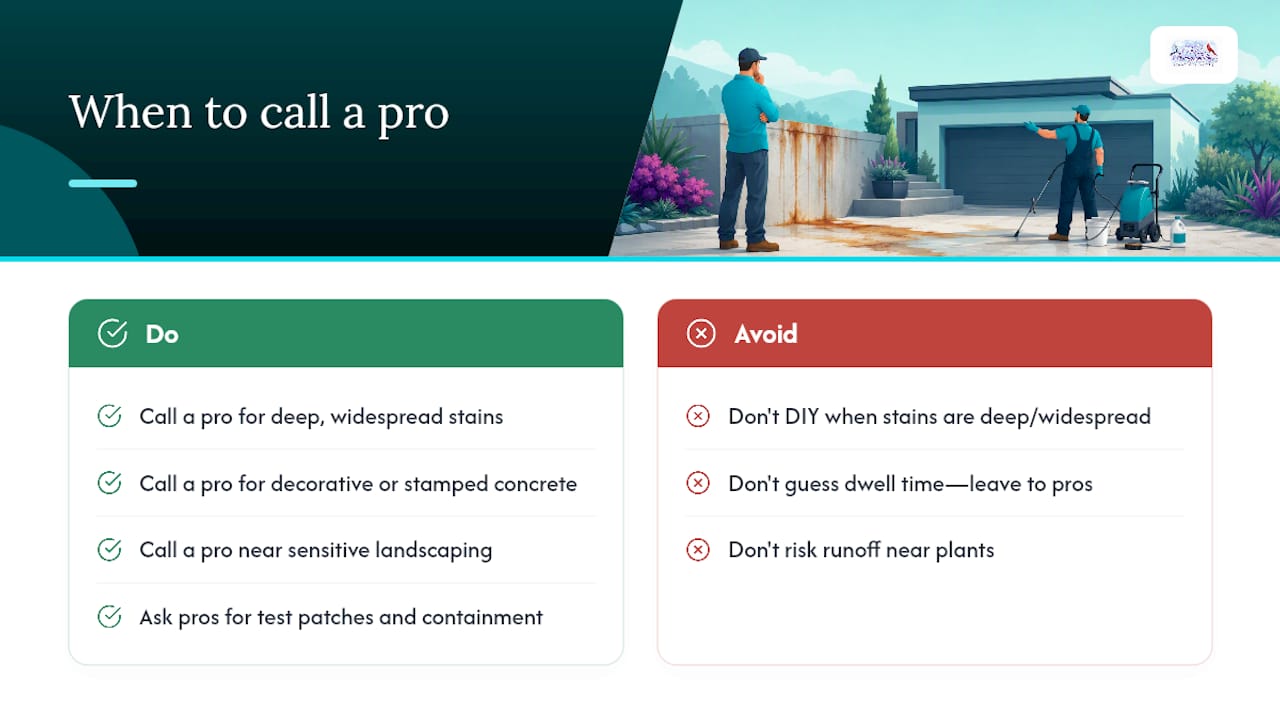
Deep, widespread staining, decorative or stamped concrete, or stains near sensitive landscaping are all signs a DIY approach will cost you more in redo attempts than it saves. Professionals bring commercial-grade chelators, proper containment for runoff, and the experience to judge dwell time by feel rather than guesswork.
Some professional cleaners have spent more than five years handling exactly these jobs for homeowners and property managers, using targeted stain-specific cleaners and test patches before ever treating a full surface. Pricing often stays straightforward and every job gets checked before it’s called finished.
A Contractor’s Honest Take on Rust Removal
Most rust removal fails not from the wrong cleaner, but from skipping the source check first. Fix the drip or the furniture leg before you touch a brush. For anything embedded, request an inspection rather than burning a weekend on acid that won’t work.
— Richard
Get Rust Stains Handled Without the Guesswork
Professional cleaners treat rust stains the way this article recommends: identify the source, test a patch, apply the right chemistry for the stain’s age, then rinse and contain runoff properly. That’s the difference between a homeowner’s third failed vinegar attempt and a driveway that actually comes clean the first time a professional touches it.

For a stain that has resisted the DIY steps above, or covers more of your driveway than a spot treatment can handle, our team applies stain-specific cleaners with proper containment and follows every application with a full rinse and neutralization step. Large jobs, decorative concrete, and stains near landscaping all benefit from that extra care. If pressure washing is part of the fix, our step-by-step walkway pressure washing process shows exactly how we handle nozzle distance and PSI to avoid etching softened concrete. Request an inspection through E and R Cleaning Solutions and get a straightforward quote before any chemical touches your driveway.
Sources
This article draws on GSA poulticing guidance, Prosoco’s technical rust removal guide, CraftingWithConcrete, and The Spruce. Always follow the product label and safety data sheet over general advice.
FAQ
What Dissolves Rust Without Scrubbing?
Chelating cleaners built on oxalic or citric acid pull rust out chemically through dwell time alone, needing only a light rinse rather than heavy scrubbing. Poultice treatments using oxalic acid or hydrogen peroxide work the same way over several hours for deeper stains.
Does WD-40 Remove Stains From Concrete?
WD-40 can loosen light surface rust on metal, but it’s not formulated to pull iron out of porous concrete and often leaves an oily residue behind. Stick with vinegar, lemon paste, or a proper chelating cleaner for concrete specifically.
Does Vinegar Damage Concrete?
Undiluted vinegar left on concrete for extended periods or used repeatedly can etch the surface slightly, since it’s still an acid. Limit dwell time to around a quarter of an hour and rinse thoroughly rather than letting it sit for hours.
What Is the Best Rust Remover for Concrete Stains?
For fresh, light stains, vinegar or a lemon and salt paste is enough. For older or embedded stains, an oxalic-acid-based chelating cleaner is the more reliable choice, with professional-grade poultice treatments reserved for stubborn cases that resist both.