What Causes Gum Stains on Sidewalks: A Property Owner’s Guide
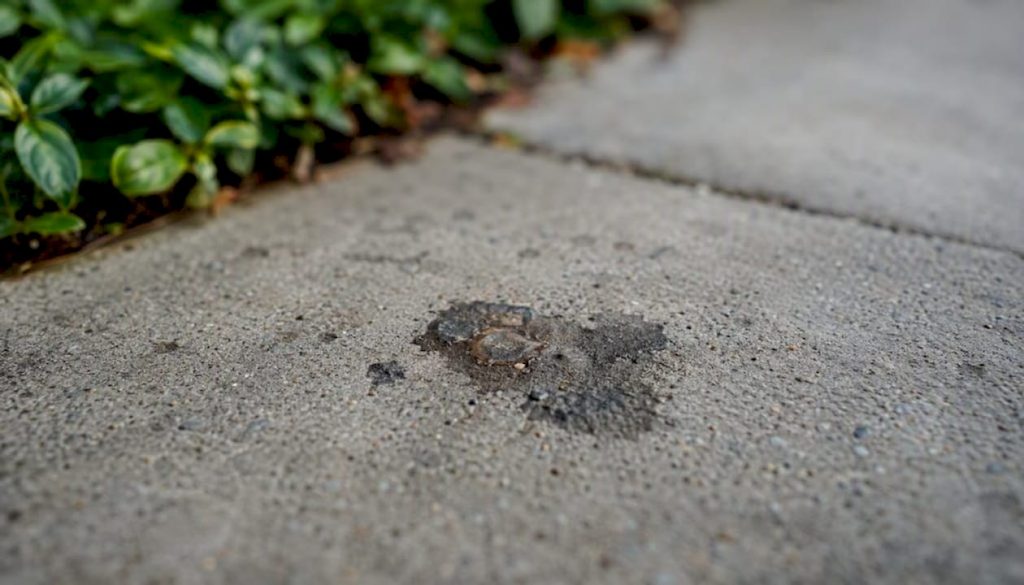
Gum stains form when discarded chewing gum’s synthetic polymer base gets flattened into porous concrete by foot traffic, trapping dirt, pollutants, and pigments deep inside the surface pores where they oxidize and darken into the familiar black speckles. Three elements drive every stain:
- Gum composition: Modern gum bases are built from synthetic polymers, resins, and softeners that bond aggressively to dry surfaces and resist water.
- Mechanical compression: Pedestrian traffic presses fresh gum into the micro-pores of concrete, embedding it far below the surface layer.
- Environmental contamination: Dirt, oil, exhaust particles, and biological matter mix with the compressed gum and oxidize over time, producing the dark discoloration.
The sections below cover how that process unfolds chemically, which removal methods actually work, how long stains persist, and when a professional service is the smarter call.
Key Takeaways
Gum stains on sidewalks are a synthetic polymer problem: the root cause doesn’t change, so recurring maintenance is the only reliable way to keep walkways clean.
| Point | Details |
|---|---|
| Root cause of staining | Synthetic gum polymers compress into concrete pores and trap dirt, oxidizing into dark, persistent stains. |
| Best removal approach | Freeze-and-scrape for spot treatment; hot-water pressure washing at 1,500–2,000 PSI for larger areas. |
| Permanence risk | Stains older than a few weeks can leave a shadow even after the gum mass is removed; two passes are often needed. |
| Prevention priority | Sealed concrete, well-placed trash receptacles, and monthly or quarterly cleaning cadences reduce deep-set staining. |
| E and R Cleaning Solutions | Offers on-site assessment, safe hot-water and steam removal, and recurring maintenance contracts for commercial and residential properties. |
Table of Contents
- What causes gum stains on sidewalks: the chemistry and mechanics
- How do you actually remove gum from concrete?
- Can gum permanently stain or etch concrete?
- Prevention and routine maintenance that actually reduce recurrence
- How long does gum persist on sidewalks?
- Why gum removal is symptom management, not a permanent fix
- What property owners usually get wrong about gum removal
- Professional sidewalk cleaning from E and R Cleaning Solutions
- Sources
What causes gum stains on sidewalks: the chemistry and mechanics
Gum’s stickiness starts with its polymer base. Most commercial gum today uses synthetic polymers, polyvinyl acetate, and petroleum-derived resins rather than natural chicle. These materials are hydrophobic, meaning they repel water and bond readily to dry, porous surfaces like concrete. That’s why gum dropped on a wet sidewalk slides around, but the same piece dropped on dry pavement on a warm afternoon sticks almost immediately.
Once gum lands on a sidewalk, the staining process follows a predictable sequence:
- Adhesion: The warm, pliable polymer base grips the concrete surface on contact.
- Compression: Foot traffic flattens the gum progressively, forcing the material into the micro-pores and surface texture of the concrete.
- Contamination: As the gum is flattened into the pavement, it picks up dirt, oil, exhaust residue, and biological matter. While still wet, it can even retain bacteria and viruses.
- Oxidation and hardening: Over days and weeks, the trapped particulates oxidize. The gum base hardens, locking the dark material in place.
- Visible stain: What remains is a flat, dark disc that looks like part of the pavement but is actually a compressed polymer-and-pollutant deposit.
The International Chewing Gum Association acknowledges that improperly disposed gum sticks to pavement and has funded research into less-adhesive gum formulations, though most products on the market today still use the same adhesive polymer chemistry.
Pro Tip: If your sidewalks are sealed with a penetrating concrete sealer, gum still sticks to the surface but has a harder time migrating into the pores. That means removal is faster and less likely to leave a residual shadow. Unsealed concrete is significantly more vulnerable to deep pigment penetration.
How do you actually remove gum from concrete?
Standard removal methods fall into a short list, each with real trade-offs. Mechanical sweepers are largely ineffective against established gum deposits, so you need a targeted approach.
Common gum stain removal methods:
- Hot-water pressure washing or steam cleaning
- Mechanical scraping (manual or rotary)
- Freezing with ice or dry ice, then scraping
- Chemical solvents (citrus-based, alcohol-based, or commercial adhesive removers)
- Laser ablation or shot-blasting (professional/industrial)
DIY removal: the freeze-and-scrape method
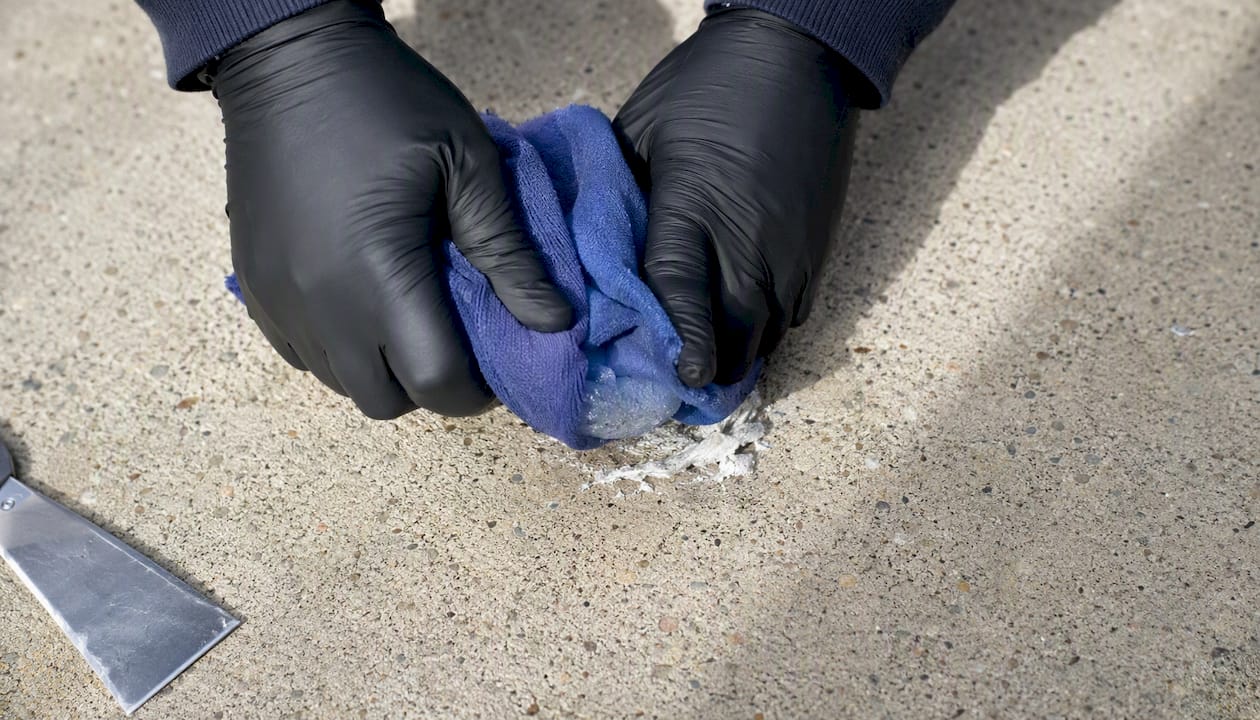
For small areas or spot treatments, the freeze-and-scrape sequence is the safest starting point:
- Fill a zip-lock bag with ice and hold it firmly against the gum for 3–5 minutes until the gum hardens completely.
- Use a plastic scraper or a blunt metal putty knife held at a low angle (roughly 20–30 degrees) to lift the hardened gum from the surface. Never use a sharp chisel at a steep angle — it can chip or gouge concrete.
- Scrub the residue with warm water and a few drops of dish soap using a stiff-bristle brush.
- Rinse thoroughly. If a faint shadow remains, apply a small amount of isopropyl alcohol or a citrus-based solvent, let it dwell for 60 seconds, then scrub and rinse again.
- Allow the area to dry fully before assessing whether a second pass is needed.
For larger areas, hot-water pressure washing at 1,500–2,000 PSI with a surface cleaner attachment is the most practical approach. Steam cleaning is gentler on the concrete surface and works well on decorative or stamped concrete where high pressure could cause damage.
| Method | Effectiveness | Risk to concrete | Effort/cost | Best for |
|---|---|---|---|---|
| Freeze + scrape | Moderate | Low (if done carefully) | Low / DIY | Spot treatment, small areas |
| Hot-water pressure wash | High | Low to moderate | Medium / rental or pro | Large sidewalk areas |
| Steam cleaning | High | Low | Medium / pro | Decorative or older concrete |
| Chemical solvents | Moderate to high | Low to moderate | Low to medium | Residue after scraping |
| Laser / shot-blasting | Very high | Low (professional only) | High / pro only | Commercial properties, heavy buildup |
Safety notes: Chemical solvents need ventilation and should never be used near storm drains. Pressure washing above 2,500 PSI on older or already-damaged concrete can erode the surface layer. For specialized equipment and safe technique, professional-grade machines calibrated for concrete are worth the investment on commercial properties.
Call a professional when: the stained area covers more than a few square feet, the concrete shows surface etching or pitting, the property is commercial with high visibility expectations, or previous DIY attempts have left the surface looking worse.
Can gum permanently stain or etch concrete?
The short answer is yes, and the timeline matters. When gum is fresh, the polymer base sits mostly on the surface and can be removed with moderate effort. Once foot traffic has compressed it and the pigments have had days or weeks to migrate into the concrete’s pore structure, you’re dealing with a fundamentally different problem.
Concrete is porous at the microscopic level. The synthetic polymers and pigments in gum base can penetrate those pores, and once they do, removing the visible gum mass doesn’t necessarily remove the discoloration. What’s left is a shadow stain, a dark ring or disc where the pigment-laden material soaked in.
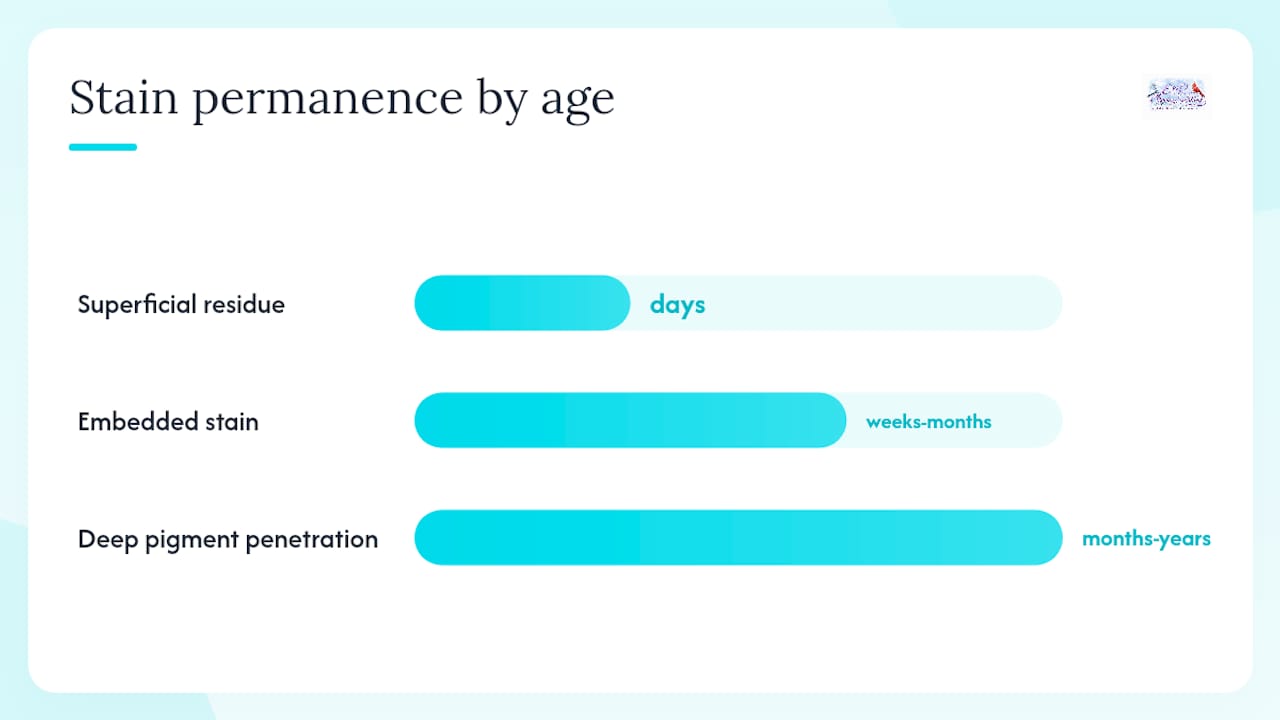
How to read the situation:
- Superficial residue (days old): The gum mass is still raised or only slightly compressed. Freeze-and-scrape followed by hot water will likely restore the surface.
- Embedded stain (weeks to months old): The gum is flat and dark. Removal of the mass is straightforward, but a residual shadow often remains. Hot-water pressure washing or steam may reduce it; a second chemical treatment pass usually helps.
- Deep pigment penetration (months to years old): The surface looks clean after removal but a dark disc persists. At this stage, spot resurfacing, a concrete overlay, or a penetrating stain treatment may be the only way to restore uniform appearance.
Gum does not chemically etch concrete the way acidic substances do. The damage is cosmetic, not structural. That said, a sidewalk covered in dozens of dark spots signals neglect to visitors and, as local reporting notes, visible gum accumulation tends to invite more littering, creating a feedback loop that compounds the problem.
Decision guide: If cleaning removes the mass but leaves a shadow, try one more hot-water or steam pass before committing to resurfacing. If the shadow persists after two professional cleaning passes, a concrete overlay or spot sealing is the more cost-effective path forward.
Prevention and routine maintenance that actually reduce recurrence
Removing gum is reactive. The property managers who keep their sidewalks cleanest are the ones who make gum disposal easy and visible upkeep routine.
Prevention checklist:
- Place covered trash receptacles and ash/gum disposal stations at every building entrance and at 30–50 foot intervals along high-traffic walkways.
- Post clear, visible signage near entrances asking visitors to dispose of gum properly. Simple, direct messaging works better than lengthy rules.
- Brief staff or security personnel to enforce disposal expectations during busy periods.
- Apply a penetrating concrete sealer to walkways every 2–3 years. Sealed surfaces are dramatically easier to clean and resist pigment migration.
- Schedule routine commercial property cleaning passes that include gum spot-checks before deposits have time to harden.
Recommended cleaning cadences by property type:
- High-traffic retail entry (daily foot traffic over 500 people): Monthly gum spot-check and targeted removal; quarterly full sidewalk hot-water wash.
- Office building or mixed-use commercial: Quarterly spot-check; semi-annual full wash.
- Residential walkways and driveways: Annual or as-needed, with a spot-check after any event or high-traffic period.
Pro Tip: A periodic low-pressure hot-water pass (under 1,500 PSI) combined with a mild detergent is gentler on concrete than infrequent high-pressure blasting. It keeps surface texture intact, removes early-stage deposits before they harden, and costs less per visit than a full remediation job.
The routine property cleaning schedule is also worth reviewing for a broader maintenance framework that incorporates gum removal alongside other exterior upkeep tasks.
How long does gum persist on sidewalks?
A long time. Modern chewing gum bases are largely synthetic polymers that behave like plastics and do not biodegrade quickly. Left untreated, a gum deposit can persist on a sidewalk for years, even decades.
Key facts for property owners:
- Synthetic gum bases: The polymers used in most commercial gum are petroleum-derived and functionally non-biodegradable on any practical human timescale. They harden, crack, and over years can break down into microplastic fragments.
- Natural chicle-based gums: A small number of specialty gum products use natural chicle, which is biodegradable. These are the exception, not the rule, in the US market.
- Environmental persistence: Because gum is effectively a plastic deposit, municipal cleanup programs treat it as a recurring maintenance cost rather than something that resolves on its own.
Gum cleanup is expensive and labor-intensive for cities and property owners alike. Research framing gum as plastic pollution rather than ordinary litter highlights why the cleanup burden falls on property managers indefinitely.
Waiting for decomposition is not a strategy. A deposit left on a busy sidewalk for six months is far harder and more expensive to remove than one addressed within the first few weeks. The practical implication is straightforward: schedule removal early and often.
Why gum removal is symptom management, not a permanent fix
Gum staining is a maintenance problem with a synthetic root cause. The gum base is designed to be durable, flexible, and adhesive. No cleaning method changes that chemistry. What cleaning does is remove the visible deposit and reduce the residual stain, but as long as foot traffic and improperly disposed gum are part of your property’s reality, new deposits will form.
For retail curb appeal, the stakes are higher. Visible gum accumulation signals poor upkeep to customers before they even reach the door. Budgeting for recurring professional cleaning is less expensive than the reputational cost of a visibly neglected entrance.
Service contracts that include scheduled pressure washing and exterior maintenance are the most cost-effective structure for commercial properties. A pressure washing contract that covers quarterly sidewalk treatment typically costs less per visit than one-off emergency calls and keeps deposits from reaching the deep-set stage.
What property owners usually get wrong about gum removal
Most property owners make the same three mistakes: they use too much pressure, they reach for the wrong solvent, and they expect one cleaning pass to solve a months-old problem.
High-pressure washing feels satisfying, but blasting concrete at 3,000+ PSI without a surface cleaner attachment can erode the surface layer, widen micro-cracks, and make the concrete more porous, which means future stains set faster and deeper. The right approach is controlled hot water at moderate pressure, not maximum force.
Wrong solvents are the second common error. Acetone and harsh degreasers can bleach or discolor concrete, leaving a light patch that’s as visible as the original stain. Citrus-based or alcohol-based products are gentler and still effective on fresh-to-moderate deposits.
The third mistake is expecting a single treatment to restore heavily stained concrete. Deep-set stains often need two passes: one to remove the gum mass and loosen the residue, a second to address the shadow. Skipping the second pass and declaring the job done leads to disappointment.
Quick wins worth doing on a first visit: freeze and lift any raised deposits before washing, run a targeted hot-water pass at 1,500–2,000 PSI with a surface cleaner, and apply a penetrating sealer once the surface is fully dry. That sequence handles the immediate problem and reduces the next one.
Professional sidewalk cleaning from E and R Cleaning Solutions
Gum staining is a recurring maintenance reality for any property with foot traffic, and the difference between a clean entrance and a spotted one often comes down to method and timing.

E and R Cleaning Solutions provides on-site assessment, targeted gum removal using hot-water pressure washing and steam, safe concrete handling that avoids surface damage, and follow-up recommendations for sealing and maintenance scheduling. With over five years of experience serving homeowners, property managers, and commercial property owners, the team selects the right method for your surface rather than defaulting to maximum pressure.
For landlords and property managers, pressure washing between tenancies is a natural point to address accumulated gum staining before new occupants arrive. For retail and commercial properties, recurring service contracts keep sidewalks clean without emergency call-out costs.
Get a custom quote for sidewalk cleaning or a recurring maintenance plan by contacting E and R Cleaning Solutions directly.
Sources
- BBC NEWS | UK | Magazine | The secret life cycle of gum
- Chewing gum is plastic pollution, not a litter problem
- What are those black dots on the sidewalk? Is it chewing gum?The Scribbler | LancasterOnline
- Remove stains from chewing gum | University of Georgia Extension
- Can chewing gum stick to clothes or pavement? – International Chewing Gum Association