Post-Storm Property Cleaning: What Homeowners Must Know

Post-storm property cleaning is the safety-first process of removing hazards, drying and sanitizing affected areas, and stabilizing your property so repairs and insurance claims can move forward. Before you touch anything, do these four things: stay away from downed power lines, document all damage with photos and video, shut off utilities if it’s safe to do so, and keep children and pets out of the affected area. FEMA and the CDC both emphasize that safety and documentation come before any physical cleanup. E and R Cleaning Solutions follows this same sequence on every post-storm job.
Immediate actions before cleanup begins:
- Stay clear of downed or sagging power lines and unstable trees
- Photograph and video every damaged area before moving or discarding anything—insurers require proof-of-loss forms and early documentation. High-resolution photos, serial numbers, and inventories are often the difference between a full and a reduced settlement.
- Shut off gas, electricity, and water at the main if you suspect damage
- Contact your insurer promptly to open a claim
Table of Contents
- What does post-storm property cleaning actually include?
- What hazards make post-storm sites dangerous?
- When should you hire professionals vs. handle it yourself?
- How do professional window cleaning and pressure-washing crews work?
- What timeline and costs should you expect?
- How do you document damage for your insurance adjuster?
- What should you ask a contractor — and what are the red flags?
- Key Takeaways
- The part most guides skip
- E and R Cleaning Solutions is ready when the storm clears
- Useful sources and further reading
What does post-storm property cleaning actually include?
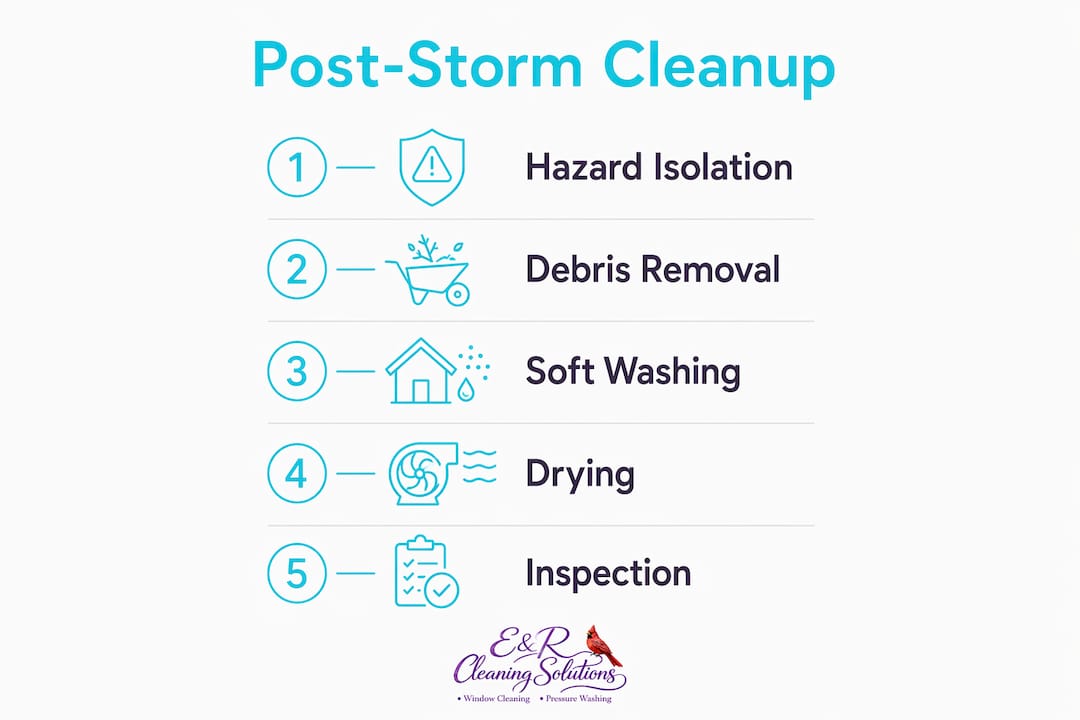
The scope goes well beyond raking leaves. A full post-storm cleanup process covers several distinct phases, and confusing them with routine yard work is one of the most common mistakes homeowners make.
| Task | What it involves | When it happens |
|---|---|---|
| Hazard isolation | Securing utilities, flagging unstable structures, cordoning downed lines | Immediately (0–24 hrs) |
| Debris removal | Hauling branches, limbs, and storm waste from the property | 0–48 hrs |
| Water extraction and drying | Pumping standing water, running industrial fans and dehumidifiers | 0–48 hrs |
| Sanitizing and disinfecting | Bleach-solution treatment of hard surfaces per CDC guidance | After drying begins |
| Window cleaning | Deionized-water rinse of glass, frames, and screens | Days 2–7 |
| Pressure washing / soft washing | High- or low-pressure exterior cleaning of siding, driveways, and roofs | Days 2–7 |
| Contaminated material disposal | Removing items that cannot be dried or disinfected | Ongoing |
A note on terminology: Soft washing uses low pressure and cleaning solutions to treat biological growth without damaging surfaces. Pressure washing uses high-pressure water for concrete, masonry, and heavy grime. Water extraction means pumping or vacuuming standing water before drying begins. A deionized water rinse leaves glass streak-free because the mineral content is removed before the water touches the glass.
Per county guidance and the Red Cross, certain items cannot be safely cleaned after flood contact and must be discarded: mattresses, carpet padding, upholstered furniture, stuffed animals, and any food or medicine exposed to floodwater. When in doubt, throw it out.
What hazards make post-storm sites dangerous?
Floodwater is not just water. It carries sewage, bacteria, chemical runoff, and agricultural waste. CDC guidance is explicit: exposure to contaminated floodwater poses real infection and illness risks, which is why PPE is non-negotiable before anyone enters a flooded space.
Minimum PPE for post-storm cleanup:
- Waterproof rubber or nitrile gloves and waterproof boots
- N95 respirator, goggles, and long-sleeved clothing
- Hard hat near unstable roofing, trees, or ceilings
- Change and bag clothing immediately after leaving the work area
Structural hazards add another layer of risk: leaning trees, compromised roof decking, and sagging ceilings can fail without warning. Practitioners prioritize hazard isolation — securing power, gas, and unstable structures — before any debris removal begins, precisely to prevent secondary collapses or electrocution.
Bleach dilution for disinfecting hard surfaces (per CDC):
- Routine surfaces: 1 cup of bleach to 5 gallons of water
- Visible mold: 1 cup of bleach to 1 gallon of water
Pro Tip: Always check the product label before mixing — bleach concentrations vary by brand. Never mix bleach with ammonia; the combination produces toxic chloramine vapors. Work in a ventilated space and wear eye protection.
Wet areas left untreated become mold problems fast. The CDC recommends drying affected areas within 24–48 hours and targeting 30–50% indoor humidity using fans and dehumidifiers. Drywall or insulation that stays wet past that window usually needs to come out entirely.
When should you hire professionals vs. handle it yourself?
Not every post-storm task requires a crew. Some things you can do safely right now; others genuinely require licensed, insured professionals.
- Photograph everything first. Walk every room and the full exterior with your phone before touching a single item. This is safe, free, and protects your insurance claim.
- Remove small, dry yard debris away from power lines, hydrants, and the roadway — FEMA guidance specifies keeping debris clear of all of these for scheduled pickup.
- Document serial numbers on appliances, electronics, and HVAC equipment before they are moved or discarded.
- Call a licensed pro for any of these: standing or contaminated water inside the structure, visible mold, suspended or leaning trees, roof or height work, large-volume water extraction, or any structural concern. Homeowners who rush cosmetic cleanup often leave hidden moisture that leads to mold and far higher remediation costs later.
- Do not pump a flooded basement all at once. The Red Cross recommends removing about one-third of the water per day to avoid wall collapse from exterior soil pressure.
The 24–48 hour drying window is the hard threshold. If you cannot get wet porous materials dry within that period, professional extraction and drying equipment is the only safe path forward.
How do professional window cleaning and pressure-washing crews work?
Professional post-storm crews bring equipment that most homeowners simply do not have access to: submersible and truck-mounted pumps, soft-wash dosing systems, truck-mounted pressure washers, deionized water rigs for glass, industrial fans, dehumidifiers, and moisture meters to confirm drying is actually complete.
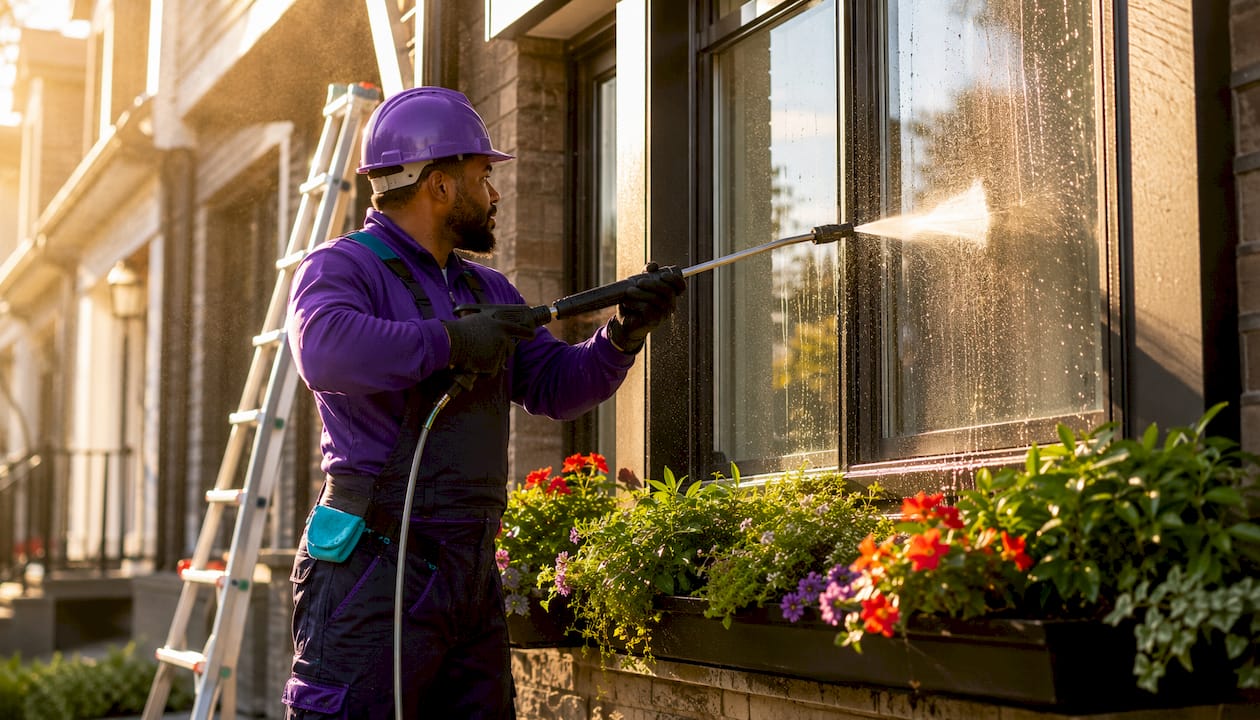
Soft wash vs. pressure wash — the practical difference:
| Method | Best for | Why |
|---|---|---|
| Soft washing | Siding, roofs, painted surfaces, algae | Low pressure prevents surface damage; chemical solution kills organic growth at the root |
| Pressure washing | Concrete, brick, driveways, masonry | High pressure removes embedded grime, mud, and debris that chemicals alone cannot shift |
| Deionized window rinse | Glass, frames, screens | Removes mineral deposits left by storm water; dries spot-free without streaking |
Safety controls separate a professional crew from a day-laborer operation. Reputable contractors use lockout/tagout procedures for utilities, fall protection on any elevated work, and they produce a written scope of work before starting. Before-and-after photos with timestamps are standard practice, and they matter for your insurer. For commercial property cleaning, a documented scope is also a compliance requirement. Full storm recovery typically requires multiple trade visits — debris hauling, water mitigation, exterior cleaning, and restoration rarely happen in a single day.
What timeline and costs should you expect?
Timeline:
- 0–48 hours: Hazard isolation, utility shutoff, damage documentation, water extraction
- 2–7 days: Debris removal, drying, sanitizing, initial window and exterior cleaning
- 1–4+ weeks: Full restoration, pressure washing, soft washing, and any structural repairs
Cost factors that drive the final number:
- Volume and type of debris (contaminated material costs more to dispose of)
- Emergency or after-hours surcharges, which can be significantly higher than standard rates
- Access difficulty (steep roofs, tight lots, multi-story buildings)
- Specialty equipment rental or subcontractor fees
- Disposal fees for regulated waste
Dollar estimates vary too widely to quote without a site visit. Always get a written estimate before any work begins. For debris hauling and bulk-waste disposal, a local service like junk removal in Hampton Roads can handle the heavy lifting alongside your cleaning crew.
How do you document damage for your insurance adjuster?
Documentation is not a formality. Insurers require proof-of-loss forms and early documentation, and what you submit directly affects your settlement.
- Photograph and video every damaged area with timestamps before anything is moved or discarded.
- Record serial numbers for all damaged appliances, electronics, and HVAC units.
- Create a written inventory of damaged items with estimated values.
- Contact your insurer within 24–48 hours — most policies require prompt notification.
- Keep removed items until your adjuster instructs otherwise; some insurers want to inspect them.
- Request itemized invoices from every contractor, including before/after photos with timestamps. Early professional mitigation helps transition to formal repairs faster and gives adjusters the documentation they need.
A cleaning service contract checklist can help property managers track contractor scopes and invoices in one place.
What should you ask a contractor — and what are the red flags?
Questions to ask before signing anything:
- Are you licensed and insured in this state? Can I see the certificate?
- Do you provide a written scope of work with line-item pricing?
- What is your mitigation timeline, and how do you confirm drying is complete?
- How do you handle contaminated material disposal?
- Will you provide before/after photos with timestamps for my insurer?
- Can you provide references from post-storm jobs?
Red flags that should stop you cold:
- No proof of insurance or a certificate that expired
- Demand for a large cash payment upfront before work begins
- Vague scope with open-ended hourly pricing and no ceiling
- Refusal to document conditions before starting work
- No written estimate, just a verbal quote
Pro Tip: Call the insurer on the certificate directly to verify it is active — do not rely on a copy the contractor hands you. Also ask for a crew safety plan; any reputable post-storm contractor should have one.
Key Takeaways
Post-storm property cleaning requires safety-first hazard isolation, drying as soon as possible within the recommended time frame, and thorough documentation before any cosmetic work begins.
| Point | Details |
|---|---|
| Safety before cleanup | Stay away from downed lines and unstable structures; shut off utilities before entering. |
| Document everything first | Photograph and video all damage and record serial numbers before moving items; early documentation is required by insurers and materially affects your claim. |
| The 24–48 hour drying window | Wet porous materials left beyond this threshold typically require removal to prevent mold. |
| Hire pros for high-risk tasks | Contaminated water, roof work, large-volume extraction, and visible mold all require licensed crews. |
| E and R Cleaning Solutions | Provides insured, documented window cleaning and pressure washing with written scopes for post-storm jobs. |
The part most guides skip
The biggest mistake homeowners make after a storm is treating cleanup as a cosmetic problem. A clean-looking exterior can hide saturated wall cavities, mold starting behind drywall, or glass etched by mineral-laden storm water. The pressure to “get things back to normal” is real, but rushing the sequence — cleaning windows before moisture is controlled, pressure washing siding before a structural check — creates problems that cost far more to fix later.
The CDC and FEMA guidance exists for a reason: the health risks from floodwater contamination are not theoretical. Sewage bacteria, chemical runoff, and mold spores are invisible. PPE and proper disinfection are not overcaution; they are the minimum.
One more thing worth saying plainly: the documentation step is not just for insurance. It forces you to slow down, look carefully, and find damage you would otherwise miss in the rush to clean up. A 20-minute photo walkthrough before you touch anything has saved homeowners from discovering hidden mold three months later.
E and R Cleaning Solutions is ready when the storm clears
When a storm hits, the last thing you need is a contractor who shows up without a plan. E and R Cleaning Solutions brings written scopes, insurance-friendly before/after documentation, and insured crews to every post-storm job — whether that means pressure washing storm-stained driveways and siding, soft washing a roof without risking shingle damage, or running a deionized window rinse to clear the mineral deposits and debris storm water leaves on glass.

For property managers, the commercial window cleaning checklist covers the full scope of what a post-storm exterior inspection and cleaning involves. For homeowners, E and R Cleaning Solutions offers custom quotes with honest pricing — no surprise fees, no vague hourly estimates. Contact E and R Cleaning Solutions to get a written estimate and get your property documented and cleaned the right way.
Useful sources and further reading
- CDC — Cleaning Safely After a Disaster: CDC Natural Disasters Safety — bleach dilution ratios, PPE requirements, and drying guidance
- FEMA — Stay Safe Cleaning After a Flood: FEMA flood cleanup guide — debris placement rules, professional help resources, and step-by-step flood recovery
- Consumer Reports — How to Clean Your Home After a Flood: Consumer Reports flood guide — PPE lists, humidity targets, and insurance documentation tips
- Red Cross — Disaster Cleanup and Repair: Red Cross disaster cleanup — water damage drying sequence, discard guidance, and structural checks
- Carteret County, NC — Home Cleanup After the Storm: Carteret County cleanup guide — local bleach dilution guidance and disposal rules for flood-damaged items