
Protect Mortar: Clean Brick Safely Under 100 PSI for Homeowners
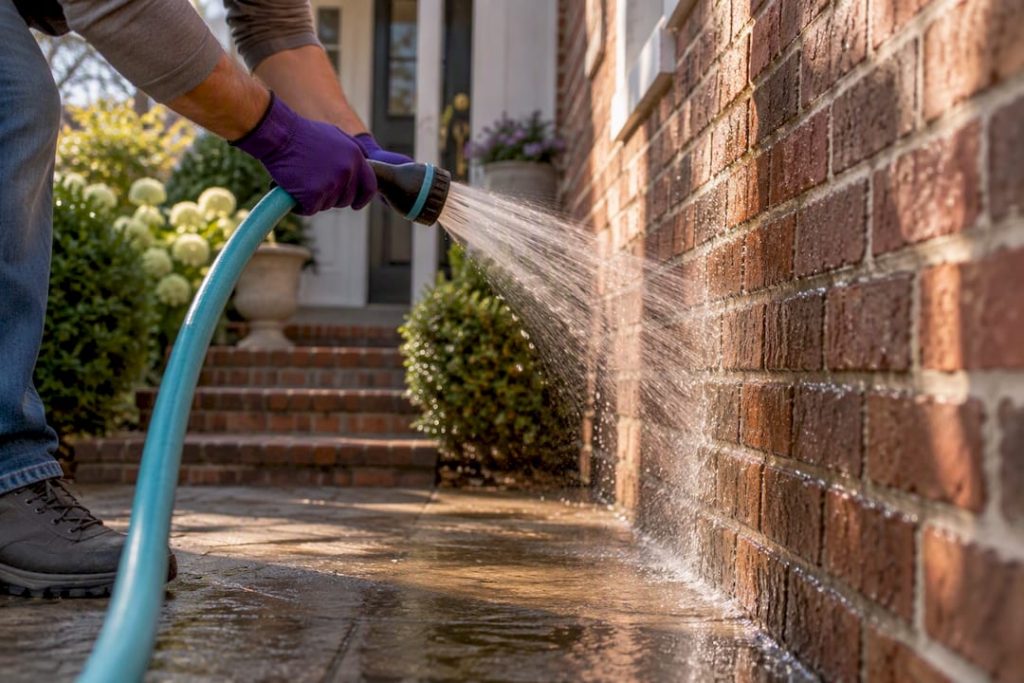
Start with plain water and the softest tool that works, testing a hidden patch before you touch the whole wall. Preservation guidance from the National Park Service backs this up: water-based cleaning solves most brick problems without chemicals. Skip muriatic acid and wire brushes entirely, rinse everything thoroughly, and call a mason if mortar starts crumbling or a stain won’t budge after two gentle attempts.
TL;DR:
- The safest cleaning method is water-based, using gentle tools and avoiding muriatic acid or wire brushes to prevent permanent damage.
- Regular maintenance such as seasonal hose-down and fixing water leaks can significantly reduce staining and the need for chemical cleaning.
- For stubborn stains, buffered masonry cleaners or chelating agents are recommended over acids, with professional help advised for large or old bricks.
- Always test cleaning products on a hidden patch first and thoroughly rinse to avoid long-term mineral deposits or surface damage.
- Professional low-pressure washing offers a risk-free alternative for complex stains or fragile brick surfaces, ensuring safe and effective cleaning.
Table of Contents
- Tools and Prep Work Before You Clean Brick Safely
- What’s the Safest Way to Clean Brick Step by Step?
- How Do You Remove Specific Stains From Brick?
- How Do You Test Brick Cleaning Without Ruining It?
- [What routine care keeps brick from getting stained?](#what-routine-carehttpsrentalincomeinsurancecozarental-property-maintenance-checklist-7-essential-tips-keeps-brick-from-getting-stained)
- What Has Actually Worked for Homeowners
- A Quick Checklist Before You Start
- Let E and R Cleaning Solutions Handle the Brick You’d Rather Not Risk
- Where to Verify These Brick Cleaning Guidelines
- Sources
- FAQ
Tools and Prep Work Before You Clean Brick Safely
Grab a nylon or natural-bristle brush, a masonry sponge, a garden hose, and a bucket with a few drops of non-ionic dish soap before you start. A low-pressure pump sprayer beats a rented power washer for most jobs, and you’ll want rubber gloves, safety glasses, and a respirator on hand if you end up using any chemical cleaner.
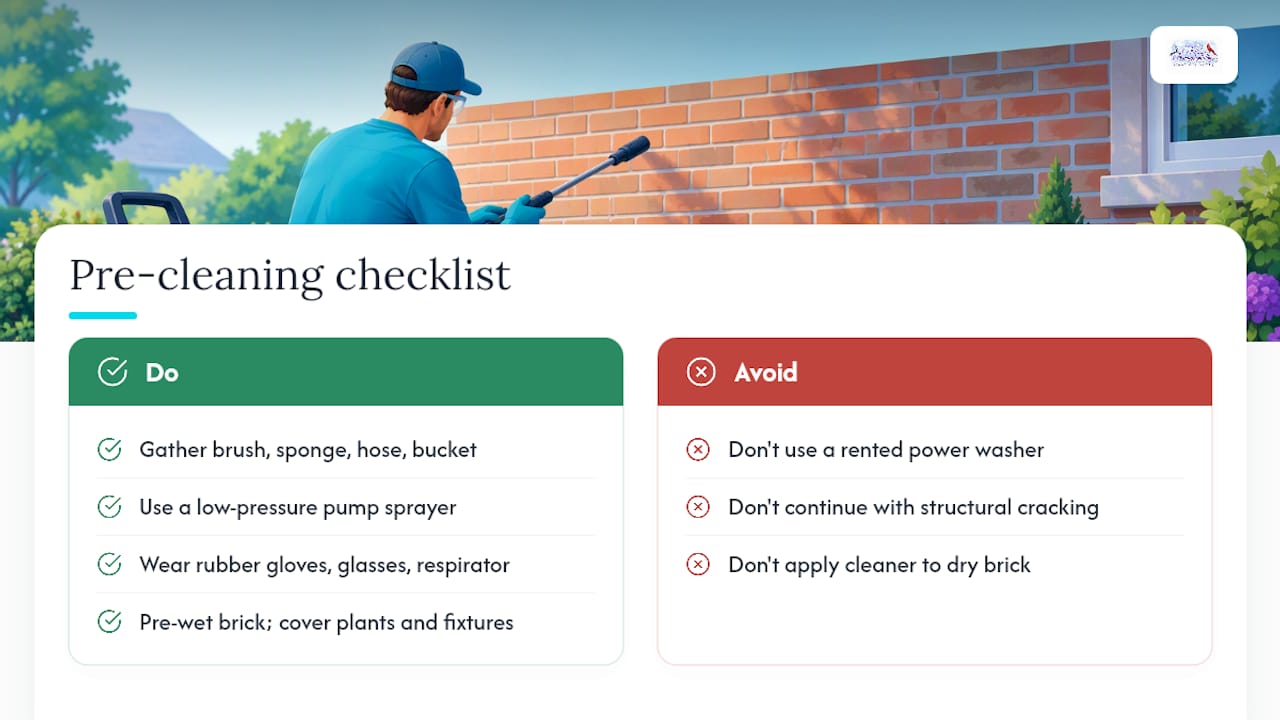
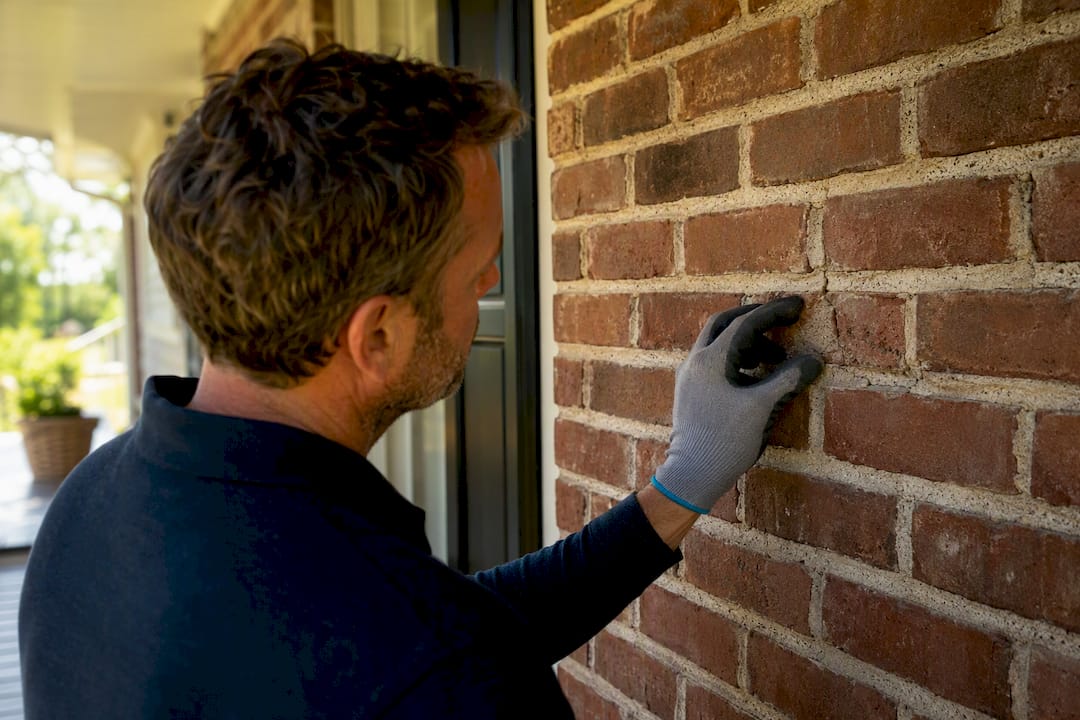
Walk the wall first. Look for loose or crumbling mortar, hairline cracks in the brick face, and flashing or window seals that need covering with plastic sheeting. If you spot active water infiltration or structural cracking, stop. That’s a masonry contractor’s job, not a weekend project.
Once you’ve cleared the checklist, cover nearby plants, mask any metal frames or light fixtures with plastic and tape, and soak the brick with a hose before applying anything. Pre-wetting matters more than most people think: dry brick absorbs cleaner fast, which drives stains deeper instead of lifting them out. For general tool guidance on getting streak-free results without scratching surfaces, E and R Cleaning Solutions has put together a rundown of safe cleaning equipment worth a look.
What’s the Safest Way to Clean Brick Step by Step?
Work through these methods in order. Stop as soon as one gets the job done.
- Bucket and brush first. Mix warm water with a few drops of mild dish soap, scrub in small circles with a soft brush, and rinse immediately. This handles ordinary dirt, dust, and light grime on most brick, and it’s genuinely enough for the majority of exterior walls that just look tired rather than stained.
- Poultice for localized stains. Oil, grease, and old paint respond well to a poultice: a paste made from an absorbent material (like diatomaceous earth or fuller’s earth) mixed with a solvent matched to the stain, spread over the spot, covered in plastic, and left for 24 to 48 hours. The poultice technique works by keeping the reagent in contact with the stain long enough to draw it out, rather than forcing chemical deep into the brick face. Scrape it off and rinse once it’s dried and hardened.
- Low-pressure or soft washing. If the brush alone isn’t cutting it, move to low-pressure water. The Brick Industry Association defines “very low” pressure as under 100 psi and “low” as roughly 100 to 400 psi, depending on the brick’s age and hardness. Use a wide-fan nozzle tip, keep it 12 to 24 inches from the surface, and sweep horizontally in overlapping passes rather than blasting one spot. Any detergent should go through the sprayer’s dispenser at diluted strength, never applied full strength by hand.
- Steam or hot water for delicate finishes. Older brick with a fragile glaze or hand-molded texture often does better with steam than with any acid, since heat loosens grime without introducing a reactive chemical.
- Buffered specialty cleaners as a last resort. If a stain survives all of the above, a manufacturer-formulated, pH-buffered masonry cleaner is the next step, not raw muriatic or hydrofluoric acid. The Brick Industry Association is explicit that unbuffered acid is never appropriate for routine cleaning, and soda blasting or specialty abrasives belong only in the hands of a trained operator.
Pro Tip: Always reach for a chemical reaction before a mechanical one. A cleaner that dissolves a stain works with the brick’s chemistry; a wire brush or grit blaster works against it, and that abrasion is permanent.
Skip the wire brush at every stage. The National Park Service warns that abrasive cleaning strips the brick’s fired surface layer right along with the dirt, and that damage never reverses.
How Do You Remove Specific Stains From Brick?
Different stains need different chemistry, and guessing wrong wastes a Saturday.
- Efflorescence (that chalky white bloom) is usually just dry-brushed off with a stiff nylon brush once it’s fully dried; a water-based poultice handles the stubborn kind. Chase down the moisture source causing it, whether that’s a leaky gutter or grading that pools water against the foundation, or the efflorescence keeps coming back. Acid should only enter the picture under a specialist’s direction. E and R Cleaning Solutions has documented a full efflorescence removal process without acid or pressure washing that walks through the exact sequence.
- Rust stains respond to chelating agents or a manufacturer-approved rust remover, applied per the label. Strong acids are risky here too, especially on lighter or manganese-rich brick, where they can trigger a permanent brown or purple discoloration instead of removing the rust.
- Algae and mildew usually lift with mild detergent and a soft brush. A diluted bleach solution works as a second option, but only after a patch test, and only with a thorough rinse afterward. Trimming back nearby plants and improving drainage keeps it from returning.
- Soot from fireplaces needs a dry vacuum pass first to pull loose particles before any liquid touches it; wetting soot before vacuuming just smears it deeper into porous brick. Mild detergent and gentle scrubbing handle the rest, though a heavily suited chimney interior is really a job for a chimney sweep.
- Paint and overspray call for a solvent-based poultice or a specialty paint remover worked into a paste, left to dwell, then scraped and rinsed. Large areas or anything on historic brick deserve a professional’s eye before you start scraping.
How Do You Test Brick Cleaning Without Ruining It?
Pick a hidden spot, roughly 1 to 2 square feet, tucked behind a shrub or around back where a mistake won’t be the first thing visitors see. Apply your chosen method exactly as you plan to use it on the full wall, following the manufacturer’s recommended dwell time, then rinse and let it dry completely before judging the result.
- Watch for color shift, a chalky or fuzzy texture, or a rougher surface than the surrounding brick.
- Flood the test patch with clean water and check the runoff. Cloudy runoff means keep rinsing; it should run clear before you call it done.
- Mortar crumbling, new white staining after drying, or a texture change means stop immediately and get a masonry professional’s opinion.
- Keep gloves, eye protection, and a respirator on hand any time a chemical product is involved, even a mild one.
One detail preservation guidance keeps circling back to: incomplete rinsing is a bigger cause of long-term brick problems than the cleaner itself, since leftover residue can bond with minerals in the brick and leave a permanent haze.
What routine care keeps brick from getting stained?
A quick seasonal hose-down and some basic upkeep prevent most of the staining that eventually demands a stronger cleaner.
- Rinse pollen, dust, and cobwebs off twice a year before they bake into the surface.
- Trim vegetation back a few inches from the wall and keep gutters and drip edges clear so water sheds away instead of running down the brick face.
- Fix flashing and roof leaks promptly. That’s the single biggest driver of the algae and efflorescence problems homeowners fight later.
- A breathable water repellent can help on cleaned brick, but test it on a small area first. Anything that seals the surface instead of letting it breathe traps moisture inside and accelerates freeze/thaw damage.
- Walk the exterior once a season and catch small buildup before it turns into a project.
What Has Actually Worked for Homeowners
E and R Cleaning Solutions has documented real cases where acid never entered the picture. One project removed stubborn efflorescence using dry brushing and a targeted poultice, with the full write-up available here, and the wall came back clean with zero etching on the mortar joints. A separate case tackled rust bleeding onto concrete near a brick planter using chelating agents instead of muriatic acid, which avoided the discoloration risk that acid carries on lighter masonry.
The dividing line for DIY versus professional help is straightforward: if the brick and mortar are sound and the stain is a known type, homeowners can usually handle it. Once you’re looking at cracked mortar, unidentified staining, or century-old brick, bring in a pro.
A Quick Checklist Before You Start
Start gentle, always. Photograph your test patch before and after so you have a record if something looks off days later. Accept going in that some stains, especially deep efflorescence or old rust, may lighten rather than vanish completely, and that’s a normal outcome, not a failed job. The moment mortar starts crumbling or the brick face looks structurally off, that’s the signal to hand it to a mason.
Conservation-minded cleaning aims for “clean and stable,” not “looks brand new.” Chasing a showroom finish on forty-year-old brick is usually how damage happens.
— Richard
Let E and R Cleaning Solutions Handle the Brick You’d Rather Not Risk
Every method above works, but a wrong pressure setting or a stain you misdiagnose can cost more to fix than hiring it out in the first place. Professional local services provide low-pressure washing and masonry-safe stain removal covered above done right the first time, without risking damage from improper power washer settings.

Service lineups from cleaning specialists cover the scenarios this guide walks through: low-pressure house washing for general grime, targeted removal for efflorescence, rust, and paint overspray, and masonry-conscious techniques that skip muriatic acid entirely. A low-pressure house washing job from E and R Cleaning Solutions starts with the same test-patch approach described here, applied on a section of your property before the full job, so you see the result before committing to the whole wall. Typically, family-run cleaning businesses price each job honestly after a walk-through, avoiding guesswork or upsells on unnecessary chemicals. If a rust stain, an efflorescence bloom, or a soot-streaked chimney makes you nervous about doing it yourself, request an inspection and get a straight answer on scope and cost before any water touches your brick.
Where to Verify These Brick Cleaning Guidelines
The Brick Industry Association’s Technical Note 20 covers pressure ranges and chemical cautions in full detail. The National Park Service’s Preservation Brief 1 and Home Depot’s brick cleaning guide offer additional homeowner-level detail. Always check your brick manufacturer’s own cleaning instructions when available, since finish and glaze vary by product.
Sources
- How to Clean Brick – The Home Depot
- Technical Note 20: Cleaning Brickwork (Brick Industry Association)
- Preservation Brief 1: Assessing Cleaning and Water-Repellent Treatments for Historic Masonry Buildings (NPS)
FAQ
Will Vinegar Damage Brick?
Diluted vinegar can work for light surface grime, but it’s mildly acidic and needs an immediate, thorough rinse or it can etch the surface and leave residue that attracts more dirt. Test it on a hidden patch first, and never use it on painted, glazed, or historic brick without checking compatibility.
Does Dawn Dish Soap Clean Brick?
Yes, a few drops of mild dish soap in warm water is one of the safest starting methods for brick, effective on everyday dirt and light grime. Scrub gently with a nylon brush and rinse completely so no soap film is left behind.
What Is the Best Thing to Clean Brick With?
For most brick, warm water and mild dish soap applied with a soft brush handles the job safely. Move to a poultice, low-pressure washing, or a buffered specialty cleaner only if soap and water don’t fully resolve the stain.
How Do You Make Brick Look New Again?
Brick rarely goes back to “new,” and chasing that look with harsh chemicals or high pressure usually causes damage instead. A gentle cleaning followed by fixing the moisture or vegetation issue causing the staining, and occasionally a breathable water repellent, gets brick looking its best while staying structurally sound. For stubborn cases, low-pressure washing services by professionals can restore brick appearance without the risks associated with DIY power washing.
When Should You Call a Professional Instead of Cleaning Brick Yourself?
Call a professional when you see crumbling or missing mortar, unidentified staining that doesn’t respond to a mild detergent, or any brick older than a few decades where the finish or glaze is unknown. A pro should also handle large-scale paint removal or any job requiring pressure above the low range, since the margin for error narrows fast at higher psi.