Black Roof Streaks: 5 Safer Soft Wash Steps for Homeowners
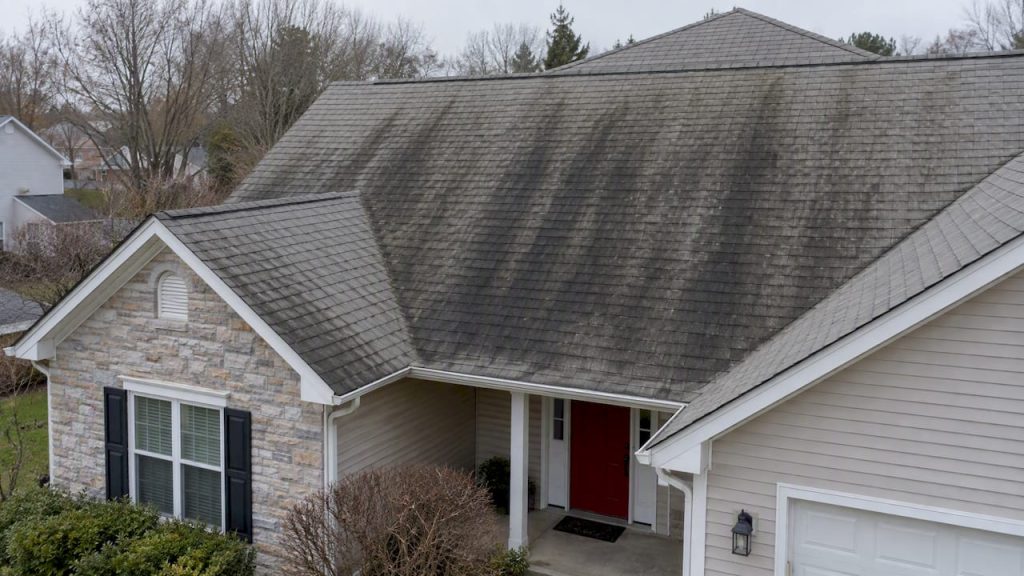
Most black streaks on a roof are a living organism, not dirt or soot. Gloeocapsa magma algae is the usual cause, and the safest fix on asphalt shingles is a manufacturer-compatible soft wash rather than a pressure washer. Regrowth is common in humid or shaded spots, but a few prevention steps cut down how often you need to clean.
TL;DR:
- Use a low pressure soft wash with a manufacturer compatible cleaner; pressure washing can strip shingle granules and may void the warranty.
- Follow EPA registered cleaner label directions exactly, test a hidden area first, and protect plants, vents, and windows from runoff.
- Algae streaks are mostly cosmetic, but moss and lichen can lift shingle edges and hold water against the roof deck, increasing leak risk.
- Trim overhanging branches, clear debris, and improve attic ventilation; even after cleaning, streaks may return within two to five years in humid climates.
- If the roof has roughly five years of expected life left, replacement with algae resistant shingles may be better value than repeated cleanings.
Table of Contents
- What causes dark streaks and how to tell what you’re looking at
- Safe removal: soft-wash chemistry, homeowner prep, and questions to ask a pro
- Reducing recurring streaks and long-term maintenance options
- Do black streaks shorten roof life or cause leaks?
- When cleaning makes sense versus when to plan for replacement
- What a responsible pro roof cleaning looks like
- Get a roof that looks clean without the shingle damage
- FAQ
- Sources
What causes dark streaks and how to tell what you’re looking at
Those vertical black or dark gray streaks running down a shingle slope are almost always Gloeocapsa magma, a blue-green algae that produces a dark protective pigment as it feeds on the limestone filler in shingle granules. It spreads fastest on north-facing slopes, shaded roofs, and anywhere moisture lingers after rain.
Algae isn’t the only culprit, though, and the pattern of the staining tells you a lot before you ever touch a hose:
- Algae shows up as soft-edged vertical streaks, often starting near the ridge and running downslope.
- Moss grows as raised green or brown clumps, usually where debris collects or shade is heaviest.
- Lichen forms crusty, flat patches that grip the shingle surface tightly.
- Soot or airborne pollution staining appears as more uniform gray-black discoloration without a streak pattern, usually near chimneys or busy roads.
- Extractive bleeding is a rare, isolated stain where resins leach from wood sheathing or trim, often in a single spot rather than a streak.
Shade, humidity, overhanging tree debris, and poor attic ventilation all push algae growth along faster, which is why the same roof can stay clean on one side and streak heavily on the other.
Safe removal: soft-wash chemistry, homeowner prep, and questions to ask a pro
The safest method for asphalt shingles is a soft wash: a low-pressure rinse paired with a cleaning solution that does the actual work. High-pressure washing can strip the protective granules off shingles in a single pass, which shortens the roof’s service life and can void a manufacturer’s warranty outright. Industry groups representing roofing and asphalt manufacturers recommend low-pressure chemical cleaning over pressure washing for exactly this reason.
If you’re tackling this yourself, follow these steps:
- Protect plants and landscaping by soaking them with water beforehand and covering them with plastic sheeting.
- Close or cover attic vents, exhaust fans, and windows near the work area to keep runoff and overspray out of the house.
- Test the cleaning solution on a small, hidden section first and wait to see how the shingles react before treating the whole roof.
- Apply the solution at low pressure, let it dwell, then rinse gently from the top down.
- Wear gloves, eye protection, and nonslip footwear, since cleaning solutions and wet shingles are both hazards on a sloped surface.
There’s no universal bleach ratio that works on every roof. Some manufacturers specify a bleach-based mix, while oxygen-based sodium percarbonate cleaners offer a gentler, slower-acting alternative that’s easier on plants and metal flashing. Whichever product you choose, EPA-registered roof cleaners carry legally binding label directions, and using a pesticide inconsistently with its label is a violation of federal law, so the label is not a suggestion.
Pro Tip: Before hiring anyone, ask what maximum pressure they use on shingles, how they protect plants and gutters, whether they provide a written scope of work, and how they handle runoff, since a responsible contractor should answer all four without hesitation.
Reducing recurring streaks and long-term maintenance options
Algae thrives on moisture and shade, so the most effective prevention is cutting off what it needs to grow:
- Trim overhanging branches to reduce shade and let the roof dry faster after rain.
- Clear leaves and debris from the roof and gutters regularly, especially in fall.
- Improve attic ventilation to reduce the trapped heat and moisture that feed algae growth.
- Check drainage so water doesn’t pool or sheet across shaded sections.
Ridge-mounted zinc or copper strips release metal ions that wash down the roof with rain and can suppress new algae growth, though they don’t remove existing stains and work best as a complement to cleaning, not a replacement for it. At reroofing time, algae-resistant shingles with embedded copper or zinc granules reduce how fast streaks return, though it’s worth checking the specific product warranty since resistance varies by manufacturer and region. In humid climates, expect streaks to return within two to five years even after a thorough cleaning.
Do black streaks shorten roof life or cause leaks?
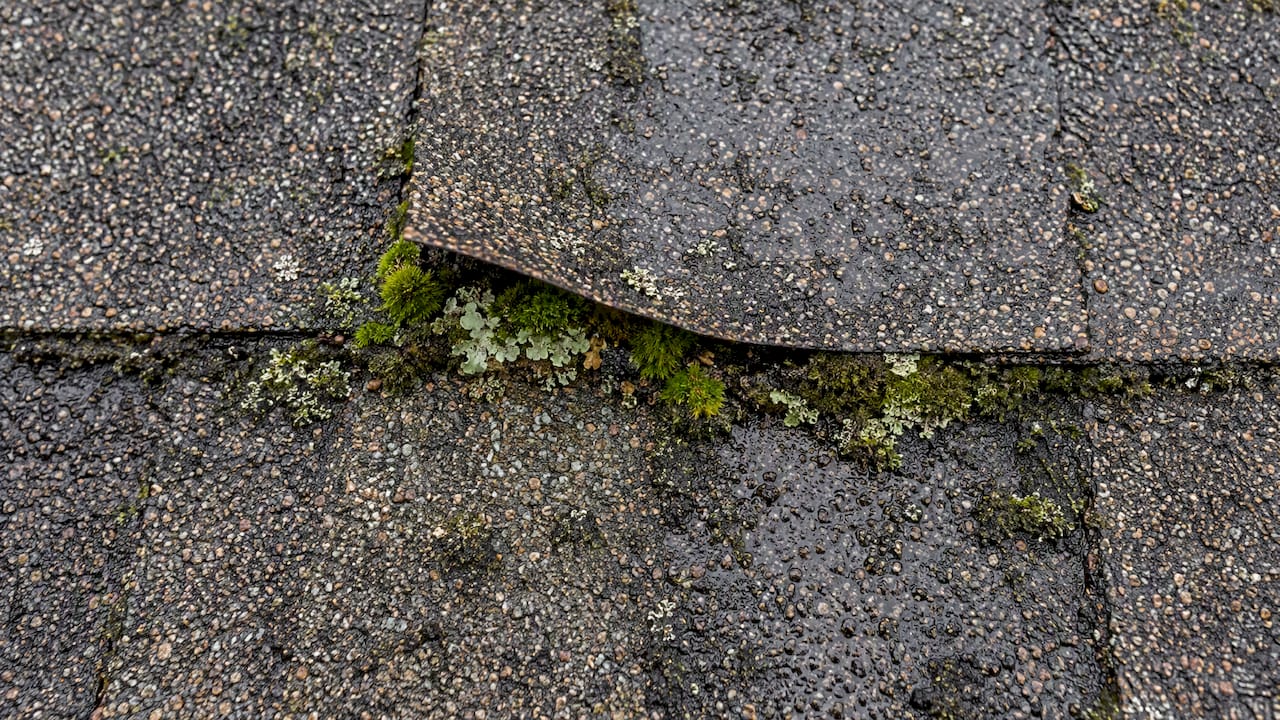
For most homes, algae staining is a cosmetic issue rather than a structural one. It can retain a bit more moisture on the shingle surface, which may contribute to slow granule loss over many years, but it doesn’t create leaks on its own. Moss and lichen are a different story: their root-like structures can lift shingle edges and hold water against the roof deck, which raises real leak risk over time.
There’s also a minor thermal effect. Dark streaks absorb slightly more heat than clean shingles, which matters mainly in hot climates where attic cooling costs are already a concern. For most homeowners, that effect is too small to drive a cleaning decision on its own.
When cleaning makes sense versus when to plan for replacement
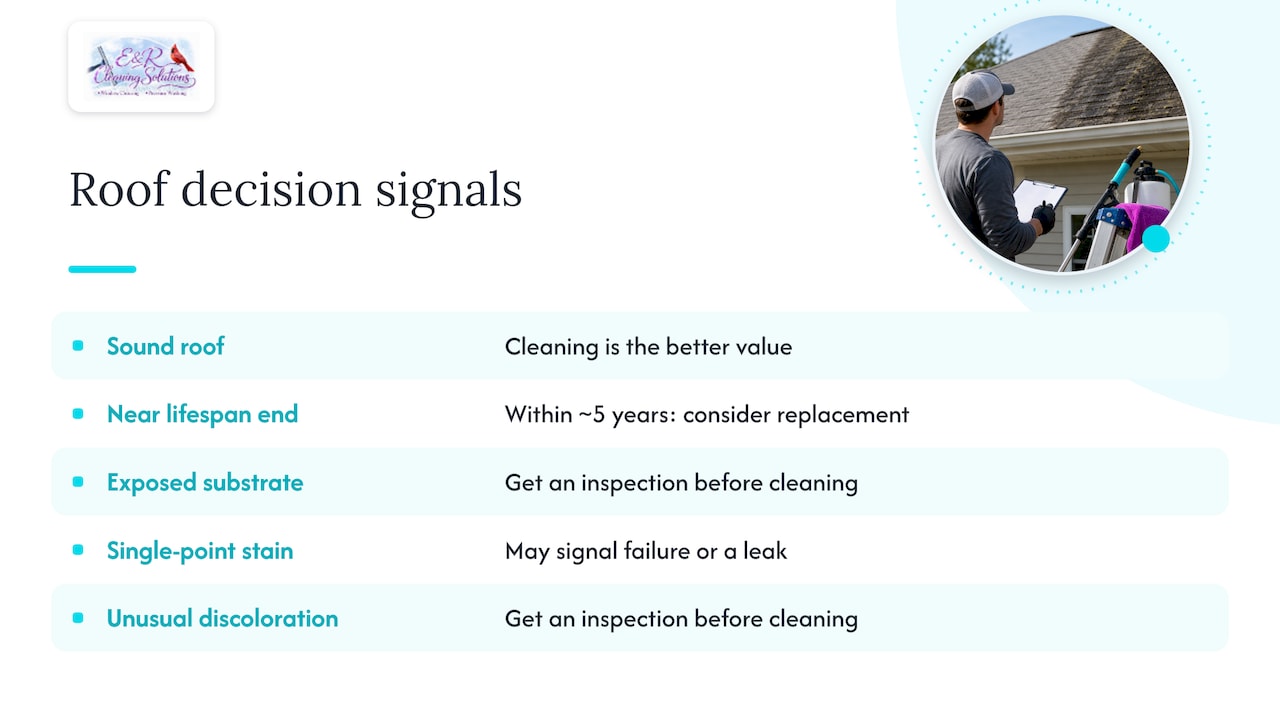
Cleaning is the better value when a roof is otherwise sound, especially if you’re preparing to sell and want better curb appeal. If your roof is within roughly five years of the end of its expected lifespan, it often makes more financial sense to put that budget toward replacement with algae-resistant shingles instead of repeated cleanings.
Before cleaning any roof, look for warning signs that call for an inspection first: exposed asphalt or substrate where granules have worn away, stains that originate from a single point rather than spreading naturally, or discoloration that doesn’t match typical algae patterns. Those signs can point to a product failure or an underlying leak that cleaning won’t fix.
What a responsible pro roof cleaning looks like
We’ve spent more than five years handling pressure washing and soft-wash projects as a family-run E and R Cleaning Solutions team, and the pattern holds: the safest jobs use low pressure, protect landscaping before any chemical touches the roof, and spell out the scope in writing. A written agreement that names the method, the plant protection steps, and the expected outcome protects both the shingles and the warranty.
— Richard
Get a roof that looks clean without the shingle damage
We offer soft-wash roof cleaning built around the same manufacturer-safe approach covered above, along with warranty-safe moss removal priced between $300 and $900 depending on roof size and staining severity, plus pressure washing for driveways, siding, and other exterior surfaces.

Before any work starts, we put the method, plant protection steps, and expected results in writing so you know exactly what you’re paying for:
- Soft-wash chemistry, not high pressure, removes the algae without stripping granules.
- Plant and landscaping protection happens before a single drop of solution goes down.
- A written scope spells out method, timeline, and outcome so there’s no guesswork after the job is done.
Request a quote through our service page and ask us to put the method and protection steps in writing before work begins.
FAQ
How do you get black streaks off a roof?
The safest method for asphalt shingles is a soft wash: a low-pressure rinse combined with a manufacturer-compatible cleaning solution that does the actual work. Avoid pressure washers, since they can strip protective granules and shorten the shingle’s service life.
Are black streaks on a roof harmful?
Algae streaks are mostly cosmetic and don’t cause leaks on their own, though they can hold moisture against the shingle surface and contribute to slow granule loss over years. Moss and lichen carry more risk since their growth can lift shingle edges and allow water to reach the roof deck.
What causes dark streaks on roof shingles?
Dark streaks are usually Gloeocapsa magma, an algae that feeds on limestone filler in shingle granules and produces a dark pigment as it spreads. Shade, humidity, poor ventilation, and nearby tree debris all speed up how fast it grows.
Are black shingles good or bad?
Black shingles aren’t inherently good or bad: they show algae staining more visibly than lighter colors, but the staining itself is a surface issue rather than a flaw in the shingle material. Choosing an algae-resistant product at installation or reroofing reduces how quickly streaks reappear regardless of shingle color.
Is pressure washing safe for removing roof streaks?
No, pressure washing is generally not recommended for asphalt shingles because it can strip the protective granules in a single pass. Soft washing with low pressure and the right chemistry removes the same staining without that risk.
Sources
This guide draws on Inspectapedia’s shingle-cleaning research, Owens Corning’s manufacturer guidance on algae causes and resistant products, and EPA pesticide label requirements for roof cleaning products, along with practical runoff-containment guidance from a vetted pressure washing partner.
- Cause & Cure of Black Stains on Roofs | Inspectapedia
- Why are there Dark Streaks on My Roof? | Owens Corning Roofing
- EPA Pesticide product label (example) — Jomax / roof cleaner (PPLS record)