Warranty Safe Roof Moss Removal for Homeowners From $300–$900
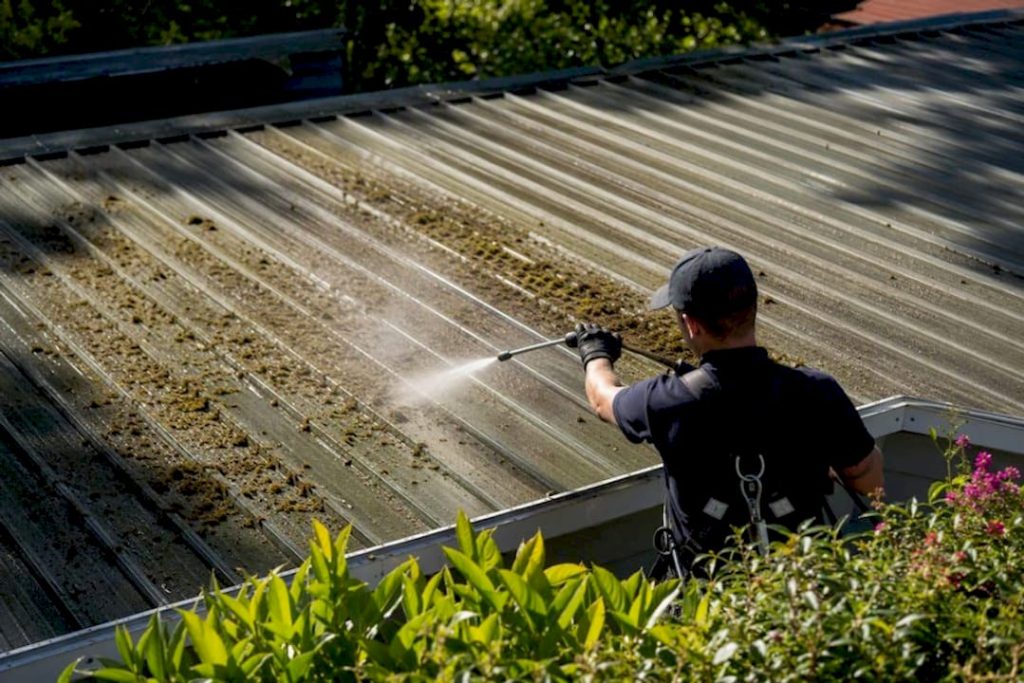
The fix is a soft-wash chemical treatment, not a pressure washer. A 50:50 bleach-and-water mix or an ARMA-compliant commercial product, applied gently and rinsed at garden-hose pressure, clears moss without stripping granules. Skip anything with a wand and PSI rating on asphalt shingles. Once the roof is clean, zinc or copper strips at the ridge keep moss from coming back.
TL;DR:
- Using a soft-wash approach with a 50:50 bleach-and-water mix or an ARMA-compliant product effectively removes moss without damaging shingles, provided it is rinsed at garden-hose pressure.
- Avoid pressure washing entirely, as it strips shingle granules, damages the roof, and voids most asphalt shingle warranties.
- Long-term prevention relies on zinc or copper ridge strips that release trace metals during rain, curbing moss regrowth significantly more than basic cleaning.
- Proper sequencing, including roof inspection, weather timing, and plant protection, is essential for safe and effective moss removal.
- Routine maintenance such as gutter cleaning, branch trimming, and reapplication of biocides or metal strips extends the interval between cleanings and preserves roof health.
Table of Contents
- What Roof Moss Removal Methods Actually Work
- How Do You Safely Soft-Wash Moss Off a Roof?
- Zinc Strips, Pruning, and Other Prevention That Actually Works
- DIY or Call a Professional? Cost and Safety Thresholds
- How E and R Cleaning Solutions Handles Roof Moss
- Why Moss Damages a Roof, Not Just How It Looks
- Keeping Moss From Coming Back Year After Year
- Handling Moss and Chemical Runoff Responsibly
- Author Perspective: The One Step Homeowners Actually Skip
- How E and R Can Help With Your Roof
- Sources
What Roof Moss Removal Methods Actually Work
Three chemical approaches dominate professional and DIY practice, and they differ mostly in speed versus how much they ask of your landscaping. Diluted household bleach (roughly 50:50 with water) is the fastest option and the one This Old House contractor Tom Silva recommends for asphalt shingles, usually clearing visible moss and black streaks within a day or two of rinsing. Sodium percarbonate, the oxygen-bleach alternative, works more slowly but won’t scorch grass or shrubs the way runoff from straight chlorine bleach can. Commercial no-rinse sprays like the apply-and-leave products sold at most hardware stores trade speed for convenience. They kill moss over several weeks without a ladder trip to rinse, which makes them a reasonable pick for light infestations or roofs you’d rather not climb twice.
For moss that’s already dead, dry, and brittle, you often don’t need chemicals at all. A leaf blower on a low setting or a soft-bristle brush pulled downward (never scrubbed side to side) knocks loose clumps free without touching the shingle surface underneath.
Vinegar and dish soap show up in a lot of home remedy roundups, and they do work, just slower and with less staying power against gloeocapsa magma, the blue-green algae responsible for those black streaks. Expect to reapply more often than with a bleach-based wash.
What you should never reach for is a pressure washer. The concentrated stream strips protective granules off asphalt shingles, forces water up under the tabs, and can shorten the roof’s remaining life immediately rather than gradually. It’s also one of the fastest ways to void a shingle manufacturer’s warranty, since most warranty language explicitly excludes damage from high-pressure cleaning.
Quick comparison of your realistic options:
- Diluted bleach soft-wash: fastest results, some landscaping risk if runoff isn’t managed
- Oxygen bleach (sodium percarbonate): slower, gentler on plants and pets
- Commercial no-rinse spray: low effort, best for light coverage, takes weeks to fully work
- Manual removal (blower or soft brush): free and immediate, but only for already-dead moss
- Vinegar and dish soap: gentle and cheap, needs more frequent reapplication
- Pressure washing: avoid entirely on asphalt shingles
How Do You Safely Soft-Wash Moss Off a Roof?
Getting this right is less about the chemical and more about sequencing. Rush the dwell time or skip plant protection and you’ll either undercut the results or damage something you didn’t mean to touch.
Before you climb anything:
- Walk the roof edge from a ladder first and look for granule loss in the gutters, soft spots, or any sign of active leaks, using a roof inspection checklist to guide your evaluation. If you find them, this becomes a repair job before it’s a cleaning job.
- Check the pitch. Anything steeper than a standard walkable roof is a job for a harness or a professional.
- Pick an overcast, calm day. Direct sun makes the bleach solution evaporate before it can work, and wind blows spray onto siding, windows, and neighbors.
Gear up. You’ll want a pump sprayer, a ladder stabilizer, chemical-resistant gloves, eye protection, and shoes with real grip. Keep a leaf blower or soft brush handy for the follow-up step.
Mix and apply. The Oregon State Extension Service and most roofing contractors point to a 50:50 household bleach and water mix as the proven standard, with a small amount of surfactant added per the label to help it cling to shingles instead of running straight off. If you’ve got shrubs or a vegetable garden close to the runoff path, swap in an oxygen bleach product instead. Soak plants below the roofline with plain water first, and cover anything you can’t rinse.
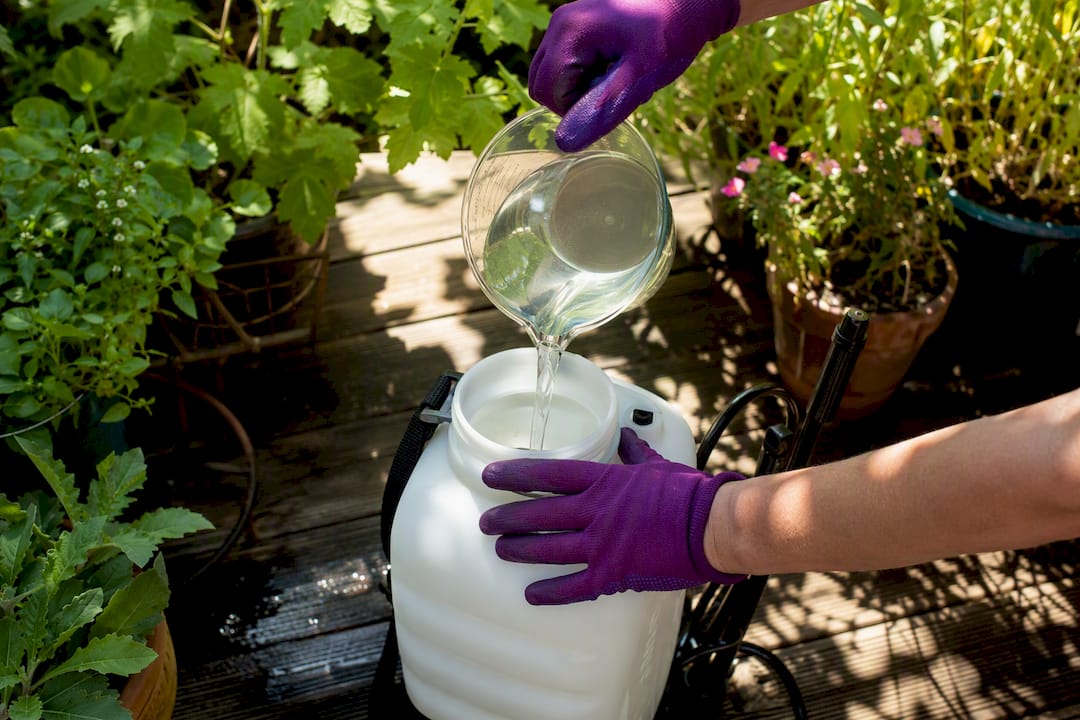
Spray from the ridge down to the eave, saturating the moss fully. Resist the urge to scrub while it’s wet. This is a chemical process, not a scouring one, and scrubbing now just knocks granules loose for nothing.
Wait, then rinse. Give it 24 to 48 hours. Once the moss has visibly loosened, remove the dead clumps by hand or with a soft brush, then rinse the whole roof with regular garden-hose pressure, working ridge to eave again.
Pro Tip: Flush your plant beds with fresh water again after rinsing the roof, and hang onto your product receipt. If a shingle issue ever comes up for warranty review, proof that you used a soft-wash method (not a pressure washer) can matter.
Zinc Strips, Pruning, and Other Prevention That Actually Works
Cleaning a roof without addressing why moss grew there in the first place just buys you a year, maybe two, before you’re back on a ladder. Prevention is the part homeowners skip, and it’s the highest-return move available.
Zinc and copper ridge strips are the single most effective long-term fix. Installed along the ridge, rain washes trace metal ions down the roof slope every time it rains, creating an environment moss and algae can’t tolerate. Copper lasts longer than zinc but costs more upfront; both dramatically stretch the interval between cleanings compared to a roof with no strip at all.
Routine maintenance matters just as much:
- Clear leaf litter and pine needles off the roof surface each fall
- Trim overhanging branches to let sunlight and airflow reach shady sections
- Keep gutters clean so water drains instead of backing up under shingles
- Watch north-facing slopes and valleys closely. They dry slowest and reinfest first
Post-clean biocide products, applied right after your soft-wash and left on the roof, add another layer of protection between full cleanings. They work faster than passive zinc strips but need reapplication and carry more plant-safety tradeoffs, since they’re formulated to keep killing spores rather than rinse off. If you’re planning a full roof replacement anyway, algae-resistant shingles embedded with copper granules are worth pricing out. They cost more upfront but cut down on how often you’ll be having this conversation with your roof again.
DIY or Call a Professional? Cost and Safety Thresholds
Most homeowners can handle a light moss problem on a single-story, low-pitch roof with a weekend and a modest budget for bleach, sprayer, and PPE. Professional soft-wash service runs roughly $300 to $900 depending on square footage and how established the growth is, with zinc strip installation typically adding another $300 to $500 on top.
Call a professional when any of the following apply:
- The roof pitch is steep enough that you’re not comfortable standing on it unassisted
- Lichen has taken hold. It bonds tightly to shingles and usually needs multiple treatments over several weeks, not a single wash
- You’ve spotted granule loss, soft decking, or any active leak
- You just don’t want to be on a ladder with a chemical sprayer, which is a perfectly reasonable line to draw
A legitimate contractor will document the soft-wash method used, carry insurance, control pressure output appropriate for the roofing material, and walk you through prevention options like zinc strips before they pack up.
How E and R Cleaning Solutions Handles Roof Moss
E and R Cleaning Solutions is a family-run operation built around honest pricing and roof-appropriate technique, never a one-size-fits-all pressure blast. Every job starts with an inspection, moves through a documented soft-wash, and wraps with debris clearance and a prevention recommendation, whether that’s zinc strips or a biocide follow-up. Customers consistently point to the same result: stubborn stains and moss gone without shingle damage.
Why Moss Damages a Roof, Not Just How It Looks
Moss isn’t a cosmetic problem you can ignore for aesthetic reasons alone. Its root structure, called rhizoids, holds water against the shingle surface long after the rest of the roof has dried out. That trapped moisture works asphalt shingles from underneath, and contractor guidance is consistent that this moisture exposure shortens a roof’s usable life faster than sun and weathering alone would.
Thick moss mats do something else that’s easy to miss from the ground: they physically lift shingle edges as they grow, creating small gaps where wind-driven rain can get underneath. Once water is under a shingle instead of running over it, you’re looking at deck rot, not just a cleaning job. Ice dams make this worse in cold climates, since moss holds meltwater in place exactly where it can refreeze and push shingles apart.
The black streaks a lot of homeowners assume are dirt are actually a different organism doing similar damage. Gloeocapsa magma feeds on the limestone filler in asphalt shingle granules, and while it’s less structurally destructive than moss in the short term, its presence signals the same moisture retention problem. Roofs with heavy algae staining tend to run hotter in direct sun too, since the dark streaking absorbs more heat than clean shingle surfaces.
None of this happens overnight. But a roof that gets cleaned and protected against regrowth every few years consistently outlasts one that’s left to accumulate moss until it’s visible from the street.
Keeping Moss From Coming Back Year After Year
A single cleaning plus zinc strips solves most of the problem, but a few habits stretch that protection even further. Walk the roofline twice a year, once in spring and once in fall, and look specifically at north-facing slopes, valleys, and anywhere a chimney or dormer creates shade. These spots dry slowest and are almost always where regrowth starts first.
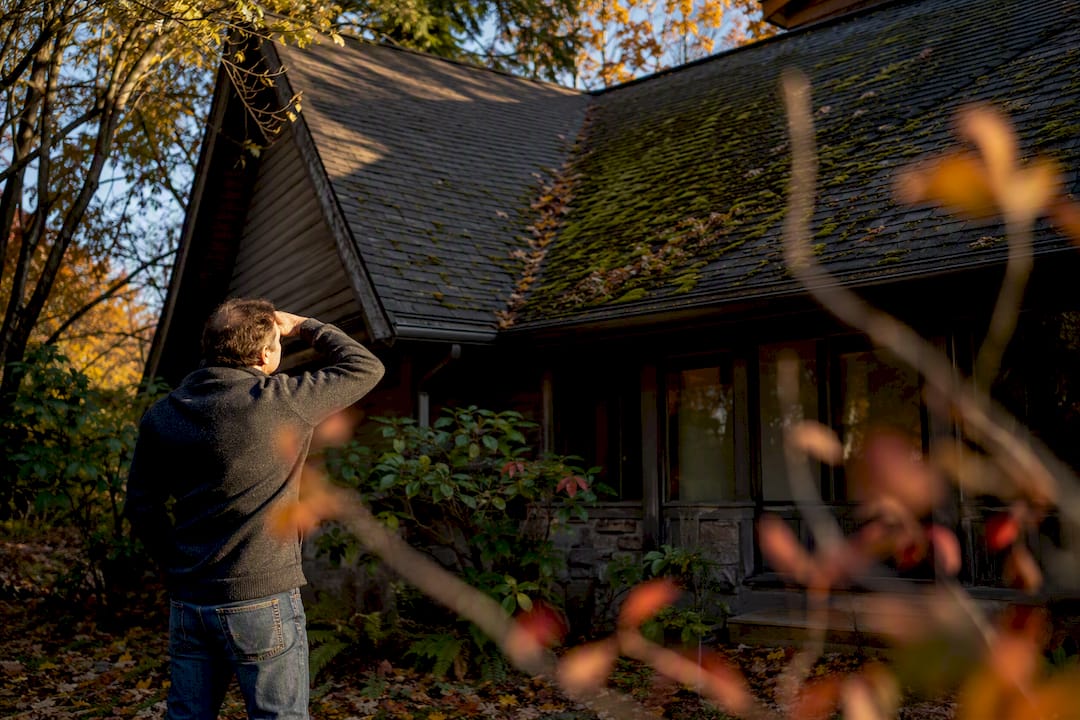
Keep gutters and valleys physically clear of debris year round, not just during your fall cleanup. A gutter clogged with wet leaves keeps the roof edge damp for weeks longer than it should be, and that damp edge is exactly where new moss colonies establish.
If you had trees trimmed back during your initial cleaning, check that regrowth hasn’t closed the gap again within a couple of seasons. Canopy grows back faster than most homeowners expect, and shade is the single biggest driver of reinfestation.
Rinse zinc or copper strips gently when you clean gutters, since a light coating of debris on the strip itself slows the metal-ion runoff that’s doing the preventive work. And if you used a post-clean biocide, mark your calendar for reapplication. These products lose effectiveness gradually rather than all at once, so it’s easy to assume they’re still working long after they’ve stopped.
Track what you did and when: cleaning date, product used, strip installation. That record makes the next cleaning faster to plan and gives you something concrete if a warranty question ever comes up.
Handling Moss and Chemical Runoff Responsibly
What goes down your gutters after a roof cleaning doesn’t just disappear. It runs into storm drains, yards, and in many areas, directly toward local waterways, which is why plant and runoff protection isn’t an optional courtesy step.
Before applying any bleach-based or oxygen-bleach solution, soak nearby plant beds with plain water and cover anything particularly sensitive. Municipal guidance from Clean Water Services recommends timing applications for dry, calm weather specifically so runoff doesn’t wash untreated chemical straight into storm drains before it’s had a chance to break down on the roof surface.
Dead moss itself is organic waste and safe to compost or bag with yard debris, no special handling required. The chemical concentrate is the part that needs care. Unused bleach or oxygen bleach solution should never go down a storm drain; small leftover amounts can typically go down an indoor sink drain connected to a municipal sewer system, following label instructions, since that wastewater gets treated before release. Empty containers should be rinsed and disposed of or recycled according to local guidelines rather than left where runoff could reach them.
If you’re using a professional soft-wash service, ask how they manage runoff and whether their product breaks down quickly in the environment. A contractor with a documented, low-impact process is protecting your landscaping and your local watershed at the same time.
Author Perspective: The One Step Homeowners Actually Skip
Soft-wash plus prevention beats every other approach, and the data backs that up consistently. But if you take one thing from this: don’t clean and walk away. Do three things now: inspect the roof for damage, protect nearby plants before you spray anything, and either pick a calm day for DIY or call a professional if the pitch or growth makes you uneasy. Keep your receipts. Warranty questions come up years later, and documentation is the only thing that settles them.
— Richard
How E and R Can Help With Your Roof
E and R Cleaning Solutions gives you a documented, warranty-safe alternative to gambling on a rental pressure washer or a weekend of ladder work you’d rather skip. Our roof-safe soft-wash process pairs with zinc strip installation, gutter cleanup, and post-clean reporting, so you get proof of method alongside the results.

We’re a family-run crew that prices honestly and treats every roof like it’s the only one on the schedule that day, which is part of why customers keep coming back for repeat exterior work. If moss, algae, or black streaks have taken hold and you’d rather not spend a weekend on a ladder with a bleach sprayer, our soft-washing process for exteriors covers roofs alongside siding and hard surfaces. Request a quote and we’ll walk your roof, tell you honestly whether it needs a full treatment or just prevention, and get you scheduled.
Sources
- How to Get Algae and Moss Off the Roof – This Old House
- How to remove moss from my roof? | Oregon State Extension Service
- How to Remove Moss from a Roof Safely | The Roofing Brief
- ROOF MOSS CONTROL | Clean Water Services (PDF)