Homeowners: Make a Slippery Patio Safe Without Undiluted Bleach
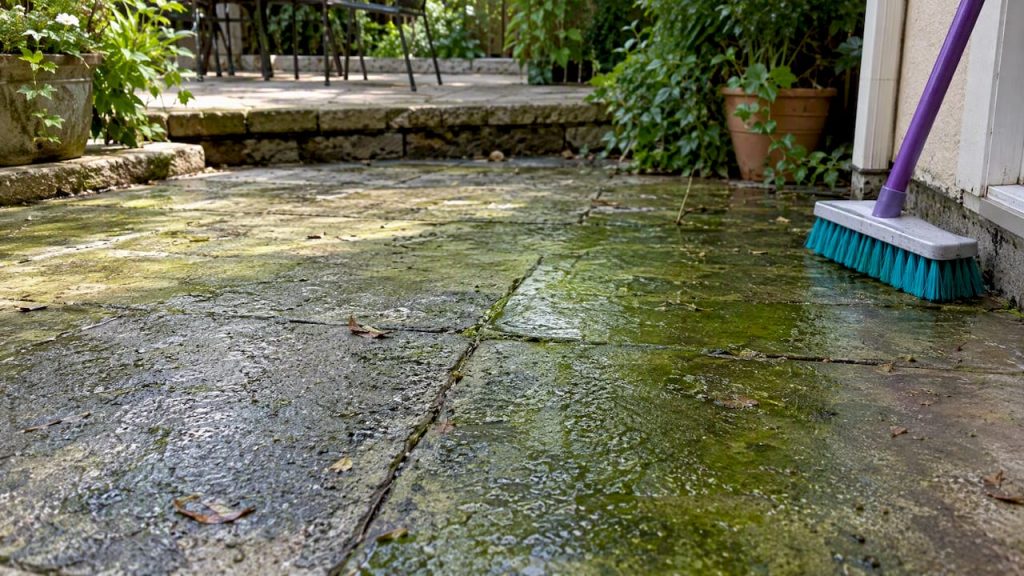
The fastest safe way to clear slippery algae from a patio is to scrape or brush off loose growth, then treat the surface with a labeled oxygen-based cleaner, or book a professional soft wash for porous stone. Skip undiluted chlorine bleach on pavers and natural stone since it can etch the surface and harm nearby plants. Once the slip hazard is gone, fix the moisture and shade problems causing the growth, and call a pro if the patio is large, porous, or keeps turning green within weeks.
TL;DR:
- Algae forms a slick film that smears, moss grows in fuzzy tufts, and dark powdery stains may indicate mildew or fungus.
- After removing loose growth, use an oxygen based cleaner as labeled, test a hidden patch, rinse thoroughly, and keep runoff away from plants and drains.
- Shaded, poorly drained patios in humid climates may turn slippery again within weeks, while sunny, well drained surfaces may stay clear for months.
- Consider a professional for porous stone, large patios, fall risks, or regrowth within a month or two; cleaning costs $0.10 to $0.50 per square foot.
- Improve drainage, trim overhanging branches, and sweep away leaves; patios exposed to shade and moisture generally need annual washing and spot cleaning after major storms.
Table of Contents
- Algae, moss, or mildew: how to tell what’s on your patio
- Why patios turn slippery and how fast algae comes back
- Step-by-step: removal methods from gentle to aggressive
- When a slippery patio needs a professional instead of a DIY fix
- Prevention checklist: keep algae from coming back
- Practical field tips from E and R Cleaning Solutions
- A family-run view on patio safety
- How we help with algae removal and patio care
- FAQ
- Sources
- Authoritative labels and guidance to consult
Algae, moss, or mildew: how to tell what’s on your patio
Treating the wrong organism wastes time and can damage your surface, so a quick look tells you what you’re dealing with before you grab a brush.
Algae forms a thin, slick, green or blackish-green film that smears when you drag a finger across it. It thrives in shaded, damp spots and is usually the culprit behind a surface that feels greasy underfoot. Moss looks different: fuzzy green tufts that grow upward, usually rooted in mortar joints or small cracks rather than spread flat across the surface. Mildew and black spot fungus show up as darker, sometimes powdery stains, often in corners or under furniture where airflow is poor.
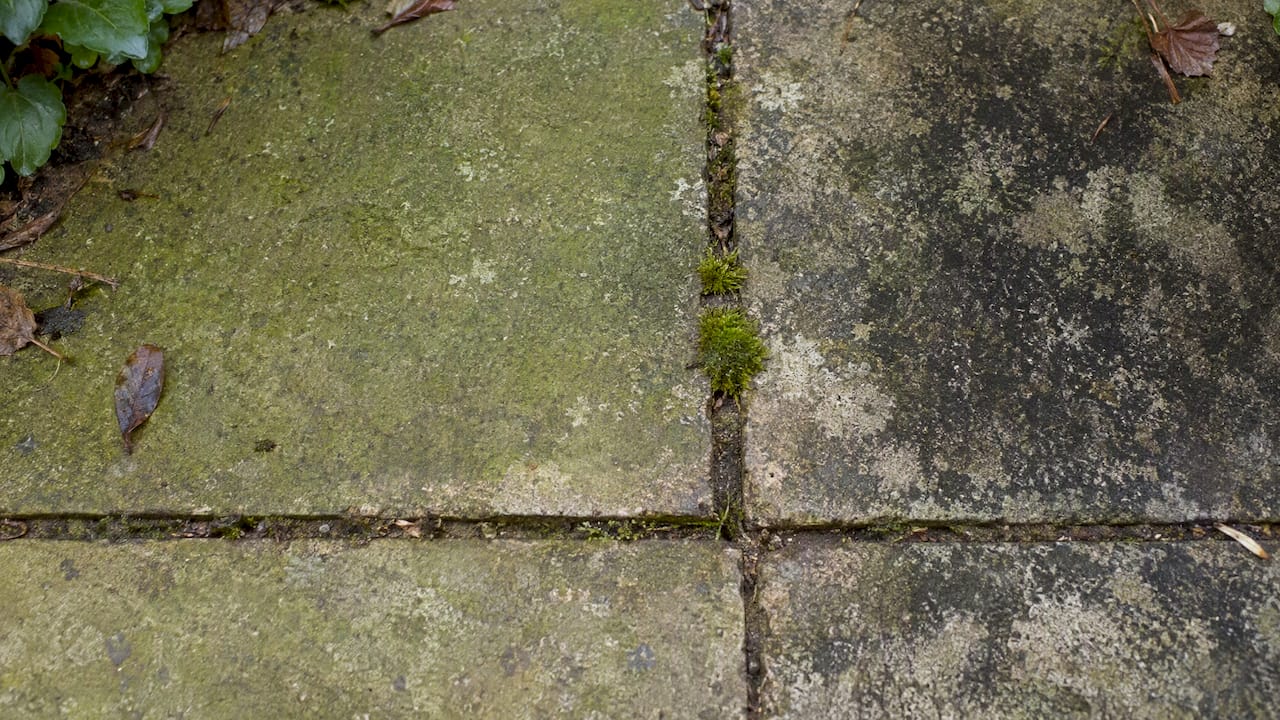
The patio material also changes your approach. Porous materials like natural flagstone, old concrete, or unsealed pavers let algae roots and staining pigments sink into the surface, which makes them harder to fully clear. Smooth, sealed concrete or dense pavers rinse clean more easily because there’s less surface area for growth to grip.
A few quick field checks help confirm what you’re facing:
- Wet the area and smear a small patch; algae feels slippery and spreads thin, while moss stays clumped.
- Spot-scrub a small section with a stiff brush; if color lifts easily, it’s likely surface-level algae rather than embedded staining.
- Check shaded, low-traffic corners first, since that’s where algae and mildew establish before spreading to open areas.
Why patios turn slippery and how fast algae comes back
Algae needs moisture, shade, and a food source, and most patios supply all three without you noticing. Standing water after rain, overhanging trees that block sun, and organic debris like leaves or grass clippings all feed the growth, while nutrient-rich runoff from nearby lawns or gutters adds fuel. EPA guidance on harmful algal bloom prevention](https://www.epa.gov/habs/preventative-measures-cyanobacterial-habs-surface-water). The same logic applies at patio scale: cut off the water and nutrients, and regrowth slows.
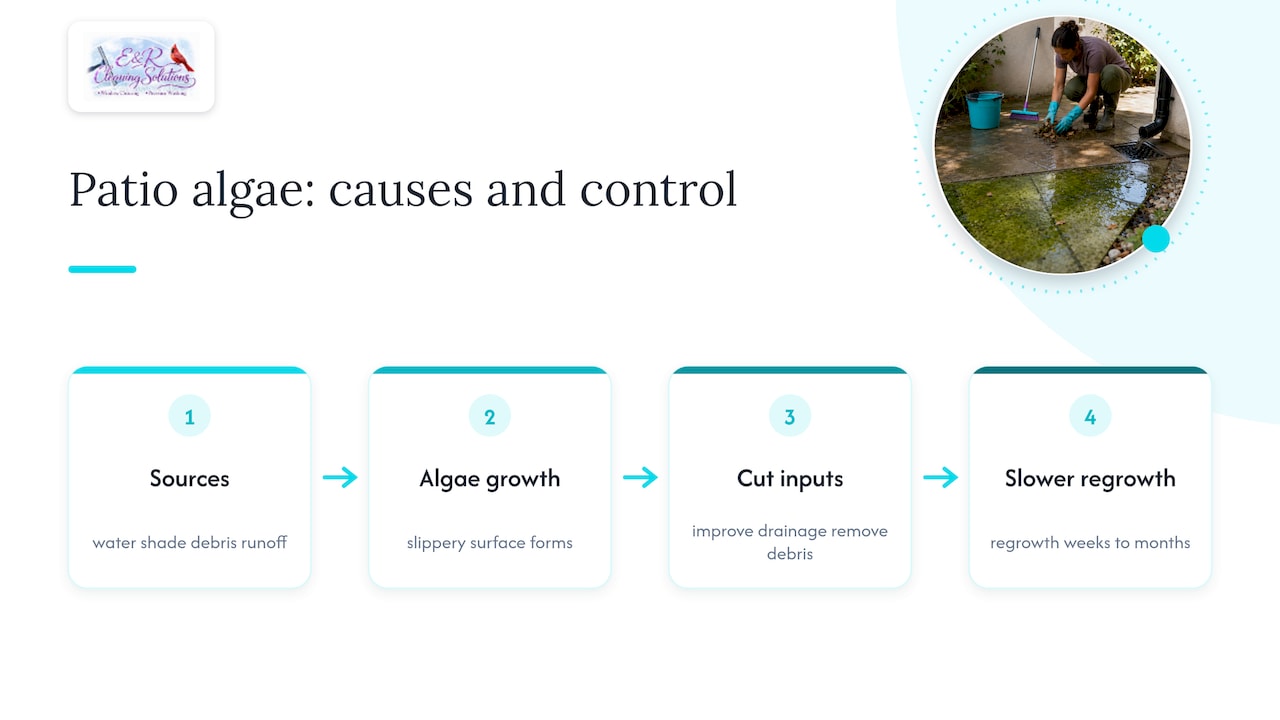
Regrowth timing depends heavily on local conditions. A shaded, poorly drained patio in a humid climate can turn slippery again within weeks of cleaning, while a sunny, well-drained surface might stay clear for months. That timeline is your guide for how often to inspect and re-treat.
Step-by-step: removal methods from gentle to aggressive
Start with the least aggressive method that works for your surface, such as tile and grout cleaning techniques, since over-treating a patio can cause more damage than the algae itself.
- Clear debris first. Sweep off leaves, dirt, and loose organic matter, then rinse with a garden hose to see what you’re actually working with.
- Scrub with an oxygen-based cleaner. Mix an oxygenated bleach product per the label, apply it to the damp surface, and let it dwell for the time stated on the package before scrubbing with a stiff-bristle brush. Homeowner cleaning guidance recommends oxygenated bleach over straight chlorine bleach for many patio materials because it lifts algae without the same etching or plant-damage risk.
- Rinse thoroughly. Flush the area with clean water, directing runoff away from garden beds, storm drains, and grass.
- Step up to a labeled algaecide or soft wash if algae persists. Products like Safer® Brand Moss and Algae Killer are labeled for use on decks, patios, and walkways, and the label itself warns that treated areas may be temporarily slippery and that residue on cement or brick can often be removed with vinegar. Always follow label directions for dilution, application, and runoff containment.
- Use a pressure washer only when needed, and match PSI to the surface. Homeowner and contractor sources suggest using a soft wash with low pressure for delicate materials like wood or flagstone, while more durable surfaces such as concrete and pavers can tolerate higher pressure levels, but care must be taken to avoid damage. A wide fan nozzle held farther from the surface reduces the risk of gouging or stripping mortar joints.
Throughout, protect nearby plants by rinsing foliage with plain water before and after treatment, keep runoff away from storm drains, and wear gloves and eye protection when handling concentrated cleaners.
Pro Tip: Test any cleaner or pressure setting on a small, hidden patch first. What’s safe on sealed concrete can strip or etch softer natural stone.
When a slippery patio needs a professional instead of a DIY fix
DIY scrubbing handles light, surface-level algae well, but some situations call for professional equipment and judgment. Porous natural stone, patios that regrow algae within a month or two of cleaning, large square footage, or any surface where a fall risk is high are good reasons to bring in a pro rather than keep re-treating by hand.
A typical professional visit includes:
- An assessment of the surface material and a small test patch before full treatment.
- A soft wash or controlled pressure wash matched to the patio’s material and condition.
- Runoff containment near drains, lawns, and garden beds.
- An optional breathable sealer applied after cleaning to slow future regrowth.
Cost depends on surface type, square footage, and how severe the growth is; patio cleaning pricing typically runs $0.10 to $0.50 per square foot depending on those factors. When comparing quotes, ask about insurance, any workmanship warranty, and references, and treat a quote that skips surface assessment or runoff planning as a red flag.
Prevention checklist: keep algae from coming back
Cleaning solves the immediate problem, but a few ongoing habits keep the patio from turning slippery again.
- Fix drainage first. Regrade low spots, clear debris from joints, and make sure water doesn’t pool after rain.
- Let in more light and air. Trim overhanging branches and shrubs so the surface dries faster between rains.
- Clear debris regularly. Leaves, grass clippings, and dirt all feed algae, so a quick sweep after storms goes a long way.
- Seal porous surfaces correctly. Choose a breathable sealer rated for your specific material and reapply on the schedule the label recommends; skipping this step on porous flagstone or older pavers often means faster re-staining and quicker algae return.
- Set a maintenance rhythm. A once-a-year wash is usually enough for patios prone to shade and moisture, with spot cleaning after major storms.
Pro Tip: If your patio sits under tree cover year-round, treat annual washing as routine maintenance rather than a one-time fix. For related drainage and spread issues on rental or managed properties, see how algae spreads on rental properties.
Practical field tips from E and R Cleaning Solutions
A small test patch and correct dilution matter more than most homeowners expect. Running a cleaner too strong, or a pressure washer too high, can etch soft stone or strip mortar before you even notice algae lifting.
On jobs we approach with care, the checklist stays simple:
- Protect plants and lawn areas before any chemical goes down.
- Contain or divert runoff away from drains and garden beds.
- Match PSI to the material, not just the stain.
- Rinse thoroughly, and neutralize if the product label calls for it.
- Consider a sealer once the surface is fully dry and clean.
The most common homeowner mistakes we see are straight chlorine bleach on pavers, pressure settings too high for soft stone, and skipping runoff protection entirely, which can damage landscaping or violate local drainage rules.
A family-run view on patio safety
We favor soft washing and plant-safe products on delicate materials because a cosmetic quick fix that damages stone or kills landscaping isn’t a win. Long-term surface care and a reader’s safety matter more than speed.
— Richard
How we help with algae removal and patio care
If you’d rather hand the job to a pro, we offer pressure washing and patio cleaning services built around honest pricing and careful, surface-appropriate technique, whether you’re a homeowner or managing a rental property.

A typical visit starts with us assessing your patio’s material and growth pattern, testing a small area, then choosing between a soft wash or a controlled pressure wash based on what the surface can handle. We protect plants and contain runoff throughout, and we can walk you through optional sealing to slow regrowth.
What you can expect working with us:
- A team focused on transparent, upfront pricing.
- Pressure washing and soft washing suited to your patio material.
- Careful handling around landscaping, drains, and delicate surfaces.
- Flexible scheduling for one-time cleanups or recurring maintenance.
If your patio has turned slippery and you’d rather skip the trial and error, request a quote from our team and we’ll tell you what your surface actually needs.
FAQ
How do I kill algae on my patio?
Scrub the surface with an oxygenated bleach cleaner and a stiff brush, letting it dwell per the label before rinsing thoroughly. For stubborn or recurring growth, a labeled algaecide such as Safer® Brand Moss and Algae Killer or a professional soft wash reaches algae rooted deeper in porous stone.
Does Dawn soap kill algae?
Dish soap can help loosen light surface grime and make scrubbing easier, but it isn’t a labeled algaecide and won’t reliably kill algae growing in porous stone pores. For real control, use an oxygen-based cleaner or a product specifically labeled for moss and algae.
How do I get rid of a slippery patio?
Brush or scrape off loose growth, then treat with an oxygen-based cleaner or a labeled algaecide, rinsing thoroughly afterward. If the patio is porous stone or keeps regrowing algae quickly, a professional soft wash handles embedded growth more completely than surface scrubbing alone.
What is the best patio green algae remover?
For many patio materials, an oxygenated bleach cleaner paired with brushing is the safer starting point since it lifts algae without the etching risk of straight chlorine bleach.
Sources
- U.S. EPA, Pesticide Product Label, SAFER MOSS AND ALGAE ATTACK CONCENTRATE, 09/16/2002
- U.S. EPA, Preventative measures for cyanobacterial HABs in surface water
- BobVila – How to get rid of moss on patio
- Wildflower Center expert cautions on DIY chemical use
Authoritative labels and guidance to consult
For readers who want to verify label directions or prevention principles directly, these sources back the guidance above:
- U.S. EPA, Pesticide Product Label, SAFER MOSS AND ALGAE ATTACK CONCENTRATE
- U.S. EPA, Preventative measures for cyanobacterial HABs in surface water
- Wildflower Center expert cautions on DIY chemical use
- BobVila, How to get rid of moss on patio