
Window Cleaning Tools Homeowners Need for Streak-Free Results
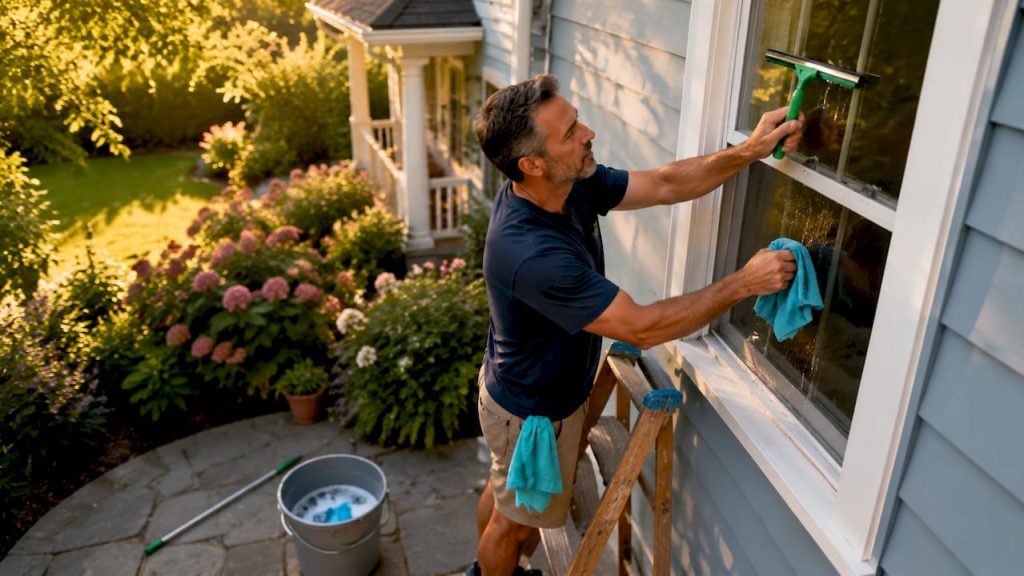
A quality squeegee, microfiber cloth, and telescopic pole are the three window cleaning tools homeowners need most to achieve streak-free results without risking injury. Professional window cleaners have used this same core kit for decades because the physics are simple: a rubber blade removes water in one pass, microfiber lifts residue without lint, and a pole keeps your feet on the ground. The International Window Cleaning Association recognizes proper tool selection and technique as the foundation of safe residential cleaning. Get those two things right, and clean windows stop being a frustrating chore.
What are the must-have window cleaning tools homeowners need?
Every effective window cleaning kit starts with four items: a squeegee, a scrubber or applicator, microfiber cloths, and a bucket with a gentle cleaning solution. Each tool has a specific job, and skipping one creates the streak or smear you were trying to avoid.
Squeegees and rubber blades
The squeegee is the single most important tool in any residential window cleaning kit. A good squeegee has a replaceable rubber blade, a comfortable handle, and a channel width matched to your window size. Narrow squeegees (8–10 inches) work well on small panes and divided-light windows. Wider models (14–18 inches) cover large picture windows faster. The rubber blade does all the real work, so its condition matters more than the handle material or brand.
Microfiber cloths
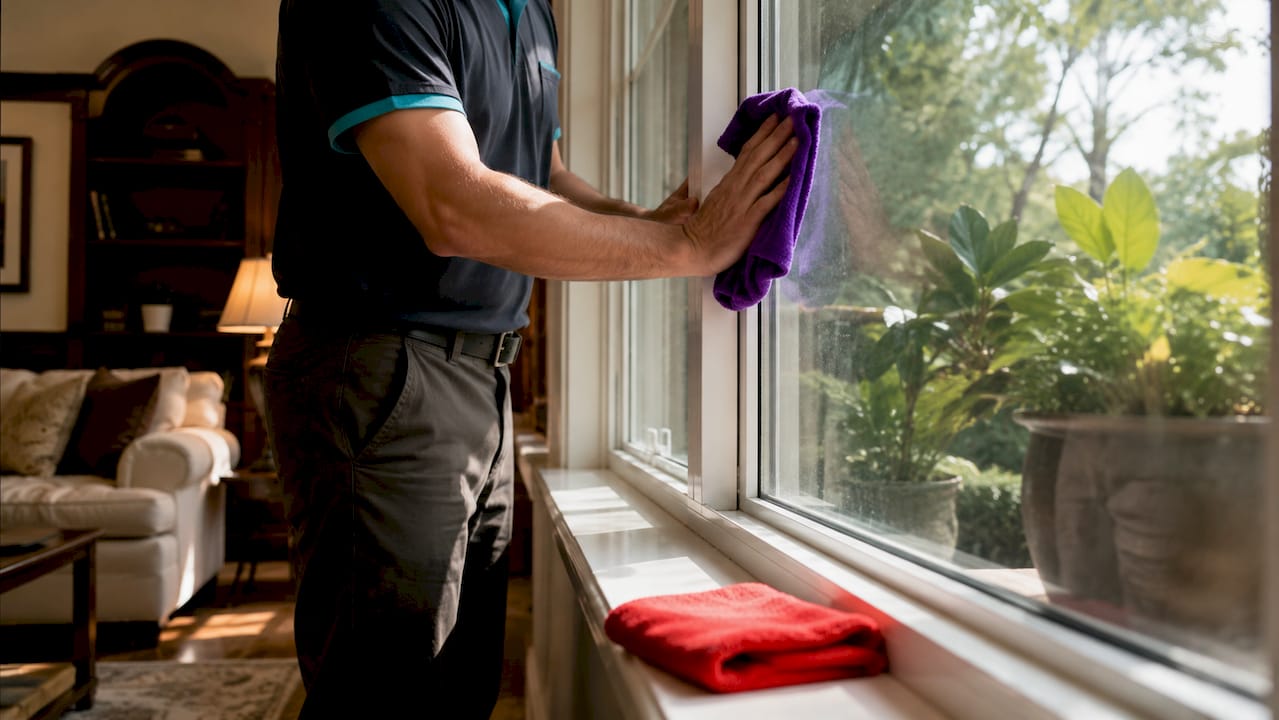
Paper towels and newspapers leave lint and static on glass, which attracts more dust within hours of cleaning. Microfiber cloths provide a lint-free finish and are the professional standard for wiping edges and corners after each squeegee pass. Keep at least four cloths per session so you always have a dry one ready.
Telescopic poles and scrubbers
A telescopic pole extends your reach to upper-floor windows without a ladder. Most homeowner-grade poles extend to 8–12 feet and accept standard squeegee and scrubber attachments. The scrubber or T-bar applicator soaks the glass with cleaning solution before the squeegee removes it. Without a scrubber, you end up using too much solution and too many passes.
Cleaning solution
Dish soap diluted with hot water is the most effective homemade cleaning solution for glass. The key measurement is a nickel-sized drop per gallon of water. More soap than that leaves a sticky film that dries into streaks. Technique outweighs product choice every time.
| Tool | Purpose | Key feature to look for |
|---|---|---|
| Squeegee | Removes water and solution in one pass | Replaceable rubber blade, matched width |
| Scrubber/T-bar | Applies and agitates cleaning solution | Absorbent sleeve, fits your pole |
| Microfiber cloths | Wipes edges and absorbs drips | Lint-free, at least 16×16 inches |
| Telescopic pole | Extends reach safely | Locks firmly, accepts standard fittings |
| Bucket | Holds solution and rinses scrubber | Wide enough for your scrubber width |
Pro Tip: Match your squeegee width to the widest section of your most common window pane. A squeegee that is too wide forces awkward angles and leaves water in the corners.
How to safely prepare and execute window cleaning
Safety is the first step in any window cleaning process, not an afterthought. Ladder-related falls are a leading cause of household injuries, and if a ladder taller than six feet is needed, a water-fed telescopic pole is the safer alternative. That single swap eliminates the most common cause of serious injury during residential window cleaning.
Safety warning: Many homeowner injuries from window cleaning are not covered by insurance if safety protocols are not followed. Insurance gaps often exclude ladder-related accidents during DIY cleaning. For any window above the first floor, use a telescopic pole or hire a professional.
Step-by-step cleaning process
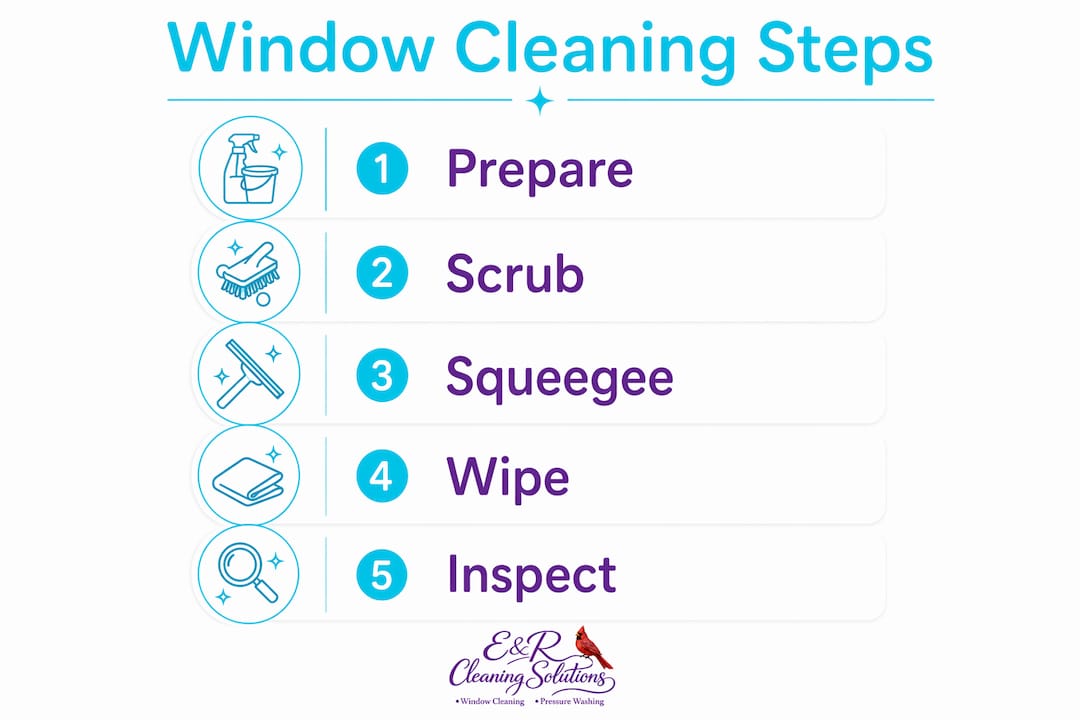
- Dust the frame and sill. Use a dry microfiber cloth or soft brush to remove loose dirt before any liquid touches the glass. Wet dirt turns to mud and smears.
- Mix your solution. Add a nickel-sized drop of dish soap to a gallon of hot water. Do not add more, even if the glass looks heavily soiled.
- Apply solution with the scrubber. Work top to bottom, covering the full pane. Let the solution sit for 10–15 seconds on stubborn spots.
- Squeegee from top to bottom. Start at the top corner, pull across in a slight arc, and overlap each pass by about an inch. Work quickly before the solution starts to dry.
- Tap and wipe the blade. Lightly tap the squeegee on a clean pane after each pass to remove excess water, then wipe the blade with a dry microfiber cloth before the next stroke.
- Detail the edges. Use a dry microfiber cloth to catch any drips along the frame and corners. This step prevents the border streaks that make an otherwise clean window look unfinished.
- Check in natural light. Step back and view the glass at an angle. Any remaining streaks show up immediately and can be buffed out with a dry cloth.
Cleaning windows on cloudy days or in the shade prevents the solution from drying too fast. Direct sunlight bakes soap residue onto the glass before you can squeegee it off, which is the most common cause of streaks on sunny days.
Pro Tip: Clean the inside of your windows first. You will be able to see which side any remaining streaks are on when you check your work from inside the room.
What mistakes cause streaks, and how do you fix them?
Most window streaks trace back to one of three causes: too much soap, a worn rubber blade, or letting the solution dry before squeegeeing. Fixing streaks is straightforward once you know which cause you are dealing with.
Too much soap
Excess soap is the biggest single cause of streaks. A nickel-sized amount per gallon is all the lubrication a squeegee blade needs. If you see a filmy residue after the glass dries, the solution was too concentrated. Rinse the glass with plain water and squeegee again.
Worn rubber blades
Squeegee rubber blades wear out with use and should be replaced after every 24–48 hours of heavy cleaning. A worn blade develops nicks and a rounded edge that skips across the glass instead of cutting cleanly through the water. You will see parallel streaks running in the direction of your squeegee pass. Replace the blade and the problem disappears immediately.
Pressure washers on glass
Pressure washers damage window seals, causing permanent fogging between double-pane units. Replacement costs for broken window units run from $400 to $800 per unit. That is an expensive lesson for a job a squeegee and bucket handle just as well.
Quick troubleshooting checklist:
- Streaks running in squeegee direction: replace the rubber blade
- Filmy residue after drying: reduce soap concentration
- Streaks at edges only: wipe blade and detail corners with microfiber after each pass
- Spots appearing after drying: solution dried before squeegeeing; clean in shade or on a cloudy day
- Foggy appearance between panes: seal damage, not a cleaning issue; contact a glazier
Pro Tip: Run your fingertip along a dried streak. If it feels slightly sticky, excess soap is the cause. If it feels smooth, the blade needs replacing.
How do you choose the right window cleaning kit for your home?
The right kit depends on your home’s height, the number of windows, and how often you clean. A single-story home with standard windows needs a basic kit. A two-story or larger home needs a water-fed pole system to stay safe.
Water-fed pole systems cost $50–$150 for homeowner-level models and up to $1,000 for commercial-grade units. These systems use purified water, which eliminates the need for detergents and leaves glass streak-free as it dries. For homeowners who clean windows more than twice a year, the investment pays back quickly in time and safety.
| Kit category | Best for | Typical cost | Key limitation |
|---|---|---|---|
| Basic squeegee kit | Single-story, 1–2 times per year | $20–$50 | Limited reach |
| Telescopic pole kit | Two-story, regular cleaning | $50–$120 | Requires technique |
| Water-fed pole system | Multi-story, frequent cleaning | $50–$150+ | Higher upfront cost |
| Professional service | High-risk or hard-to-reach windows | Varies | Ongoing expense |
For most homeowners, a mid-range telescopic pole kit with a quality squeegee, two scrubber sleeves, and a pack of microfiber cloths covers every window in the house safely. Check the window cleaning frequency guide to decide how often your home actually needs cleaning, since that affects which kit level makes sense for your budget.
Prioritize blade quality over handle aesthetics. A $15 squeegee with a replaceable rubber blade outperforms a $40 model with a fixed blade every time. The same logic applies to microfiber cloths: buy a pack of at least eight so you always have dry ones available mid-job.
Key Takeaways
The most effective window cleaning kit for homeowners combines a quality squeegee with a replaceable blade, microfiber cloths, a telescopic pole, and a diluted dish soap solution used in the right sequence and conditions.
| Point | Details |
|---|---|
| Squeegee blade condition | Replace rubber blades after 24–48 hours of use to prevent streaks from worn edges. |
| Soap concentration | Use only a nickel-sized drop per gallon; excess soap is the leading cause of streaks. |
| Safety first | Use a telescopic pole instead of a ladder for any window above the first floor. |
| Timing matters | Clean in shade or on cloudy days to stop solution drying before you can squeegee it off. |
| Pressure washers damage glass | High-pressure water destroys window seals, leading to $400–$800 replacement costs. |
What I have learned after years of watching homeowners clean windows
The gap between a streaky window and a clean one almost never comes down to the product. It comes down to blade condition and soap concentration, every single time. I have seen homeowners spend $40 on specialty glass cleaners and still end up with streaks because they used a worn blade or doubled the soap dose. Meanwhile, a $12 squeegee with a fresh blade and a bucket of diluted dish soap produces results that look professional.
The safety piece is where I push back hardest on the DIY instinct. Ladders on uneven ground, on wet grass, or leaned against a window frame are genuinely dangerous. The residential window cleaning process for upper-floor windows is not complicated, but it does require the right equipment. A telescopic pole is not a luxury. For a two-story home, it is the only responsible choice.
My honest advice: spend your money on a quality squeegee with replaceable blades and a solid telescopic pole. Everything else is secondary. Once you have those two tools and you understand the sequence, clean windows take less time than most homeowners expect. The technique clicks fast, and the results are immediately obvious.
— Richard
Window cleaning help from E and R Cleaning Solutions
E and R Cleaning Solutions has spent over five years helping homeowners get streak-free windows safely and efficiently. The team handles everything from standard residential windows to hard-to-reach upper floors, removing stubborn stains and hard water marks that DIY kits struggle with.

For homeowners who want professional results without the risk, E and R Cleaning Solutions offers transparent pricing and a customer-first approach on every job. Read the full homeowner’s window cleaning guide to see exactly how the process works, or reach out directly to get a quote for your property.
FAQ
What tools do homeowners need for streak-free windows?
A squeegee with a fresh rubber blade, microfiber cloths, a scrubber, and a diluted dish soap solution are the core tools. Technique and timing matter as much as the equipment itself.
How often should homeowners clean their windows?
Most homes benefit from cleaning at least twice a year, with more frequent cleaning in harsh or dusty environments. The right cleaning frequency depends on your location and window exposure.
Is it safe to use a pressure washer on windows?
Pressure washers should never be used on windows. High-pressure water damages seals on double-pane units, causing permanent fogging that costs $400–$800 per unit to fix.
What causes streaks after cleaning windows?
Streaks come from three main causes: too much soap in the solution, a worn squeegee blade, or letting the cleaning solution dry before squeegeeing. Reducing soap concentration and replacing the blade solves most streak problems immediately.
When is it better to hire a professional window cleaner?
Hire a professional for any window that requires a ladder taller than six feet, or when the property has uneven ground, steep rooflines, or hard water staining that standard tools cannot remove. DIY ladder accidents are often not covered by homeowner insurance.