
Window Cleaning Frequency Home Guide for 2026

Window cleaning frequency for a home is defined by two variables: environment and exposure. Interior windows need cleaning every 4–6 months, while exterior windows require attention 1–4 times per year depending on where you live. Southern Living recommends cleaning all window parts at least twice annually, typically in spring and fall, as a baseline for most homeowners. Getting the schedule right protects your glass, preserves your view, and prevents the kind of buildup that shortens window lifespan.
How does window cleaning frequency change by environment?
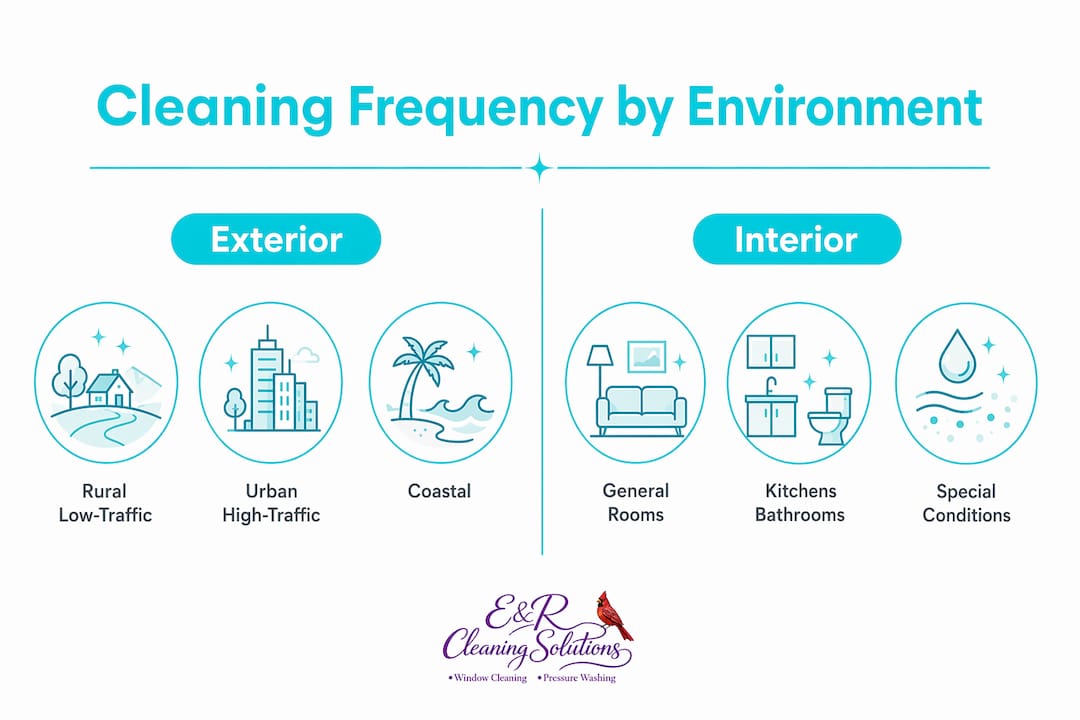
Your environment is the single biggest factor in how often you clean. A home near a busy highway collects traffic film and exhaust residue far faster than a rural property surrounded by fields. Windows near busy roads require cleaning every 1–2 months due to pollution and traffic film, while coastal homes often need monthly cleaning because of salt spray. Salt air is especially aggressive. It bonds to glass and frames, and if left untreated, it etches the surface over time.
Urban, rural, and coastal homes each follow a different window maintenance frequency. The table below gives a practical starting point for setting your cleaning schedule.
| Environment | Exterior cleaning frequency | Interior cleaning frequency |
|---|---|---|
| Rural or low-traffic suburban | 2 times per year | Every 4–6 months |
| Urban or near busy roads | Every 1–2 months | Every 2–3 months |
| Coastal or high salt air | Monthly | Every 2–3 months |
| High pollen or dusty region | Every 6–8 weeks in season | Every 4–6 months |
Window orientation also matters more than most homeowners realize. South-facing windows collect more UV-baked grime and insect residue than north-facing ones. North-facing windows stay cleaner longer but are more prone to moisture and mold buildup in humid climates.
Local weather patterns shift your schedule too. Heavy rain can rinse light dust off exterior glass, but it also deposits mineral-rich water that dries into spots. Wind carries pollen, dust, and debris that cling to wet glass. After a major storm, an unscheduled rinse is worth the effort.
- Coastal homes: clean exterior windows monthly
- Urban homes near roads: clean every 1–2 months
- Suburban or rural homes: clean exterior 2–4 times per year
- High pollen zones: add a targeted clean during peak pollen season (typically march through may)
Pro Tip: After any major storm or high-wind event, do a quick exterior rinse with a garden hose. It takes five minutes and prevents dried debris from bonding to the glass.
What is the best window cleaning frequency for interior and exterior glass?
Invisible Glass recommends separate schedules for indoor and outdoor windows because they face entirely different conditions. Exterior glass battles weather, pollution, and biological growth. Interior glass collects dust, fingerprints, cooking grease, and humidity residue. Treating them the same way leads to either over-cleaning or neglect.
Here is a practical window cleaning schedule broken down by room and window type:
- Living room and bedroom windows (interior): Clean every 4–6 months. These rooms have low humidity and minimal grease, so buildup is slow.
- Kitchen windows (interior): Clean every 1–2 months. Cooking produces grease vapor that coats glass quickly. Left too long, it turns into a sticky film that requires more effort to remove.
- Bathroom windows (interior): High humidity areas like bathrooms require monthly cleaning to prevent fogging, mold, and mineral stains. The combination of steam and hard water creates a cloudy film that worsens with each shower.
- Standard exterior windows: Clean 2–4 times per year. Spring and fall are the most effective times because you clear winter grime before summer and remove pollen and debris before cold weather sets in.
- Exterior windows near trees or sprinklers: Clean every 4–6 weeks during active seasons. Tree sap and sprinkler mineral deposits are among the hardest residues to remove once they dry and bake onto the glass.
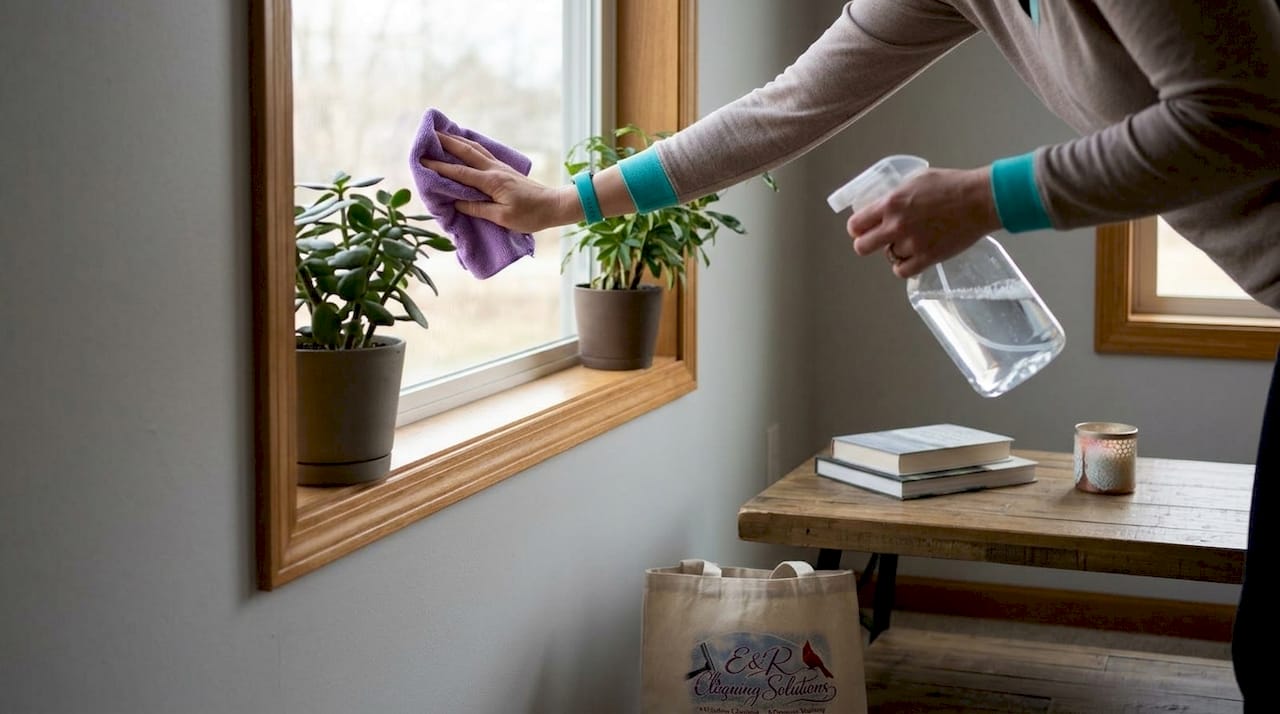
Light monthly touch-ups between deep cleans maintain clarity by preventing buildup from pollen, dust, and humidity. A quick wipe with a microfiber cloth or a light rinse takes less than ten minutes per window and extends the time between full cleans significantly.
Pro Tip: Keep a spray bottle of diluted white vinegar and a clean microfiber cloth near your most-used windows. A 60-second wipe every few weeks prevents the kind of buildup that turns a simple clean into a two-hour job.
Why does frame and drainage maintenance belong in your cleaning schedule?
Most homeowners focus entirely on the glass and ignore the frames, drainage holes, and seals. That is a mistake. Quarterly washing of frames, drainage holes, and vents is crucial to prevent buildup and prolong window life, especially in urban and coastal areas. Blocked drainage holes trap water inside the frame, which accelerates rot in wood frames and causes mold in uPVC frames.
Frames collect their own layer of grime, separate from the glass. Dirt, algae, and oxidation build up on the frame surface and eventually transfer back onto clean glass during rain. Cleaning the glass without cleaning the frame is like mopping a floor without cleaning the baseboards.
Common mistakes homeowners make with frame maintenance:
- Skipping drainage hole clearing, which leads to standing water inside the frame
- Using bleach or harsh chemical cleaners on uPVC frames, which causes yellowing and brittleness over time
- Ignoring rubber seals, which dry out and crack when not cleaned and lightly conditioned
- Cleaning glass but leaving dirty frames, which re-contaminates glass during the next rain
The table below outlines a simple window maintenance frequency checklist for frames and drainage:
| Task | Recommended frequency |
|---|---|
| Frame wipe-down | Every 3 months |
| Drainage hole clearing | Every 3 months |
| Rubber seal inspection | Every 6 months |
| Sill and track cleaning | Every 3 months |
| Full frame deep clean | Once per year |
Pro Tip: Use a cotton swab or a thin brush to clear drainage holes. A blocked weep hole can cause water to pool inside the frame for weeks without any visible sign until damage appears.
Does professional cleaning frequency affect cost and results?
Professional window cleaning costs more per visit as a one-time service than as part of a recurring contract. Recurring cleaning contracts reduce cost per visit by 10%–20% compared to one-time cleanings, and consistent scheduling limits buildup. That pricing gap grows when you factor in the extra labor required to remove heavy buildup that accumulates between infrequent cleans.
The cleaning method also determines how long results last. Pure-water cleaning methods using RO/DI reduce water spots by removing 95%–99% of dissolved solids and ions, preventing mineral residue on glass. Standard tap water leaves behind calcium and magnesium deposits that dry into white spots. Purified water rinses clean and dries spot-free, which means windows stay cleaner longer between visits.
When professional cleaning makes the most sense:
- Homes in coastal or urban environments where DIY cleaning becomes a monthly chore
- Properties with hard-to-reach second or third-story windows
- Homeowners dealing with hard water stains or mineral buildup that standard cleaning products cannot remove
- Before or after major seasonal events like spring pollen season or post-storm cleanup
Recurring professional cleaning not only lowers per-visit cost but also improves outcomes by preventing the stubborn residue buildup that makes infrequent cleans so much harder. A quarterly professional service combined with light monthly DIY touch-ups is the most cost-effective approach for most homeowners.
Pro Tip: Ask your window cleaning provider whether they use a pure-water RO/DI system. If they use tap water with a squeegee only, you will likely see water spots within days of the clean.
Key Takeaways
The most effective window cleaning schedule combines environment-based exterior frequency, room-specific interior intervals, and quarterly frame maintenance to protect glass and extend window life.
| Point | Details |
|---|---|
| Interior cleaning interval | Clean interior windows every 4–6 months, or monthly in kitchens and bathrooms. |
| Exterior cleaning interval | Clean exterior windows 1–4 times per year based on pollution, salt air, and pollen exposure. |
| Frame and drainage care | Clear drainage holes and wipe frames every 3 months to prevent water damage and re-contamination. |
| Light touch-ups between cleans | Monthly rinses or microfiber wipes prevent buildup and extend time between deep cleans. |
| Professional service value | Recurring contracts cost 10%–20% less per visit and deliver better results with pure-water methods. |
What I have learned after years of cleaning windows
Generic advice tells you to clean twice a year and call it done. That works for a house in a quiet suburb with no trees, no traffic, and no coast nearby. For most homeowners, it falls short.
The biggest mistake I see is treating all windows the same. A kitchen window above the stove and a bedroom window on the north side of the house have almost nothing in common in terms of how fast they get dirty. Applying one schedule to both means the kitchen window is always overdue and the bedroom window gets cleaned more than it needs to be.
The second thing most guides miss is the frame. I have seen glass that looked perfectly clean from a distance but had frames so clogged with grime and blocked drainage holes that water was sitting inside the frame channel. The glass looked fine. The window was quietly deteriorating.
My practical recommendation: spend ten minutes assessing your home before you set any schedule. Walk around the outside. Note which windows face the road, which are near trees, and which get the most direct sun. Check the frames for dirt and the drainage holes for blockages. That ten-minute assessment tells you more about your ideal cleaning frequency than any generic guide can.
For most homeowners, a quarterly exterior clean combined with biannual interior deep cleans and monthly light touch-ups in high-use rooms covers the full picture. Adjust from there based on what you actually see on the glass.
— Richard
Professional window cleaning services from E and R Cleaning Solutions
Keeping up with the right cleaning schedule is straightforward once you know your home’s exposure level. Putting it into practice consistently is where most homeowners fall behind.

E and R Cleaning Solutions provides professional residential window cleaning built around your home’s specific conditions. Their team uses pure-water technology to deliver spot-free results that last longer than standard cleaning methods. With flexible scheduling options including quarterly, semiannual, and seasonal plans, E and R Cleaning Solutions makes it easy to stay on schedule without the effort of managing it yourself. Their family-run approach means honest pricing and no upselling. Book a professional window clean and see the difference a proper schedule makes.
FAQ
How often should you clean windows at home?
Most homeowners should clean windows at least twice per year, in spring and fall. Homes near roads, coastlines, or high-pollen areas need more frequent cleaning.
What is the recommended cleaning interval for interior windows?
Interior windows should be cleaned every 4–6 months in most rooms. Kitchens and bathrooms need monthly cleaning due to grease and humidity buildup.
Do window frames need to be cleaned on the same schedule as the glass?
Frames and drainage holes should be cleaned quarterly, even if the glass looks clean. Blocked drainage holes trap water inside the frame and cause long-term damage.
Does professional window cleaning cost less with a recurring contract?
Recurring contracts reduce the cost per visit by 10%–20% compared to one-time cleanings. Consistent scheduling also prevents heavy buildup that makes each clean harder and more expensive.
What is pure-water window cleaning and why does it matter?
Pure-water cleaning uses RO/DI systems to remove 95%–99% of dissolved solids from rinse water. The result is spot-free glass that stays cleaner longer between professional visits.