
Residential Window Cleaning Process: A Homeowner’s Guide
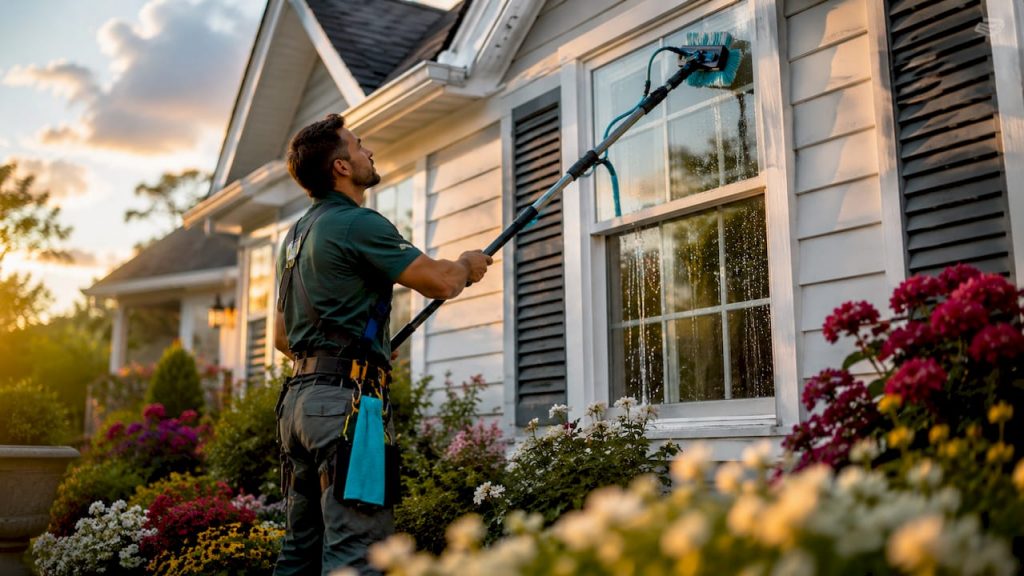
The residential window cleaning process is a systematic, professional method that moves through inspection, preparation, solution application, squeegee work, edge detailing, and a final quality check to deliver streak-free glass. Most homeowners treat window cleaning as a simple wipe-down task. Professional window cleaners treat it as a structured workflow, and the difference shows in the results. Understanding what is residential window cleaning process means knowing which tools, solutions, and techniques actually matter, and why skipping any step leads to streaks, residue, or damaged frames.
What are the main steps in the residential window cleaning process?
The professional cleaning process follows a standardized sequence of steps designed to protect your home and produce consistent results. Rushing or skipping steps is the most common reason DIY attempts fall short.
-
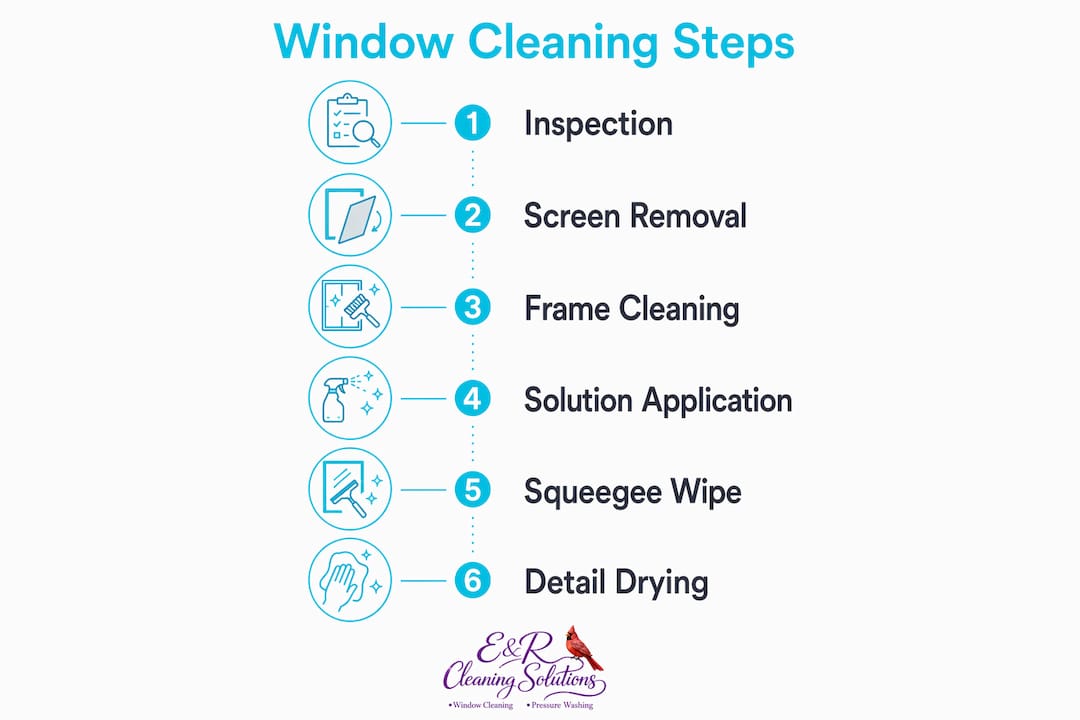
Property walk-through. A professional inspects every window before touching a single pane. This identifies cracked glass, damaged seals, or frames that need special care. Catching problems early prevents liability and sets expectations.
-
Protect indoor surfaces. Before any water touches glass, indoor flooring and furniture get covered with cloths or drop sheets. Drips happen, and protecting surfaces is non-negotiable.
-
Remove and clean screens. Screens trap dust, pollen, and debris. Professionals remove them carefully, clean them separately with a soft brush and mild solution, and set them aside to dry before reinstallation.
-
Clean frames, sills, and tracks. Dirt in window tracks works its way onto clean glass the moment a window opens. Frames and sills get wiped down before any solution touches the glass.
-
Apply the cleaning solution. A sponge or scrubber applies the solution across the full pane, loosening grime, oxidation, and fingerprints. Coverage needs to be even and complete.
-
Squeegee the glass. This is the step most homeowners get wrong. The squeegee blade leads at a slight angle, channeling water off the glass in overlapping strokes. The blade gets wiped clean between every pass.
-
Detail edges and corners. A lint-free microfiber cloth picks up any remaining moisture along the edges and corners that the squeegee cannot reach cleanly.
-
Reinstall screens and clean the surrounding area. Screens go back in, and any drips on sills or frames get wiped away.
-
Final walkthrough. A post-cleaning walkthrough with the homeowner checks every window in different lighting to catch missed spots immediately. This step separates reputable professionals from average ones.
Pro Tip: Walk each window in natural light after cleaning. Streaks that are invisible indoors show up immediately when light hits the glass at an angle.
Which tools and solutions work best for residential window cleaning?
Streak-free windows depend more on technique and water quality than on expensive chemical solutions. The right tools make the process faster and the results cleaner.
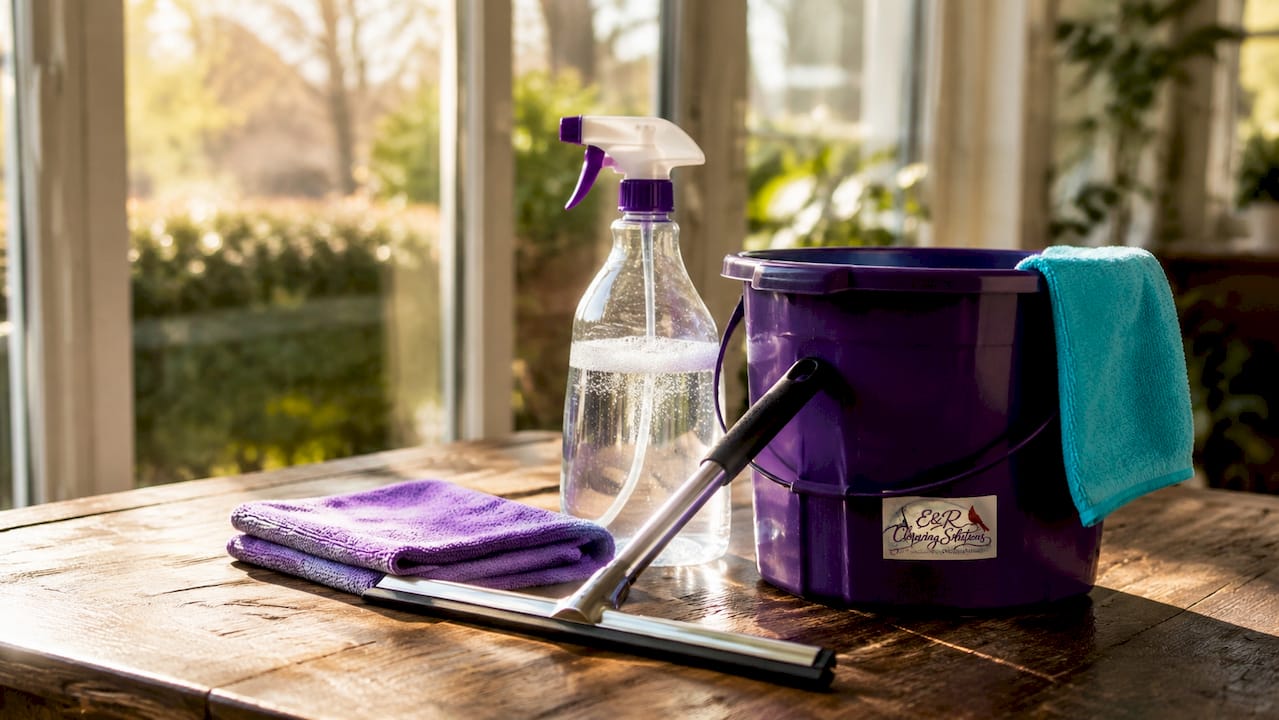
Cleaning solutions
A nickel-sized drop of dish soap per gallon of warm water is the standard professional formula. That ratio sounds almost too simple, but it works. Overloading the solution with soap is one of the top causes of residue and streaking. Less product, applied correctly, outperforms heavy chemical applications every time.
Squeegees
Professional squeegees use brass, aluminum, or stainless steel handles with replaceable rubber blades. Consumer plastic squeegees flex unevenly and leave lines. Blade condition matters as much as technique. Professionals replace blades every 24–48 hours of heavy use to maintain a sharp, clean edge.
Microfiber cloths
Microfiber cloths outperform paper towels on every measure. Paper towels leave lint on glass. Microfiber lifts moisture and debris without scratching or depositing fibers. Use separate cloths for frames and glass to avoid cross-contamination.
Water-fed pole systems
Water-fed pole systems use purified, deionized water delivered through a brush head on an extendable pole. They are the standard tool for second-story and hard-to-reach windows. Consumer-grade versions start at around $45. Professional-grade systems are significantly more capable and allow ground-level cleaning of windows several stories up.
| Tool | Best use | Key advantage |
|---|---|---|
| Squeegee | All flat glass surfaces | Removes solution without lint |
| Microfiber cloth | Edges, corners, frames | Lint-free, scratch-safe |
| Water-fed pole | Multi-story windows | Ground-level safety, purified water |
| Sponge or scrubber | Solution application | Even coverage across full pane |
Pro Tip: Never use tap water in a water-fed pole system if you live in a hard water area. Mineral deposits in tap water leave white spots on glass as it dries. Deionized or purified water eliminates that problem entirely.
What best practices produce streak-free windows and protect window integrity?
Most streaks come from leftover dried cleaning products, dirty cloths, or cleaning in direct sunlight. Not from cheap chemicals. Technique and timing matter far more than the brand of solution you use.
Timing and conditions
Direct sunlight dries solution on the glass before you can squeegee it off. That leaves residue. Clean windows on overcast days or work in the shade whenever possible. Early morning and late afternoon are the best times on sunny days.
Squeegee technique
The upper edge of the squeegee blade must lead by a few degrees during each stroke. This angle channels water forward and off the glass rather than letting it pool behind the blade. Overlap each stroke by about an inch. Wipe the blade with a clean cloth after every single pass. A dirty blade redistributes grime instead of removing it.
Stroke direction for streak detection
Cleaning interior glass with horizontal strokes and exterior glass with vertical strokes is a professional trick that makes streak detection simple. If you see a streak, the direction it runs tells you immediately which side of the glass it is on. This saves time and eliminates guesswork.
Frequency recommendations
Professionals recommend cleaning windows twice per year, typically in spring and fall. Homes near busy roads, construction zones, or high-pollen areas need more frequent attention. Property managers overseeing multiple units should build window cleaning into their regular maintenance schedule rather than treating it as a reactive task.
Key best practices at a glance:
- Clean on overcast days or in the shade to prevent fast drying
- Wipe the squeegee blade after every stroke
- Use horizontal strokes inside and vertical strokes outside
- Replace squeegee blades regularly to prevent lines
- Clean frames and tracks before touching the glass
How do professionals handle difficult window types and locations?
Not every window is a flat, ground-level pane. Multi-story homes, specialty glass, and environmental conditions all require adjustments to the standard process.
Multi-story and hard-to-reach windows
Water-fed pole systems with purified, deionized water are the safest and most efficient solution for high windows. They allow a technician to clean from the ground without ladders, reducing fall risk significantly. The purified water dries spot-free without any squeegee work on the glass itself.
Specialty glass and coatings
Tinted glass, low-emissivity coatings, and tempered glass all require gentler handling. Abrasive scrubbers and razor blades can scratch coated surfaces permanently. Professionals identify glass type during the initial walk-through and adjust their tools accordingly.
Difficult stains
Hard water spots and paint overspray require targeted treatment before standard cleaning begins. Hard water deposits respond to a diluted white vinegar solution or a commercial calcium remover. Paint requires a plastic scraper or a razor blade used at a very low angle on uncoated glass only.
| Challenge | Recommended approach |
|---|---|
| Multi-story windows | Water-fed pole with deionized water |
| Hard water spots | Diluted vinegar or calcium remover pre-treatment |
| Coated or tinted glass | Soft scrubber only, no abrasives or razor blades |
| Paint overspray | Plastic scraper or low-angle razor on uncoated glass |
Seasonal factors also affect the process. Pollen coats glass heavily in spring. Winter leaves mineral deposits from rain and snow. Adjusting cleaning frequency to match your local environment keeps windows in better condition year-round.
Key takeaways
The residential window cleaning process delivers streak-free results through a fixed sequence of preparation, correct tool use, and technique, not through expensive products.
| Point | Details |
|---|---|
| Follow the full process | Skipping steps like frame cleaning or screen removal leads to streaks and re-contamination. |
| Use the right tools | Professional squeegees, microfiber cloths, and deionized water outperform consumer alternatives. |
| Technique beats product | Blade angle, stroke direction, and timing matter more than the cleaning solution you choose. |
| Clean twice a year minimum | Spring and fall cleanings maintain window integrity and prevent buildup from becoming permanent. |
| Final walkthrough matters | Checking windows in natural light after cleaning catches missed spots before the job is done. |
What I’ve learned after years of watching homeowners clean their own windows
The biggest misconception I see is that more soap equals cleaner glass. Homeowners pour dish soap into a bucket until it foams, then wonder why every window has a filmy residue. The professional formula is almost embarrassingly simple: a small drop of dish soap per gallon of warm water. The cleaning power comes from agitation and technique, not from soap volume.
The second thing I’ve noticed is that most people underestimate how much window tracks and frames affect the final result. You can squeegee a pane perfectly and still end up with dirty glass the moment someone opens the window, because the track deposits grime right back onto the clean surface. Cleaning frames and tracks first is not optional. It is the foundation the rest of the process depends on.
Water-fed pole technology has genuinely changed what is possible for residential window care. A few years ago, cleaning second-story windows safely meant ladders, risk, and a lot of wasted time. Now a ground-level operator with a water-fed pole and purified water can clean those windows faster and more safely than any ladder-based method. Homeowners who hire professionals should ask specifically whether their provider uses this system for upper-floor windows. If the answer is no, that tells you something about how current their methods are.
Regular maintenance also protects your investment in ways most homeowners do not consider. Hard water deposits and oxidation etch into glass over time. Once that etching happens, no amount of cleaning removes it. Twice-yearly professional cleaning prevents that damage from accumulating.
— Richard
Professional window cleaning services from E and R Cleaning Solutions
Clean windows are not just about appearance. They protect glass from long-term damage caused by mineral deposits, oxidation, and debris buildup. E and R Cleaning Solutions brings over five years of hands-on experience to every residential job, using professional-grade tools and honest pricing that homeowners and property managers can count on.

E and R Cleaning Solutions specializes in streak-free results for homes of all sizes, including multi-story properties where water-fed pole systems make the difference between a safe job and a risky one. Their family-run approach means every job gets personal attention, not a rushed crew moving to the next address. If you want windows cleaned correctly the first time, contact E and R Cleaning Solutions to schedule your service.
FAQ
What does the residential window cleaning process include?
The professional process includes inspection, screen removal, frame and track cleaning, solution application, squeegee work, edge detailing, screen reinstallation, and a final walkthrough. Each step builds on the last to produce streak-free results.
How often should residential windows be cleaned professionally?
Professionals recommend cleaning twice per year, in spring and fall. Homes near high-traffic roads, construction, or heavy pollen sources may need more frequent service.
What causes streaks after window cleaning?
Streaks result from dried cleaning product residue, dirty squeegee blades, or cleaning in direct sunlight. Reducing soap quantity and wiping the blade after every stroke eliminates most streaking.
What is a water-fed pole system and when is it used?
A water-fed pole system delivers purified, deionized water through a brush head on an extendable pole. Professionals use it for second-story and hard-to-reach windows, allowing safe ground-level cleaning without ladders.
Can I use any cleaning solution on specialty or coated glass?
No. Tinted, low-emissivity, and coated glass require soft scrubbers and no abrasive tools. Using the wrong materials scratches coatings permanently and voids manufacturer warranties on specialty glass.