Why Commercial Windows Need Specialized Cleaning
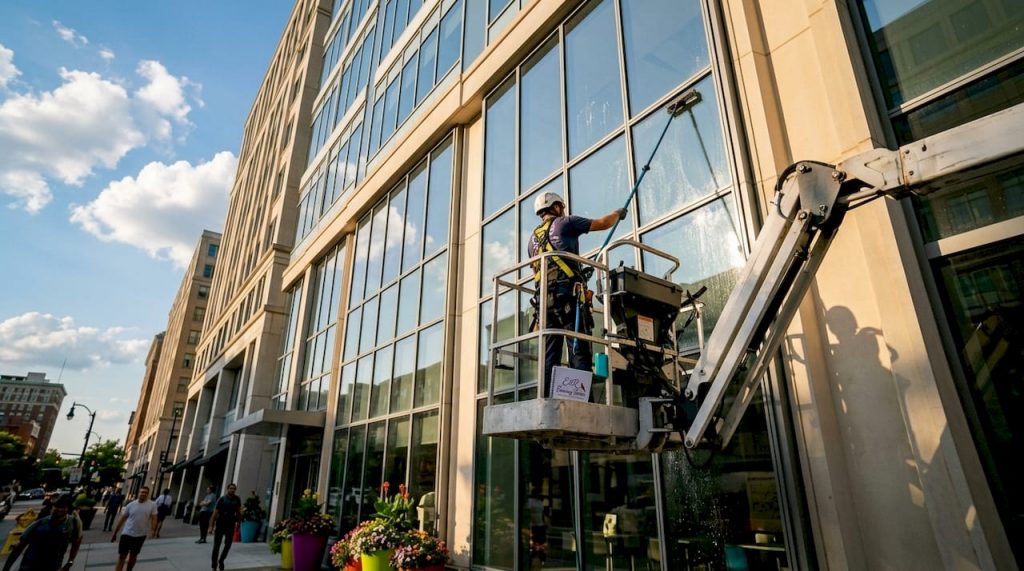
Commercial window cleaning is defined as the professional maintenance of glass surfaces on business properties using equipment, techniques, and cleaning solutions matched to the building’s scale, glass type, and environmental exposure. Standard residential methods fail on commercial properties because the glass, coatings, and safety demands are fundamentally different. Property managers who treat commercial windows like home windows risk permanent glass damage, voided warranties, and costly early replacements. Understanding why commercial windows need specialized cleaning is the first step toward protecting one of your building’s most visible and expensive assets.
Why commercial windows need specialized cleaning: the core differences
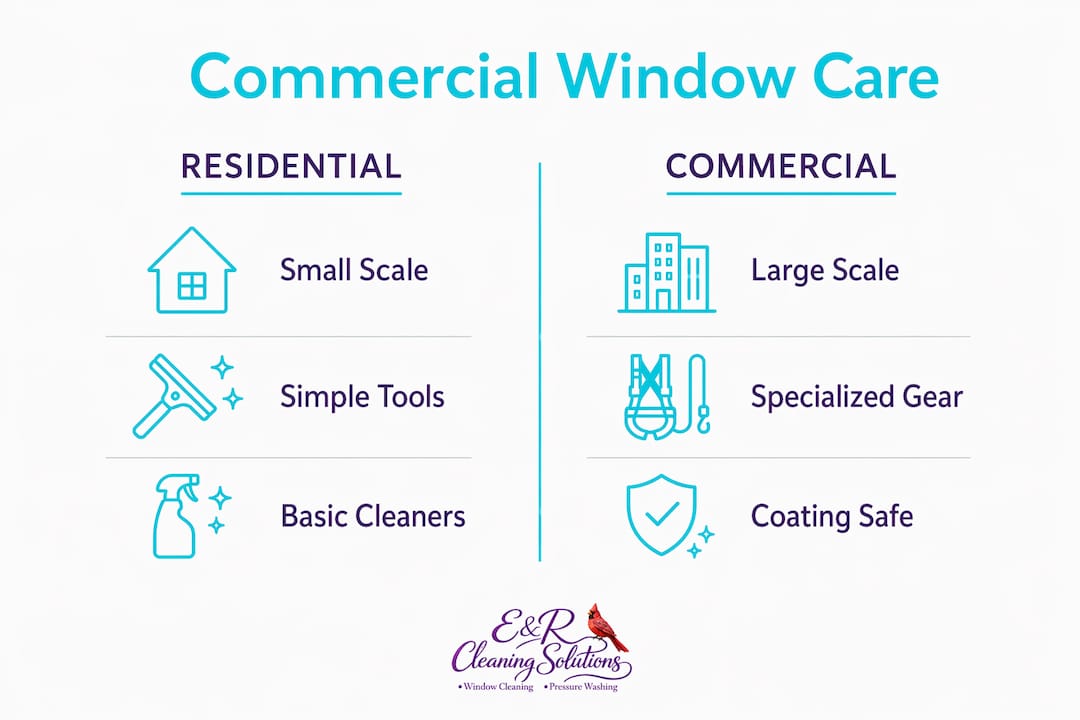
Commercial window cleaning differs from residential cleaning in three critical ways: scale, safety, and surface complexity. A two-story home and a six-story office building are not the same job with a bigger ladder.
Scale drives the first major difference. Commercial buildings require specialized gear like water-fed poles, aerial lifts, and scaffolding to reach upper floors safely and effectively. These tools are not optional upgrades. They are the minimum standard for consistent, streak-free results on large glass surfaces.

Safety regulations create the second gap. Commercial window cleaning on elevated structures falls under OSHA guidelines for working at height. Residential window cleaning carries no equivalent regulatory burden. Property managers who allow untrained crews to clean upper-floor windows without proper fall protection equipment expose themselves to liability.
The third difference is foot traffic and exposure. A retail storefront on a busy street accumulates exhaust particles, fingerprints, and airborne grease far faster than a suburban home window. Higher cleaning frequency is not a sales tactic. It reflects the actual rate of contamination in commercial environments.
- Water-fed pole systems deliver purified water directly to the glass, eliminating streaks without harsh chemicals
- Aerial lifts and scaffolding provide stable platforms for multi-story facades
- Squeegees sized for commercial panes cover more surface area per pass than residential tools
- Purified water systems remove mineral deposits that tap water leaves behind
Pro Tip: Ask any cleaning crew whether they use purified or deionized water. If they use tap water on exterior glass, expect water spots within days, not weeks.
How specialized cleaning protects window materials and coatings
Commercial buildings increasingly use specialty glass, and that glass requires chemistry-matched cleaning solutions. Low-E (low-emissivity) glass, tinted glass, and laminated glass each have coatings that standard household cleaners destroy.
Ammonia-based cleaners damage Low-E coatings and void manufacturer warranties. This is not a minor risk. Low-E coatings are invisible films applied to the glass surface to reflect heat and reduce energy costs. Once degraded, they cannot be repaired. The only fix is full glass replacement.
Abrasive cleaners cause a separate problem. Scrubbing tinted or coated glass with abrasive pads scratches the surface and creates micro-fractures that trap dirt permanently. The glass looks worse after cleaning than before. This is a common outcome when property managers hire crews without commercial glass experience.
The types of window glass cleaning challenges vary by building:
- Low-E glass: requires pH-neutral, non-ammonia solutions to preserve the energy-efficient coating
- Tinted glass: needs non-abrasive applicators to avoid surface scratches that distort color
- Laminated safety glass: must be cleaned without solvents that can penetrate and weaken the interlayer
- Tempered glass: tolerates more pressure but still requires squeegee technique to avoid edge chips
Mild, non-alkaline solutions matched to the specific glass type preserve coatings and extend the functional life of the window. Specialized crews identify glass type before selecting a cleaning product. General cleaning crews typically do not.
Pro Tip: Request the Safety Data Sheet for any cleaning product a crew plans to use on your windows. If it contains ammonia or has a pH above 10, it is not safe for coated commercial glass.
What are the real operational benefits of regular commercial window cleaning?
The business case for regular specialized cleaning goes well beyond appearance. Regular professional cleaning prolongs window lifespan by removing dirt, overspray, salt, and particulates before they etch the glass surface permanently. Glass etching is irreversible. Prevention costs far less than replacement.
Pollutant buildup is the most underestimated threat to commercial windows. Coastal properties face salt spray that corrodes seals and frames. Urban properties face exhaust particles and construction overspray that bond to glass over time. Both types of contamination accelerate seal failure. Cleaning identifies seal failures early, before water infiltration causes interior damage.
Natural light is a measurable operational asset. Dirty windows reduce the amount of daylight entering a building, which increases reliance on artificial lighting. Clean windows support energy efficiency by maximizing solar gain in winter and allowing occupants to rely less on electric lighting year-round.
Here is how regular specialized cleaning reduces long-term costs:
- Prevents glass etching: Removing mineral deposits and pollutants before they bond to the surface avoids permanent damage that requires glass replacement.
- Extends seal life: Clean frames and edges prevent moisture intrusion that degrades window seals and leads to fogging between panes.
- Reduces repair frequency: Early issue detection during cleaning catches cracks, failed seals, and frame corrosion before they escalate.
- Supports energy efficiency: Clean Low-E glass performs as designed, reducing heating and cooling loads.
- Protects tenant satisfaction: Tenants in office and retail buildings notice dirty windows. Clean glass signals that the property is well managed.
Why building facades need regular cleaning connects directly to brand perception. A streaked, grimy facade tells clients and tenants that maintenance is not a priority. That impression affects leasing decisions and foot traffic in retail settings.
How do you design a commercial window cleaning program?
A commercial window cleaning program is not a fixed monthly schedule applied to every building. Effective schedules depend on environmental factors like proximity to busy roads, coastal salt exposure, and building height. A downtown high-rise needs a different program than a suburban medical office.
The factors that drive cleaning frequency and method selection include:
- Location: Buildings near highways or industrial zones accumulate exhaust and particulate faster than those in low-traffic areas
- Height: Upper floors require rope access, aerial lifts, or water-fed pole extensions, which affect scheduling and cost
- Glass type: Specialty coatings determine which cleaning solutions are safe to use
- Weather exposure: Coastal and high-wind locations accelerate salt and debris buildup on exterior surfaces
- Operational hours: Retail and hospitality properties need cleaning scheduled outside peak business hours
The table below shows how program variables shift across common commercial building types.
| Building type | Recommended frequency | Primary method | Key challenge |
|---|---|---|---|
| Urban retail storefront | Weekly to biweekly | Squeegee and purified water | Exhaust, fingerprints, foot traffic |
| Mid-rise office building | Monthly to quarterly | Water-fed pole or aerial lift | Height access, streak-free finish |
| Coastal hospitality property | Biweekly | Purified water system | Salt spray and mineral deposits |
| Industrial or warehouse | Quarterly | Pressure-assisted water-fed pole | Heavy particulate and overspray |
| Medical or professional office | Monthly | pH-neutral solution, lint-free applicator | Streak visibility, infection control |
Professional exterior window cleaning is safer and faster than DIY for upper floors. Professionals using telescoping poles and aerial lifts complete jobs in hours that would take an untrained crew a full day, with better results and no ladder fall risk.
Interior vs exterior window cleaning differences also matter for program design. Exterior glass faces weather, pollution, and biological growth. Interior glass faces dust, HVAC output, and human contact. Both surfaces need attention, but exterior glass typically requires more frequent cleaning and heavier equipment.
Pro Tip: Schedule a professional assessment before setting your cleaning frequency. A trained technician can identify your building’s specific contamination sources and recommend a schedule based on actual conditions, not a generic calendar.
Key takeaways
Commercial windows require specialized cleaning because their glass coatings, scale, and exposure to pollutants make standard residential methods both ineffective and damaging.
| Point | Details |
|---|---|
| Specialized tools are non-negotiable | Water-fed poles, aerial lifts, and purified water systems are required for safe, effective commercial cleaning. |
| Coating damage is permanent | Ammonia-based cleaners destroy Low-E coatings and void warranties; only pH-neutral solutions are safe. |
| Regular cleaning prevents costly repairs | Removing pollutants before they etch glass or fail seals saves far more than reactive replacement costs. |
| Frequency depends on environment | Coastal, urban, and high-traffic buildings need more frequent cleaning than suburban or low-exposure properties. |
| Interior and exterior surfaces differ | Exterior glass faces weather and pollution; interior glass faces dust and contact. Both need tailored approaches. |
What I’ve learned after years of commercial window work
The most common mistake property managers make is treating commercial window cleaning as a cosmetic line item rather than a maintenance function. I’ve seen buildings where the windows hadn’t been professionally cleaned in over a year. By that point, the mineral deposits had etched the glass surface, and no amount of cleaning could restore clarity. The windows had to be replaced. That cost was entirely preventable.
DIY or low-cost cleaning methods almost always fall short on commercial properties. The safety risks alone disqualify most amateur approaches for anything above the ground floor. Beyond safety, the results simply don’t hold. Tap water leaves mineral deposits. Wrong-pH solutions strip coatings. Residential squeegees leave streaks on large commercial panes because they’re not sized for the job.
The detail I find most overlooked is the connection between clean windows and tenant retention. Property managers focus on HVAC, plumbing, and structural maintenance. Windows feel secondary. But tenants in office buildings notice. Retail clients notice. A grimy facade communicates neglect, and neglect costs you lease renewals.
The right cleaning program is not expensive relative to what it protects. A well-designed schedule, matched to your building’s actual environment, keeps glass in service longer, keeps tenants satisfied, and keeps your facade looking like the asset it is.
— Richard
Professional window cleaning for your commercial property
Clean windows are a maintenance investment, not an optional upgrade. E and R Cleaning Solutions works with commercial property owners and managers to build cleaning programs matched to their building’s specific glass type, height, location, and schedule requirements.

With over five years of experience handling complex commercial jobs, E and R Cleaning Solutions uses purified water systems, professional-grade equipment, and chemistry-matched cleaning solutions to protect your windows and your investment. Whether you manage a single retail storefront or a multi-story office building, their team delivers results that hold up between visits. Contact E and R Cleaning Solutions to schedule a professional assessment and get a cleaning program built around your property’s real needs.
FAQ
Why do commercial windows need specialized cleaning?
Commercial windows use specialty glass coatings, span multiple floors, and face higher pollutant exposure than residential windows. Standard cleaning methods damage coatings, miss upper surfaces, and fail to remove bonded contaminants like salt and exhaust particles.
How often should commercial windows be cleaned?
Cleaning frequency depends on location, building height, and glass type. Urban and coastal properties typically need cleaning every two to four weeks, while low-exposure suburban buildings may need it monthly or quarterly.
What happens if you use the wrong cleaner on commercial glass?
Ammonia-based or abrasive cleaners permanently damage Low-E coatings and void manufacturer warranties. The coating cannot be repaired once degraded, making full glass replacement the only option.
What is the difference between interior and exterior commercial window cleaning?
Exterior glass faces weather, pollution, and biological growth, requiring purified water systems and heavy equipment. Interior glass accumulates dust and contact residue, requiring gentler solutions and lint-free applicators.
Can property managers schedule commercial window cleaning around business hours?
Professional cleaning crews schedule around operational hours for retail, hospitality, and office properties. Early morning or after-hours scheduling minimizes disruption while maintaining consistent maintenance.