Safe, Pro Backed Roof Washing Chemical Mixes for Homeowners
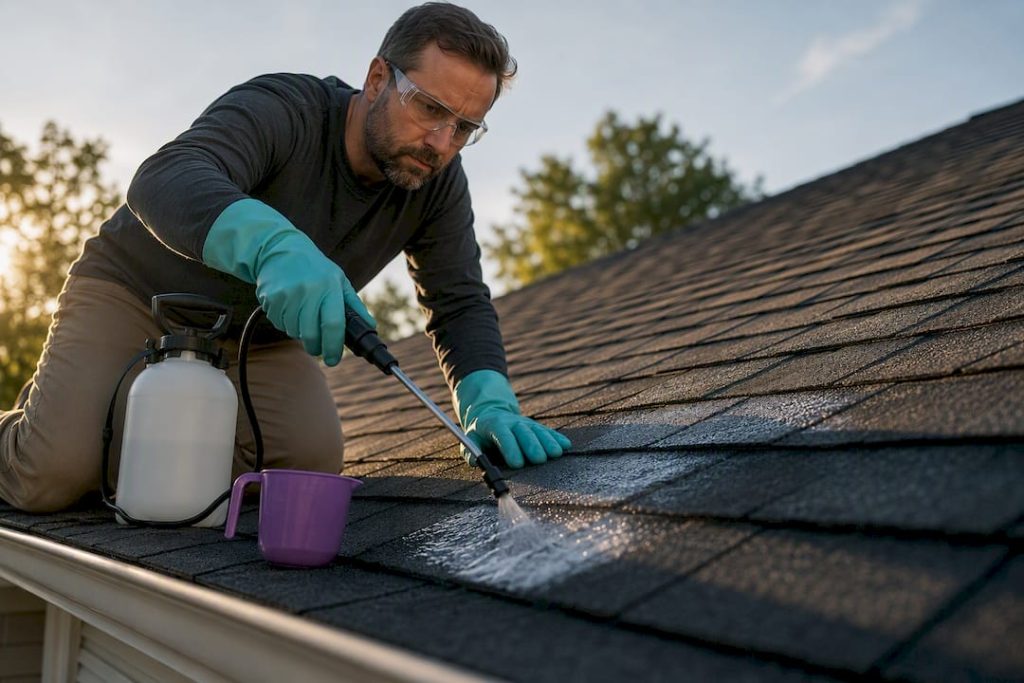
The most effective, widely used approach for cleaning a residential roof is a low-pressure “soft wash” built on sodium hypochlorite and a surfactant, applied gently and paired with runoff containment. This combination kills algae and moss at the root without the physical force that strips shingle granules. Skipping the surfactant, using a pressure washer instead, or ignoring runoff protection is where most roof-cleaning problems start.
TL;DR:
- Proper soft-wash cleaning relies on a dilute sodium hypochlorite solution combined with a surfactant to ensure algae and moss are killed at the roots without damaging shingles through high pressure.
- Concentration levels should be tested on a small roof area first, especially since chemical potency drops quickly in storage or extreme weather, affecting safety and results.
- Protecting landscaping and controlling runoff are critical, involving pre-wetting plants, covering sensitive areas, and rinsing from the top down to prevent runoff from hitting unprotected surfaces.
- Asphalt shingles are vulnerable to granule loss if high pressure or over-concentrated bleach is used, while metal roofs tolerate soft washing well, and tiles require gentle application to prevent cracking.
- DIY roof cleaning may be feasible for small, gentle-sloped roofs with minimal moss, but steep or high roofs need professional handling to ensure safety, compliance, and proper containment.
Table of Contents
- 1. Common roof-washing chemicals and how they work
- 2. Soft-wash mixes and safe dilution guidelines
- 3. Safety, runoff containment, and landscaping protection
- 4. Which chemicals suit which roof material, and where shingles get hurt
- 5. DIY vs hiring a pro: when chemicals require professional handling
- 6. Handling and storage precautions for roof washing chemicals
- 7. Regulatory guidelines and legal restrictions on chemical use for roof washing
- What years of roof algae removal taught me about getting it right
- How E&R Cleaning Solutions handles soft-wash roof cleaning
- Sources
- FAQ
1. Common roof-washing chemicals and how they work
Sodium hypochlorite, the same active ingredient in household bleach but used in a more controlled formulation, is the primary chemical professionals rely on to kill roof algae, mold, and mildew. Soft-wash supplier guidance explains that solutions built around sodium hypochlorite depend on more than just bleach](https://ecolink.com/info/what-is-soft-washing/): a surfactant, and sometimes an algaecide or residual inhibitor, work alongside it to actually get the job done.
- Sodium hypochlorite oxidizes and breaks down organic growth, which is why it remains the standard active for black streaks and moss colonies.
- Oxygen-based cleaners (sodium percarbonate or hydrogen peroxide) are gentler chemistry, often chosen when a homeowner wants to protect shingle color or reduce corrosion risk on nearby metal.
- Surfactants reduce surface tension so the solution clings to a sloped, vertical-facing roof plane instead of sheeting off, which improves contact time and kill rate.
- Algaecides and residual inhibitors slow regrowth by leaving a thin protective layer behind after rinsing.
The surfactant is doing more work than people assume. It keeps the active agent sitting on algae long enough to kill it at the root, which is why a properly mixed soft wash outlasts a plain bleach-and-water rinse. Household bleach and professional-grade sodium hypochlorite differ in stability and buffering, which is part of why generic bleach from under the sink behaves less predictably on a roof than a formulated soft-wash mix.
2. Soft-wash mixes and safe dilution guidelines
Professional soft-wash mixes are built around a tank concentration that gets diluted further before it ever touches the roof, so the number on a jug label rarely reflects what actually lands on the shingles. Getting from tank to surface concentration safely is where most DIY attempts go wrong.
- Light algae or early black streaking typically calls for the mildest end of a soft-wash mix, since the goal is knockdown, not a deep chemical burn.
- Heavy staining usually needs a stronger mix and a longer dwell time rather than more pressure.
- Moss colonies often need the strongest end of a safe range because moss roots dig into shingle mat, and undiluted spot-treatment may be needed on thick patches.
Bulk sodium hypochlorite degrades quickly when exposed to heat and UV, and strength can drop significantly within weeks if it is stored in a hot garage or the back of a truck. That is a dosing problem as much as a safety one: chemical that has lost potency gets used at higher volumes to compensate, which increases runoff risk without improving results.
Pro Tip: Test solution strength on a small, hidden roof section first and watch for 10 to 15 minutes before treating the whole surface. Fresh chemical from a recently opened container works faster and more predictably than anything that has sat mixed for days.
3. Safety, runoff containment, and landscaping protection
Containment matters as much as the chemistry itself. Many roof-cleaning complaints trace back to runoff hitting plants, gutters, or a neighbor’s yard rather than the active ingredient being too strong.
- Pre-wet shrubs, lawn areas, and anything below the roofline before treatment so foliage absorbs less of the runoff.
- Cover sensitive plants with plastic sheeting or tarps, and move outdoor furniture and cushions out of the drip line entirely.
- Control the rinse order, working from the top of the roof down so runoff carries downward in a predictable path instead of pooling unpredictably.
- Use a neutralizer, such as a diluted rinse, on any plant beds that did get overspray, and flush gutters and downspouts afterward.
- Wear PPE, including eye protection, gloves, and nonslip footwear, and keep pets and children off the treated area and away from runoff paths until everything has been rinsed clear.
Extreme heat, direct sun, or high wind all make treatment less predictable: heat accelerates chemical breakdown, and wind carries mist onto surfaces you never intended to treat. Calm, overcast conditions give the mix time to work before it evaporates or drifts.
4. Which chemicals suit which roof material, and where shingles get hurt
Not every roof surface tolerates the same chemistry or method, and mismatching the two is how warranties get voided.
- Asphalt shingles are the most common surface and the most misunderstood: many shingle manufacturers caution against high pressure because it strips protective granules, and misapplied or over-concentrated bleach can accelerate that same granule loss over time.
- Metal roofing generally tolerates soft-wash chemistry well, with low risk of abrasion since there is no granule layer to strip.
- Tile roofing holds up to properly diluted soft-wash mixes but can crack under direct pressure-washer force, so gentle application matters more than chemical strength.
- Cedar and wood shake need the gentlest approach of all: chemical cleaning helps with surface growth, but deep stains and weathering have limits that no chemical treatment fully reverses.
Before starting any job, check the shingle manufacturer’s cleaning guidance and take photos of the roof’s condition. That record protects you if a warranty question comes up later, and it gives you a baseline to judge whether the cleaning actually helped.
5. DIY vs hiring a pro: when chemicals require professional handling
A single-story roof with light streaking and easy ground access is reasonable to treat yourself if you are comfortable with ladders and careful dilution. Steep pitch, second-story height, heavy moss, or a roof over landscaping you cannot easily protect are all reasons to call in a professional instead.
- Check pitch and height first: anything beyond a gentle slope or a single story raises the fall risk enough that professional equipment and insurance matter.
- Ask about insurance and warranty-safe practices: a contractor should carry liability coverage and know your shingle manufacturer’s cleaning restrictions.
- Ask specific questions before booking: what dilution range they use, how they contain runoff, and whether they can provide references from recent roof jobs.
E&R Cleaning Solutions approaches roof jobs with the same conservative, warranty-safe mindset outlined in its soft-wash siding guidance, including plant protection and controlled rinse containment on every job.
6. Handling and storage precautions for roof washing chemicals
Sodium hypochlorite and other soft-wash chemicals need to be treated with the same respect as any other household or industrial cleaning agent, not casually stored in a garage corner. Keep concentrated stock in its original, labeled container, away from direct sunlight and extreme heat, since both accelerate breakdown and shorten shelf life.
Never mix sodium hypochlorite with ammonia-based cleaners or other chemicals, since combining incompatible agents can create dangerous fumes. Store containers upright on a stable surface where they cannot tip, and keep them out of reach of children and pets. A locked shed or a cool interior closet works better than an open shelf near a water heater or in a hot vehicle trunk.
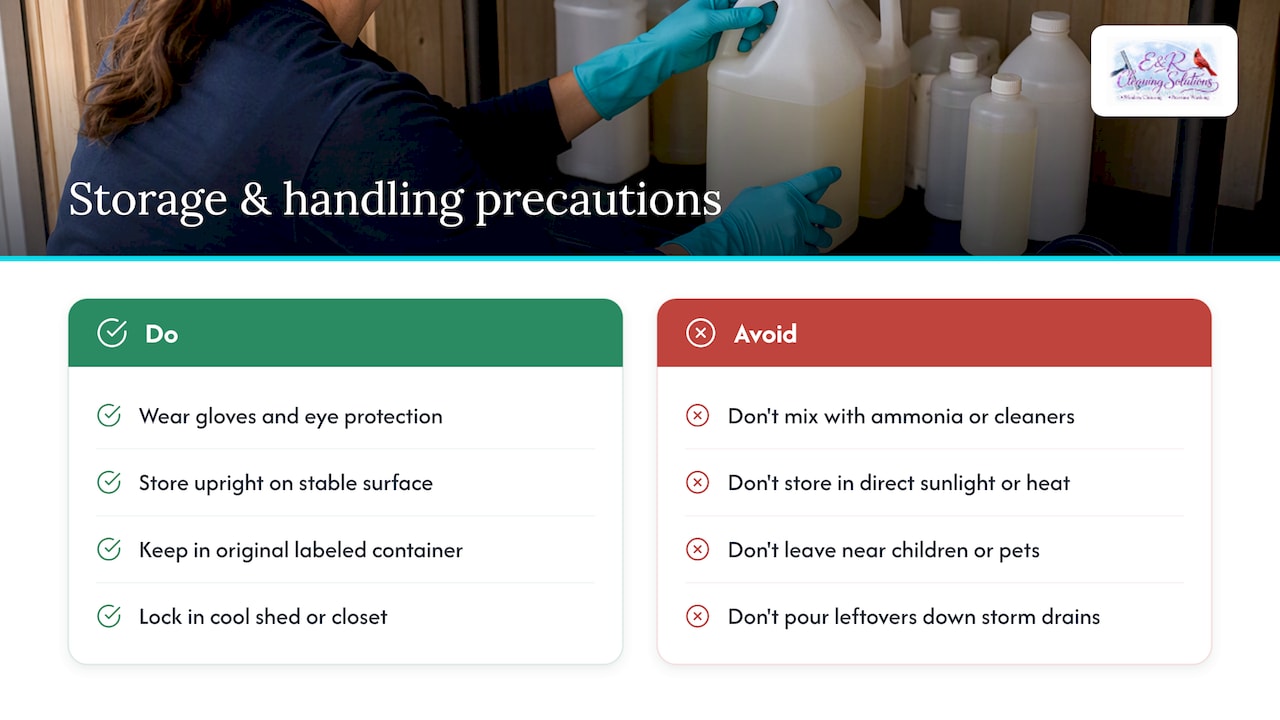
When transporting chemical from a supplier to a job site, keep it in a sealed, leak-resistant container and avoid leaving it in a hot car for extended periods, since heat exposure during transport degrades strength just as storage heat does. Dispose of empty containers and any unused, degraded solution according to local waste guidelines rather than pouring it down a storm drain. Rinse mixing equipment in a designated area, not over a lawn or garden bed, to avoid concentrated residue building up in one spot.
Anyone handling concentrated solution, whether decanting it into a sprayer or mixing a batch, should wear gloves and eye protection at minimum, and work in ventilated conditions to avoid inhaling fumes during mixing.
7. Regulatory guidelines and legal restrictions on chemical use for roof washing
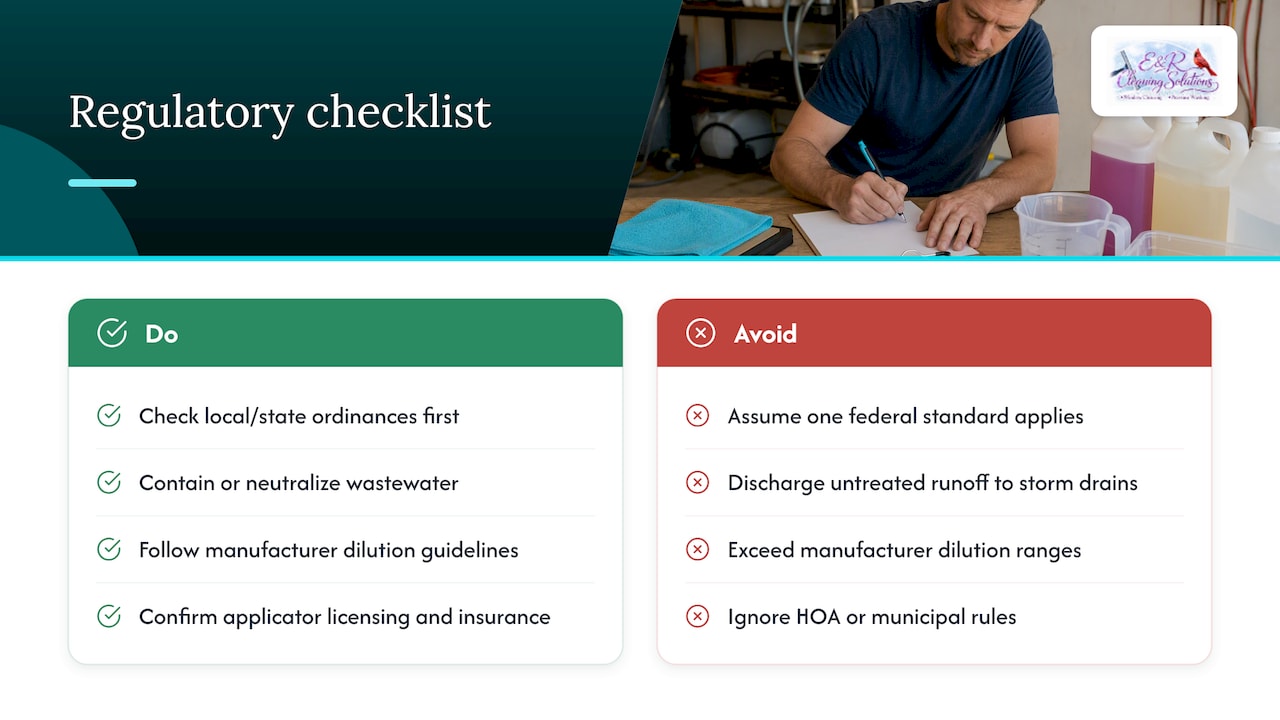
Rules around chemical roof cleaning are set primarily at the state and local level rather than through one federal standard, and they vary depending on where runoff ends up. Many municipalities regulate what can legally enter storm drains, since untreated chemical runoff can affect local waterways, and some jurisdictions require containment or neutralization steps before wastewater reaches a public system.
Homeowners associations and some municipal codes also address exterior cleaning more broadly, occasionally restricting the timing or method of pressure-washing and chemical treatments in residential areas. It is worth checking local ordinances before a large job, particularly if the property sits near a storm drain, wetland, or protected waterway.
Professional applicators in many states carry specific licensing or certification requirements tied to commercial chemical application, and insurance requirements often hinge on following manufacturer-recommended dilution ranges rather than exceeding them. Because these rules differ by state and even by city, the safest approach is to confirm current local requirements directly with your municipality or state environmental agency rather than assume a rule from one region applies everywhere. Shingle manufacturers also publish their own cleaning guidelines, and following them is often a condition of keeping a roofing warranty valid.
What years of roof algae removal taught me about getting it right
Recurring roof algae almost always comes back weaker, or not at all, when the first treatment respects the manufacturer’s warranty guidance and uses a conservative concentration rather than the strongest mix available. The same restraint that keeps siding safe, outlined in our soft-wash siding guidance, applies to roofs. My pro tip after years of this work: less chemical, more dwell time, and careful containment beats a heavier mix every time.
— Richard
How E&R Cleaning Solutions handles soft-wash roof cleaning
E&R Cleaning Solutions treats roof cleaning as containment work first and chemistry second. Every soft-wash job includes plant and landscaping protection, a controlled rinse sequence, and a post-service inspection so you can see the difference and confirm nothing was missed.

When you request an on-site quote, expect a walk-around of the roof to check pitch, material, and moss severity before any pricing is discussed, since those factors change both the approach and the time on site. This service keeps pricing transparent and explains the plan before starting, rather than surprising customers with add-ons afterward. If you want a straightforward estimate for your property, get in touch through our services page to schedule a look at your roof.
Sources
Technical background on soft-wash chemistry comes from Ecolink’s explanation of soft washing, with pressure-washing damage risks detailed in Shingle Roof Renewal’s guide and landscaping protection steps covered in TruPainting’s plant-safe pressure washing guide.
- What Is Soft Washing – Soft Wash Chemicals
FAQ
What is the best chemical to use for washing a roof?
Sodium hypochlorite mixed with a surfactant is the standard professional choice because it kills algae and moss effectively while the surfactant keeps it in contact with the surface long enough to work. Oxygen-based cleaners are a gentler alternative when shingle color or corrosion is a concern, though they can act more slowly.
What chemicals do you use to clean a roof?
Most professional soft-wash mixes combine sodium hypochlorite with a surfactant, and sometimes an algaecide or residual inhibitor to slow regrowth after rinsing. The surfactant is what makes the solution cling to sloped surfaces rather than running off before it can work.
Will bleach ruin roof shingles?
Bleach itself does not automatically damage shingles, but misuse, including high pressure application or an overly concentrated mix left on too long, can accelerate granule loss over time. A properly diluted soft-wash mix applied at low pressure with a reasonable dwell time is the safer path.
What is the best way to wash your roof?
A low-pressure soft wash using a diluted sodium hypochlorite and surfactant mix, applied from the top down with runoff containment for landscaping, is the safest and most effective method. High-pressure washing is generally discouraged since it risks stripping shingle granules without improving the actual cleaning result.