Rust Stains on Pavers: Causes, Safe Removal and Prevention
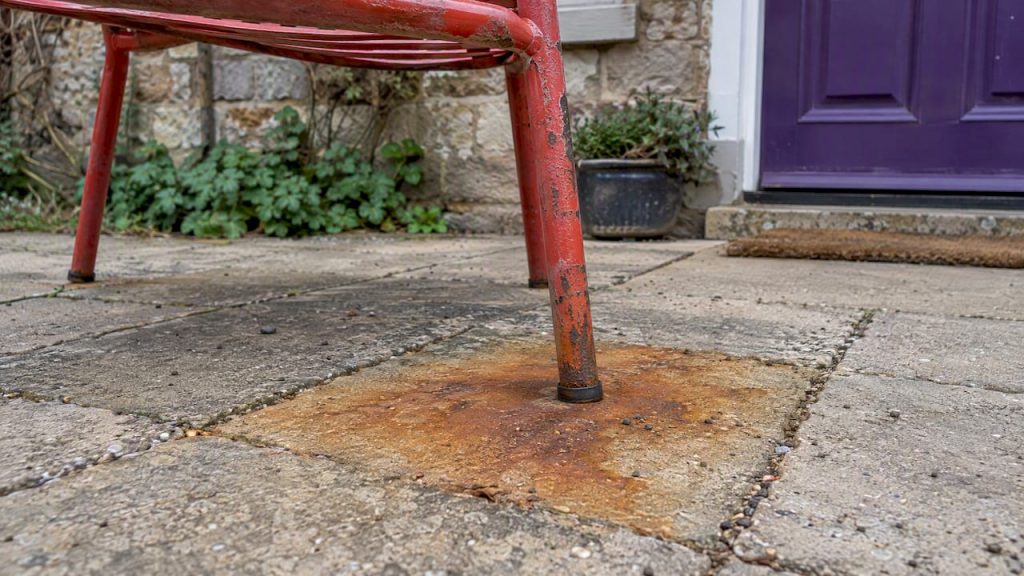
Rust stains on pavers are orange or brown marks left by iron, and most can be removed once you know where the iron came from. The fix depends on the paver material and on the source. A plain rinse won’t touch them. Harsh acid on the wrong stone can leave damage worse than the stain. This guide shows you how to identify the stain, what usually works, what to avoid, and when it makes sense to hand the job to a professional.
TL;DR
- Rust on pavers comes from two places: iron that landed on the surface (furniture, fertilizer, sprinkler water) or iron inside certain natural stone.
- Pressure alone rarely removes rust, and a narrow tip or too much pressure can etch the surface for good.
- Acid-based rust removers can permanently etch limestone, marble and some manufactured stone. Test a hidden spot first.
- Never let a rust remover dry on the pavers. Keep it wet, then rinse.
- If the stain returns within weeks, fix the source (a rusting fixture, fertilizer, iron-rich irrigation water) or you’ll be cleaning again.
Table of Contents
- What rust stains on pavers actually are
- Find the source before you clean
- Why recurring stains point to a bigger problem
- Know your paver before you pick a product
- How to remove rust from pavers step by step
- Rust on poured concrete next to your pavers
- Rust stains on siding
- Mistakes that turn a stain into damage
- Our perspective
- When to hire a professional
- How to keep rust away
- FAQ
- Sources
What rust stains on pavers actually are
Rust is iron oxide. When iron meets moisture and oxygen it corrodes, and tiny iron particles wash into the porous face of the paver. Concrete, brick and natural stone all absorb them, which is why the stain looks like it is part of the stone rather than sitting on top.
The Tile and Stone Journal separates rust stains into two types that need different treatment: surface rust from outside metal objects or fertilizers, and naturally occurring rust from the oxidation of iron particles inside stone such as sandstone. Cleaners for the first are generally non-caustic. The second often calls for acid-based products.
That split matters because most homeowners treat every orange mark the same way, and that is how pavers get damaged.
Find the source before you clean
A few minutes of detective work saves you from repeating the job. Look for the pattern of the stain.
| What you see | Likely cause | What to check |
|---|---|---|
| Round or ring-shaped marks | Metal furniture feet, planters, grill legs, umbrella bases | Lift the item and look at its underside for bare, flaking metal |
| Small orange specks scattered across an area | Granular fertilizer | Whether it contains iron and was left on the pavers after application |
| Orange streaks fanning out from a sprinkler head | Iron in irrigation water, common with well water | Whether the same stains show up on fences, siding and the driveway |
| Rust-colored spots appearing from inside the paver | Iron in natural stone | Whether there is no metal nearby and the spots return after cleaning |
| Drips below a rail, gutter or fixture | A corroding metal part above | Rail bases, flashing, screws, downspout straps |
Fertilizer is a surprisingly common culprit. Many granular lawn fertilizers contain iron, and if it isn’t swept or blown off hard surfaces it can stain them, a point homeowners raise often in local forum threads on rust spots on driveway pavers. Sweep up stray granules right after you feed the lawn.
If sprinklers are the source, the fix lives at the water supply, not the pavers. Clean Water Store explains that iron in well water can leave orange stains on fences, driveways, siding and concrete, and that the usual treatments are polyphosphate injection or iron filtration. A water treatment specialist can test your water and size the right system.
Why recurring stains point to a bigger problem
If rust comes back shortly after a professional cleaning, treat that as information. Guidance on exterior staining notes that recurring marks often signal an underlying issue, such as poor drainage or improperly capped flashing, rather than a dirty surface. A Power Home Remodeling article on vinyl siding stains makes the same point about runoff from another part of the home.
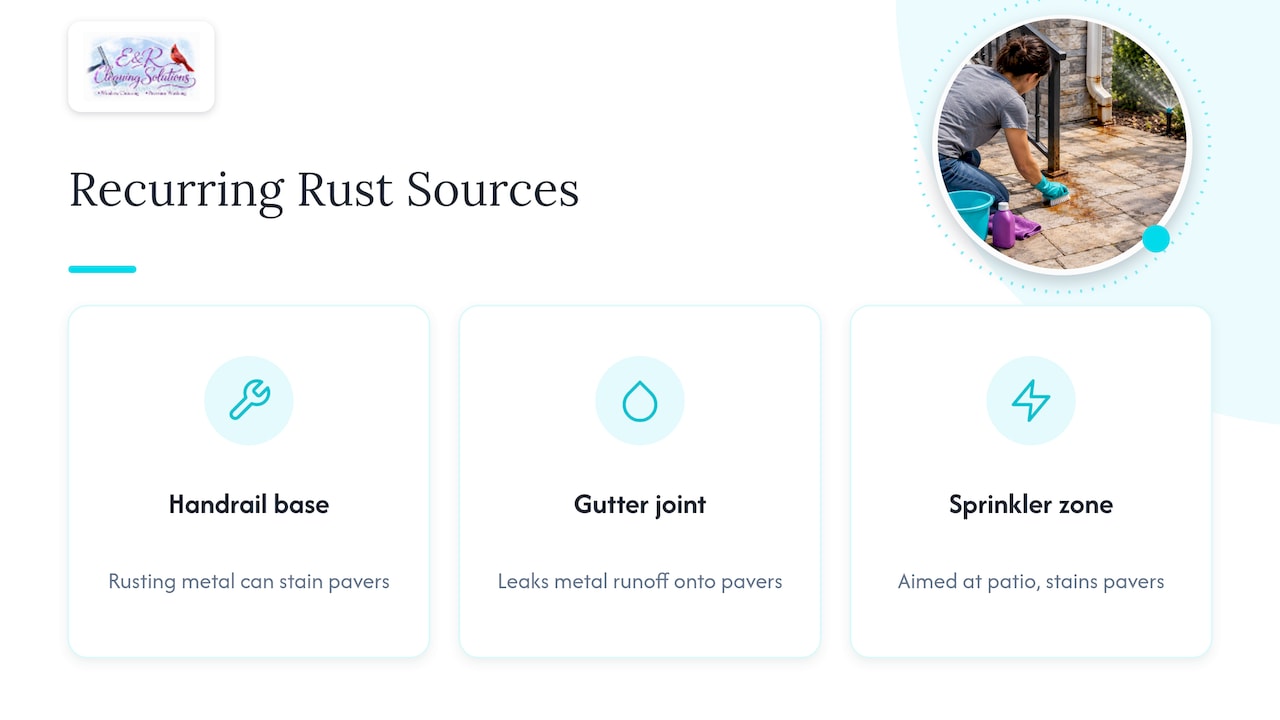
For property managers and landlords, this is the practical rule: clean once, then trace the source. A rusting handrail base, a leaking metal gutter joint or a sprinkler zone aimed at the patio will undo the work in a few weeks.
Know your paver before you pick a product
The material decides what is safe.
- Concrete pavers (dry-cast or wet-cast): Usually tolerate products made for rust removal, if you follow the label and test first.
- Natural stone (sandstone, slate, travertine, flagstone): May carry iron inside. Some stones react to acid, so they need a careful, small-area test.
- Limestone, marble and some manufactured stone: Acid-sensitive. The Techo-Bloc care guide warns against assuming acid cleaners are safe for every surface, and recommends testing an inconspicuous area even when the label says the product is safe.
- Brick pavers: Porous, and sensitive to pressure. Our guide to pressure washing brick safely covers starting low and testing a patch.
If you don’t know what your pavers are made of, check the installer’s paperwork or the manufacturer’s care sheet before anything else.
How to remove rust from pavers step by step
This is the approach that gets the best results with the least risk. It suits small, fresh surface stains. For large areas, natural stone with internal iron, or anything valuable, skip ahead to the professional section.
- Remove the source. Move the furniture, repaint or replace the rusting metal, sweep off fertilizer granules.
- Sweep and pre-rinse. Loose dirt hides the stain’s true size and can streak the result.
- Test a hidden spot. Pick a corner, apply your product at the strength you plan to use, wait the stated time, rinse, and let it dry. Check for lightening, dulling or etching. Skip this and you risk a light patch in the middle of your patio. One homeowner thread reported a rust remover that worked but also lightened the pavers, which is exactly what a test patch is for.
- Start gentle. For light stains, some people try dish soap and water or a mild acidic household option like lemon or white vinegar first. Results vary and acidic household products still need a test on sensitive stone.
- Use a rust remover made for pavers. Products such as Gator Rust Remover are designed for the surface of concrete pavers, wet-cast products and natural stone, and target spots from steel, water build-up and fertilizer. Another widely used option is oxalic acid, which Ask the Builder describes as reacting chemically with iron oxide, with the advice to test a small spot first. Wear gloves and eye protection, and follow the label.
- Keep it wet. Don’t let a rust remover dry on the surface. The Gator product guidance is clear that dried product can leave a residue or spot that is harder to remove than the original stain. Stay nearby and watch the dwell time.
- Rinse thoroughly. Use plenty of clean water, and keep runoff off plants and lawns where the label advises it.
- Reassess after drying. Stains often look different dry. Repeat once if needed instead of using a stronger product.
Where pressure washing fits in
A pressure washer is good for the dirt, algae and grime around a rust stain, but it is not a rust remover. Used badly, it does damage. Techo-Bloc notes that narrow tips or excessive pressure can permanently etch paving stones, and that professionals typically use low-pressure techniques with suitable cleaning agents. If you are cleaning the whole surface anyway, our walkway pressure washing walkthrough and pool deck pressure washing guide explain how pressure should match the material.
A common sequence: treat the rust spot first, rinse, then wash the whole paved area so the cleaned spot doesn’t stand out as a bright patch.
Rust on poured concrete next to your pavers
Driveway aprons, steps and walkways are often poured concrete, and the same iron logic applies. Many people reach for muriatic acid. We explain a gentler route in removing rust stains from concrete without muriatic acid. If you want to understand why concrete stains in the first place, read what causes staining on concrete surfaces. For oil rather than rust, see our steps to absorb, degrease, poultice and rinse driveway oil.
For stubborn, deep stains on masonry, conservators use poultices: an absorbent paste that draws the stain out as it dries. The U.S. General Services Administration describes the technique in its procedure for poulticing caulking compound stains from concrete. That page deals with a different stain, but it shows how the method works on porous concrete.
Rust stains on siding
People searching for rust on pavers often have the same orange streaks on siding, because the causes overlap: sprinkler overspray, rusting nails or screws, metal flashing and gutters.
Before you scrub, confirm it is rust. According to Power Home Remodeling, vinyl siding itself doesn’t rust, and what looks like rust is often surface staining or buildup from moisture, dirt, algae, mildew or runoff from elsewhere on the house. Look up from the stain: a fastener, a metal trim piece or a gutter joint is usually the source.
For siding, use low pressure and keep the nozzle moving. Our season-first pressure washing guide for siding covers timing and protection, and the stucco test patch rules apply to other delicate surfaces too. Rust remover meant for pavers is not automatically safe for siding, paint or aluminum, so check the label for the exact surface.
Mistakes that turn a stain into damage
- Using acid on acid-sensitive stone. Etching is permanent. It looks like a dull, pale patch bigger than the stain.
- Cranking up the pressure. It can scar the face of the paver and drive iron deeper.
- Mixing products. Never combine rust removers with bleach or other cleaners. Dangerous fumes can result. Follow each label.
- Letting product dry. It can leave a new residue or spot.
- Skipping the source. If the same sprinkler or planter caused it, the stain returns.
- Waiting too long. Left for months or years, an iron oxide stain can work deeper into porous concrete, brick or natural stone and become harder to remove, as Ferber Painting’s pavers guide notes.
One more: sealing over a rust stain locks it in. Clean first, seal after.
Our perspective
Most rust calls we see start the same way: someone tried a strong product or a narrow pressure tip, and now there is a pale or etched patch beside the orange one. As a family-run team doing window cleaning and pressure washing for homes and businesses, we would rather spend ten minutes on a test patch than an hour trying to fix a mistake.
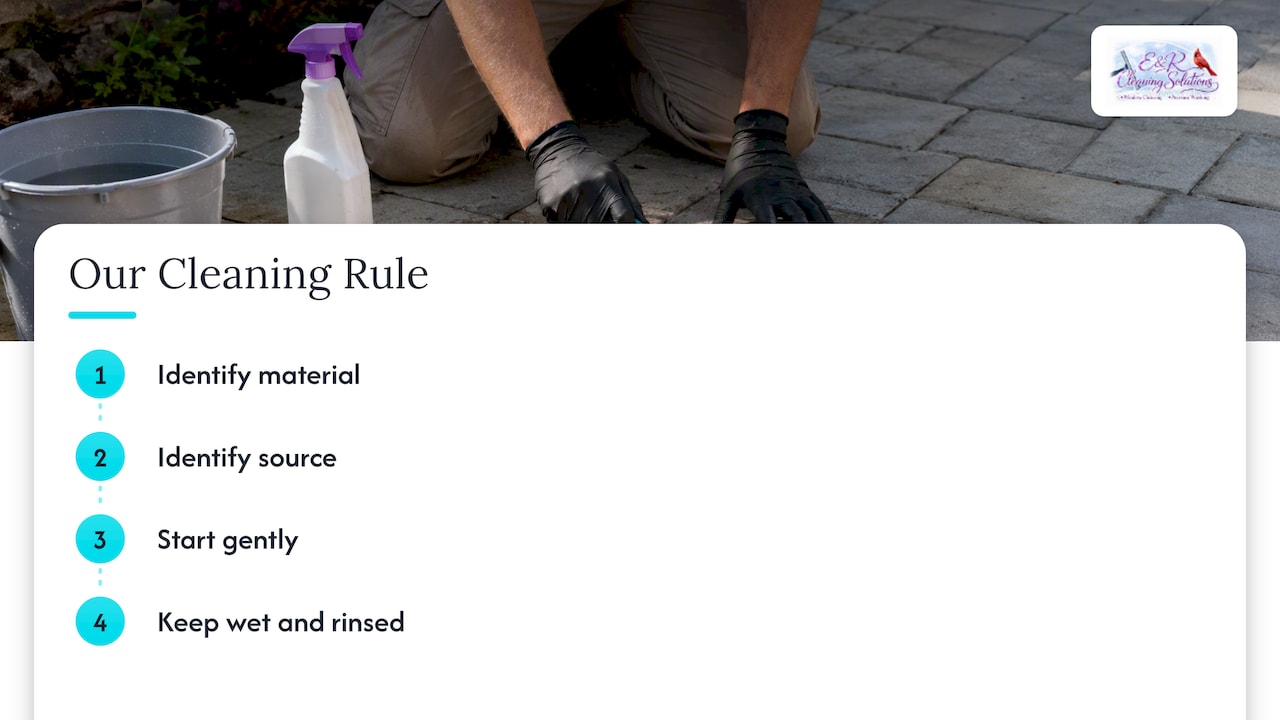
Our rule is simple. Identify the material, identify the source, start with the gentlest method that could work, and keep the surface wet and rinsed. We quote each job on its own because a single rust ring under a patio chair and a whole walkway streaked by sprinklers are different jobs, and we think pricing should reflect that honestly.
We also tell customers when the answer isn’t more cleaning. If a sprinkler head or a rusting rail keeps feeding the stain, we say so, because a repeat visit that fixes nothing is not good service.
— Richard
When to hire a professional
Do it yourself when the stain is small, fresh, on a known concrete paver, and you have a hidden spot to test. Call a pro when:
- The pavers are natural stone, or you are unsure what they are.
- The stains cover a large area, such as a driveway, pool deck or storefront entrance.
- You have already tried a product and the stain lightened but didn’t leave.
- The surface is slippery with algae too. See our guide to making a slippery patio safe without undiluted bleach, or black spots on a patio.
- You manage rentals or commercial property and want consistent results across units. Our notes on pressure washing between tenancies and driveway cleaning for rental homes explain how that works.
Working with E&R Cleaning Solutions
We offer pressure washing for driveways, sidewalks, patios and building exteriors, including stain removal, for residential and commercial properties, plus window cleaning inside and out with hard water stain removal. Pricing is custom per project and scheduling is flexible. Tell us what the pavers are, where the stains are and what you’ve already tried, and we’ll quote it honestly. You can request a quote for pressure washing and window cleaning on our site.
How to keep rust away
- Replace rusting furniture feet with plastic or rubber glides, and use saucers under metal planters.
- Repaint or replace corroding metal with a rust-preventive primer and paint.
- Sweep fertilizer off pavers right after applying it.
- Aim sprinklers away from hard surfaces, and test your water if you use a well.
- Rinse pavers regularly and follow the manufacturer’s care guide. Our driveway pressure washing frequency guide helps you match schedule to material and traffic.
FAQ
Can rust stains on pavers be permanent?
Most aren’t, especially if you treat them early. Stains left for months or years can sink deeper into porous stone and need more effort. The permanent damage usually comes from the wrong fix: etching from acid on sensitive stone or from a narrow pressure tip.
Will a pressure washer remove rust from pavers?
Usually not by itself. Water pressure removes loose dirt, not the iron bound into the surface, and too much pressure can etch pavers. Treat the rust with a product made for pavers, then rinse or wash at a pressure suited to the material.
Is vinegar or lemon juice safe for rust on pavers?
They are mild acids, and they sometimes help on light surface stains on concrete. They can still dull acid-sensitive stone, so test a hidden spot first and rinse well. If nothing changes after one try, move to a paver-specific rust remover instead of stronger home mixes.
Why do rust stains keep coming back on my pavers?
The source is probably still active. Common culprits are iron in sprinkler water, fertilizer, a rusting fixture or metal furniture. Fix the source, then clean once more.
Sources
- How to remove rust from paving slabs, Tile and Stone Journal
- Customer care and maintenance guide, Techo-Bloc
- Gator Rust Remover, Alliance Gator
- Does vinyl siding rust or mold?, Power Home Remodeling
- Rust removal from concrete pavers, Ask the Builder
- How to stop rust stains from sprinklers, Clean Water Store
- How to remove rust from pavers, Ferber Painting