
Pool Deck Pressure Washing for Homeowners: Match PSI, Avoid Damage
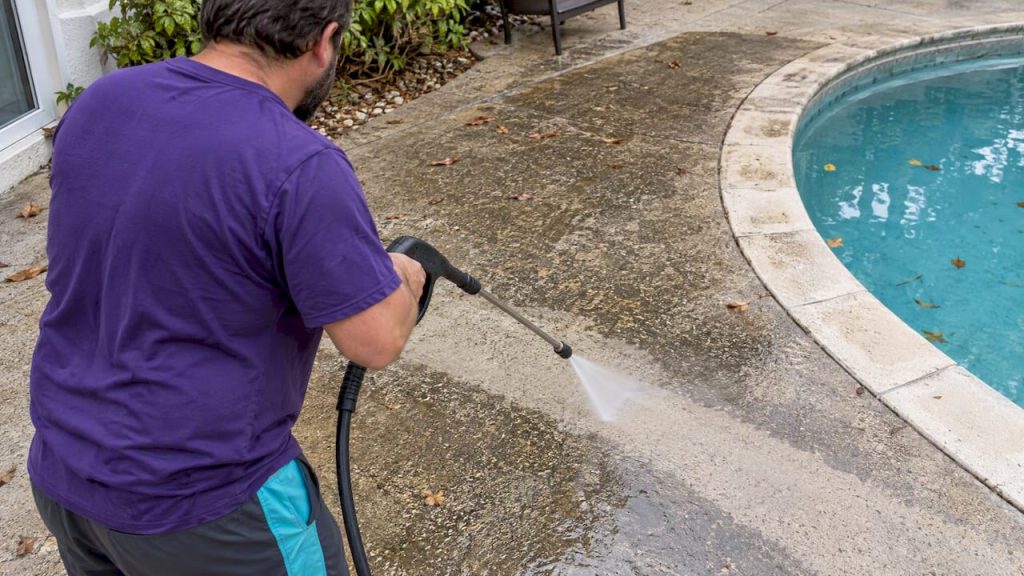
Yes, most pool decks can be pressure washed safely if you match the pressure and technique to the surface and keep chemically treated water out of storm drains. Concrete handles higher pressure well, while acrylic coatings, pavers, and tile need gentler methods. The real question isn’t whether you can clean your pool deck this way, it’s which settings and runoff plan fit your specific surface.
TL;DR:
- Use 1,800 to 2,800 PSI on broom finished concrete, with a 25° to 40° nozzle held 8 to 12 inches away; test a hidden patch first.
- Skip the high pressure wand on acrylic coatings; use soft washing or hand scrubbing, and clean pavers with a surface cleaner before replacing joint sand.
- Keep chemically treated runoff out of storm drains; dechlorinate it before release, and confirm local rules before using a sanitary sewer or irrigation.
- Deep clean annually, or sooner when algae or stains return; weekly sweeping and monthly spot cleaning can reduce buildup between washes.
Table of Contents
- Tools and Supplies You Need for Pool Deck Cleaning
- PSI and Nozzle Settings by Deck Material
- A Step-by-Step Pressure-Washing Workflow
- Managing Wastewater and Chemical Runoff Safely
- What Pool Deck Cleaning Costs and How Often to Do It
- Pro Tips to Protect Your Deck Long-Term
- When to Call a Pool Deck Cleaning Professional
- A Straightforward Take on Pool Deck Cleaning
- Get a Pool Deck Cleaned the Right Way
- FAQ
- Sources
Tools and Supplies You Need for Pool Deck Cleaning
A consumer-grade electric pressure washer with moderate PSI works fine for light pool deck grime, while a higher-PSI gas-powered unit handles stubborn algae and old stains faster, though it also carries more risk of surface damage if mishandled. Wide-angle nozzles spread force over a broader area and reduce the chance of etching concrete or stripping coatings.
A surface cleaner attachment, which spins two nozzles under a protective housing, gives even coverage across flat areas like pool decks without the streaking a single wand often leaves behind.
- Choose pool-safe or biodegradable cleaners instead of straight bleach, which can harm landscaping and waterways when it runs off.
- Keep a soft-bristle brush on hand for grout lines and coated surfaces that can’t take direct pressure.
- Wear closed-toe shoes, safety glasses, and gloves rated for chemical contact.
- Stock plastic sheeting or sandbags to protect nearby plants and temporarily block storm drains during the job.
PSI and Nozzle Settings by Deck Material
Every pool deck surface has a pressure threshold, and guessing wrong can mean permanent damage. Test an inconspicuous patch before committing to a full pass, regardless of material.
- Concrete (broom finish): Moderate PSI (1,800 to 2,800) with a 25° to 40° wide-angle nozzle, held 8 to 12 inches from the surface.
- Acrylic or textured overlays such as Kool Deck or similar proprietary coatings: skip the high-pressure wand entirely. Low-pressure soft washing or manual scrubbing avoids stripping the finish, since composite and coated surfaces respond better to gentler methods than to direct blasting.
- Pavers and natural stone: Use a surface cleaner at moderate PSI to avoid blowing out joint sand. Plan to re-sand joints after the deck dries.
- Tile and grout: Low pressure with angled passes and a gentle detergent protects grout lines from erosion.
- Wood and composite decking: Low PSI or a soft-wash approach with a wide-angle nozzle prevents splintering and keeps factory finishes intact.
Pro Tip: When in doubt, drop to the lowest setting that still lifts dirt, then increase gradually rather than starting high and risking a mistake you can’t undo.
A Step-by-Step Pressure-Washing Workflow
Working through the job in order prevents the two most common mistakes: uneven cleaning and accidental surface damage.
- Prep the area. Remove furniture and planters, sweep loose debris, cover or block nearby drains, and shut off pool equipment and irrigation lines near your work zone.
- Run a test patch. Pick a hidden corner, try your planned PSI and nozzle combination, and note what worked before moving to the full deck.
- Wash in overlapping passes. Start at the farthest corner from your exit point and work backward in consistent, overlapping strokes, keeping the wand at a steady distance and speed.
- Treat stubborn spots. Oil stains often need a degreaser with dwell time before rinsing; rust responds to a rust-specific cleaner rather than higher pressure. Algae on coated or shaded areas usually comes up faster with a soft-wash detergent and a short dwell period than with brute force.
- Rinse thoroughly and inspect. Flush all detergent residue, check for lifted sand, chipped coating, or new cracks, and let the surface dry fully before returning furniture or reopening the pool area.
This same sequence, prep, test, wash, treat, rinse, applies closely to walkway pressure washing and other flatwork around a property.
Managing Wastewater and Chemical Runoff Safely
Pool water treated with chlorine, bromine, or salt can damage waterways if it drains straight into a storm system, and EPA guidance on safely discharging chemically treated water recommends dechlorinating before release, draining to a sanitary sewer where local rules allow it, or using treated water for irrigation after dechlorination.
- Let chlorinated water sit and off-gas, or use a dechlorination product, before it reaches any drain.
- Check with your municipality before draining to a sanitary sewer, since EPA’s illicit discharge guidance confirms that local permits govern which non-stormwater discharges are allowed.
- Contain wastewater with barriers or a wet vacuum setup when neither sewer discharge nor irrigation reuse is an option.
Algae and mold on outdoor surfaces aren’t just cosmetic. EPA mold health information notes that mold and mildew exposure can cause health problems for sensitive individuals, which is one more reason to clean buildup rather than leave it. Rules on discharge vary by municipality, so a quick call to your local water authority saves headaches later. Colorado homeowners, for example, face specific wastewater enforcement rules that illustrate how local ordinances can shape what’s allowed.
What Pool Deck Cleaning Costs and How Often to Do It
Price depends on deck size, surface type, how stubborn the stains are, and whether wastewater containment adds extra labor. A breakdown of patio pressure washing costs walks through typical pricing factors homeowners run into.
- A small to medium residential pool deck usually takes a few hours from setup to final rinse.
- Larger or older decks with heavy staining can stretch into a full day.
- Light seasonal maintenance, like a quick rinse and spot-clean, keeps algae from taking hold between deep cleanings.
- A full deep clean once a year, or sooner if algae or stains reappear, generally keeps most decks in good shape.
Frequency also depends on material and sun exposure, similar to how driveway cleaning schedules shift based on traffic and surface type.
Pro Tips to Protect Your Deck Long-Term
Small habits between deep cleans make a bigger difference than any single power-wash session.
- Photograph your test patch and write down the PSI, nozzle angle, and distance that worked, so you’re not guessing next time.
- Apply a sealer or joint-sand treatment appropriate to your material once the surface is fully dry, following the product’s own instructions.
- Sweep weekly and spot-clean monthly to keep algae from establishing a foothold, which cuts down on how often you need high-pressure cleaning at all.
- Work on mild, overcast days. Peak sun dries cleaners too fast for even results, and freezing temperatures can crack wet concrete.
Pro Tip: Keep a small logbook of settings by surface area. A deck often has more than one material, and what works on the coping stone may ruin the coated walkway beside it.
When to Call a Pool Deck Cleaning Professional
Some damage only shows up under close inspection: hairline cracks, coating that’s already thinning, or a drainage path that sends runoff somewhere it shouldn’t go. A trained eye catches those before they turn into a bigger repair bill.
- We check for existing coating wear, hidden cracks, and drainage direction before ever turning on a pressure washer.
- We offer soft-wash methods for coated and sensitive surfaces alongside standard pressure washing, matched to what your deck can actually handle.
- Quotes are itemized and priced honestly, with no surprise add-ons once the work begins.
A Straightforward Take on Pool Deck Cleaning
Most of the damage I see on pool decks comes from using one pressure setting everywhere instead of matching the method to the material. Test first, protect your drains, and if your deck has an aging coating or a drainage setup you’re unsure about, get a professional opinion before you reach for the wand. The same caution applies to walkway cleaning and other flatwork around your home.
— Richard
Get a Pool Deck Cleaned the Right Way
We price every job honestly and treat each pool deck like it’s our own, matching pressure, nozzle, and cleaner to the surface instead of running one setting on everything.

Whether your deck is broom-finished concrete, a coated acrylic surface, or aging pavers, we can walk you through what it needs. Request a quote for window cleaning or pressure washing and get a plan built around your deck, not a generic script.
FAQ
Can you pressure wash a pool deck?
Yes, most pool deck materials can be pressure washed safely when you match the PSI and nozzle to the surface and manage runoff properly. Acrylic coatings and some pavers need lower pressure or a soft-wash approach instead of a direct high-pressure blast.
What is the average cost to pressure wash a pool deck?
Cost depends on deck size, surface material, staining, and whether wastewater containment is needed, so there’s no single fixed price. A detailed cost breakdown for patio pressure washing walks through the main factors that drive the final number.
What is the best way to clean a pool deck?
The safest approach starts with a test patch, then moves to consistent overlapping passes at a steady distance, working from the farthest corner back toward your exit. Spot-treat stains like oil, rust, or algae with the right product before your final rinse.
Is it a good idea to pressure wash a deck?
It’s a good idea when you use pressure and nozzle settings suited to the material, since the wrong settings can strip coatings or dislodge joint sand. Wood, composite, and coated acrylic surfaces often do better with low pressure or a soft-wash method than with a direct high-pressure wand.