Protect Siding: Season First Pressure Wash Timing for Homeowners
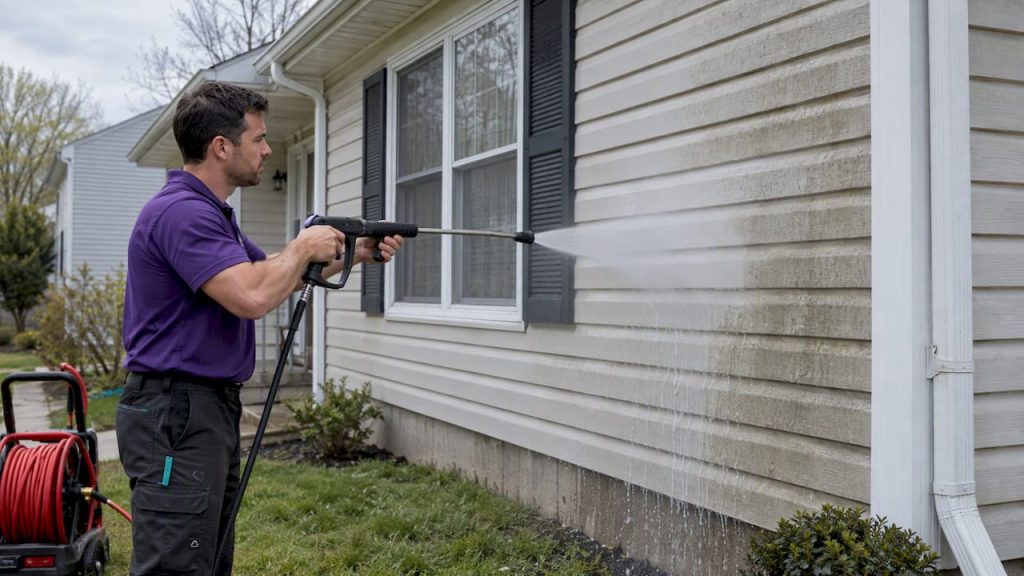
Most homeowners should pressure wash at least once a year, ideally in spring or early fall when temperatures sit between 40 and 75 degrees Fahrenheit. Humid, shaded, or coastal homes often need a second wash, and homes getting ready for paint or a sale may need washing scheduled around that project instead of the calendar.
TL;DR:
- Humid, coastal, or shaded homes often need twice-yearly pressure washing to effectively control mildew, salt residue, and algae buildup.
- Temperatures between 40 and 75 degrees Fahrenheit are ideal for pressure washing, with hotter or colder conditions risking streaks or freezing.
- Professional services tailor pressure levels and nozzles to specific materials, avoiding damage to delicate surfaces like stucco or painted wood.
- Pressure washing should be avoided during rain, high wind, or near freezing temperatures when runoff or damage risks increase.
- DIY pressure washing is suitable for small, ground-level projects, but professional help is recommended for delicate materials or high or hard-to-reach areas.
Table of Contents
- Best seasons and the right temperature window for pressure washing
- How often to pressure wash a house by climate, exposure, and material
- When not to pressure wash and the safety risks to know
- Timing a pressure wash around painting or selling your home
- DIY versus hiring a pro for pressure washing
- How E&R Cleaning Solutions applies this guidance in practice
- A field perspective on getting the timing right
- Book a pressure wash timed to your home’s exterior
- FAQ
- Sources
Best seasons and the right temperature window for pressure washing
Spring is the obvious starting point because it clears away everything winter left behind: road salt residue, dead leaves ground into the walkway, and the mildew that grows in damp, cold corners while the sun sits low. Early fall earns a spot on the schedule too, since it strips off a summer’s worth of pollen, dust, and algae before colder weather locks grime onto the siding for months.
Temperature matters more than most homeowners expect. The CDC notes that mild spring weather in the 40 to 75 degree Fahrenheit range gives cleaning solutions time to work without evaporating or freezing, which is exactly the window a professional crew will usually recommend for a home’s exterior. Go much hotter and cleaning agents dry on the surface before they finish breaking down mildew, which can leave streaks. Go colder and water left in hoses, nozzles, or siding cracks can freeze overnight.
A few other conditions are worth checking before booking a wash:
- Rain in the forecast within a day can wash away cleaning solution before it finishes working.
- High wind spreads overspray onto windows, cars, and plants.
- Heavy pollen days mean the exterior will just look dusty again within hours.
Plan around a dry, mild stretch rather than the first warm Saturday of the season, and the result holds up much longer.
How often to pressure wash a house by climate, exposure, and material
Once a year is the baseline most homeowners can work from, but it is a floor, not a fixed rule. Southern Living notes that homes in humid or coastal regions often need washing twice a year to keep up with mildew, pollen, and salt buildup that a single annual wash cannot fully manage.
A few factors push that baseline higher:
- Heavy shade from trees keeps siding damp longer, which speeds up algae and moss growth.
- Coastal homes collect salt residue that eats into paint and metal trim over time.
- Homes near busy roads or construction sites pick up grime faster than quiet residential streets.
Surface type changes the approach as much as the schedule does. Vinyl and aluminum siding generally hold up fine on an annual cycle. Concrete driveways and walkways often need more frequent attention since oil drips, tire marks, and ground-in dirt build up faster than they do on vertical surfaces. Painted wood, stucco, and brick are a different story: these materials do better with a soft-wash approach that uses lower pressure and a cleaning solution instead of brute force, since high PSI can strip paint, crack stucco, or force water behind siding where it causes rot. Better Homes & Gardens points out that more pressure is not always better, and that professionals tailor PSI and nozzle choice to the material rather than using one setting for everything.
Beyond the calendar, a few triggers mean it is time regardless of when the last wash happened: visible mildew or algae patches, a wash-worthy mess left behind by a storm, or salt film after a coastal weather event.
When not to pressure wash and the safety risks to know
Skip pressure washing when temperatures are near or below freezing, since water left behind can freeze overnight and crack hoses, fittings, or even siding. Scorching midafternoon heat is just as bad in the other direction: cleaning solution dries before it has time to lift dirt and mildew, which often leaves streaks that need a second pass to fix.
The CDC warns that pressure washers can cause serious deep-tissue injuries, a risk that rises sharply when the person holding the wand has never used one before. The spray from a gas or electric unit carries enough force to cut skin, and the same guidance stresses never aiming the wand at another person or at bare skin.
Gas-powered units carry a second risk that has nothing to do with the spray itself. Running a gasoline engine indoors or in a partially enclosed space like a garage builds up carbon monoxide fast enough to be lethal, which is why professionals keep the engine outside and run the hose in rather than bringing the machine indoors.
Pro Tip: Keep gas-powered pressure washers at least several feet from doors and windows, and never run one in a garage even with the door open.
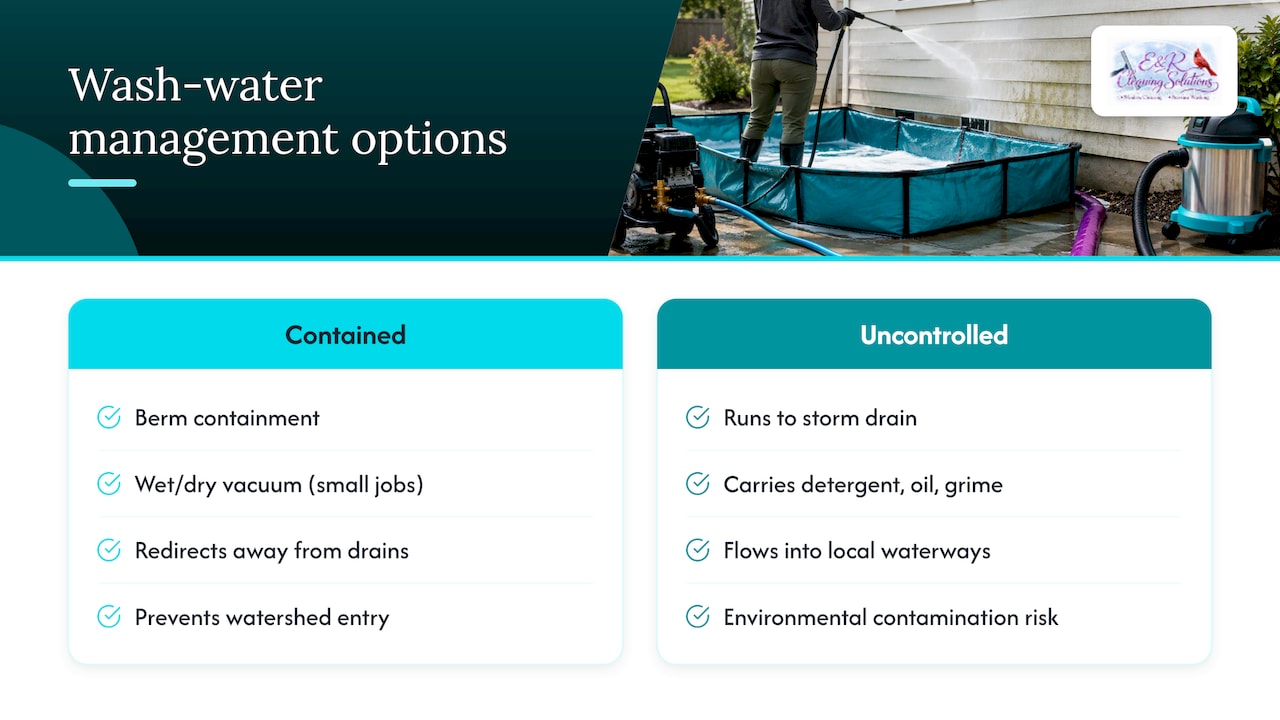
Runoff is the quieter risk, and managing wash-water handling and drain management effectively helps prevent environmental runoff. Wash water carrying detergent, oil, and grime can run straight into a storm drain and from there into local waterways, so containing or redirecting it with a berm or a wet/dry vacuum on smaller jobs keeps that mess out of the watershed.
Timing a pressure wash around painting or selling your home
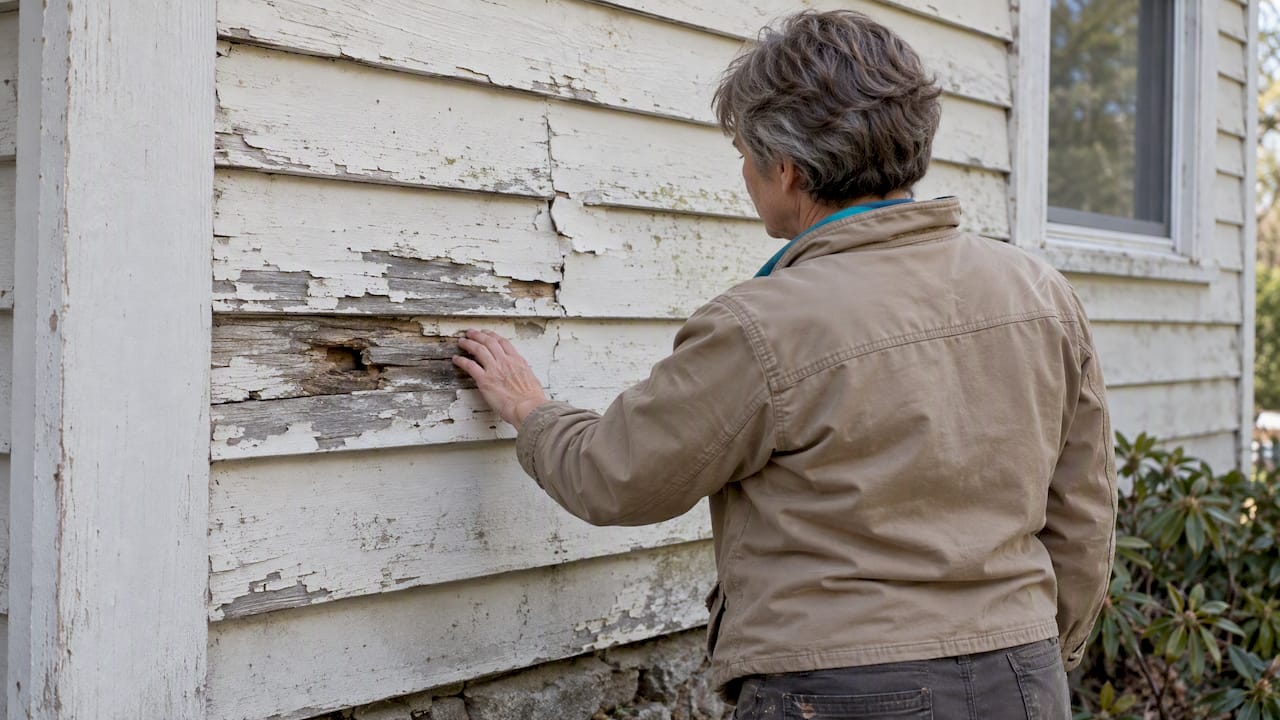
A pressure wash does more than clean before a paint job. It uncovers peeling spots, cracks, and rot that need repair before a brush ever touches the wall, and paint simply will not bond well to a dirty surface. Bob Vila’s guidance on exterior washing recommends letting the surface dry for 24 to 72 hours before painting or staining, since trapped moisture under fresh paint causes blistering and early failure.
Selling a home calls for a different kind of timing. A wash scheduled one to two weeks before listing photos or showings gives the exterior time to settle, so fresh water spots and streaks are gone and new leaf drop or pollen has not had time to resettle on clean siding.
A few things a professional crew typically protects during the job:
- Trim and freshly painted surfaces get lower pressure and wider nozzle angles.
- Plants and landscaping get rinsed or covered before chemical cleaners are applied.
- Windows and screens are checked for existing damage before spraying near them.
DIY versus hiring a pro for pressure washing
Small, ground-level jobs are reasonable to tackle with a rented or consumer pressure washer: a patio, a short walkway, or a single-story driveway. Anything involving a ladder, a second story, or a roofline is a different calculation, since a fall from height combined with a high-pressure wand is a bad combination.
- Call a professional for heavy mildew, algae, or mold that has had years to set in.
- Call a professional before any paint prep job, since incorrect pressure can strip more than dirt.
- Call a professional for stucco, older siding, or anything described as delicate by the manufacturer.
Professionals bring a few advantages that matter here: soft-wash chemicals for delicate materials, PSI and nozzle settings matched to the surface, and a plan for managing runoff instead of letting it run straight into the yard or street.
Pro Tip: Before hiring anyone, ask about insurance coverage, how they handle wastewater, whether they can provide references, and what equipment they bring for your specific siding type.
How E&R Cleaning Solutions applies this guidance in practice
The company is a family-run business that handles residential and commercial pressure washing and window cleaning. That day-to-day work lines up closely with the guidance above: delicate siding gets a soft-wash treatment at low pressure rather than a blast of high PSI, jobs get scheduled around mild, dry weather instead of whatever day happens to be open, and wash water gets managed rather than left to run into the street.
Homeowners planning their own schedule can check a seasonal maintenance guide for a broader year-round checklist, or look at the steps involved in washing a walkway before deciding whether a job is a reasonable DIY project or one worth handing off.
A field perspective on getting the timing right
The biggest mistake homeowners make is not choosing the wrong season. It is choosing the right season and then using the wrong pressure for the material in front of them. A vinyl-sided house and a stucco house do not get the same treatment, even on the same mild spring afternoon.
Three things matter more than the calendar date: the temperature window, a quick check of what the surface is actually made of, and a plan for where the wash water goes. Get those three right and the season almost takes care of itself.
— Richard
Book a pressure wash timed to your home’s exterior
E&R Cleaning Solutions handles both window cleaning and pressure washing for homes and small businesses, with soft-wash options for siding that cannot handle high pressure and custom scheduling built around the weather rather than a generic calendar.

What homeowners get with a booked job:
- Honest, custom pricing quoted for the specific job, not a flat rate for every house.
- Crews experienced with vinyl, stucco, brick, and painted wood, each handled differently.
- Wash water managed to keep runoff out of storm drains and gardens.
Request a quote through the E&R Cleaning Solutions homepage and get a schedule built around your home’s siding and the season ahead.
FAQ
When should you not power wash your house?
Skip it when temperatures are near or below freezing, since leftover water can freeze and crack hoses or siding, and avoid scorching midafternoon heat since cleaning solution dries too fast and can leave streaks. Rain, high wind, and heavy storms are also reasons to reschedule.
What is the best month to pressure wash a house?
There is no single best month everywhere, but spring and early fall tend to offer the mildest, driest conditions for washing. Aim for a stretch of dry weather with temperatures between 40 and 75 degrees Fahrenheit rather than a specific date.
What are the don’ts when pressure washing a house?
Do not use a gasoline-powered washer indoors or in an enclosed space, since the engine can build up lethal carbon monoxide. Avoid aiming the wand at people or pets, and avoid high PSI on delicate materials like stucco or painted wood, which can strip paint or force water behind siding.
When pressure washing a house, do you start at the top or bottom?
Most professional guidance favors working from the top down so dirty runoff rinses over areas that have not been cleaned yet rather than streaking already clean sections. A telescoping wand helps reach upper stories without the fall risk that comes with a ladder.
How often should a driveway be pressure washed compared to siding?
Concrete driveways generally need more frequent cleaning than siding because oil, tire marks, and dirt build up faster on a horizontal surface people drive and walk on daily. Siding on most homes holds up fine on an annual cycle, or twice a year in humid or coastal climates.
Sources
- Pressure washer safety | Natural disasters | CDC
- How often to pressure wash your house | Better Homes & Gardens
- How often should you power wash your house? | Southern Living
- How to pressure-wash a house | Bob Vila