Choose a Pressure Washing Company Safely for Homeowners & Managers
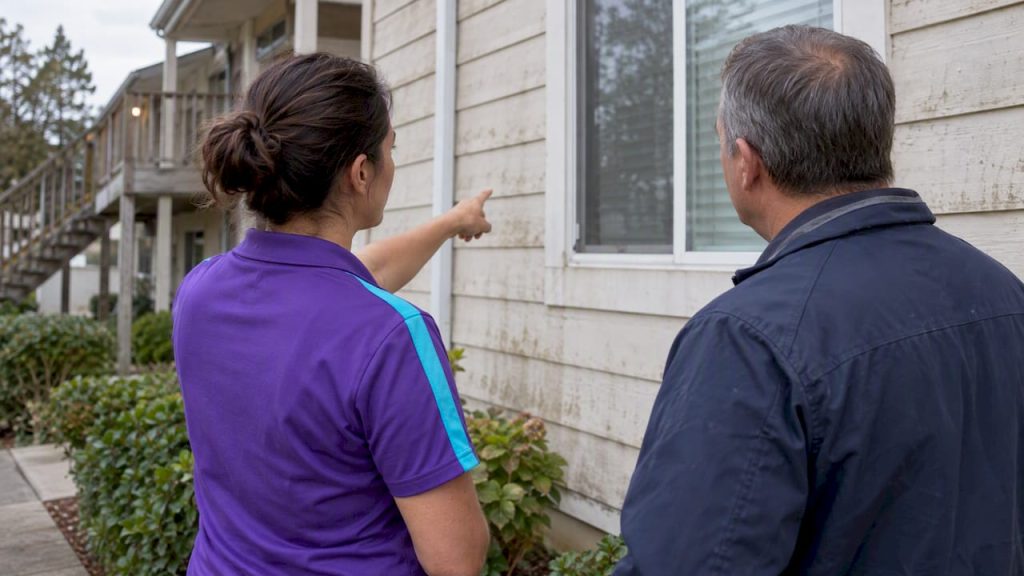
Hire a licensed, insured professional who visits your property, measures the job, and explains which method fits each surface before any cash changes hands. The safest path is to collect 2 to 3 written on-site quotes and compare them side by side rather than picking the first phone estimate you get. That comparison, not the lowest number, is what protects your siding, your driveway, and your wallet.
TL;DR:
- Always confirm insurance, licensing, and detailed scope in writing before any pressure washing work begins.
- An on-site estimate provides crucial information on access, stains, and surface condition that a phone quote cannot offer.
- Use a contractor that specifies the cleaning method for each surface, rather than a generic pressure wash, to prevent damage.
- Beware of low bids that lack transparency on method, scope, or insurance, as these often lead to higher costs and higher risks.
- Prioritize a contractor who explains their process clearly, provides line-item quotes, and offers warranties to ensure quality and safety.
Table of Contents
- What to check at a glance before you hire anyone
- What pressure washing actually costs and how quotes get built
- Vetting credentials and protecting your property
- Safe methods for siding, windows, concrete, and roofs
- Questions to ask and red flags that should end the call
- Comparing quotes and picking the right contractor
- E&R Cleaning Solutions: what to expect when you request a quote
- Why the lowest quote is rarely the smart choice
- Ready to request your written quote?
- FAQ
- Sources
What to check at a glance before you hire anyone
Before you let anyone near your siding or driveway, run through a short screening list. It takes a few minutes and rules out the contractors who will cause you headaches later.
- Ask for proof of general liability insurance and a current business license.
- Confirm the exact method planned for each surface, since soft washing and high-pressure cleaning are not interchangeable.
- Request references, recent before and after photos, and testimonials from jobs similar to yours.
- Insist on a written, line-itemized estimate that breaks out materials, labor, and cleanup.
A contractor who hesitates on any of these is telling you something. The ones worth hiring usually have this information ready before you ask twice.
Pro Tip: Keep a copy of the contractor’s insurance certificate in your email, not just a verbal confirmation, in case a dispute comes up later.
What pressure washing actually costs and how quotes get built
Most pressure washing companies price jobs one of three ways: per square foot, per hour, or as a flat rate for a defined scope. Hourly billing is common when the job’s difficulty is uncertain, and rates typically fall in the $35 to $100 per hour range, with a standard siding or deck job running about 2 to 3 hours. Our own pressure washing cost breakdown walks through what homeowners actually pay for common jobs, and patio-specific numbers are covered in our patio pressure washing cost guide.
Several factors push a quote higher or lower:
- Height and the need for ladders or extension equipment.
- Heavy staining, mildew, or algae that requires extra treatment time.
- Specialty detergents for grease, rust, or hard water deposits.
- Surface prep, such as covering plants or securing loose fixtures.
- Travel distance for jobs outside a contractor’s usual service radius.
An on-site visit beats a phone quote because a contractor can see the actual square footage, staining severity, and access challenges that change the price. Some homeowners consider renting equipment themselves, with rental rates around $40 to $120 per day, but inexperienced operators face a real risk of cracking concrete or stripping paint, which is why most jobs are better left to a professional crew.
Vetting credentials and protecting your property
Credentials matter more than a polished website or a quick smile. Before signing anything, work through these steps.
- Request the insurance declarations page, not just a certificate number, and confirm the policy is active by calling the carrier if the job is large.
- Verify the business license number through your state or local licensing board if one is required in your area.
- Ask what the workmanship guarantee covers, including whether a damaged screen, cracked light fixture, or dead plant would be repaired or replaced at no charge.
- Get everything in a written contract before work starts, including scope, price, timeline, and payment terms.
- Confirm bonding and worker’s compensation coverage, since this determines who pays if a worker is injured on your property.
Skipping any one of these steps shifts the financial risk from the contractor’s insurance company onto you.
Safe methods for siding, windows, concrete, and roofs
The surface determines the method, and a contractor who uses the same setting on every job is cutting corners. Soft washing, which combines low pressure with a cleaning detergent, is the right call for painted siding, roofline algae, and window frames because it lifts organic growth without forcing water behind siding panels or into window seals.

Higher-PSI settings are appropriate for concrete driveways and walkways, often paired with degreasers for oil and grease stains. Consumer Reports warns against concentrated zero-degree streams, which are narrow enough to etch wood, shatter glass, or strip paint in seconds.
A contractor who knows what they’re doing will also:
- Cover or relocate landscaping before starting.
- Shut off or cover exterior electrical outlets and fixtures.
- Test pressure settings on an inconspicuous area first.
Our low-pressure house washing guide and pressure window washing safety guide go deeper on these distinctions.
Questions to ask and red flags that should end the call
A short phone screen before you book an on-site visit saves everyone time.
Ask by phone first:
- What is your availability, and how far out are you booking?
- Walk me through how you build an estimate for a job like mine.
- How long does a typical job this size take?
- Can you send proof of insurance before the visit?
Ask on-site:
- What exact method will you use on each surface?
- What prep work is needed before you start?
- What results should I realistically expect?
- What does cleanup look like when you’re done?
Red flags to walk away from: no proof of insurance, a vague verbal scope with no written estimate, or pressure for a large cash deposit upfront.
Pro Tip: A contractor who can’t explain their method for your specific siding or concrete type in plain language probably hasn’t thought it through.
Comparing quotes and picking the right contractor
Once you have 2 to 3 written quotes, resist the urge to sort by price alone. A $200 bid with vague scope language can cost more than a $280 bid once you account for damage risk or redone work.
Compare each quote on the same five points:
- Insurance coverage, confirmed and current, not just claimed.
- Method specified per surface, not a generic “pressure wash” line.
- Scope detail, including exactly what’s included and excluded.
- Timeline, with a realistic start and completion window.
- Warranty and cleanup terms, spelled out rather than implied.
When one quote costs a bit more but spells out the method, insurance, and warranty clearly, that clarity is usually worth paying for. A vague low bid often becomes the expensive option once something goes wrong.
E&R Cleaning Solutions: what to expect when you request a quote
We have handled window cleaning and pressure washing for homeowners and property managers for over five years. Written quotes spell out the method for each surface, line-item pricing, an estimated timeline, and cleanup details before any work begins, with testimonials referencing results on stubborn stains and hard water marks. For method specifics, our low-pressure house washing page and walkway pressure washing guide explain what we do and why, and property managers can review pricing expectations in our apartment pressure washing guide.
Why the lowest quote is rarely the smart choice
The advice that gets repeated most often, get three quotes and pick the cheapest, misses the actual decision. Price only matters once you’ve confirmed insurance, method, and scope are equal across bids. A homeowner who skips straight to the dollar figure is comparing apples to a surface that might end up damaged.
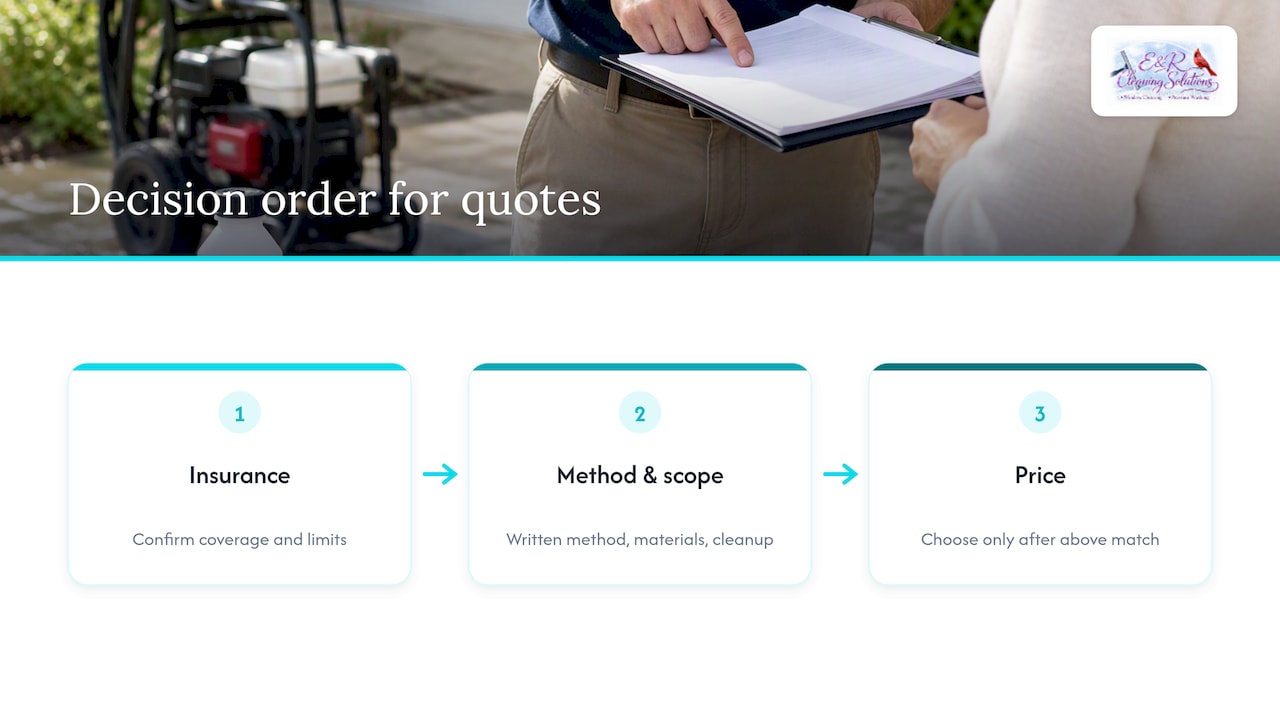
What gets underrated is the written quote itself. A contractor willing to put method, materials, and cleanup on paper is telling you they stand behind the work. One who won’t is telling you something too.
If you take one thing from this guide, prioritize the on-site visit over the phone quote. Pressure washing problems, cracked concrete, stripped paint, a soaked electrical outlet, almost always trace back to someone skipping the measurement and assuming instead of checking. Get that part right and the rest of the decision gets a lot easier.
— Richard
Ready to request your written quote?
Getting a clear answer on your project starts with a visit, not a guess over the phone. We’ll walk your property, explain the method for each surface, and send a written quote with pricing, timeline, and cleanup terms spelled out.

| What you get | Detail |
|---|---|
| Quote format | Written, line-itemized, on-site |
| Methods explained | Per surface, before work starts |
| Services | Window cleaning, pressure washing |
Request your quote from E&R Cleaning Solutions and get a straight answer on scope, timeline, and price.
FAQ
How much does it cost to pressure wash a 2,000 square foot house?
Pricing depends on height, staining, and whether soft washing or higher pressure is needed, but most residential jobs are billed hourly at roughly $35 to $100 per hour or as a flat rate based on square footage. A typical siding job runs about 2 to 3 hours, so get an on-site quote for an accurate number specific to your home.
What is the most reliable brand of pressure washer?
Brand reliability varies by use case and maintenance history, and no single model is universally best for every job. Consumer Reports evaluates pressure washers on performance and safety, and recommends avoiding equipment or settings that produce a concentrated zero-degree stream regardless of brand.
Why do most pressure washing businesses fail?
Common reasons include inconsistent pricing that doesn’t cover true costs, inexperienced operators damaging property and losing repeat customers, and skipping insurance or licensing that limits which jobs they can legally take. Businesses that survive tend to price transparently and document their work with written estimates and references.
What factors should I consider when choosing a pressure washer company?
Prioritize proof of insurance and licensing, a written on-site quote with line-item pricing, and a clear explanation of the method planned for each surface. Reviews, before and after photos, and a stated warranty or workmanship guarantee round out a solid screening checklist.
Sources
- Pressure Washer Ratings & Reviews – Consumer Reports
- Cost of Office Cleaning – Last Updated August 2026 – Yelp