Apartment Pressure Washing: $100–$400 & Hiring for Property Managers
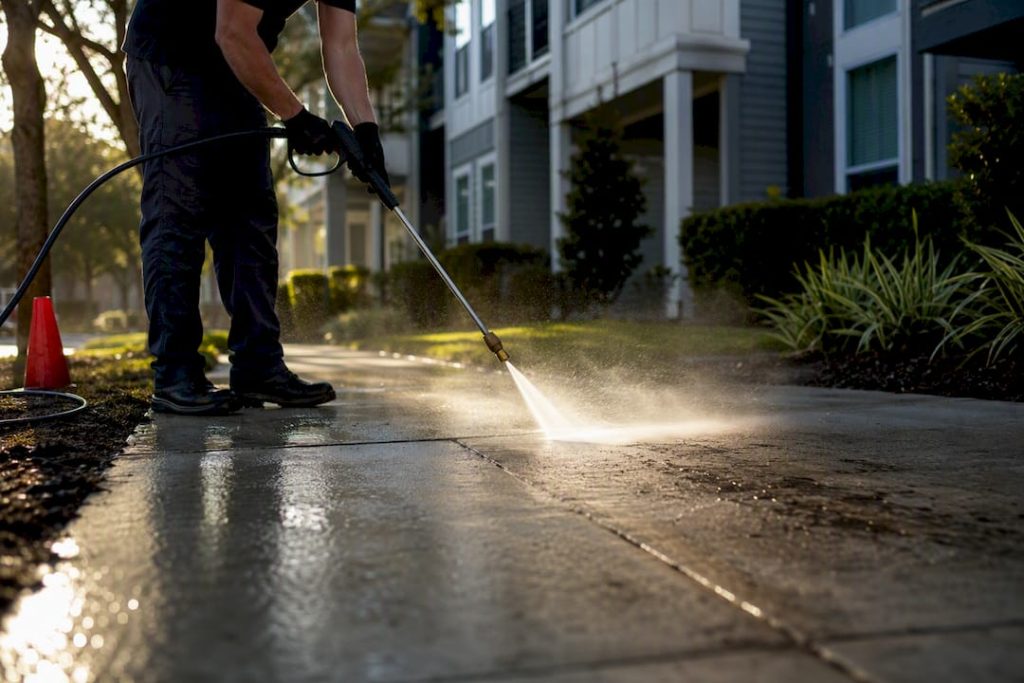
Hire a professional pressure-washing crew for apartment exteriors, walkways, parking lots, and balconies when stains, algae, oil, or tenant turnover affect safety or curb appeal. Homeowner curb-appeal jobs typically run $100 to $400 as a baseline, but apartment and commercial jobs scale up with square footage and access complexity. A qualified crew will choose soft washing for siding and painted surfaces, and high-pressure methods for concrete, based on what the surface can actually handle.
TL;DR:
- Pressure washing costs for apartments typically start around $100 to $400 for homeowners, scaling higher based on size, access, and stain severity.
- Soft washing is recommended for siding and painted surfaces to avoid damage, while high-pressure cleaning is suitable for concrete and heavily soiled areas.
- Proper site preparation, including tenant notifications and vehicle removal, is essential to prevent delays and complaints during cleaning.
- Contract transparency is crucial, requiring itemized estimates that specify scope, methods, chemicals, and permits, with proof of insurance to prevent liability issues.
- Scheduling regular pressure washing between tenancies reduces deep stains and maintains curb appeal, preventing costly restorations and supporting higher rent premiums.
Table of Contents
- What Does Apartment Pressure Washing Include?
- Why Does Pressure Washing Matter for Occupancy and Safety?
- How Much Does Apartment Pressure Washing Cost?
- What Should You Check Before Hiring a Contractor?
- Soft Wash or High Pressure: Which Method Fits Your Building?
- What Precautions Apply to Different Building Surfaces?
- How Do You Prepare Tenants and the Site Before the Job?
- What Perspective Matters Most for Property Managers?
- Ready to Book Apartment Pressure Washing?
- Where to Learn More
- FAQ
What Does Apartment Pressure Washing Include?
A full-service quote for apartment pressure washing should spell out exactly which surfaces and areas get treated, not just “the outside of the building.” Scope creep and vague line items are where most disputes start.
Most reputable contractors cover:
- Building exteriors, including vinyl siding, stucco, and brick facades
- Common walkways, entry stairs, and stairwells shared by multiple units
- Parking lots, garage entrances, and dumpster pads
- Patios and balconies, both private and shared
- Spot treatments for oil, chewing gum, and rust stains on concrete
Many property managers bundle in window washing or soft washing as a package, since siding, roofing, and painted trim generally need lower pressure and detergent-based cleaning, while concrete and asphalt can handle stronger mechanical pressure. Knowing which surface needs which approach before you request quotes helps you compare bids on equal footing instead of guessing why one number is so different from another.
Why Does Pressure Washing Matter for Occupancy and Safety?
Curb appeal is not cosmetic vanity for a rental property. It’s often the first thing a prospective tenant judges before they ever step inside a unit, and dirty siding or a stained walkway signals neglect that makes people assume the interior gets the same treatment.
Clean parking lots and walkways carry a safety dimension too. Algae, mildew, and oil residue turn concrete and painted surfaces slippery, and that risk climbs during wet seasons when foot traffic on shared walkways is heaviest. Removing biological growth and grease buildup before it becomes a liability is far cheaper than settling a slip-and-fall claim.
Pro Tip: Schedule pressure washing between tenancies whenever possible. It gives you access to units and patios you can’t reach while occupied, and it resets the property’s appearance right before a new tenant walks through.
The financial case adds up in less obvious ways too:
- Regular cleaning protects tenant satisfaction and lease renewal rates tied directly to how well-kept common areas look
- Preventative cleaning avoids the deeper staining and surface etching that comes from letting grime sit for years
- A well-maintained exterior supports the rent premium a property can reasonably charge
How Much Does Apartment Pressure Washing Cost?
E and R Cleaning Solutions publishes a curb-appeal pricing range of $100 to $400 for typical homeowner jobs, and that figure works as a useful baseline even for apartment properties. The math simply scales from there once you factor in more square footage, more access points, and often multiple buildings on one site.
A handful of variables move the price up or down on any apartment quote:
- Total square footage of exteriors, walkways, and lots being treated
- Building height and access needs, since second- and third-story work often requires lifts or extended wand systems
- Staining severity, particularly years of built-up algae, rust, or oil that requires pretreatment
- Surface type, since soft-wash chemical treatments cost differently than straight high-pressure concrete work
- Mobilization and traffic control, especially for parking lots that need cones, signage, or partial closures during the job
When you get a quote back, read it the way you’d read a contractor invoice, not a one-line estimate. A trustworthy bid itemizes labor, equipment use, chemical or soft-wash solution costs, mobilization, and how the contractor handles wastewater and runoff disposal. If a quote is just a single flat number with no breakdown, ask why. You want to know what you’re paying for before the crew shows up.
What Should You Check Before Hiring a Contractor?
Vetting a pressure-washing contractor for a multi-unit property is closer to hiring a subcontractor than booking a handyman. The stakes (property damage, tenant safety, liability) are higher, so the screening should be too.
Before signing anything, confirm the basics:
- General liability insurance and workers’ compensation coverage, with certificates you can actually verify
- A written estimate that lists scope, surfaces covered, and exclusions
- References from other apartment or commercial jobs, not just single-family homes
- Their default method for each surface type: soft wash, high pressure, or a mix
- What equipment and cleaning solutions they use, and whether those solutions are safe for landscaping and runoff
- Any written guarantee or warranty on the work
Pro Tip: Ask a contractor to walk you through what happens if it rains the day after the job. A crew that has a real answer about warranty coverage and reschedule policy has done this before.
Red flags show up fast if you’re paying attention. Watch for contractors who won’t produce proof of insurance, quote a suspiciously low flat fee with no scope details, or can’t name a single past apartment or commercial client. E and R Cleaning Solutions’s guide to commercial cleaning best practices breaks down what a solid contract should include if you want a reference point while comparing bids.
Soft Wash or High Pressure: Which Method Fits Your Building?
The single biggest technical decision in apartment pressure washing is choosing between soft washing and high-pressure cleaning, and the wrong choice can cause real damage.
Soft washing uses low water pressure combined with a detergent solution, typically in the 1% to 1.5% concentration range for on-surface applications, to break down algae, mildew, and grime without blasting the surface itself. It’s the right call for siding, stucco, painted trim, and roofing, where high pressure can strip paint, force water behind panels, or crack aging shingles.
High-pressure washing earns its place on concrete, asphalt, and heavily soiled surfaces like parking lots and dumpster pads, where mechanical force is needed to lift grease and embedded dirt. Used on the wrong surface, though, it can etch concrete unevenly or blow out window seals.
A few things worth raising with any contractor before work begins:
- How they plan to control runoff so chemical solution doesn’t drain into storm systems or landscaping
- Whether local permits are required for water discharge, particularly for larger commercial sites
- How they’ll protect nearby plants, shrubs, and irrigation lines during the job
What Precautions Apply to Different Building Surfaces?
Every surface on an apartment property reacts differently to pressure and chemicals, and a one-size-fits-all approach is how damage happens.
- Siding and painted exteriors. Soft wash is the safer default here. A good crew tests a small, inconspicuous area first and checks for loose or peeling paint before committing to the whole building.
- Concrete, parking lots, and driveways. Oil and gum stains need pretreatment before the main wash, and nozzle selection matters. Too tight a nozzle angle at close range can etch or streak the surface permanently.
- Balconies and railings. Tenant belongings need to be moved or covered, and overspray control matters most here since units are often just feet apart with open windows or doors nearby.
- Windows. Pressure washing glass carries real risk of forcing water past seals into the wall cavity. Many contractors handle windows as a separate specialist service using low-pressure techniques designed specifically for glass and frames.
How Do You Prepare Tenants and the Site Before the Job?
Preparation is where a lot of apartment pressure-washing jobs go sideways, usually because nobody told the tenants anything until the crew showed up outside their window.
Before the scheduled date, property managers should:
- Arrange for vehicles to be moved out of parking lots and garage entrances
- Have tenants relocate portable items from balconies and patios
- Cover or route around landscaping the contractor flags as sensitive to overspray
- Secure pets away from work areas for the day
- Give tenants written notice covering timing, expected noise, and any temporary water shut-off
- Confirm the contractor’s plan for signage and pedestrian safety around wet, freshly cleaned surfaces
Walking through this checklist with your contractor ahead of time, using a resource like E and R Cleaning Solutions’s walkway pressure-washing guide as a starting point, heads off the two most common complaints: surprised tenants and blocked access.
What Perspective Matters Most for Property Managers?
Most guides to apartment pressure washing treat it as a one-time event: schedule it, get it done, move on. That framing misses the bigger picture. The properties that stay looking sharp year over year treat exterior cleaning as a recurring line item tied to tenancy turnover, not an emergency response to a complaint.
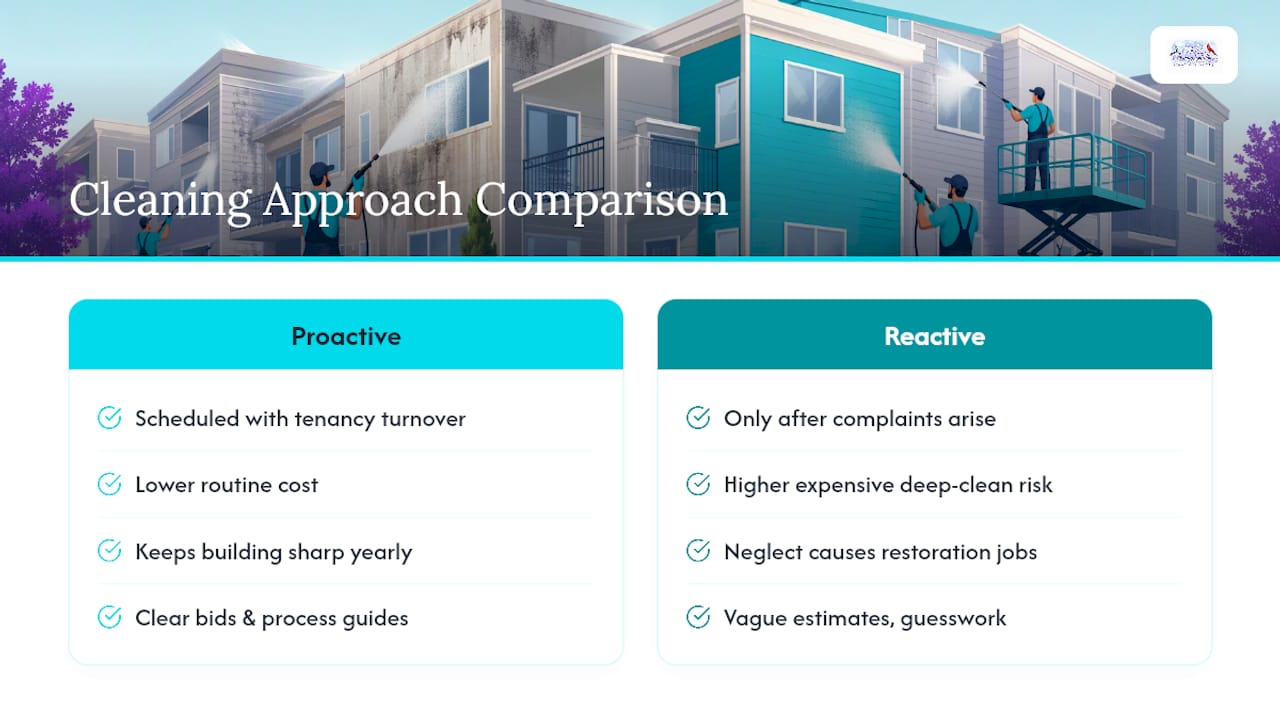
Experienced exterior cleaning providers note a clear pattern: buildings cleaned proactively between move-outs rarely require aggressive, expensive deep-clean jobs resulting from years of neglected staining. Waiting until algae has climbed halfway up the siding or oil has soaked into concrete for a decade turns a routine wash into a restoration project.
Another important factor is pricing transparency. Property managers comparing bids often encounter issues more from vague estimates than high prices. Contractors who provide clear numbers and back them up with detailed process guides tend to come prepared with actual plans rather than relying on guesswork.
— Richard
Ready to Book Apartment Pressure Washing?
Professional cleaning services typically handle apartment exteriors, common walkways, parking lots, and balconies using a soft-wash-first approach like that used on residential jobs, adjusted for the scale and access needs of multi-unit properties. Pricing is generally honest and itemized rather than vague or arbitrary.
When you request a quote, have a few details ready: photos of the affected areas, an approximate square footage for the exteriors and lots involved, the type of staining you’re dealing with (algae, oil, rust, gum), and any access windows tenants need respected. That information lets E and R Cleaning Solutions put together an accurate estimate instead of a rough guess. Visit the E and R Cleaning Solutions site to request a custom estimate for your property, or check the curb-appeal pricing breakdown first if you want a sense of scale before reaching out.
Where to Learn More
For deeper process detail beyond this guide, these resources help fill in the specifics:
- The Role of Pressure Washing Between Tenancies for scheduling around turnover
- Soft Washing for Commercial Buildings for chemical concentration guidance
- A homeowner’s guide to pressure washing for a neutral technical primer on methods
FAQ
How Often Should Apartment Buildings Be Pressure Washed?
Most properties benefit from a wash between tenancies and at least once seasonally, though buildings in humid or high-traffic areas may need more frequent attention to prevent algae buildup.
Is Soft Washing or High-Pressure Washing Better for Apartments?
Neither is universally better. Soft washing protects siding, paint, and roofing, while high-pressure methods handle concrete, parking lots, and heavy grease more effectively.
How Much Does Apartment Pressure Washing Cost?
Pricing depends on square footage, access, and staining severity, but homeowner curb-appeal jobs from E and R Cleaning Solutions start in the $100 to $400 range as a baseline, with apartment jobs scaling from there.
What Should Be in a Pressure-Washing Contract?
A solid contract lists the surfaces covered, method used per surface, equipment and chemicals, insurance coverage, and any cleanup or guarantee terms, not just a single flat price.
Can Pressure Washing Damage Apartment Exteriors?
Yes, if the wrong method or pressure level is used. High pressure on siding or windows can force water behind panels or through seals, which is why soft washing is standard for those surfaces.