Storefront Pressure Washing: Signs Property Managers Must Know
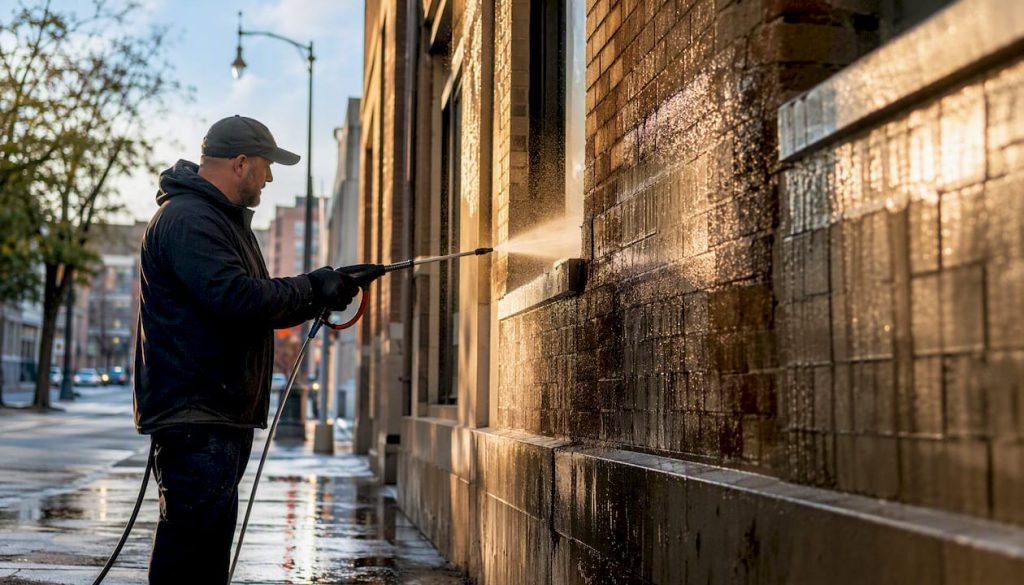
Your storefront needs pressure washing when you can see green or black streaks from mold and algae, feel slippery grit under your feet at the entry, spot oil or rust stains on the pavement, or notice faded signage and grimy awnings that no amount of hand-scrubbing will fix.
Check these in under two minutes on your next site visit:
- Green, black, or gray streaks on siding, brick, or concrete (mold, algae, mildew)
- Slippery entry pads, stairs, or sidewalk sections, especially after rain
- Dark oil or grease blotches on the dumpster pad or parking apron
- Gum spots, rust rings, or graffiti on pavement or facade
- Faded, chalky, or stained signage and awnings
- Visible grime lines on window frames and sills
- Musty odor near the entry or loading area
If any of those are present, schedule a professional inspection this week. If the entry is slippery right now, block access and post a wet-floor sign before you do anything else.
Key Takeaways
Slippery entries, visible mold or algae, and stubborn stains are the clearest signs your storefront needs pressure washing — and each one carries a different urgency level, from immediate safety action to scheduled cosmetic cleaning.
| Point | Details |
|---|---|
| Act on slippery surfaces immediately | Block access and post hazard signage; a slick entry is a premises liability risk under U.S. law. |
| Match the method to the surface | Soft wash for painted, vinyl, and delicate surfaces; high-pressure only for bare concrete and sound masonry. |
| Document before and after | Timestamped photos in every zone create a condition record and support any future liability or insurance claim. |
| Schedule by climate and exposure | High-humidity markets need twice-yearly cleaning at minimum; dry climates typically need one annual wash. |
| E and R Cleaning Solutions | Provides commercial storefront pressure washing with site assessment, method selection, and before/after photo documentation. |
Table of Contents
- Walk through your storefront like a pro: a 10-minute inspection checklist
- What different stains are actually telling you
- Cleaning methods, safe pressure ranges, and the risks managers must understand
- Managing water, runoff, and local environmental rules
- How often to schedule and what drives the cost
- What to do before the crew arrives and what to expect on the day
- When to call a professional instead of attempting it yourself
- What professional standards actually look like on a storefront job
- Why storefront cleaning is an operational decision, not just a cosmetic one
- E and R Cleaning Solutions handles commercial storefronts from inspection to completion
- Sources
Walk through your storefront like a pro: a 10-minute inspection checklist
A quick, zone-by-zone walk-through before you call a cleaning crew does two things: it tells you exactly what you are dealing with, and it creates a documented baseline for before/after comparison. Work through these zones in order.
-
Windows and frames. Look for hard-water mineral streaks, dirt buildup in the frame channels, and paint peeling at the sill. Grime here is often the first thing customers notice. For heavily soiled commercial glazing, specialized window cleaning is a separate service from pressure washing and should be quoted independently.
-
Entry mats and thresholds. Lift the mat. If the concrete underneath is darker than the surrounding slab, organic material has been trapping moisture there long enough to start degrading the surface.
-
Sidewalks and curbs. Walk the full width. Kneel and look at the surface at a low angle — slick, dark patches are easier to spot in raking light than from standing height.
-
Stairs and ramps. Run your boot across each tread. Any slide at all is a slip-and-fall liability waiting to happen. Mark it, photograph it, and restrict access until it is cleaned.
-
Awnings. Check the underside, not just the top. Black mold colonies often start underneath where moisture collects and sunlight does not reach.
-
Signage. Step back 20 feet. If the lettering looks faded or the background has a gray cast, UV degradation and surface grime are working together. Pressure washing alone will not restore UV-bleached paint, but it will reveal what is grime versus what is actual color loss.
-
Gutters and downspouts. Overflow staining on the facade below a downspout is a reliable sign that the gutter is blocked. Clean the gutter first, or the facade staining will return within weeks.
-
Dumpster pad and loading area. This is almost always the dirtiest zone. Oil, food waste, and standing water create the conditions for heavy mold growth and persistent odor.
Document everything. Take timestamped photos in each zone before the crew arrives. Note any moisture or odor. Mark safety hazards on a simple site sketch or a photo with annotations.
Pro Tip: Check the caulk and mortar joints around windows and at the base of brick or stone facades. Soft, crumbling, or missing mortar is a signal to avoid high-pressure washing entirely in that zone — water forced into open joints can accelerate structural damage far more than the stain itself ever would.
What different stains are actually telling you
Not every dark patch means the same thing, and the wrong cleaning method can make a problem worse. Here is how to read what you are looking at.
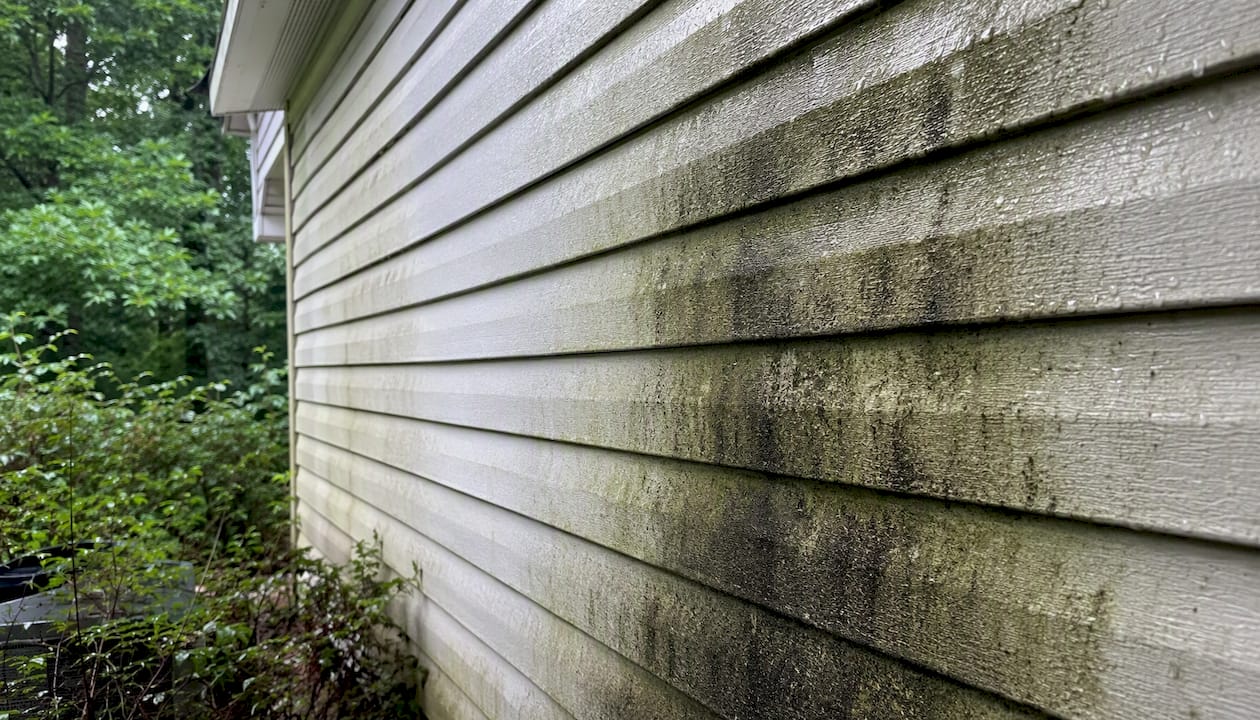
Green or black streaks on siding, brick, or concrete point to mold, mildew, or algae. Algae tends to be green and appears first in shaded, damp areas. Mold and mildew run darker, often black or gray, and frequently carry a musty smell. Both are cosmetic and a health concern, and both respond well to a soft-wash treatment using a low-pressure rinse with a biocidal detergent rather than raw high-pressure blasting, which can spread spores.
Orange or brown streaks running vertically from metal fixtures, fasteners, or irrigation heads are rust. The stain itself is cosmetic, but the source (a corroding anchor bolt, a failing downspout bracket) is a maintenance issue worth flagging.
Dark blotches on concrete, particularly near parking or loading areas, are almost always oil or grease. These need a degreaser and dwell time before pressure washing; skipping the pretreatment step leaves a ghost stain.
Sticky spots on pavement are gum. Targeted hot-water pressure washing at close range removes them efficiently. Cold water alone rarely works.
White or chalky mineral streaks on glass, brick, or concrete are hard-water deposits or efflorescence (mineral salts migrating through masonry). Efflorescence on brick is worth investigating — it can indicate water infiltration behind the wall.
Faded or chalky signage and paint is UV degradation combined with surface grime. Pressure washing will remove the grime layer and may reveal the true color, but paint that has chalked or peeled needs repainting, not just cleaning.
| Stain type | Likely cause | Urgency | Recommended method |
|---|---|---|---|
| Green/black streaks | Mold, mildew, algae | Moderate (health + cosmetic) | Soft wash with biocidal detergent |
| Orange/brown streaks | Rust from metal fixtures | Low (cosmetic) | Low-pressure rinse + rust treatment |
| Dark concrete blotches | Oil/grease | Low-moderate | Degreaser pretreatment + pressure wash |
| Sticky spots | Gum | Low | Targeted hot-water pressure wash |
| White mineral streaks | Hard water or efflorescence | Low-moderate (investigate source) | Low-pressure rinse + acid wash if needed |
| Faded/chalky surfaces | UV + grime | Low (cosmetic) | Pressure wash; repaint if needed |
Pro Tip: If you press your thumb into a mortar joint and it crumbles, or if you see brick faces spalling, call a mason before you call a pressure washer. High-pressure water on compromised masonry can dislodge material and void any warranty on recent tuckpointing work.
Cleaning methods, safe pressure ranges, and the risks managers must understand
The two main approaches are soft washing and high-pressure washing, and choosing the wrong one for a surface is how storefronts get damaged.
Soft washing uses low pressure (typically under 500 PSI) combined with cleaning solutions to do the chemical work. It is the right choice for painted wood, vinyl siding, awnings, signage, and any surface where the water force itself could cause damage. High-pressure washing (typically 1,500–3,000 PSI for commercial concrete and masonry) relies on mechanical force and is appropriate for bare concrete, brick in good condition, and heavily soiled pavement.
For storefront glass, neither raw high-pressure nor harsh detergents are appropriate. Window cleaning is a separate discipline.
The safety risks are serious and underappreciated.
- Jet injuries. Pressure washers can cut skin and inject contaminants deep into tissue at close range. The CDC notes that any jet strike should be treated as a medical emergency, not a surface wound. The effective force drops rapidly with distance, so nozzle-distance discipline is the primary control.
- Electrocution. The U.S. Consumer Product Safety Commission warns that electric pressure washers have caused fatal electrocutions. Always use a properly grounded GFCI-protected outlet, never remove grounding prongs, and keep all power connections out of standing water.
- Carbon monoxide. Gas-powered units must run outdoors or in fully open areas. Running one in a partially enclosed loading bay or covered entry can be fatal.
- Rebound debris. High-pressure spray dislodges grit, paint chips, and biological material. Anyone in the exclusion zone without eye protection is at risk.
| Method | Best for | Main risks | Key controls |
|---|---|---|---|
| Soft wash | Painted surfaces, vinyl, awnings, signage | Chemical contact, HVAC intake contamination | Biodegradable detergents, cover intakes |
| High-pressure wash | Concrete, bare brick, pavement | Jet injury, surface damage, rebound debris | PPE, exclusion zone, correct nozzle |
| Targeted spot wash | Gum, graffiti, rust spots | Jet injury at close range | Maintain safe distance, correct tip |
On-site safety controls to require from any crew:
- Pedestrian exclusion zone with cones and signage before work starts
- Full PPE: sealed goggles, waterproof boots, gloves, and hearing protection
- GFCI protection tested at arrival for any electric unit
- Pre-job hazard briefing covering electrical panels, gas meters, and HVAC intakes
- Proof of liability insurance and, where required, a local permit
Safe pressure-washing practice means matching the nozzle and pressure to the task, wearing sealed goggles and waterproof boots, using GFCI outlets for electric machines, running gas units outdoors only, and treating any jet strike as a medical emergency.
Pro Tip: Ask the crew to test the GFCI outlet before connecting equipment. A GFCI that fails to trip during a test is a defective device — it should be replaced before any electric pressure washer is plugged in.
Managing water, runoff, and local environmental rules
Pressure washing generates a lot of contaminated water fast, and where that water goes is not just an environmental question — it is a legal one. Most U.S. municipalities prohibit discharge of wash water containing detergents, oil, or biological material directly into storm drains under local stormwater ordinances tied to the Clean Water Act.
Practical controls your crew should use:
- Drain covers or plugs placed over nearby storm drain inlets before work begins
- Containment berms (rubber or sandbag) to direct runoff to a collection point
- Wet/dry vacuum or pump to collect and dispose of contaminated water at an approved facility
- Biodegradable, phosphate-free detergents to reduce chemical load if any runoff does escape containment
Cleaning detergents and volatile compounds near building entries can also affect indoor air quality. The EPA’s indoor air quality guidance notes that outdoor cleaning products can migrate indoors through open doors and HVAC intakes. Cover or temporarily shut down HVAC intakes on the side of the building being washed, and keep entry doors closed during application.
Before scheduling a job, call your city’s public works department and ask: “Does our municipality require a permit or notification for commercial pressure washing, and are there restrictions on wash-water discharge to storm drains?” Most jurisdictions have a straightforward answer, and getting it in writing protects you.
Statistic callout: The EPA estimates that stormwater runoff is among the leading sources of water quality impairment in urban areas — a fact that drives why local ordinances on wash-water discharge are actively enforced in many cities, not just written into code.
Pro Tip: A roll of inexpensive foam backer rod pressed into the storm drain grate takes 30 seconds to install and prevents the most common discharge violation on routine storefront jobs. Keep a few rolls in the service vehicle.
How often to schedule and what drives the cost
Frequency depends on where you are and what your storefront faces every day.
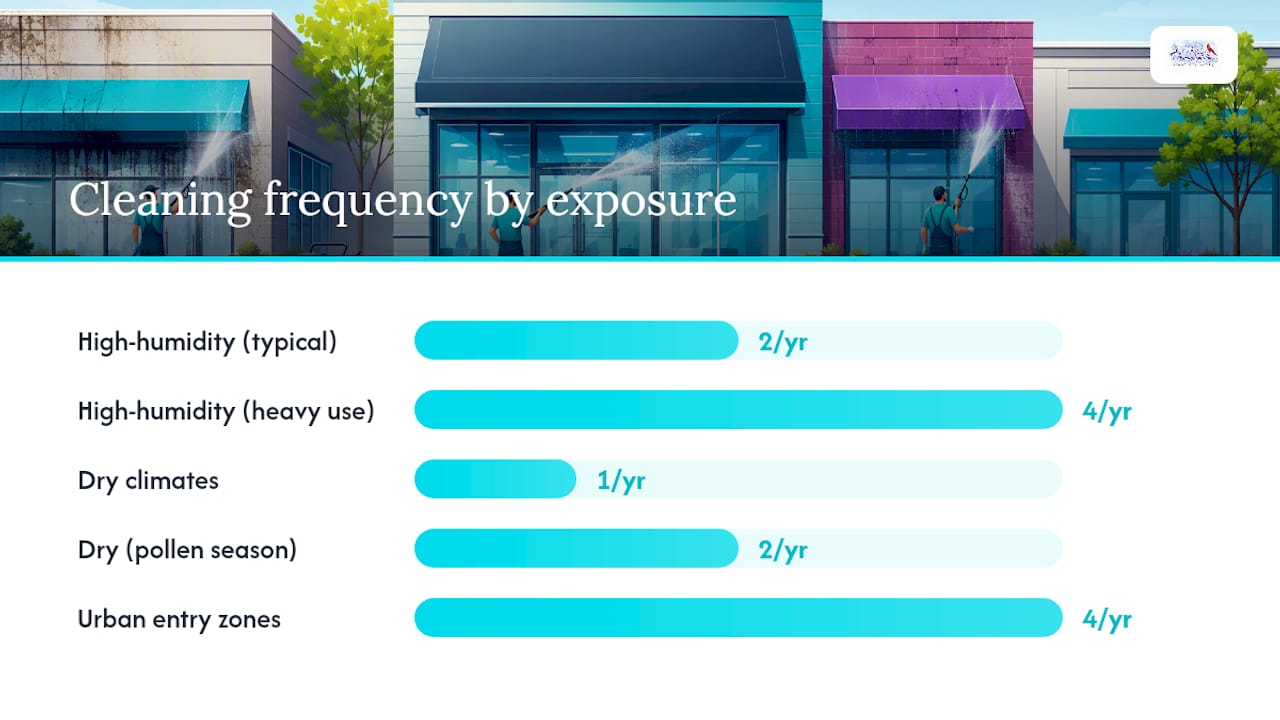
- High-humidity or coastal markets (Southeast, Gulf Coast, Pacific Northwest): twice per year at minimum; quarterly for storefronts with heavy foot traffic or significant shade.
- Dry or low-humidity climates (Southwest, Mountain West): once per year is often enough for concrete and masonry, though pollen season in spring may push that to twice.
- Urban storefronts with heavy pedestrian traffic: quarterly cleaning of entry zones and sidewalks, annual full-facade wash.
- Post-storm cleaning: after major weather events, schedule an inspection within a week regardless of your regular cycle. Post-storm debris and runoff can accelerate mold growth significantly.
Spring is widely recommended as the primary annual wash because it clears winter grime and pollen before peak customer traffic. Avoid scheduling in freezing temperatures — water forced into surface pores that then freeze can crack concrete and masonry.
Primary cost drivers to understand before you get quotes:
- Square footage of surfaces to be cleaned
- Surface type (bare concrete is faster and cheaper than textured brick or painted wood)
- Stain severity and whether pretreatment is needed
- Access and height (single-story vs. multi-story adds equipment and time)
- Soft-wash requirements vs. straight pressure washing
- Water supply and disposal logistics
- Traffic control or permit requirements
Questions to ask when getting quotes: What PSI and nozzle will you use on each surface? Is detergent included, and what type? How do you handle runoff containment? Do you carry general liability and workers’ comp insurance? What does the post-job inspection include? For exterior cleaning frequency guidance by climate and exposure type, that resource breaks down scheduling by property type in more detail.
What to do before the crew arrives and what to expect on the day
Pre-service checklist for managers:
- Move vehicles and equipment away from the work zone
- Secure or remove fragile planters, signage inserts, and exterior displays
- Plan a pedestrian detour and post temporary signage the day before
- Note any locked gates, utility shutoffs, or access codes the crew will need
- Take timestamped before photos of every zone being cleaned
- Confirm the crew has proof of insurance before they start
What a professional crew typically does:
- Site setup: cones, exclusion zone, drain covers, equipment staging
- Pre-inspection walk with the property manager to confirm scope and flag any surface concerns
- Detergent application (soft-wash jobs): apply with low-pressure tip, allow dwell time
- Washing sequence: typically top-down, working from the building face outward to the curb
- Rinse and spot correction: revisit stubborn areas with targeted pressure or a second detergent pass
- Post-job cleanup: remove containment, collect wash water, clear equipment
- Final walk-through with the manager and delivery of before/after photos
Documentation to request: before/after photos for every zone, a written work report noting surfaces cleaned and methods used, an itemized invoice, and any recommendations for repairs (loose mortar, cracked concrete, peeling paint) the crew observed during the job. That repair list is worth its weight — it is essentially a free condition report on your facade.
When to call a professional instead of attempting it yourself
DIY pressure washing is reasonable for a small, single-story concrete pad with no adjacent surfaces at risk. For almost everything else on a commercial storefront, the liability and damage risk tips firmly toward hiring a licensed, insured professional.
Call a pro when:
- The work involves anything above single-story height
- You see loose mortar, spalling brick, or peeling paint (wrong pressure will make it worse)
- Mold or algae covers more than a few square feet (spreading spores is a real risk without proper containment)
- The facade is near electrical panels, meters, or exposed wiring
- The location requires pedestrian traffic control or a city permit
- The surface is painted, clad in vinyl, or includes signage that could be damaged by incorrect pressure
- You have no experience matching nozzle type and PSI to surface material
The liability question is straightforward. Under premises liability law, property owners and managers can be held responsible for injuries caused by slippery or poorly maintained entryways. A DIY job that leaves a surface slicker than it started, or that damages a surface and creates a trip hazard, creates exposure that a professional’s insurance would have covered.
Quick on-site decision prompt: If you would not feel comfortable explaining your method, equipment, and safety controls to your insurance carrier, hire a pro.
What professional standards actually look like on a storefront job
A professional crew does not just show up with a machine. The workflow starts before the water runs.
What a credentialed team should do:
- Conduct a site risk assessment covering surface types, electrical hazards, HVAC intakes, and pedestrian exposure
- Select method (soft wash vs. pressure) per surface, not per preference
- Install runoff containment before starting
- Verify GFCI protection on electric units before connecting (per CPSC guidance)
- Brief all crew on exclusion zones and emergency procedures
- Sequence work top-down to avoid re-contaminating cleaned surfaces
- Conduct a post-job inspection with the property manager present
Trust signals to request before booking:
- Certificate of general liability insurance and workers’ compensation coverage
- References or before/after photos from comparable commercial jobs (platforms like Google and Yelp surface customer feedback on stain removal and reliability — use them alongside direct references)
- A written method statement specifying PSI, nozzle type, and detergent for each surface
- Confirmation of runoff containment plan and any required permits
At E and R Cleaning Solutions, every commercial storefront job starts with a documented site walk, surface-specific method selection, and before/after photo delivery — so property managers have a clear record of condition and completed work, not just a clean facade.
Why storefront cleaning is an operational decision, not just a cosmetic one
The checklist in this article is not really about aesthetics. A slippery entry pad is a liability claim waiting to happen. Mold on a facade is a health concern for employees and customers who walk past it daily. Loose mortar discovered during a pressure-washing inspection is a structural issue that costs far less to fix now than after water infiltration has worked behind the wall for another winter.
Property managers who treat exterior cleaning as a scheduled maintenance task rather than a reactive fix tend to catch these problems earlier. A storefront that looks neglected also signals to prospective tenants and customers that the property is not actively managed. That perception affects occupancy and foot traffic in ways that are hard to recover from quickly. Exterior cleanliness directly supports property occupancy and tenant retention — the connection is well-documented among commercial property operators.
The managers who get the most value from pressure washing are the ones who use the service as a diagnostic tool, not just a cleaning one.
E and R Cleaning Solutions handles commercial storefronts from inspection to completion
E and R Cleaning Solutions brings over five years of commercial exterior cleaning experience to storefronts across the area, combining soft-wash and pressure washing with honest, custom-quoted pricing and no surprise add-ons. The team handles the full scope: surface assessment, method selection, runoff containment, and before/after documentation delivered to you at job completion.

For property managers who need a clean record alongside a clean facade, that documentation matters as much as the result. Whether you are managing a single retail unit or a multi-tenant strip, E and R Cleaning Solutions will walk the site with you, quote the job transparently, and complete it with the safety controls and insurance coverage your property requires. Request an on-site estimate at Eandrcleaningsolutions and get a clear scope and price before any work begins.
Sources
The following sources back the safety, legal, and environmental claims in this article and are worth bookmarking for your property management records.
- Pressure Washer Safety | Natural Disasters | CDC
- Commission Issues Pressure Washer Warning
- Introduction to indoor air quality (IAQ) | US EPA
- Slip-and-fall accidents | Justia
- How To Pressure Wash Safely — WC Safety