
Pressure Window Washing: Safe Guide for Homeowners
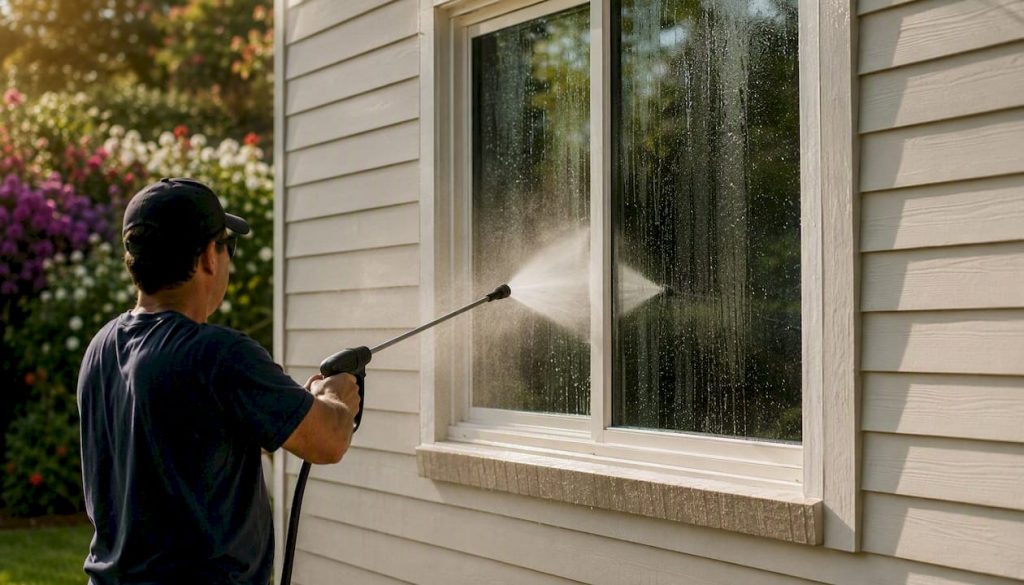
Yes, you can pressure wash windows — but only with low-pressure techniques, the right nozzle, and strict distance control. Use a 40° white-tip nozzle, stay 3–5 feet from the glass, and start at the lowest useful PSI before stepping up. Go beyond those limits and you risk cracked glass, blown seals, and water inside your walls. Simpson’s manufacturer guidance is explicit: a white 40° nozzle and at least three feet of clearance are non-negotiable minimums. This Old House reinforces the same principle, recommending a test-first approach at the lowest practical setting before touching the full window surface. E and R Cleaning Solutions follows this same safety-first framework on every job, residential or commercial.
- Nozzle: 40° white tip (widest safe fan for glass)
- Distance: 3–5 feet from the glass surface
- Starting PSI: Begin low; increase only if necessary
- Method: Soft-wash (chemical + low pressure) for delicate or older windows
Key Takeaways
Safe pressure window washing depends on low pressure, wide-angle nozzles, proper distance, and soft-wash chemistry for any window where seals or coatings are at risk.
| Point | Details |
|---|---|
| Use the right nozzle | A 40° white-tip nozzle is the correct choice for rinsing glass; never use yellow or red tips near windows. |
| Keep your distance | Stay 3–5 feet from the glass surface to distribute force and avoid etching or cracking. |
| Start low and test first | Begin at the lowest useful PSI and test on an inconspicuous corner before cleaning the full window. |
| Prefer soft-wash for delicate glass | Chemical dwell plus low-pressure rinsing protects seals and coatings better than high-pressure alone. |
| E and R Cleaning Solutions | Handles residential and commercial window cleaning with soft-wash methods, trained crews, and transparent pricing. |
Table of Contents
- What can go wrong when you pressure wash windows
- What gear to use for safe pressure window washing
- How to pressure wash a window safely, step by step
- How to handle different window types
- Safe methods for high and multi-story windows
- What to charge or expect to pay for window pressure washing
- When you should hire a professional instead of DIY
- Soft-wash versus pressure washing: what the research actually shows
- The E and R Cleaning Solutions approach to safe window washing
- Professional window cleaning from E and R Cleaning Solutions
- Sources
What can go wrong when you pressure wash windows
The damage modes are more varied than most homeowners expect, and several are permanent.
Glass failure is the most dramatic risk. A narrow nozzle concentrating force on a single point creates both impact stress and, on a hot day, thermal shock where cold water hits sun-warmed glass. Older single-pane windows and any glass with existing micro-cracks are especially vulnerable. Window World Clarksville warns that high-pressure streams can shatter glass outright and compromise structural integrity around the frame.
Seal failure is quieter but just as costly. The rubber gaskets and silicone beads holding double- or triple-pane units together are not designed to absorb direct water pressure. Once a seal breaks, humid air enters the gap between panes and condenses there permanently, producing that milky fogging you cannot wipe away. Replacing a fogged insulated glass unit typically costs more than a professional cleaning service.
Frame damage follows its own logic by material:
- Wood frames: Pressure strips paint, drives water into grain, and accelerates rot. Even a brief pass too close can lift paint that took weeks to apply.
- Vinyl and aluminum: More forgiving, but concentrated spray at seams can force water behind the frame and into the wall cavity.
- Glazing compound: Old putty glazing on single-pane windows can be dislodged entirely by a direct hit.
Operational risks compound the material ones. Holding the nozzle too close, lingering on one spot, or using a 0° red or 15° yellow tip near glass are the three most common mistakes that turn a cleaning job into a repair bill.
Pro Tip: Before any pressure work, run your hand along every frame and press lightly on each corner of the glass. Flex, soft spots, or visible cracks are red flags — stop and repair before you clean.
What gear to use for safe pressure window washing
The right equipment makes the difference between a clean window and a broken one. Here is what actually matters.
Pressure washer type
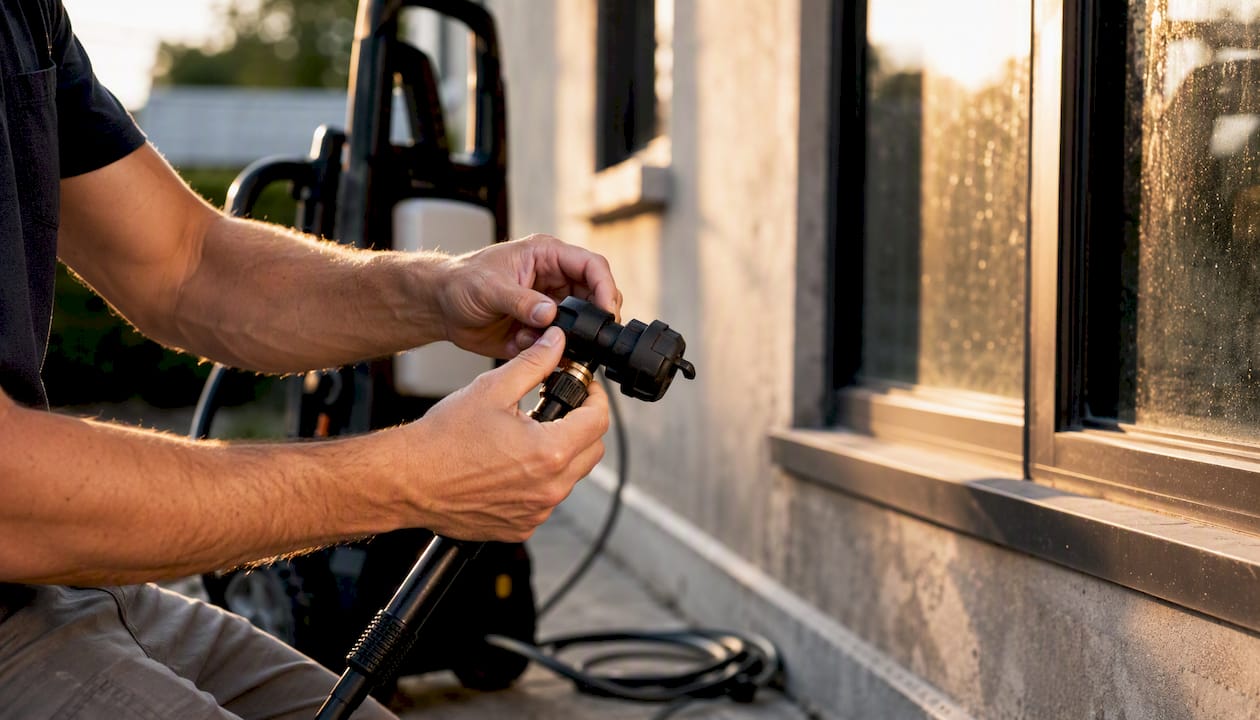
Variable-pressure electric units with moderate PSI settings give you enough power for exterior grime while staying controllable. Gas units can work, but their higher baseline PSI demands more discipline on distance and nozzle selection. Whatever unit you use, a soap/black nozzle (low-pressure detergent mode) is the starting point for window work, not the rinse nozzle.
Nozzle guide
Simpson’s guidance specifically calls out the white 40° tip as the correct choice for rinsing glass. The wider the fan angle, the more the force spreads across the surface rather than concentrating on one point.
Accessories worth having
- Telescoping wand: Adds reach without a ladder and lets you maintain safe distance on upper-floor windows
- Water-fed pole with deionized water: The professional standard for streak-free results on multi-story work, per Nilfisk’s how-to guide
- Soft-bristle brush attachment: Gentle agitation without pressure risk
- Foam cannon or soap bottle: Applies detergent at low pressure for proper dwell time
- Safety gear: Chemical-resistant gloves, eye protection, and non-slip footwear
Check the window cleaning tools homeowners need for a fuller breakdown of what to have on hand before you start.
Always read your window manufacturer’s spec sheet before starting. Some coated or tinted glass has explicit PSI limits that override any general guidance here.
How to pressure wash a window safely, step by step
Work one window at a time. Rushing across a whole facade without checking each unit is how small problems become expensive ones.
- Inspect the window. Check for cracks, soft seals, peeling paint, or loose glazing. If you find any, stop and repair before cleaning.
- Remove or protect screens. Take screens out entirely and set them aside. Clean them separately with a low-pressure rinse or a garden hose.
- Close the window fully and tape any gaps. Painter’s tape over weep holes and frame seams reduces water intrusion risk.
- Move plants, furniture, and anything fragile at least six feet from the work area. Detergent runoff damages plants.
- Pre-rinse with the white 40° nozzle at 3–5 feet, top to bottom, to loosen surface dirt before soap goes on.
- Switch to the black soap nozzle. Apply detergent from bottom to top so the foam doesn’t dry on the glass before you rinse. Let it dwell for 2–3 minutes.
- Agitate gently if needed with a soft-bristle brush on stubborn spots. Do not scrub with the nozzle.
- Rinse top to bottom with the white 40° nozzle, overlapping each pass by a few inches to avoid streaks. Keep the spray at a slight downward angle, never perpendicular to the glass.
- Squeegee or microfiber finish. Pull a clean squeegee from top to bottom in one stroke, or use a lint-free microfiber cloth for the final pass.
- Inspect seals and sills. Run your finger along the frame. Any moisture inside the frame or on the sill interior means water got in — dry it immediately and note the location.
Pro Tip: Test the full sequence on an inconspicuous corner of the least-valuable window on the property before committing to the whole job. Two minutes of testing can save hours of repair.
For a deeper look at the full residential process, the homeowner’s window cleaning guide covers finishing techniques in more detail.
How to handle different window types
Not every window responds the same way to pressure, and the differences matter.
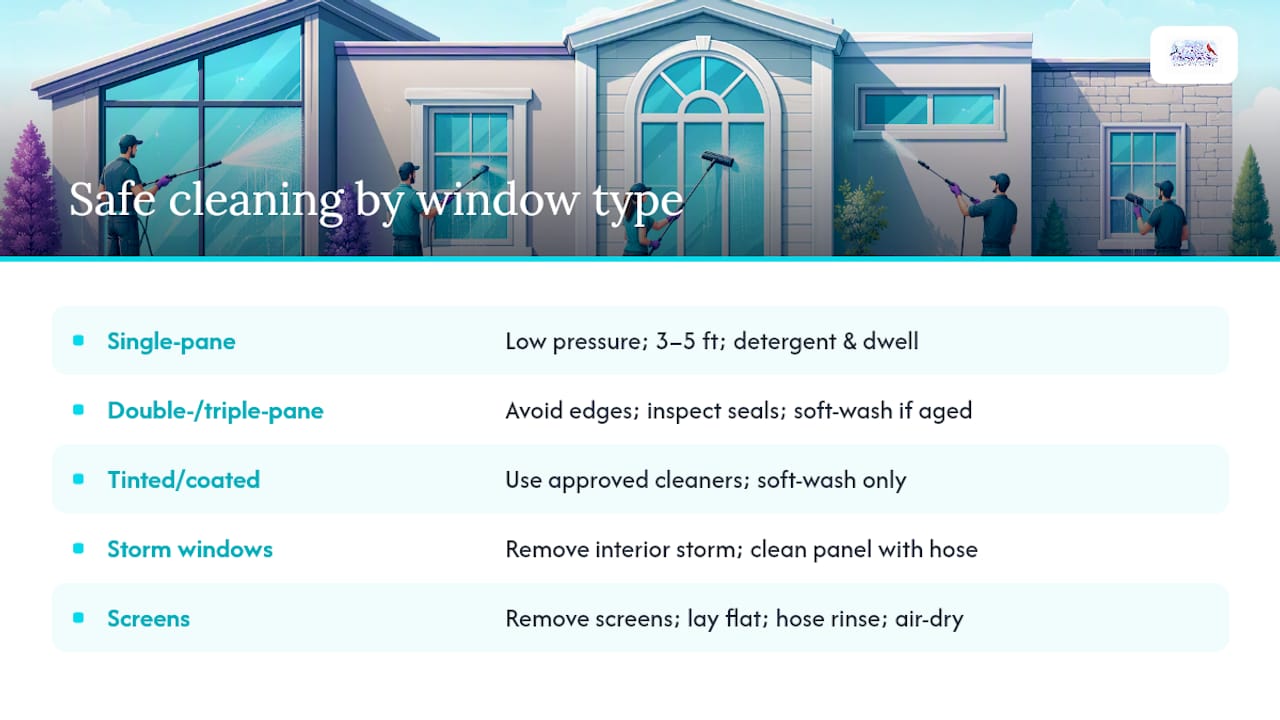
Single-pane glass is the most fragile category. Use lower pressure, stay toward the far end of the 3–5 foot range, and let detergent do more of the work. Longer dwell times reduce how much rinsing force you need.
Double- and triple-pane insulated units are where seal damage is the real concern. Avoid directing spray at the edges of the glass where the spacer bar sits. If the seals look old, discolored, or already slightly fogged, skip the pressure washer entirely and use a water-fed pole or soft-wash method instead. Anchor World Services notes that seal and frame inspection before cleaning is a prerequisite, not an afterthought.
Tinted or coated glass requires manufacturer-approved cleaners and the softest possible method. Aggressive pressure can lift or scratch low-emissivity (Low-E) coatings, which are expensive to replace. When in doubt, soft-wash only.
Storm windows are generally more robust, but remove the interior storm panel before cleaning the primary glass behind it. Clean the storm panel separately with a garden hose or low-pressure spray.
Screens should always come off before any pressure work. Even a gentle rinse can distort aluminum screen mesh if you hold the nozzle too close. Lay screens flat, rinse with a garden hose, and let them air dry before reinstalling.
Frame material shapes your approach as much as the glass type does. Wood frames need the gentlest possible pass and should be dried quickly after rinsing. Vinyl and aluminum tolerate more, but watch the seams.
Safe methods for high and multi-story windows
Ladders and pressure washers are a dangerous combination. The recoil from a running pressure washer can shift your balance on a ladder in a fraction of a second. Simpson’s safety notes include an explicit no-ladder recommendation when operating powered washers, and most professional training programs follow the same rule.
The practical alternatives:
- Telescoping wands extend your reach from the ground to second-story windows without climbing. Adjust your distance and nozzle angle to compensate for the added length.
- Water-fed pole systems with deionized water are the professional standard for multi-story facades. Deionized water leaves no mineral residue, so windows dry streak-free without a squeegee pass. Nilfisk recommends these systems specifically for high-access work.
- Second-story nozzle kits attach to standard wands and redirect spray upward at a controlled angle.
- Boom lifts and rope access are the domain of commercial buildings and should only be operated by trained, insured crews.
When you extend your reach with a wand or pole, the effective pressure at the glass drops with distance. That is actually a safety advantage, but you may need to increase dwell time on detergent to compensate.
Pro Tip: Wind above 15 mph and temperatures below 40°F are both reasons to reschedule elevated window work. Wet surfaces and cold hands are a bad combination even at ground level.
For commercial properties specifically, the commercial windows specialized cleaning guide covers multi-story access methods and the business case for professional crews.
What to charge or expect to pay for window pressure washing
Pricing for pressure window washing varies more than most homeowners expect, and the variables compound quickly on larger properties.
Primary cost drivers:
- Number of windows and panes (per-window pricing is common for residential jobs)
- Window height and access difficulty (second-story work adds time and equipment cost)
- Condition: hard-water staining, mineral deposits, or heavy organic growth all add labor
- Frame material and age (wood frames require slower, more careful work)
- Whether deionized rinsing or soft-wash chemistry is needed
- Travel distance and local disposal requirements for detergent runoff
Pricing models used by professional window cleaners include per-window flat rates, per-pane rates (useful for large commercial storefronts with many small panes), hourly rates, and job-based flat quotes. Per-window and flat-job quotes are the most common for residential work because they give homeowners a predictable number upfront.
For basic exterior pressure-window cleaning on a single-story home, homeowners typically see quotes in the range of $4–$8 per window for straightforward jobs, with prices rising for second-story access, hard-water treatment, or specialty coatings. Commercial storefronts and multi-story buildings are quoted differently, often as a flat job rate that accounts for lift rental or rope-access labor.
Extras to disclose or ask about in any quote:
- Screen removal and reinstallation
- Hard-water or mineral stain treatment
- Seal inspection and reporting
- Frame cleaning (separate from glass)
- Follow-up visit or satisfaction guarantee
When you should hire a professional instead of DIY
Some jobs are genuinely outside the safe range for DIY pressure washing, and the cost of getting it wrong is higher than the cost of a professional visit.
Hire a pro when:
- Any window is above the first floor and a ladder would be required
- You can see fogging, condensation, or discoloration between panes (seal already compromised)
- The glass has existing cracks, chips, or soft spots in the frame
- The property is a commercial storefront with large plate-glass panels
- Hard-water staining is between the panes rather than on the surface
- Your insurance or lease requires licensed contractors for exterior maintenance
- The building has Low-E or specialty coated glass without accessible spec documentation
Pro Tip: Property managers: keep a simple triage list. Ground-floor, single-pane residential windows in good condition are reasonable DIY candidates. Everything else — multi-story, commercial, coated, or compromised — goes to a licensed contractor. One liability claim costs more than years of professional cleaning contracts.
A one-line note on liability: if you are unsure whether a window is safe to pressure wash, consult a professional before starting. Damage caused by improper cleaning is rarely covered by standard homeowner’s insurance.
Soft-wash versus pressure washing: what the research actually shows
The industry has shifted meaningfully toward low-pressure soft-wash methods for window work over the past decade, and the reasoning is practical rather than just cautious.
NearToHome’s analysis of soft-wash techniques explains the core logic: chemical agents applied at low pressure dissolve biological growth (mold, algae, lichen, pollen films) at the molecular level, and antimicrobial components slow regrowth. A high-pressure blast removes what is visible on the surface but leaves the root structure of organic growth behind. Soft-wash addresses both.
The calibration insight matters here. NearToHome notes that practitioners adjust nozzle angle, PSI, distance, and detergent dwell time together as a system. Reducing pressure often means extending dwell time, and that trade-off usually produces a cleaner result with less risk to seals and coatings.
When soft-wash outperforms brute-force pressure washing:
- Mold and algae on glass or frames (chemical kill prevents rapid regrowth)
- Mineral and hard-water films (acid-based cleaners dissolve deposits that pressure cannot dislodge)
- Pollen and atmospheric dust on coated glass (low pressure avoids scratching)
- Any window where seal age or condition is uncertain
What the sources agree on for pressure rinsing when it is used:
- White 40° nozzle for glass, per Simpson
- Minimum 3-foot clearance from the glass surface
- Start at the lowest useful PSI and increase only if necessary, per This Old House
- Test on a small, inconspicuous area first, per Nilfisk
- Inspect seals and frames before starting, per Anchor World Services
For a deeper look at soft-wash chemistry and detergent selection, the window cleaning solutions guide covers the options in practical terms.
The consensus across manufacturers and professional guides is consistent: soft-wash methods with proper dwell time and low-pressure rinsing protect seals, reduce damage risk, and extend the interval between cleanings compared with high-pressure approaches alone.
The E and R Cleaning Solutions approach to safe window washing
E and R Cleaning Solutions starts every job with a risk assessment before any equipment comes out. That means checking seal condition, frame material, glass type, and access requirements before deciding whether soft-wash, a water-fed pole, or a calibrated low-pressure rinse is the right method for that specific window. With over five years of residential and commercial window cleaning experience, the team has developed a preference for soft-wash on any window where seal age or coating type introduce uncertainty.
Every crew carries insurance, and jobs are quoted transparently so homeowners and property managers know exactly what they are paying for before work begins. For commercial properties, that includes a written assessment of access requirements and any specialty equipment needed.
Professional window cleaning from E and R Cleaning Solutions
Knowing the right technique is one thing. Having the right equipment, insurance, and trained crew to execute it safely is another.

E and R Cleaning Solutions handles the full range of residential and commercial window cleaning jobs: exterior soft-wash cleaning, hard-water stain removal, screen and frame service, deionized water rinsing for streak-free results, and multi-story access for properties where ladders are not an option. For property managers with multiple buildings, the team offers custom scheduling and flat-rate commercial quotes so maintenance budgets stay predictable.
The difference between a DIY pressure wash and a professional job is not just equipment. It is the pre-job inspection, the calibrated settings, and the accountability when something unexpected comes up. For commercial window cleaning or a full residential service, contact E and R Cleaning Solutions for a no-obligation quote.
Sources
The sources below are the strongest references for technical guidance on pressure window washing. Use them to verify nozzle and PSI specifications, understand soft-wash methodology, and evaluate when professional oversight is warranted.
- How to pressure-wash windows — This Old House
- Can I wash windows with my pressure washer? | Simpson
- How to Clean Windows with a Pressure Washer – Nilfisk
- The Gentle Giant: How Low-Pressure Washing Became a Hero for Delicate Windows — NearToHome
- Can You Pressure Wash Windows? Safe Cleaning Guide — Anchor World Services