Owner Operated Pro Advice on Low Pressure House Washing for Homeowners
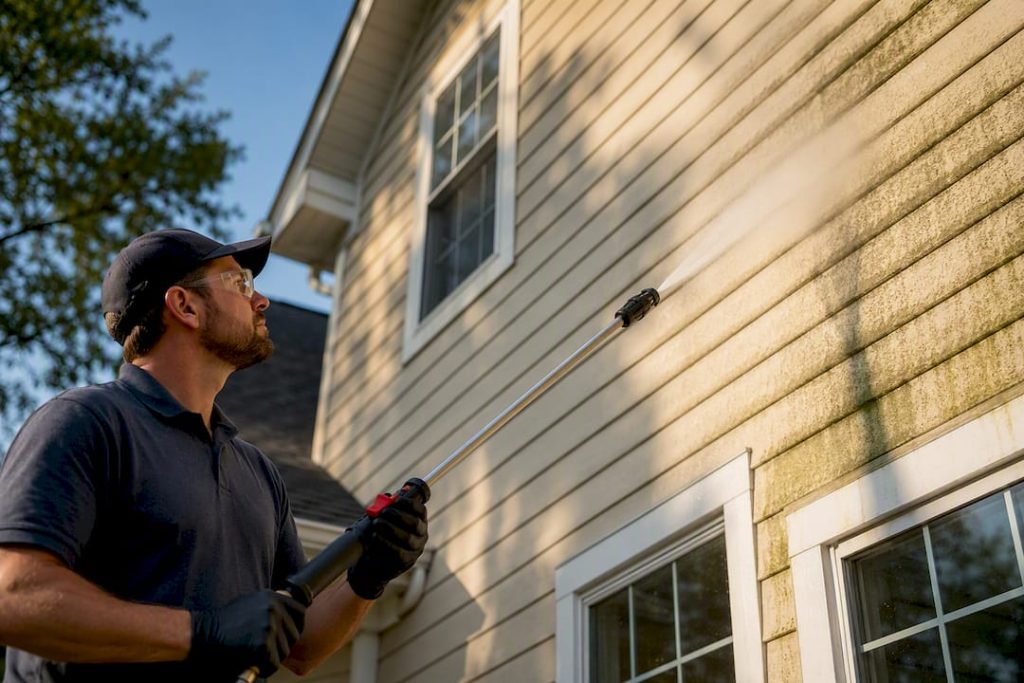
Soft washing is the safer method for vinyl siding, painted wood, stucco, and trim, and it works by killing algae and mold at the root instead of blasting it off with force. It avoids the cracked shingles, stripped paint, and forced water intrusion that come with cranking up the PSI. E and R Cleaning Solutions applies the industry-standard 1 to 1.5% soft-wash concentration on siding jobs, and that guideline is a good one to know whether you’re doing this yourself or hiring it out.
TL;DR:
- Soft washing relies on diluted chemical solutions, typically around 1 to 1.5%, rather than high pressure, to remove organic growth effectively and safely.
- It uses low PSI levels, usually between 500 and 1,200, making it suitable for delicate surfaces like vinyl siding, painted wood, and stucco, which can be damaged by standard pressure washing.
- Proper preparation, testing a small patch, and correct chemical handling are key steps for DIY soft washing, especially on single-story homes with mild stains.
- Most residential soft washing jobs cost between $100 and $400 and last 12 to 24 months before algae and mildew begin reappearing, with higher costs for larger or heavily stained homes.
- Larger or more complex jobs, such as multi-story houses or extensive mold coverage, are best handled by professionals due to fall risks and the need for precise chemical application.
Table of Contents
- What Is Low Pressure House Washing and How Does It Differ From Pressure Washing?
- Which Surfaces Call for Soft Washing (and Which Don’t)?
- How Do You Safely Soft Wash a House Step by Step?
- What Does a Soft Wash Cost and How Long Does It Last?
- How Do You Choose a Soft Wash Professional?
- E and R Cleaning Solutions: Practical Experience Behind the Guidance
- When Should You Always Call a Pro Instead of DIYing It?
- Book a Soft Wash With E and R Cleaning Solutions
- Sources
- FAQ
What Is Low Pressure House Washing and How Does It Differ From Pressure Washing?
Soft washing pairs low water pressure with a cleaning solution that does the actual work of breaking down algae, mold, and mildew. Instead of relying on force to strip dirt off a surface, the chemical solution dissolves the biological growth, and a gentle rinse carries it away. That’s the core distinction between soft washing and traditional pressure washing: one uses chemistry, the other uses mechanical force.
The solutions themselves are usually a diluted mix built around sodium hypochlorite, similar to household bleach, cut with water and a surfactant that helps it cling to vertical surfaces long enough to work. Low concentrations matter here. Too strong, and you risk bleaching landscaping or degrading paint finishes over time.
On equipment, soft washing typically runs in the 500 to 1,200 PSI range through a wide fan tip or a specialized soft-wash nozzle, compared to 2,000 to 4,000 PSI for standard pressure washing on concrete or brick. The Home Depot’s pressure washing guide recommends matching pressure and nozzle choice to the surface and testing an inconspicuous area first, advice that applies just as much to soft washing as it does to concrete cleaning.
Quick tradeoffs to weigh:
- Pro: Removes organic growth at the source rather than just knocking it loose temporarily.
- Pro: Far lower risk of water intrusion behind siding or damage to old mortar joints.
- Con: Takes longer, since dwell time is part of the process.
- Con: Requires correct chemical handling, which raises the stakes for DIYers who skip label instructions.
Which Surfaces Call for Soft Washing (and Which Don’t)?
Vinyl siding, painted wood, stucco, brick, and trim all respond well to soft washing. These materials are either too soft to handle direct high-pressure impact or too porous, meaning a forceful spray can drive water where it doesn’t belong.
Watch for these signs that a soft wash is the right call:
- Black or green streaking on siding, especially on north-facing walls
- Fuzzy white or gray mildew patches around trim and eaves
- Dark, splotchy staining that spreads rather than sitting in one spot (a classic algae signature)
Some surfaces need a different approach entirely, or extra caution:
- Loose or peeling paint can lift further under any spray, low pressure or not.
- Deteriorated mortar joints on older brick may need repointing before any wet cleaning.
- Certain roof shingles, especially older asphalt, call for a dedicated low-pressure roof treatment rather than a standard siding mix.
Pro Tip: Close all windows and vents before starting, and tape off exterior outlets. A surprising number of “water intrusion” complaints trace back to an open attic vent, not a failed seal.
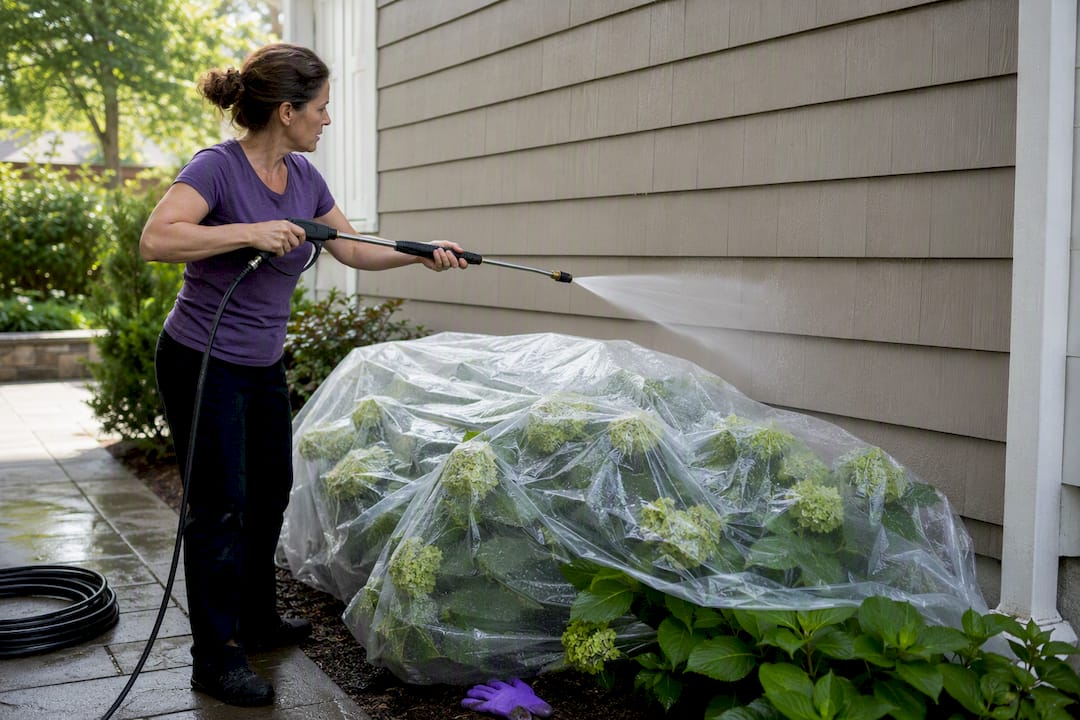
Cover delicate plants and shrubs with plastic sheeting beforehand. Soft-wash chemicals are diluted, but a sustained direct hit on a hydrangea bed will still cause leaf burn.
How Do You Safely Soft Wash a House Step by Step?
Whether you’re tackling a small job yourself or checking a contractor’s technique, the process follows the same logic every time.
- Prep the area. Wet down and cover plants and landscaping, close all windows and vents, and cover outdoor light fixtures and outlets with waterproof tape.
- Test a patch. Apply diluted solution to a small, hidden section of siding and wait 10 minutes to check for discoloration before treating the whole house.
- Mix the solution. Follow the product label exactly. For siding, E and R Cleaning Solutions documents a 1 to 1.5% on-surface concentration as the safe working range, mixed with water and a surfactant.
- Suit up. Wear chemical-resistant gloves, eye protection, and old clothes you don’t mind bleaching. If you’re working near your face at all, add a respirator mask.
- Apply low to high. Spray from the bottom up in overlapping passes, holding the nozzle 12 to 18 inches from the surface at low pressure (roughly 500 to 1,200 PSI through a wide fan tip).
- Let it dwell. Give the solution 5 to 15 minutes of contact time. This is where the actual cleaning happens, not during the spray.
- Rinse top to bottom with clean water at a similarly low pressure, working in the reverse direction of application so runoff doesn’t restain a section you already cleaned.
- Inspect afterward. Check window seals, outdoor outlets, and any low-hanging soffits for water pooling or unexpected discoloration.
One number worth remembering: 1 to 1.5%. That’s the on-surface concentration range professionals target for siding, a figure narrow enough that going much higher risks fading paint or damaging plant life nearby.
DIY makes sense for a single-story home with a simple layout and mild staining. It stops making sense once you’re dealing with a second story, a steep roofline, extensive black algae coverage, or siding that’s already showing signs of looseness. At that point, the risk of a fall or a mistake with concentration outweighs whatever you’d save doing it yourself.
What Does a Soft Wash Cost and How Long Does It Last?
Pricing depends heavily on house size, story height, ease of access, and how bad the staining has gotten. Smaller curb-appeal jobs, like a single-story wash, often land in the $100 to $400 range that E and R Cleaning Solutions cites for typical homeowner work, while larger two-story homes with heavy algae coverage run higher.
What to expect once the job’s booked:
- Most single-family homes take 1 to 3 hours from setup to rinse, depending on square footage.
- Results typically hold for 12 to 24 months before algae and mildew start returning, longer in drier climates.
- Surfaces may look slightly duller right after rinsing as residual moisture evaporates. That’s normal and fades within a day.
- Watch for any new streaking near gutters or downspouts in the following weeks. That usually points to a drainage issue, not a failed wash.
How Do You Choose a Soft Wash Professional?
Start with a short list of questions before you book anyone:
- Are you licensed and insured for exterior cleaning work?
- What concentration do you use on siding, and can you name the product?
- What equipment and PSI setting do you run for soft washing versus concrete work?
- Can you provide references or before-and-after photos from similar homes?
- Will I get a written estimate before work begins?
Trust signals worth asking for directly: a written estimate with the scope spelled out, the actual product name or Safety Data Sheet, and proof of current insurance. Any legitimate pro should hand these over without hesitation.
Red flags to walk away from:
- A contractor who pushes for higher PSI “to get it really clean” on siding or stucco.
- Vague or dodging answers about chemical concentration.
- No references, no portfolio, and no willingness to provide either.
Keep that checklist handy when you’re calling around for quotes. It takes five minutes and saves you from a bleached lawn or stripped paint job.
E and R Cleaning Solutions: Practical Experience Behind the Guidance
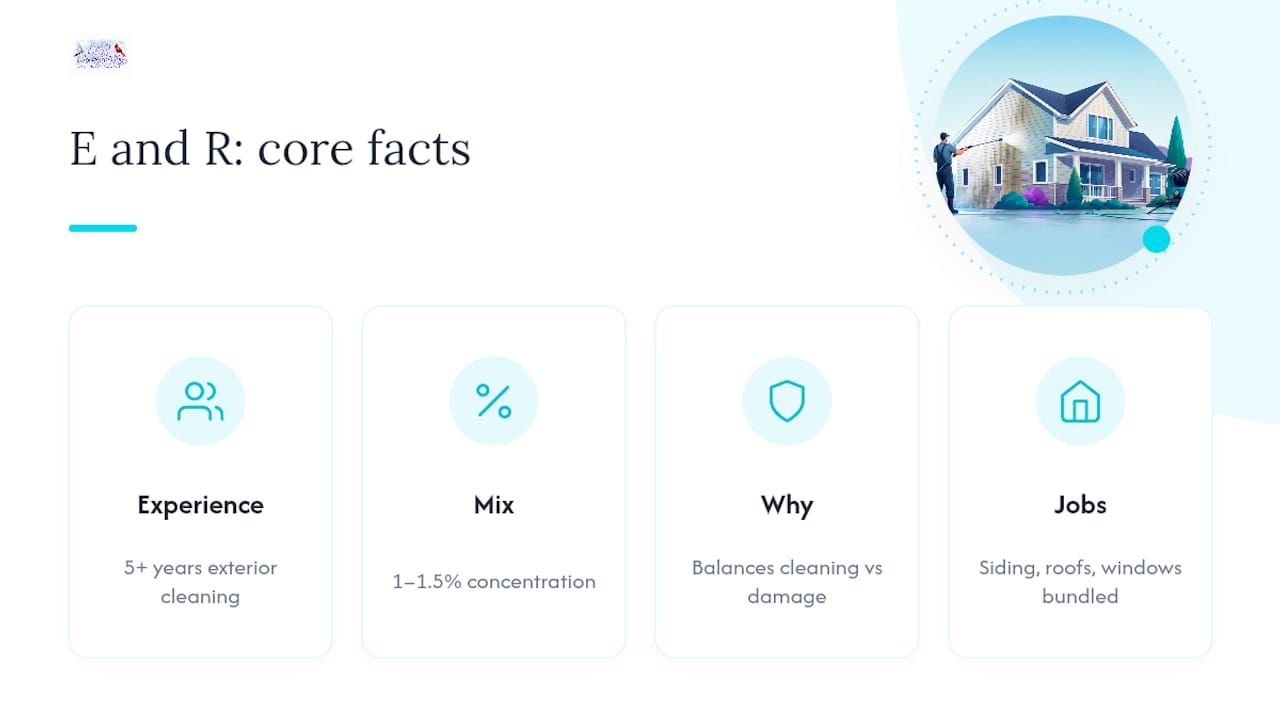
Richard and the team at E and R Cleaning Solutions have spent more than five years handling exterior cleaning for homeowners, property managers, and small business owners. The 1 to 1.5% soft-wash concentration referenced throughout this guide isn’t a textbook number pulled from a manual. It’s the range E and R applies on siding jobs specifically because it balances effective cleaning against the risk of damaging paint or nearby plants.
Common jobs include siding soft washes, low-pressure roof cleaning, and exterior window cleaning, often bundled together for homeowners tackling a full curb-appeal refresh in one visit.
When Should You Always Call a Pro Instead of DIYing It?
Some jobs just aren’t worth the risk of doing yourself. Steep or multi-story rooflines, houses with extensive mold coverage, and siding that’s already loose or damaged all belong in a professional’s hands. The fall risk alone changes the math, and getting the chemical concentration wrong on a large surface area is expensive to fix.
Simple tasks, like a single-story spot treatment on a small patch of mildew, are reasonable for a careful homeowner to handle. Anything bigger than that, get a quote before you buy a sprayer.
— Richard
Book a Soft Wash With E and R Cleaning Solutions
E and R Cleaning Solutions gives you the safer alternative to a generic power-wash outfit that shows up with one pressure setting for every surface. As a family-run business, the team quotes honestly upfront and applies the same 1 to 1.5% soft-wash concentration on siding that’s outlined throughout this guide, rather than guessing at dilution on-site.

Services include soft-wash siding cleaning, low-pressure roof washing, and interior and exterior window cleaning, all scoped to your home’s specific materials and staining level. If your siding is showing streaking or your trim has gone gray with mildew, request a custom quote through E and R Cleaning Solutions and get a scheduled visit instead of a guessing game.
FAQ
How Much Does It Cost to Pressure Wash a 2,000 Sq Ft House?
Pricing varies by height, access, and staining severity, but smaller curb-appeal jobs often run in the $100 to $400 range for single-story homes. A 2,000 square foot two-story house with heavier algae buildup typically costs more, and getting an exact figure requires a site-specific quote.
Is 1,500 PSI Enough to Clean Siding?
Yes, and in most soft-wash setups it’s actually higher than needed. Soft washing typically runs between 500 and 1,200 PSI through a wide fan tip, relying on the cleaning solution’s dwell time rather than pressure to break down algae and mildew.
Is It Better to Soft Wash or Pressure Wash Siding?
Soft washing is the better choice for vinyl, painted wood, and stucco siding because it removes biological growth without risking cracked panels or forced water behind the wall. High-pressure washing is better reserved for durable, non-porous surfaces like concrete driveways and walkways.
Is 2,000 PSI Enough to Clean a House?
For siding and painted surfaces, 2,000 PSI is too aggressive and can strip paint or force water behind panels. That pressure level suits harder surfaces like concrete, while house exteriors call for the lower range used in soft washing.