Property Managers: 5 Questions Before Storefront Pressure Washing

For most commercial storefronts, hiring a professional storefront pressure-washing service restores curb appeal, cuts slip-and-fall risk near entryways, and protects the exterior finish from long-term damage. Expect a cleaner facade, brighter signage, and safer walkways within a single visit. The right next step is simple: request a site inspection and a written quote before your next high-traffic season starts.
TL;DR:
- Storefront pressure washing costs mainly depend on surface area, material, grime level, and access challenges, with prices varying widely across markets.
- Soft washing is recommended for delicate surfaces like stucco and signage to prevent damage, while high-pressure cleaning suits concrete and heavily soiled areas.
- Contractors should perform an inspection, tailor methods, contain runoff, and provide photos before and after to ensure quality and compliance.
- Prioritizing contractor vetting, including proof of insurance and references, reduces risk of damage and unnecessary repair costs over focusing solely on price.
- A free site inspection and written quote should always precede any work, with scheduling based on foot traffic and potential after-hours or recurring maintenance needs.
Table of Contents
- What Does Storefront Pressure Washing Cover?
- Why Does a Clean Storefront Matter for Business?
- What Happens During a Professional Storefront Cleaning?
- What Does Storefront Pressure Washing Cost?
- How Do You Choose a Storefront Pressure Washing Contractor?
- E&R Cleaning Solutions: What You Can Expect
- Why Most Guides Get the Hiring Decision Backwards
- Get a Free Storefront Inspection and Written Quote
- Sources
What Does Storefront Pressure Washing Cover?
Storefront pressure washing typically addresses the building facade, sidewalks and entryways, awnings, signage, and the exterior of storefront windows. Each surface carries its own stain profile and cleaning risk, which is why a one-size-fits-all approach usually falls short.
Common surfaces and issues a contractor handles include:
- Facades and siding: grease film, exhaust soot, and biological growth like algae or mildew
- Sidewalks and entryways: gum, oil drips, rust streaks, and gum residue that build up slip risk
- Awnings and canopies: mold, bird droppings, and UV-faded fabric that needs gentler treatment
- Signage and metal trim: oxidation and grime that dulls visibility
- Window exteriors: hard water spotting and general street-level grime
Delicate materials such as painted stucco, wood trim, or older brick often call for soft washing instead of high pressure, since aggressive spray can strip paint or erode softer mortar joints. Storefront-focused providers commonly pair soft-wash detergents with targeted pressure washing depending on the material, then bundle in awning cleaning or window service for a full refresh in one visit, according to Clean Solutions USA.
Why Does a Clean Storefront Matter for Business?
Customers judge a business before they walk through the door. A grimy entrance, streaked windows, or a stained sidewalk signals neglect, even if the inside is spotless. Retail and restaurant operators who invest in exterior upkeep are betting, correctly, that first impressions drive foot traffic.
Safety is the less visible but more expensive benefit. Algae, mold, and grease buildup on entryways create slip hazards, and commercial cleaning providers point to hazard removal as a direct way to lower liability exposure around building entrances, per JAN-PRO. A slip-and-fall claim near your front door costs far more than a cleaning invoice.
There’s a maintenance angle too. Left alone, organic growth and stains don’t just look bad. They accelerate surface deterioration, staining porous concrete permanently and breaking down caulking and paint faster than normal weathering would. Regular cleaning is cheaper than the repair bill that follows years of neglect.
Pro Tip: Ask your contractor to photograph problem areas before and after service. Those photos double as documentation if you ever need to show due diligence on a slip-and-fall claim.
What Happens During a Professional Storefront Cleaning?
A competent job follows a sequence, not a spray-and-go routine. Here’s the typical order of operations:
- Site inspection. The contractor walks the property to identify surface materials, existing damage, and problem areas, then sets pressure levels accordingly. Commercial pressure washing normally begins with this kind of detailed inspection, per JAN-PRO.
- Method selection. Soft-wash detergents handle painted surfaces, awnings, and delicate signage; high-pressure settings tackle concrete, brick, and heavily soiled sidewalks.
- Site preparation. Crews cover electrical fixtures and signage, protect nearby landscaping, and often schedule around foot traffic or after-hours to avoid disrupting customers, coordinating with driveway gate installation services to protect nearby fixtures.
- Runoff containment. Wastewater gets diverted or captured to meet local environmental rules, particularly near storm drains.
- Final walkthrough. The crew reviews the work with you, documents results with photos, and recommends a follow-up interval based on how quickly grime returned.
Scheduling matters more than most managers expect. A retail strip with heavy pedestrian traffic collects grime faster than a quiet office building, so the recommended cadence should reflect actual foot traffic, not a generic calendar reminder.
What Does Storefront Pressure Washing Cost?
Price depends on a handful of variables, and any contractor who quotes a flat number over the phone without seeing the property is guessing. The main cost drivers are:
- Total square footage of surfaces being cleaned
- Surface material (brick, stucco, glass, and metal all clean differently)
- Soil level and how long grime has been building up
- Access and height, since second-story facades or awnings need lifts or extended reach
- Specialty treatments like graffiti removal or gum extraction
- Scheduling requests, especially after-hours or weekend work
Contractors generally price by square footage, by the hour, or with a flat storefront rate. Per-square-foot pricing is the most transparent for comparing quotes, but it can hide surcharges for access equipment. Flat rates are simple but risk covering less scope than they appear to.
Realistic ranges vary widely by market and building size, so treat any online estimate as a starting point rather than a final number. JAN-PRO notes that on-site inspection is standard practice precisely because access and material variables shift the price so much. When comparing quotes, line up scope, frequency, and what’s included (runoff management, post-job photos) rather than just the bottom-line number.
How Do You Choose a Storefront Pressure Washing Contractor?
Start with a short list of questions before you sign anything:
- Are you insured, and can you provide proof of liability coverage?
- Do you have references or photos from commercial storefront jobs, not just residential driveways?
- What method will you use on my specific surfaces, and why?
- How do you handle runoff and local environmental requirements?
- What’s included in a written scope, and what counts as an add-on?
Trust signals worth requesting include proof of insurance, a written scope of work, and before-and-after photos from similar commercial projects. Business verification pages like Better Business Bureau listings and third-party review platforms are useful for confirming a contractor’s track record before you commit to a recurring contract.
Red flags include vague pricing, no proof of insurance, and reluctance to do a site walk before quoting. If you’re negotiating a recurring maintenance plan, ask for a locked-in rate over multiple visits. It rewards loyalty and gives you predictable budgeting.
Pro Tip: If a contractor won’t walk the property before quoting, treat that as a warning sign, not a convenience.
E&R Cleaning Solutions: What You Can Expect
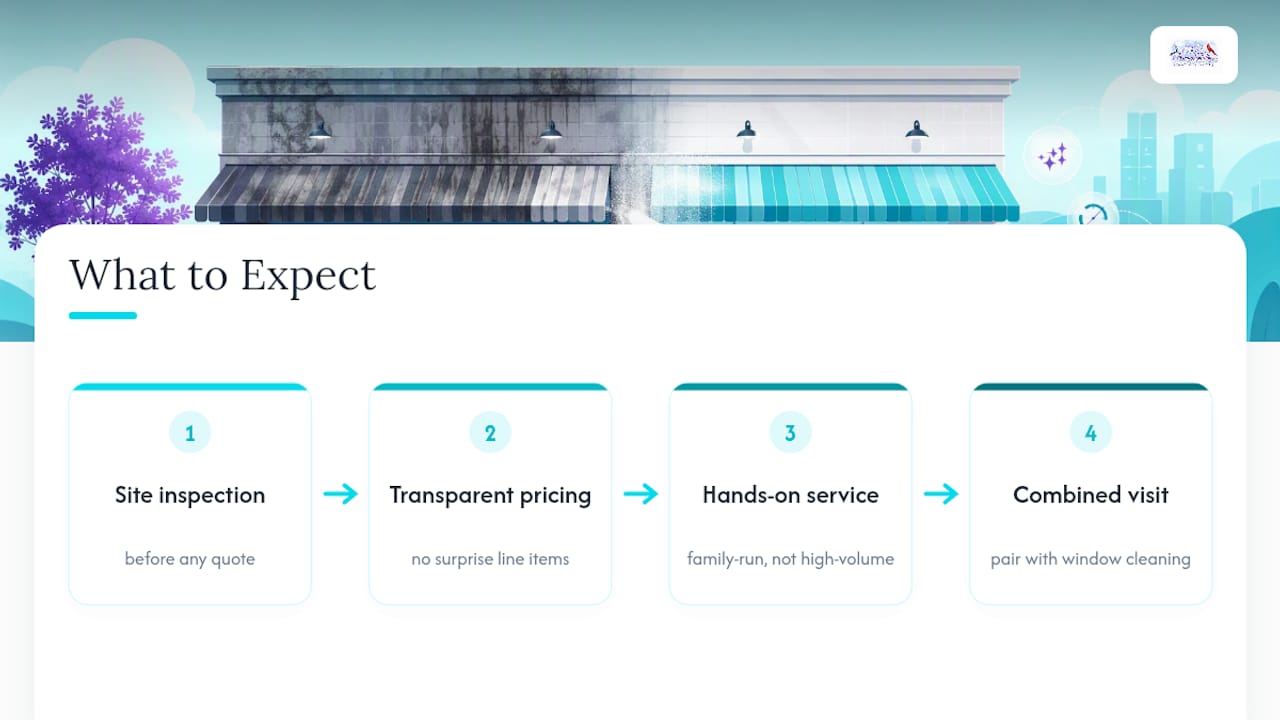
The company is a family-run operation with more than five years of experience serving homeowners, property managers, and small business owners. It emphasizes honest pricing and hands-on attention rather than volume, and customer feedback often points to strong results removing stubborn stains and hard water marks.
For storefront clients, that means a real site inspection before any quote, transparent pricing with no surprise line items, and the option to pair pressure washing with commercial window cleaning for a complete exterior refresh in one scheduled visit.
Why Most Guides Get the Hiring Decision Backwards
Most advice on this topic leads with technique: pressure settings, chemical dilution ratios, nozzle angles. Property managers don’t need that level of detail. They need to know how to evaluate a quote and avoid getting burned by a contractor who under scoped the job.
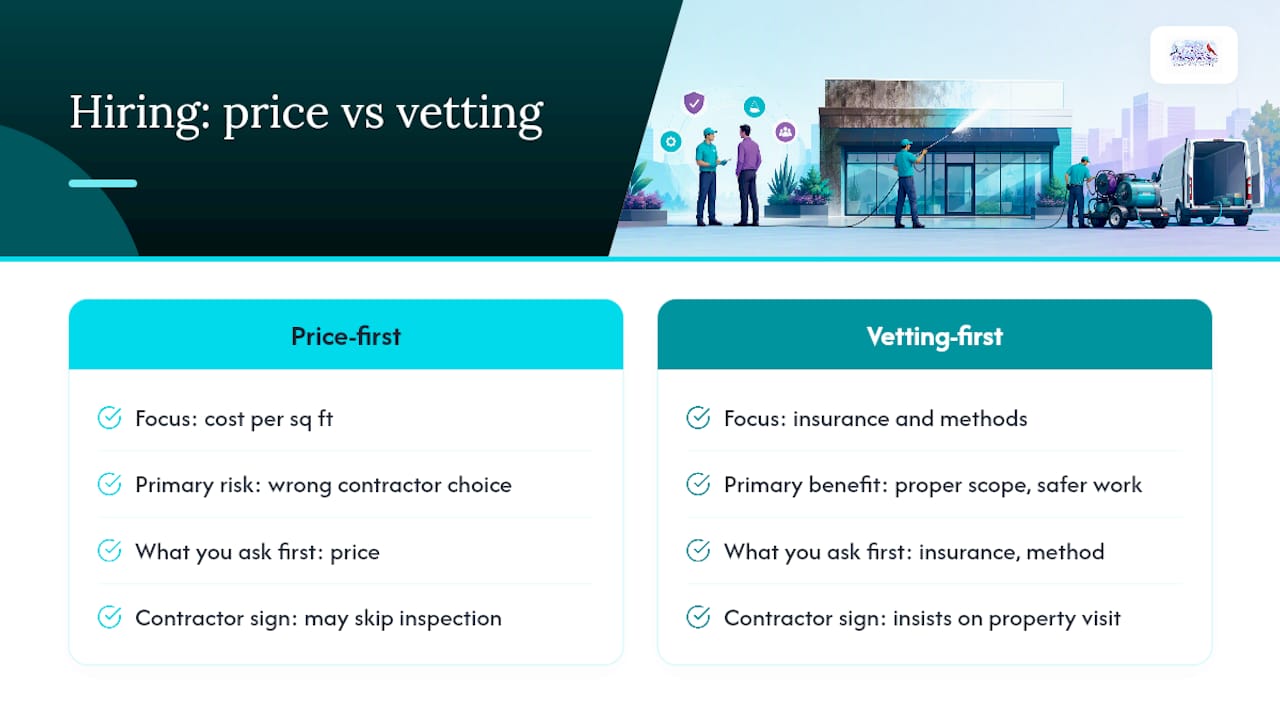
The conventional advice treats pricing as the deciding factor. That’s backwards. The real risk isn’t paying too much. It’s hiring someone who skips the inspection, uses high pressure on stucco that needed a soft wash, and leaves you with a bigger repair bill than the original stain would have cost. A contractor who insists on seeing the property before quoting is telling you something useful about how they operate.
If you take one thing from this guide, prioritize the vetting checklist over the price sheet. Ask about insurance and method selection before you ask about cost per square foot. The businesses that get burned by pressure washing almost always skipped that step, not because they picked the wrong number on a quote.
— Richard
Get a Free Storefront Inspection and Written Quote
The company offers an on-site inspection before you commit to anything, so the quote you get matches the job you need done.
The free inspection covers your facade, entryway, and signage, and results in a written estimate with a recommended cleaning frequency based on your actual foot traffic, not a generic calendar. Many commercial clients bundle recurring maintenance with awning and window cleaning service, scheduled around your business hours so cleaning never disrupts customers. If you’re managing turnover between tenants, pressure washing between tenancies is worth booking before a new lease starts. Reach out to schedule your inspection and get a written quote in hand before your next busy season.
Sources
- Commercial Pressure Washing Services | Free Inspection — JAN-PRO
- Storefront pressure washing — Clean Solutions USA
- City Clean Inc. — BBB listing