Seasonal Storefront Maintenance Tasks for Retail Owners
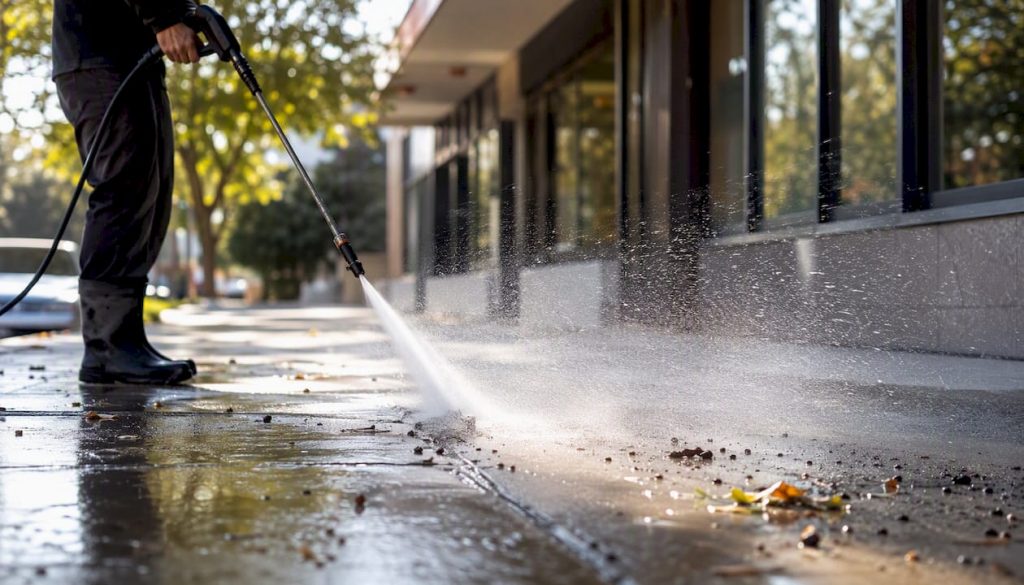
Seasonal storefront maintenance tasks are the scheduled exterior cleaning jobs that protect your curb appeal, prevent costly repairs, and signal to every passing customer that your business is worth walking into. The four core tasks are exterior window washing with hard-water stain removal; pressure washing of sidewalks, entryways, and building facades; awning and signage cleaning; and post-storm inspections. Storefront appearance directly drives customer entry, which means neglecting these jobs isn’t just an aesthetic problem — it’s a revenue problem.
Quick-reference cadence checklist:
- Frequent: Exterior window cleaning for restaurants and high-traffic retail; regular entryway spot-washing
- Every few months: Full storefront window cleaning for moderate-traffic retail and medical offices
- Periodic: Sidewalk and entry pressure washing; awning inspection and spot treatment
- Seasonally (spring and fall): Full facade cleaning using pressure or soft wash; hard-water stain restoration; signage deep clean; post-storm inspections following major weather events
- Annually: Sealant inspection and reapplication; application of awning protective coating; treatment of gutter runoff areas
Pro Tip: Apply a protective coating to fabric awnings each spring. It repels moisture and biological growth, cutting mid-season cleaning calls in half and extending awning life by years.
Key Takeaways
Consistent seasonal storefront maintenance prevents costly repairs, protects curb appeal, and requires a written scope, confirmed insurance, and a water-reclamation plan from every contractor you hire.
| Point | Details |
|---|---|
| Spring and fall are priority windows | Schedule full exterior cleans in these two seasons before peak booking fills contractor calendars. |
| Match method to surface | Soft wash for fabric, wood, and brick; pressure wash at controlled PSI for concrete; professional restoration for hard-water glass etching. |
| Always get a written scope | Verbal pricing and vague method descriptions are the top red flags; require surface-specific methods and PSI limits in writing. |
| Bundle services to save cost | Combining window cleaning, awning care, and pressure washing in one visit typically reduces cost by 10–20% versus separate bookings. |
| E and R Cleaning Solutions | Offers licensed, insured seasonal storefront cleaning with written scopes, before/after documentation, and bundled seasonal plans. |
Table of Contents
- What seasonal storefront maintenance tasks should you schedule each season?
- How do you hire a qualified professional for storefront cleaning?
- Which cleaning method is right for which storefront surface?
- What does seasonal storefront cleaning typically cost?
- What safety and environmental rules apply to storefront cleaning?
- Contractor prep checklist you can hand over on job day
- Why E and R Cleaning Solutions for seasonal storefront maintenance?
- Preventive maintenance tips to avoid common seasonal issues
- How seasonal landscaping supports your storefront’s curb appeal
- How to align maintenance with your seasonal promotional calendar
- Material-specific care for every storefront surface
- What most owners get wrong about seasonal storefront care
- Ready to book seasonal storefront cleaning with E and R Cleaning Solutions?
- Sources
What seasonal storefront maintenance tasks should you schedule each season?
Spring and fall are your two highest-priority windows. Here’s what each season actually demands.
| Season | Priority Tasks | Cadence |
|---|---|---|
| Spring | Remove winter salt/sand residue; pressure wash sidewalks and entryways; exterior window deep clean with hard-water treatment; inspect awnings, sealants, door thresholds | Once, early season |
| Summer | Algae/mildew control on shaded facades; more frequent window touch-ups for display-heavy storefronts; soft-wash biological growth on facades | Monthly–bi-monthly |
| Fall | Clear leaf/debris buildup; pre-winter pressure wash; treat awnings before wet season; tighten loose fixtures; inspect roof gutter runoff zones | Once, before first freeze |
| Winter | Post-storm inspections only; defer deep cleaning to thaw windows; avoid exterior pressure washing in freezing temps (water refreezes on surfaces and creates slip hazards) | As needed |
Commercial pressure-washing frequency should be set by foot traffic and environmental exposure. High-traffic zones often need monthly to quarterly attention; a quieter professional office might need only a seasonal pass.
Pro Tip: Schedule awning cleaning the same day as window cleaning. Cleaning the awning first prevents dirty runoff from streaking freshly cleaned glass — a common cause of repeat service calls.
How do you hire a qualified professional for storefront cleaning?
Three things are non-negotiable before you sign anything: the contractor must be licensed and insured, provide a written scope that names surfaces and methods, and supply references or before/after photos. Specialized professional techniques consistently outperform general-purpose cleaning for hard-water stain removal and large-format storefront glass.
Questions to ask every candidate:
- What PSI settings do you use on glass, brick, and fabric surfaces?
- How do you handle hard-water mineral staining or etching on glass?
- What is your wastewater management plan? Do you use water reclamation?
- What fall-protection measures do you use for elevated work, and what are your insurance limits?
- Have you cleaned awnings and signage before? Can you show before/after photos?
- What does your service guarantee cover, and what is your change-order procedure?
Red flags to walk away from:
- Verbal-only pricing with no written scope
- Vague descriptions of method (“we’ll clean everything up”)
- Subcontracting without disclosure
- Unwillingness to provide proof of insurance or references
- No mention of wastewater handling or environmental compliance
A solid contract must name every surface, specify the method (soft wash vs. pressure wash), list PSI ranges, describe window treatments, detail staging and surface protection, set the timeline, and include a clear payment and change-order procedure.
Which cleaning method is right for which storefront surface?
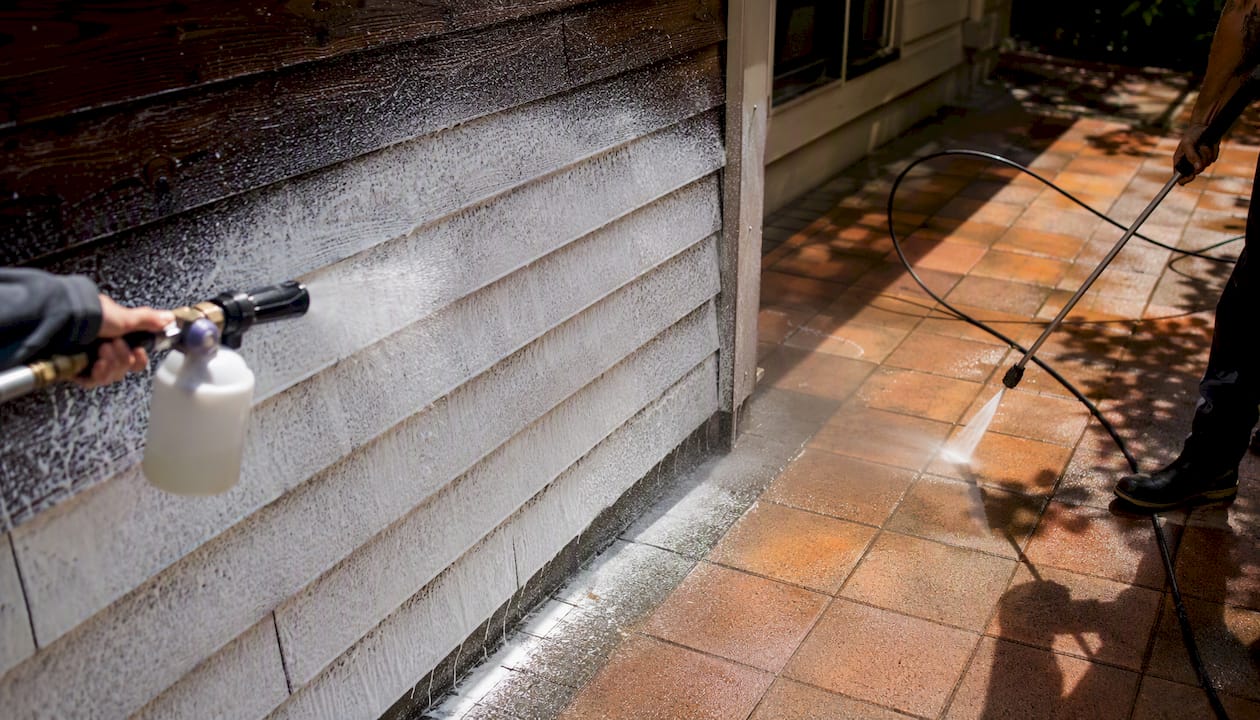
Match the method to the material. Soft washing uses low pressure and a cleaning solution to break down biological growth; pressure washing uses mechanical force. Using the wrong one damages surfaces and voids warranties.
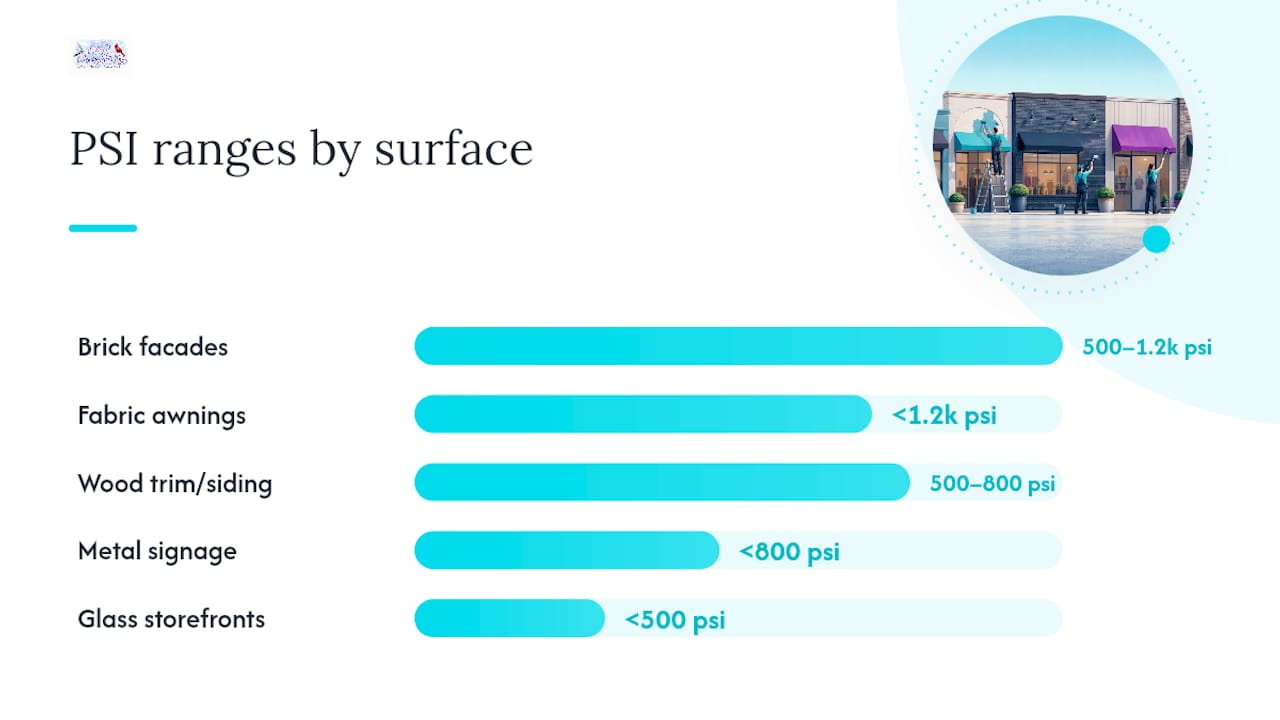
| Surface | Recommended Method | PSI Range | Notes |
|---|---|---|---|
| Concrete sidewalks | Pressure wash | low to moderate pressure | Effective for staining, gum, grease |
| Brick facades | Soft wash or low-pressure wash | 500–1,200 psi | High pressure erodes mortar joints |
| Glass storefronts | Soft wash + squeegee | Under 500 psi | Hard-water stains need professional restoration |
| Fabric awnings | Soft wash only | Under 1,200 psi | Oxygen bleach for mildew; never chlorine |
| Metal signage | Low-pressure rinse + hand wipe | Under 800 psi | Avoid concentrated nozzles near paint edges |
| Wood trim/siding | Soft wash | 500–800 psi | High pressure raises grain and strips sealant |
Fabric awnings require soft-wash methods; pressure washing damages fibers and protective coatings unless pressure is kept low and tested on a hidden area first. For mildew on acrylic fabric, oxygen bleach is the right treatment — chlorine bleach degrades most awning fabrics and should be avoided. Always apply a fabric protectant after cleaning.
Pro Tip: Before any pressure washing on a surface you haven’t treated before, test a 12-inch patch in a hidden corner. Thirty seconds of testing can prevent an irreversible strip of coating or a torn fabric panel.
What does seasonal storefront cleaning typically cost?
Window-cleaning frequency varies by business type: restaurants and retail storefronts often require frequent exterior cleaning, while corporate offices and upper floors may be cleaned less often. Budget accordingly.
Typical cost bands (per service visit, U.S. market):
- Storefront window cleaning: Low end for small single-story fronts; higher for multi-story or hard-water restoration work
- Sidewalk/entry pressure washing: Varies by linear footage and staining severity
- Facade soft wash: Depends on building height, access, and biological load
- Awning cleaning: Per panel or per linear foot; mildew treatment adds cost
- Bundled seasonal package (windows + pressure wash + awning): Typically discounted 10–20% versus booking each service separately
Variables that push costs up: building height requiring lifts or rope access, heavy mineral etching on glass, graffiti removal, and material repairs discovered during cleaning.
Booking lead times: Spring (March–May) and fall (September–October) are peak windows. Book 3–4 weeks ahead for those seasons. For recurring contracts, lock in your schedule in January or August to secure preferred time slots.
Budgeting tip: Reserve a dedicated seasonal maintenance line in your exterior-maintenance budget and negotiate a multi-service rate when bundling window cleaning, awning care, and pressure washing in one visit.
What safety and environmental rules apply to storefront cleaning?
Your contractor carries the compliance burden, but you carry the liability if something goes wrong on your property. Confirm these before work begins.
- OSHA fall protection: Any work above 4 feet requires fall-protection systems. Confirm the contractor’s specific plan for elevated window or facade work.
- Stormwater runoff: Many municipalities prohibit discharge of washwater containing detergents, algae treatments, or sediment into storm drains. Check your local stormwater authority’s rules.
- Water reclamation: Some jurisdictions require a water reclamation plan for commercial pressure-washing jobs. Ask for documentation before work starts.
- Pedestrian safety: Contractor must barricade wet sidewalks, post wet-surface signage, and protect adjacent landscaping from chemical overspray.
- PPE: Confirm the crew uses appropriate eye protection, gloves, and non-slip footwear.
Pro Tip: Request the contractor’s water-reclamation plan and proof of local permits in writing before the job date. A contractor who can’t produce these documents quickly is a contractor who hasn’t done this work compliantly.
Contractor prep checklist you can hand over on job day
Give this to your service provider at booking and again on the day of service.
Property and contact information:
- Property address and primary contact name/phone
- Emergency contact (after-hours number)
- Key access instructions (gate codes, alarm codes, who to call if locked out)
- Scheduled date, start time, and expected duration
Scope confirmation:
- List every surface to be cleaned (sidewalk zones, facade sections, window count, awning panels, signage)
- Confirm method and PSI limits for each surface
- Note any display windows, landscaping, or fixtures requiring protection
- State post-job inspection criteria (who signs off, what “done” looks like)
On-site protocol:
- Designated parking and equipment staging area
- Water source location and access authorization
- Electrical access if needed (for lighting or equipment)
- Sprinkler system shutoff contact
- Hours when work is permitted (check local noise ordinances)
- Who is authorized to sign the completion form
Attach this checklist to your written contract or work order. It eliminates the most common sources of miscommunication and gives both parties a clear acceptance standard. For a more detailed onboarding framework, the exterior cleaning service provider guide walks through the full vetting and contracting process.
Why E and R Cleaning Solutions for seasonal storefront maintenance?
E and R Cleaning Solutions provides professional exterior window cleaning and pressure washing for retail storefronts, commercial properties, and multi-unit buildings, with written scopes and documented service records on every job.
Services aligned to this checklist:
- Storefront window cleaning, including hard-water stain removal and glass restoration
- Sidewalk, entryway, and building facade pressure washing
- Awning and signage cleaning using material-appropriate methods
- Soft washing for commercial facades where biologicals or delicate surfaces are present
- Water-reclamation options for environmentally sensitive jurisdictions
Why owners and property managers choose E and R:
- Family-run business with 5+ years of commercial exterior cleaning experience
- Licensed and insured, with proof available before any job begins
- Written pricing and scope templates provided at estimate stage
- Before/after photo documentation on request
- Service guarantees with clear terms
Awnings and signage are often called the silent ambassadors of a business. When they’re stained or faded, customers notice before they ever read your hours or your menu. E and R Cleaning Solutions treats those surfaces with the material-specific care they need, not a one-size-fits-all pressure wash. View the curb appeal cleaning services gallery to see before/after results from retail storefronts.
Preventive maintenance tips to avoid common seasonal issues
The cheapest repair is the one you prevent. A few targeted steps between professional visits protect your investment and keep service costs predictable.
Sealant inspections: Check caulking and sealant around door frames, window frames, and facade joints every spring and fall. Failed sealant lets water behind cladding, which accelerates staining, mold growth, and structural damage. Reapply before the wet season.
Weatherproofing: Inspect entry door thresholds and sweep seals annually. A worn threshold lets water pool inside the entry, damaging flooring and creating slip hazards. Replace before winter.
Pest prevention: Pressure-washed surfaces have fewer organic deposits for pests to feed on. Pay particular attention to grease buildup near restaurant entries and leaf debris accumulation in corners, both of which attract insects and rodents.
Gutter and downspout checks: Roof runoff that overflows onto your facade creates the dark vertical staining that’s expensive to remove. Clear gutters each fall before heavy rain season and confirm downspouts direct water away from the building face.
Between-visit upkeep: Sweeping entryways daily and wiping down door glass between professional visits keeps grime from bonding to surfaces. The daily retail storefront maintenance guide covers practical steps owners can handle in-house.
How seasonal landscaping supports your storefront’s curb appeal
Landscaping and exterior cleaning work together. Overgrown shrubs trap moisture against facades, accelerating mildew and biological staining. Coordinate trimming with your cleaning schedule: cut back plants before a facade soft wash so the crew has clear access and treated surfaces aren’t immediately re-contaminated by dripping foliage.
Seasonal planting choices matter too. In spring, fresh planters and window boxes signal an active, cared-for business. In fall, replacing summer annuals with seasonal color (ornamental kale, mums, small pumpkins) extends curb appeal through the slower retail months. Keep planters off direct contact with the building face to prevent moisture transfer and staining.
Hardscape maintenance ties directly to pressure washing. After a sidewalk wash, inspect pavers and concrete for cracks or heaving that could become trip hazards. Addressing these immediately after cleaning, when the surface is clear and visible, is far more efficient than scheduling a separate inspection visit.
How to align maintenance with your seasonal promotional calendar
Your cleaning schedule and your marketing calendar should share the same planning document. A storefront that’s pressure-washed and window-cleaned the week before a major promotional push looks intentional. One that’s grimy during your biggest sales event undercuts every dollar you spent on signage and advertising.
Practical alignment points:
- Holiday season (November–December): Schedule a full exterior clean in late October, before holiday décor goes up. Clean glass and a freshly washed facade make window displays dramatically more effective.
- Spring sales events: Book spring pressure washing and window cleaning in February or early March, before peak booking season fills the calendar.
- Back-to-school or fall promotions: A pre-September facade wash and awning clean sets the right tone before foot traffic picks up.
- Grand reopenings or lease turnovers: A full exterior clean is standard practice before any high-visibility event. The commercial exterior cleaning before inspection guide covers the full scope for these situations.
Coordinate décor installation with your cleaning contractor. Hanging seasonal banners or window clings on dirty glass defeats the purpose of both. Clean first, decorate second.
Material-specific care for every storefront surface
Different surfaces age differently and fail differently. Treating them all the same is how you end up with stripped wood, eroded mortar, or cracked glass coatings.
Glass: Routine exterior cleaning removes surface grime. Hard-water mineral deposits require a separate restoration process using professional-grade mineral removers or polishing compounds. Once etching is present, general washing won’t touch it. Annual professional cleaning prevents etching from developing in the first place.
Brick: Brick is porous and holds biological staining deeply. Low-pressure soft washing with an appropriate surfactant lifts algae and mildew without eroding mortar joints. High-pressure washing above 1,500 psi on brick is a common mistake that causes long-term structural damage. Seal brick facades every 3–5 years to reduce absorption.
Wood trim and siding: Wood raises grain under high pressure and loses sealant quickly. Soft wash at 500–800 psi, followed by reapplication of a UV-protective sealant each spring, keeps wood trim from graying and cracking. Inspect for rot at the base of any wood trim that contacts concrete or pavers.
Metal signage and fixtures: Metal corrodes where paint or coating is breached. Low-pressure rinse and hand-wiping with a mild detergent preserves finish. Inspect for rust spots each spring and touch up with a rust-inhibiting primer before the wet season.
Fabric awnings: As covered in the methods section, oxygen bleach for mildew, no chlorine, pressure kept under 1,200 psi, and a fabric protectant applied after every cleaning. Frequency depends on local tree cover, coastal salt exposure, and pollution levels.
What most owners get wrong about seasonal storefront care
The conventional wisdom is that storefront cleaning is a cosmetic expense — something you do when things look bad enough to notice. That framing gets it exactly backward.
By the time mineral etching is visible on your glass, you’re already paying for restoration, not maintenance. By the time awning fabric is stained through, the protectant layer is gone and the fabric itself is degrading. The cost of reactive cleaning is consistently higher than the cost of scheduled prevention, and the disruption is worse because reactive jobs are unplanned and often urgent.
The other thing owners underestimate is the compounding effect of a clean storefront on customer behavior. A dirty entry doesn’t just look bad — it signals something about how the business is run. Customers make that judgment in seconds, often before they’ve read a single word of your signage.
Seasonal maintenance isn’t a line item to cut when margins are tight. It’s one of the few exterior investments that pays back in both reduced repair costs and increased foot traffic.
Ready to book seasonal storefront cleaning with E and R Cleaning Solutions?
E and R Cleaning Solutions gives retail owners and property managers a single point of contact for exterior window cleaning, pressure washing, awning care, and facade soft washing — bundled into a seasonal plan with written scope, transparent pricing, and insurance documentation provided upfront.

Here’s what to expect from a first visit: a free on-site estimate, a written scope covering every surface and method, confirmation of insurance and water-reclamation plan, and a scheduling window that fits your operational hours. Recurring seasonal contracts are available for owners who want to lock in priority scheduling for spring and fall deep-clean windows.
To get started, request a quote for commercial window cleaning or explore the full range of commercial property cleaning best practices to plan your seasonal maintenance budget. Attach the contractor prep checklist from Section 7 to your inquiry and E and R Cleaning Solutions will match the scope to your property on the first call.
Sources
- Commercial Awning Maintenance & Cleaning Tips | ALEKO
- How Often Does Your Business Need Window Washing? – Janitorial Plus LLC
- Retail Store Cleaning and Maintenance: A Complete Guide for Store Managers and Retail Property Owners — RBM Building Services
- How Often Should You Pressure Wash Commercial Spaces?