
Homeowners: Artillery Fungus on Siding, Clean Spots, Replace Mulch
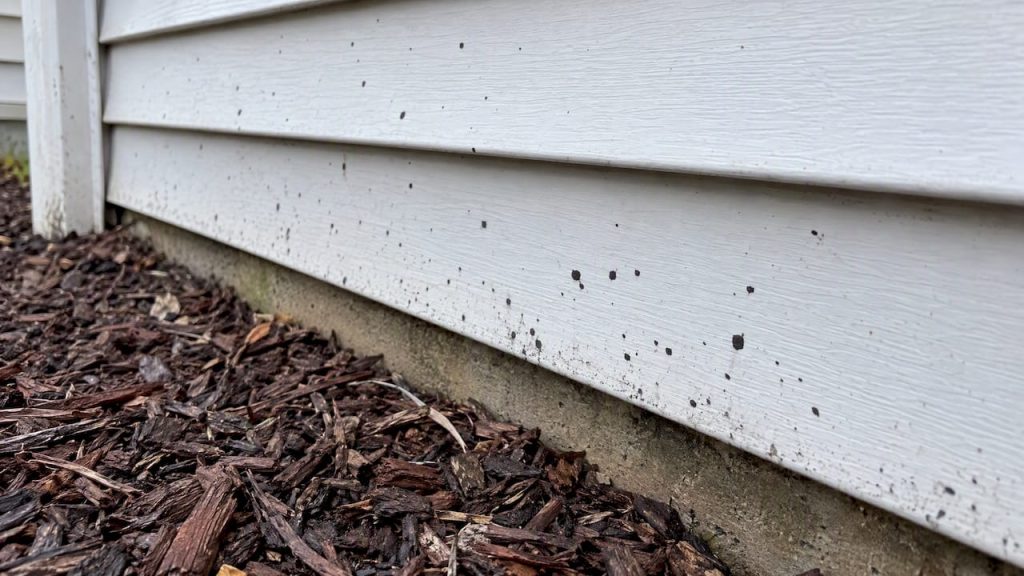
Those black specks are almost certainly artillery fungus (Sphaerobolus spp.), and extension guidance says the damage is cosmetic, not structural. Do two things right away: pull out the infested mulch near your house, and clean fresh spots gently before they cure. Once hardened, they are stubborn, so speed matters more than strength.
TL;DR:
- Fresh deposits often lift with soap, warm water, and a soft brush, but cured spores may leave faint stains even after careful scraping.
- Remove the infested bed material before cleaning, then choose pine bark nuggets; adding at least 40% fresh mushroom compost to replacement mulch can suppress the fungus.
- No fungicide is recommended for artillery fungus, and household chemicals, abrasive scrubbing, or high pressure can harm siding, plants, people, or pets.
- Call a professional for widespread, high, or cured staining; insist on a patch test and low pressure cleaning suited to your siding.
Table of Contents
- What artillery fungus is and why it leaves sticky black spots
- Can artillery fungus harm siding, cars, people, or plants?
- How to remove artillery fungus: steps for fresh and cured spots
- Preventing artillery fungus: mulch choices and site fixes
- When to call a pro and what to expect from professional cleaning
- Our practical takeaways on artillery fungus
- How we can help with siding stain removal and prevention
- FAQ
- Sources
What artillery fungus is and why it leaves sticky black spots
Artillery fungus grows in mulch and shoots its spores at nearby surfaces. Here is what makes those spots so hard to deal with:
- Tiny launchers. The fungus forms small cup-shaped fruiting bodies that build pressure and eject a sticky spore body called a peridiole toward light sources, which is why pale siding gets hit.
- Glue that cures. Practitioners at Ask Extension report that the spores harden with UV exposure and bond to surfaces like super glue.
- Looks worse than it is. The spots are tar-like, dark and gritty, and many homeowners mistake them for paint splatter or insect droppings.
The good news is that the fungus does not eat vinyl, aluminum, or wood. The stain sits on top of your siding rather than inside it, so the problem is how it looks, not whether your wall holds up.
Can artillery fungus harm siding, cars, people, or plants?
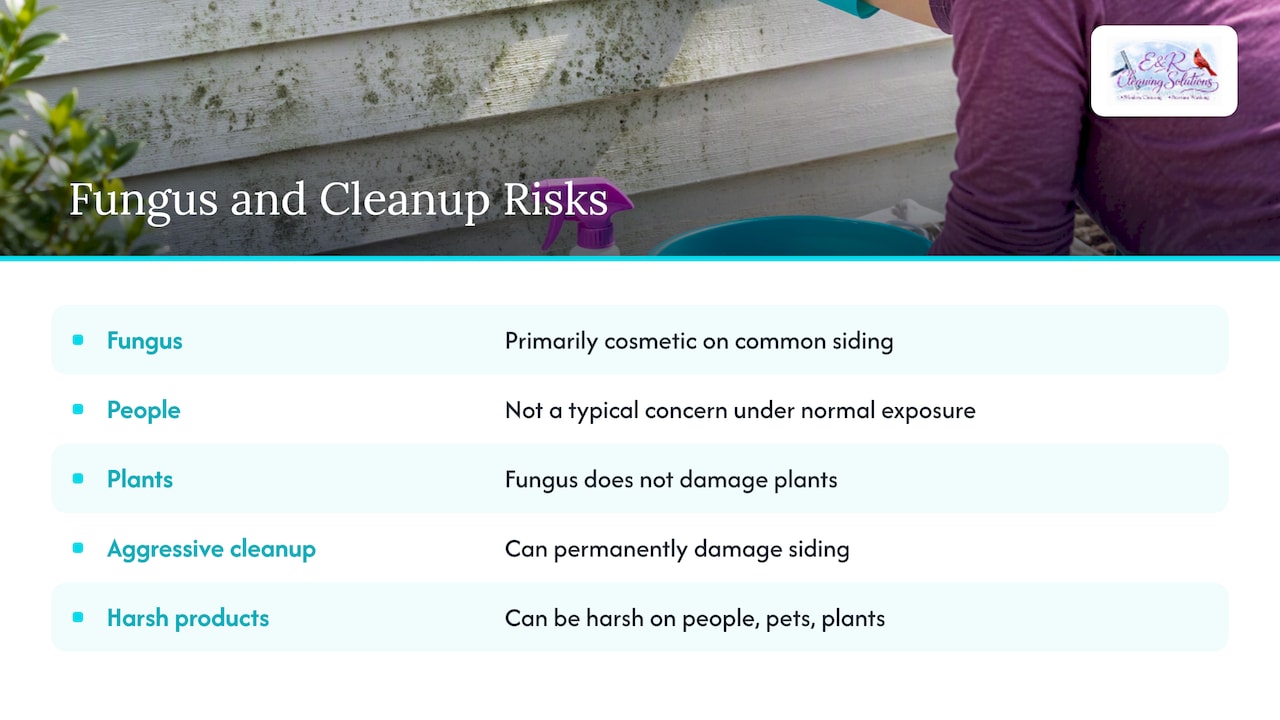
Extension sources describe the fungus as primarily cosmetic on common siding types. It is not a typical health concern under normal exposure, and it does not damage your plants, though the mulch it lives in may need to go.
The real risk comes from the cleanup. Experts warn that aggressive removal can permanently damage siding, and they caution against home remedies and household chemicals that can be ineffective and harsh on plants, people, or pets. High-pressure blasting and abrasive scrubbing are the usual culprits. Gentle, tested methods protect your siding far better than force.
How to remove artillery fungus: steps for fresh and cured spots
Timing decides how hard this job is. Fresh deposits, from the first days to a few weeks, can often be handled with a bucket and brush. Cured spots are another story, and no fungicide will make them vanish. The University of Delaware notes there is no recommended fungicide for the fungus itself, and Ask Extension cautions against products promising guaranteed removal.
- Remove the mulch first. Cleaning is pointless while the source keeps firing.
- Test a small, hidden patch. Confirm your method does not dull or mark the siding.
- Wash fresh spots. Use soap, warm water, and a soft brush, then rinse promptly. Soap and water can work before the peridioles dry.
- Scrape cured spots carefully. Use a soft plastic scraper and lift each spot gently. Skip metal tools, which gouge vinyl and painted surfaces.
- Use siding-safe cleaners only. A home exterior care guide from Pulte advises using the siding manufacturer’s recommended cleaners. Follow label directions exactly and never mix bleach with ammonia-containing products.
- Consider a soft wash for large or high areas. Professionals may use low-pressure application and a siding-appropriate cleaning solution, as we explain in our guide to soft washing siding safely.
Pro Tip: Work in the shade on a cool day and rinse quickly. Cleaner that dries on siding can leave streaks that look worse than the fungus.
Expect some ghosting even after a good cleaning. Cured spots can leave a faint stain, and it may take a season or two for leftover marks to fade once the source is gone.
Preventing artillery fungus: mulch choices and site fixes
Removing the source is the main control. Take the infested mulch out and dispose of it well away from your house and vehicles. Then make the bed less friendly to the fungus:
- Switch materials. The University of Delaware suggests more resistant options such as pine bark nuggets, and says to avoid hardwood-derived mulch and thick layers.
- Try mushroom compost. Research cited in the same fact sheet indicates that blending fresh mushroom compost into mulch at 40% or more can help suppress the fungus by adding competing microbes.
- Keep mulch shallow. A moderate layer dries out faster than a deep, soggy one.
- Leave a gap. Leave space between siding and soil, and keep plants trimmed away from the wall, per the Pulte guide above.
- Cut back water. Aim sprinklers away from siding and improve drainage along the foundation.
- Refresh yearly. Rake and turn mulch each year, since disturbance can reduce fruiting.
If your wall also shows green or gray film, that is a different problem. Our page on algae on siding covers that one, and our mold on siding guide covers when DIY is reasonable.
When to call a pro and what to expect from professional cleaning
Call someone when spots cover a large area, sit on a second story, or have already cured across a wide section of wall. Ladders and wet siding are a poor mix, and a careless pass with a pressure washer causes more trouble than the fungus did.
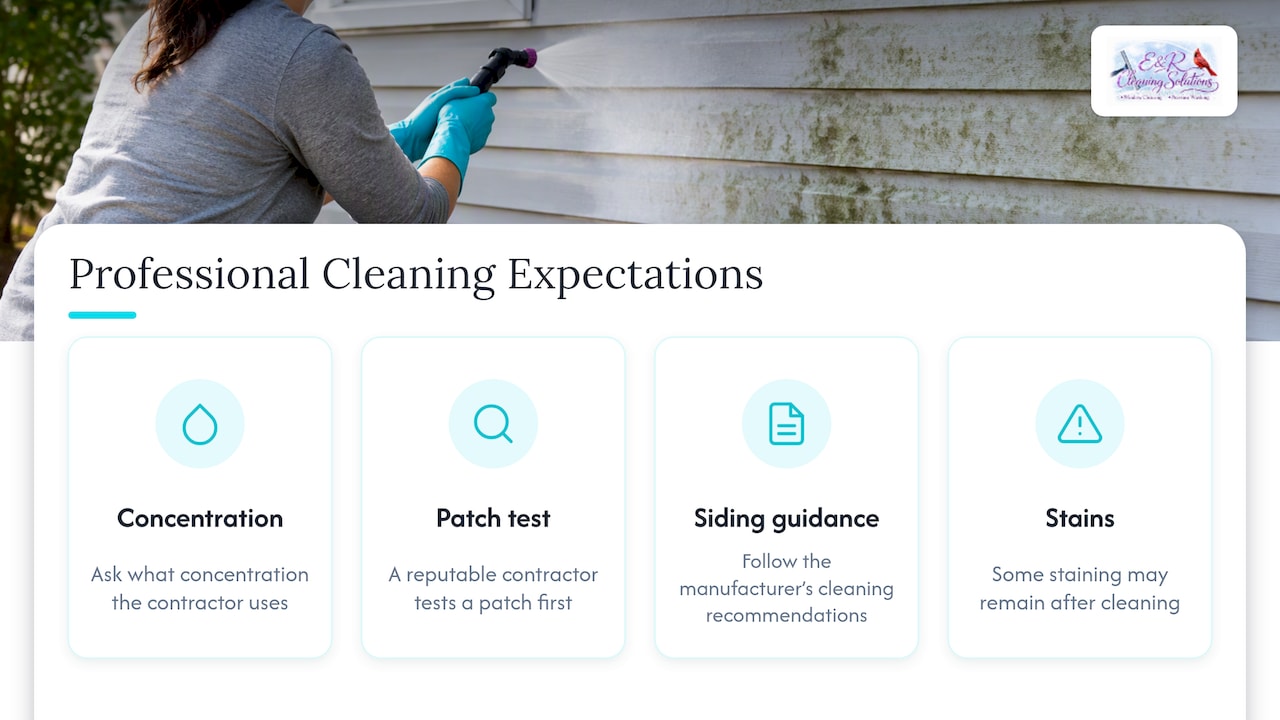
A reputable contractor will start with a patch test, use a low-pressure soft-wash mix, and be honest that some staining may remain. Ask any provider what concentration they use, whether they test first, and whether they follow your siding manufacturer’s cleaning recommendations. A pro who promises every speck will disappear deserves a second question, because Ask Extension warns against guaranteed-removal claims.
Our practical takeaways on artillery fungus
We see the same pattern again and again: homeowners scrub hard and fast, then discover the real fix was upstream in the mulch bed. Our advice is to pull the mulch first, try gentle cleaning early, and bring in help for widespread or high-up staining. In our experience, mulch replacement plus a soft wash plus careful spot scraping gives the best cosmetic result, even though a faint trace sometimes lingers. We are a family-run team, we price honestly, and we always test a small patch before touching your wall.
— Richard
How we can help with siding stain removal and prevention
E and R Cleaning Solutions handles pressure washing and soft-wash siding cleaning for homeowners, with low-pressure methods chosen for your siding type. When you book, you can expect:
- A custom quote based on your home
- A test patch before full cleaning
- Flexible scheduling
- Practical advice on the landscape fixes that keep spores away

Contact us for an estimate or a test patch and we will take it from there.
FAQ
What attracts artillery fungus?
Artillery fungus is drawn to damp, decaying organic matter, especially hardwood mulch and old compost in shady spots. The spores then aim for light-colored, bright surfaces like siding and cars. Shade and moisture near the foundation make outbreaks more likely, according to the University of Delaware.
Can WD-40 be used to remove artillery fungus?
The sources we reviewed do not recommend WD-40 or similar household products. Ask Extension warns that home remedies and household chemicals can be ineffective and potentially harmful, so stick with soap, water, a soft brush, and siding-safe cleaners after a patch test.
Is artillery fungus harmful?
It is mainly a cosmetic nuisance. Extension guidance says it does not structurally damage vinyl, aluminum, or wood siding. The bigger danger is overly aggressive cleaning that scars the siding.
How do you get rid of artillery fungus naturally?
Start by removing the infested mulch and replacing it with a more resistant material such as pine bark nuggets. Blending fresh mushroom compost into mulch is a research-backed way to help suppress the fungus. Leftover spots may take a season or two to fade.
Sources
The source is nearly always decomposing organic matter close to your foundation, especially mulch. The University of Delaware fact sheet points to mulch and other decaying material as the starting point, and the University of Maine Cooperative Extension says the fix begins with removing that source.
Conditions that make an outbreak more likely:
- Artillery fungus on vinyl siding – Ask Extension
- Artillery Fungus and Other Things That Grow in Mulch | Cooperative Extension | University of Delaware
Spores can travel several feet, so a flower bed that looks harmless can still coat a wall or a parked car. If you see specks in a pattern that fans out from one bed, you have found your launch site.