Homeowners: Book Spring House Wash Late March–May, Insist on Low Pressure

Schedule a spring house wash if winter left your siding streaked, your driveway darkened, or green film creeping across your roofline. Hire a professional for whole-house soft washing, gutters, and any roof work, since these carry real risk of damage or injury when done wrong. Small, isolated spots, like a single mildew patch under about two feet, are reasonable to handle yourself. Before booking, inspect your exterior and ask any provider how they contain runoff and whether they use a soft-wash method.
TL;DR:
- A spring house wash effectively removes pollen, mildew, algae, and salt residue to prevent staining and interior damage before summer heat and humidity promote growths.
- Soft washing is recommended for siding and roofs to avoid damage, while pressure washing suits hardscapes like driveways and patios for efficient cleaning.
- Best booking times are late March to May, avoiding frost risk, with most homes needing only one annual cleaning unless climates favor biannual maintenance.
- Costs vary based on house size, siding type, stain severity, and access challenges, with detailed estimates providing clarity and avoiding surprise charges.
- Proper preparation involves inspecting for damage, protecting landscaping, asking providers about their methods and containment plans, and documenting existing issues before cleaning.
Table of Contents
- Why spring is the right season for a house wash
- What a spring house wash includes
- Soft washing vs pressure washing: when to pick each method
- Timing and frequency: when in spring to book and how often to repeat
- Cost factors and typical pricing shapes
- Preparing your home and essential questions to ask providers
- Environmental, safety, and roof-specific cautions
- What we prioritize on every spring wash
- Get your home ready with a professional cleaning service
- Sources
- FAQ
Why spring is the right season for a house wash
Winter leaves behind a specific mess: wind-driven pollen, algae that thrives in damp shade, mildew along north-facing walls, road salt splashed up onto lower siding, and soot from chimneys or nearby traffic. Left alone, these deposits do more than look bad. Algae and mildew can etch into porous surfaces over time, and salt residue accelerates corrosion on metal fixtures and fasteners.
A spring wash addresses this buildup before summer heat bakes it into a permanent stain, and it sets up the rest of your seasonal maintenance, from repainting trim to inspecting for winter damage.
- Removes pollen, algae, mildew, and salt residue before they stain permanently
- Restores curb appeal ahead of spring and summer outdoor activity
- Creates a clean baseline for spotting cracks, rot, or loose siding
Timing matters too. You want a stretch of dry, stable weather without frost risk, since cold snaps can affect how cleaning solutions cure and how quickly surfaces dry.
What a spring house wash includes
A typical spring service covers several distinct zones of your home, each treated differently depending on material and risk.
- Siding and trim: cleaned with a soft-wash method, low pressure combined with a cleaning solution, to lift algae and mildew without forcing water behind panels.
- Gutters: flushed and brightened on the outside to remove oxidation streaks and buildup from winter debris.
- Windows: exterior glass, frames, and screens cleaned separately from the house wash, often as an add-on.
- Roofs: treated with a specialized low-pressure application rather than a standard pressure wash, given how easily shingles are damaged.
- Driveways and patios: cleaned with pressure washing or flat-surface attachments suited to concrete, pavers, or stone.
Most estimates itemize these as separate line items, since materials and methods differ so much between a vinyl-sided wall and a concrete slab. Common add-ons include paint prep for peeling trim or targeted rust and oil stain remediation, which usually require different chemicals than a standard wash.
Soft washing vs pressure washing: when to pick each method
Soft washing uses low water pressure combined with a cleaning solution, often a diluted bleach mix, to kill algae and mildew and let it rinse away gently. Pressure washing relies on mechanical force alone, using higher pressure to physically blast dirt off a surface.
Each method suits different materials:
- Soft washing fits vinyl siding, stucco, painted wood, and roofing, where high pressure can strip paint, crack seals, or drive water behind panels.
- Pressure washing fits concrete, brick, and other dense hardscapes that can tolerate stronger force without damage.
- A common mistake is applying pressure-washer force to shingles or old mortar joints, which erodes surfaces meant to shed water, not resist a direct blast.
Watch for red flags in how a provider describes their process. High-pressure equipment aimed at a roof, or aggressive scrubbing on fragile siding, are both signs of a method mismatch rather than skill.
Pro Tip: Ask any provider which method they plan to use on each surface before they start, not after.
Timing and frequency: when in spring to book and how often to repeat
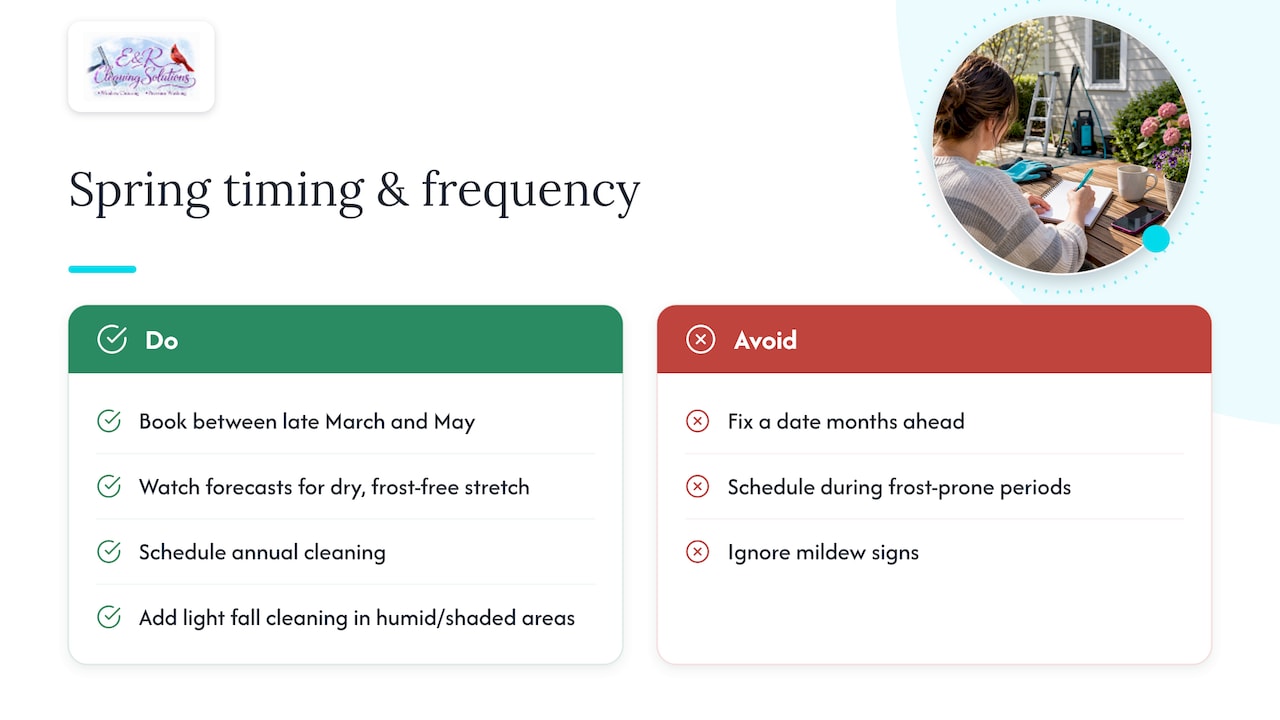
Most homeowners get good results booking anywhere from late March through May, depending on regional weather patterns. The goal is a run of dry days without frost, since cold temperatures can interfere with how cleaning solutions work and how surfaces dry afterward.
Watch local forecasts for a stable stretch rather than fixing a specific date months in advance. If your area sees late frosts, waiting until closer to May reduces the risk of rescheduling.
For frequency, once a year is typical for most homes. Properties in humid or heavily shaded climates, where algae and mildew return faster, sometimes benefit from a second light cleaning in fall. Visible green streaking or a moldy smell near vents are signs to move up your schedule rather than wait for a fixed date.
Cost factors and typical pricing shapes
Quotes vary because so many variables affect labor and materials on a given house.
- House size and height: a single-story ranch costs less to wash than a three-story home requiring ladders or lifts.
- Siding type: vinyl and brick clean faster than stucco or wood siding, which need gentler, slower application.
- Staining severity: heavy algae or years of neglect require more solution and dwell time than routine upkeep.
- Access difficulty: fenced yards, tight side lots, or landscaping close to the foundation add time.
- Containment and disposal needs: jobs near storm drains or in areas with runoff restrictions may need extra setup.
Rather than compare a single number, think in shapes: a small, easy-access single-story home sits at the low end, while a large, multi-story property with heavy staining and difficult access sits at the high end. A written, itemized estimate protects you by spelling out exactly what is included, so you are not surprised by an add-on charge for gutters or window screens after the job starts.
Preparing your home and essential questions to ask providers
A short walk around your property before booking saves time and prevents disputes later.
- Check trim and caulk: loose trim boards or failing caulk joints can let water in during washing and should be flagged in advance.
- Protect landscaping: move potted plants and cover sensitive beds near the foundation, or confirm your provider will do this.
- Ask about the soft-wash mix: a reputable provider can explain their soft-wash concentration and why it suits your siding.
- Ask about containment and disposal: find out where wash water goes and how they avoid sending it into storm drains.
- Confirm insurance and experience: ask specifically about experience with your siding and roof type, and request references.
For a full walkthrough of what to ask before hiring, our guide on onboarding an exterior cleaning provider covers the process in more depth, and our low-pressure house washing article explains the technique itself.
Pro Tip: Photograph any existing siding damage before the crew arrives, so pre-existing issues are documented.
Environmental, safety, and roof-specific cautions
Wash water is not just soapy runoff. The EPA’s guidance on pressure washing advises against letting dust, debris, and wastewater leave the work area uncontained, particularly where lead-based paint rules apply, and recommends against discharging wash water directly into storm drains. Broader EPA stormwater best practices for vehicle and equipment washing point to the same principle: contain, capture, or route wastewater responsibly rather than letting it flow downstream.
Roofs need their own approach entirely. The Asphalt Roofing Manufacturers Association recommends a 50:50 laundry-strength bleach-and-water solution with a 15 to 20 minute dwell time, rinsed at low pressure, and explicitly warns against pressure washing shingles because it strips granules and shortens roof life.
- Ask whether your provider follows this dwell-and-rinse method rather than a direct pressure blast
- Confirm they have a stated containment or disposal plan before work begins
- Inspect drainage planes and seals first, since washing can reveal or worsen existing moisture problems that need separate repair.
What we prioritize on every spring wash
Family-run businesses tend to treat a house wash as more than a cosmetic job, and that shapes how we work. We default to low-pressure techniques on siding and roofing, protect landscaping before starting, and give homeowners a written, itemized estimate rather than a vague number. Before any equipment turns on, our technicians check for loose trim, failing caulk, and signs of existing moisture damage, since cleaning over a hidden problem only masks it temporarily. For more on the reasoning behind this approach, see our articles on low-pressure house washing and safe soft-wash concentrations.
— Richard
Get your home ready with a professional cleaning service

A spring wash only pays off if it is done with the right method for your siding, roof, and driveway, and that is where E and R Cleaning Solutions focuses. We handle low-pressure house washing, exterior window cleaning, gutter brightening, and driveway cleaning as a coordinated spring service rather than a single generic pass. When you request an estimate, expect a walkthrough of your property, a written scope broken out by task, and honest pricing with no surprise add-ons. Visit our services page to request your estimate.
Sources
- How do RRP requirements apply to pressure washing? What containment and other preparation are required? | US EPA
- Algae & Moss Prevention and Cleaning for Asphalt Roofing Systems – Asphalt Roofing Manufacturers Association (ARMA)
- Sealing roofs, walls, windows and doors to keep water out | UMN Extension
FAQ
Is spring or fall better for power washing a house?
Spring is generally preferred because it removes winter buildup, pollen, and algae before summer heat sets it into surfaces, and it lines up with broader seasonal maintenance. Fall cleaning can help in humid climates prone to fast algae regrowth, but it does not replace a spring wash for most homes.
What does spring house cleaning typically involve?
Spring house cleaning for exteriors usually covers soft-washing siding and trim, cleaning gutters, washing exterior windows, and pressure washing driveways or patios. Roofs get a separate, low-pressure treatment rather than a standard pressure wash, per ARMA’s guidance.
How much does driveway and sidewalk pressure washing cost?
Cost depends on square footage, staining severity, and access, so pricing shapes vary rather than following one fixed number. A detailed, itemized estimate from a provider is the most reliable way to know what your specific driveway and sidewalk will cost, and our walkway pressure washing guide breaks down what typically drives that price.
Which month should you start spring cleaning tasks?
Most homeowners start exterior spring cleaning between late March and May, once frost risk has passed and a stretch of dry weather is likely. Waiting for stable weather matters more than hitting an exact date, since rushing into a cold snap can affect how cleaning solutions perform.
Can I pressure wash my own house instead of hiring a pro?
Small, isolated spots under about two feet are reasonable to handle yourself with basic care, as covered in our guide on removing mold from siding safely. Whole-house washing, gutters, and any roof work are best left to professionals, given the risk of siding damage, water intrusion, or shingle granule loss.