Roof Lichen Can Cut Roof Life by 5+ Years: Remove It Safely
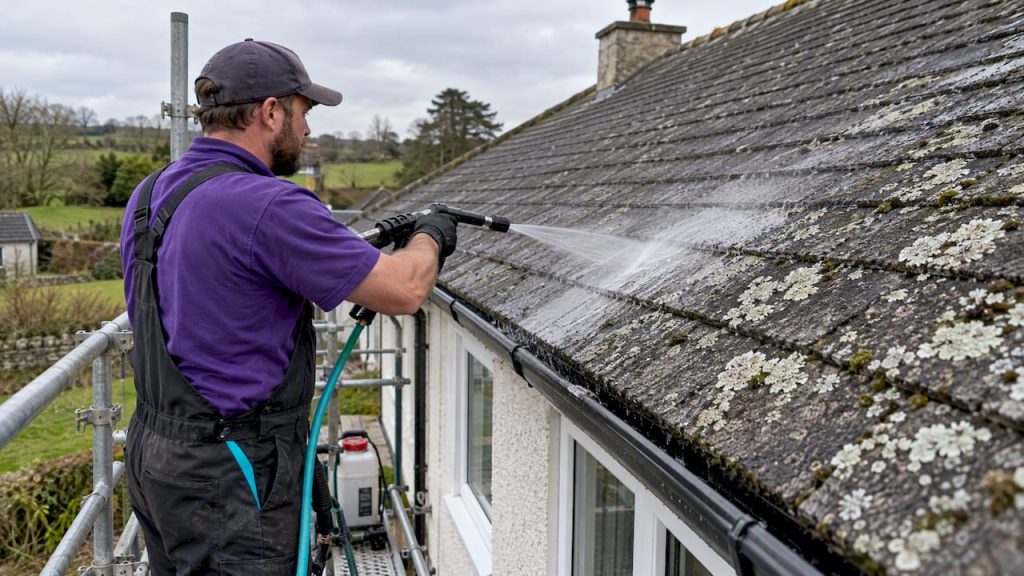
The safest DIY approach is a shingle-safe soft wash using an ammonium-based roof cleaner, applied with a pump sprayer while you protect your plants. Skip pressure washing and scraping, because both tend to strip the protective granules off your shingles. Expect results to show up slowly, not immediately.
TL;DR:
- Untreated lichen can shorten a roof’s functional lifespan by five or more years, while scraping or pressure washing removes protective granules.
- Choose a cleaner labeled for roofs with an ammonium based active, follow label directions for dilution and dwell time, and protect plants and control runoff.
- DIY suits modest patches on sound, low slope roofs; avoid it on brittle, curled, heavily worn, or steep roofs, and call a professional instead.
- Lichen may brown, loosen, and wash away with rain over 6 to 12 months; persistent patches warrant a professional inspection, not scrubbing.
- Copper or zinc strips near the roof ridge release ions in rain that discourage regrowth; trimming overhanging branches and clearing gutters also reduce damp conditions.
Table of Contents
- Why does lichen grip shingles so tightly?
- Which products and active ingredients should you use?
- What is the step-by-step soft-wash method?
- How long does lichen removal really take?
- How do you keep lichen from coming back?
- When is DIY reasonable, and when should you call a pro?
- E&R Cleaning Solutions: professional soft-wash roof cleaning
- FAQ
- Sources
Why does lichen grip shingles so tightly?
Lichen can be a particularly damaging biological growth on a roof. It embeds into the shingle surface and pulls nutrients from it, which is why untreated lichen can shorten a roof’s functional lifespan by five or more years. That grip is also the reason fast removal backfires.
When you pull or scrape lichen off, it often takes mineral granules with it, leaving holes that look a lot like blistering. Pressure washing does similar harm on a larger scale. Here is what you are really trading off:
- Speed versus longevity: A roof that looks clean today but has bare asphalt patches will age faster.
- Mechanical force: Brushing, raking, scraping and high pressure all dislodge granules that protect the shingle from sun.
- Harsh chemistry: Strong chemicals in the wrong concentration can harm shingles and nearby plants, and may put your shingle warranty at risk.
- Roof access: Some roofers also point out that pressure washing a roof carries its own safety and damage concerns for people on ladders and for the roof itself.
The slow, gentle route protects the one thing you cannot easily replace: the shingle surface.
Which products and active ingredients should you use?
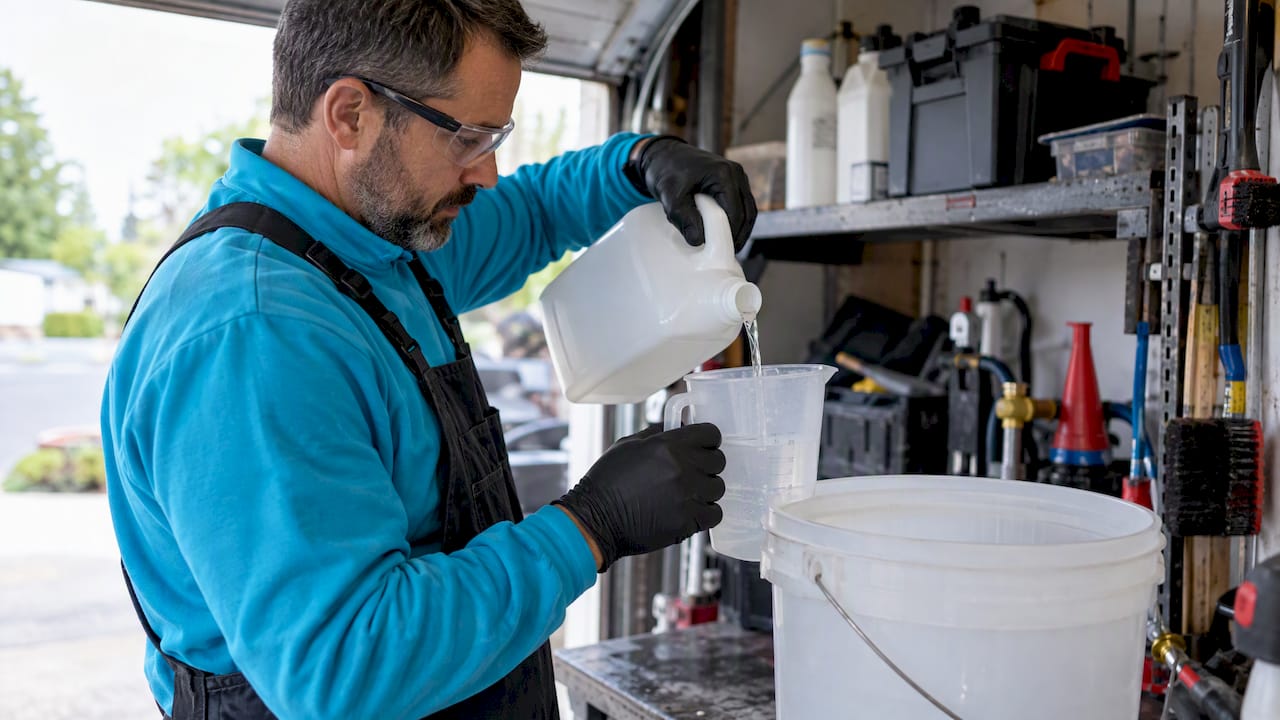
Look for a roof cleaner made for shingles that lists an ammonium-based active, such as alkyl dimethyl benzyl ammonium chloride. Trade guidance for homeowners recommends this class of formula. Concentrates sold for roofs are designed so they can be applied and left to work.
What to look for when you shop:
- A label that names shingles or roofs as an approved surface
- An ammonium-based or quat active ingredient
- A concentrate you dilute yourself, so you control the mix
- A garden or pump sprayer that the product manufacturer says is compatible
What to avoid or treat with caution:
- High-concentration bleach, which at strong mixes or long contact times can damage shingles and harm vegetation
- Ammonia and trisodium phosphate, which are harsh on shingles and on the plants around your house
- Any product whose label does not list roofs
Pro Tip: Read the whole label before you buy, not after. The label is the law: it sets dilution, application and safety gear, and following it protects your roof, your plants and your runoff.
If you want to see how professionals think about mixes, our page on roof washing chemical mixes for homeowners walks through the safety side in more detail.
What is the step-by-step soft-wash method?
Before you start, check the roof. If shingles look brittle, heavily worn or curled, or the pitch is very steep, skip the DIY route. Take photos of the current condition so you can compare later.
- Gather your gear. You need gloves, goggles, a pump sprayer, a stable extension ladder and tarps or coverings for plants and gutters.
- Protect landscaping. Wet down nearby plants, cover delicate ones and keep pets and kids away from the work area.
- Mix the product exactly as the label directs. Use the stated ratio. Stronger is not better, and it can hurt shingles.
- Apply from a safe position. Spray the affected areas evenly, working in the conditions the label allows (some products specify a dry or damp roof).
- Let it dwell. Follow the label’s dwell time. Some products are meant to stay on and keep working through rain, and some need a second application.
- Rinse overspray off plants. If the label calls for it, hose down foliage and hard surfaces that caught drift.
- Leave the dead growth alone. Do not scrub or blast it. Weather and rain will wash it away over time.
- Recheck from the ground. Use binoculars or a low-angle look to spot color change and flaking, not a ladder and a brush.
Pro Tip: Spray on a calm day. Wind carries mist onto plants, cars and neighbors, and it makes your coverage uneven.
If your roof has the same biological growth on other surfaces, our notes on soft washing and dwell times for algae on siding apply the same principles.
How long does lichen removal really take?
Plan for months, not days. The treatment kills lichen chemically, but the dead growth releases its grip slowly. Industry guidance describes it as a waiting game in which the growth dies, dries and detaches over 6 to 12 months. Some of these products are built to be applied and left on, staying active through rainfall, which is why they can take months to loosen the growth.
Here is a realistic picture:
- At first: You may see browning or darkening as the lichen dies.
- Following months: Patches loosen, flake and wash off with rain.
- Long term: Some manufacturers claim multi-year suppression, but dead patches can leave visible granule loss behind.
- If patches persist: After a sensible reapplication schedule, have a professional inspect the roof before you try anything mechanical.
The worst move at month two is losing patience and grabbing a scrub brush.
How do you keep lichen from coming back?
Cleaning without prevention just resets the clock. The most common long-term fix is a metal strip. Copper or zinc strips along the ridge release metal ions every time it rains, and those ions wash down the shingles and discourage regrowth. Place them near the peak so rain carries the metal down the slope.
Other measures that help:
- Algae-resistant shingles: Consider them whenever you eventually re-roof.
- Trim shade: Overhanging branches keep the roof damp and shaded, which lichen loves.
- Clear gutters and debris: Leaves and moisture feed growth along the edges.
- Routine checks: A quick look from the ground each season catches problems early.
Prevention means fewer retreatments, and fewer retreatments mean less wear on the shingles you are trying to protect.
When is DIY reasonable, and when should you call a pro?
Here is my honest view. DIY makes sense for modest patches on a structurally sound, low-slope roof if you are comfortable on a ladder and willing to wait. Call a professional for steep pitches, heavy coverage, aged or fragile shingles, warranty worries, or any job where you cannot control runoff. A mistake can cause premature roof wear, so consider having the roof inspected. Patience and the right chemistry beat force every time.
— Richard
E&R Cleaning Solutions: professional soft-wash roof cleaning

When the roof is too steep, too large or too fragile for a weekend project, we can handle it. We are a family-run team offering pressure washing and soft-wash cleaning for homes and commercial properties, with custom pricing for each job. You get a careful, shingle-first approach and a plain-spoken quote, with no pressure to commit.
Before you hire anyone, including us, ask about:
- Warranty-safe methods for your shingle type
- How runoff and landscaping will be protected
- Insurance coverage
- References from recent roof jobs
You can read how we approach warranty-safe roof moss removal, or request an inspection and quote today and we will tell you straight whether your roof needs a pro.
FAQ
What is the white powder people put on their roofs?
Usually it is a zinc or copper-based product, often sold as a granular moss and lichen preventive. Rain dissolves it and carries metal ions down the shingles, which discourage regrowth. Always follow the label for placement and amounts.
Does Dawn dish soap kill roof moss?
Dish soap is not a roof treatment and is not designed to kill lichen or moss on shingles. Use a product whose label lists roofs and an ammonium-based active, and follow its instructions.
How fast does vinegar kill lichen?
Vinegar is not a dependable roof treatment, and it is not a labeled product for shingles. Even labeled treatments are slow, with full clearing often taking 6 to 12 months, so expect patience either way.
What is the best time of year to remove moss from a roof?
Choose a calm, dry stretch of mild weather, and check what your product label says about roof conditions and temperature. Because some treatments rely on later rainfall to carry dead growth away, applying before a wetter season can help.
Sources
- Asphaltroofing
- Epa
- Mastering Roof Inspections: Asphalt Composition Shingles, Part 43 – InterNACHI®
- How to Remove Lichen and Moss from Your Roof – Fine Homebuilding