
Mildew on Window Frames: How to Clean It and Keep It Gone
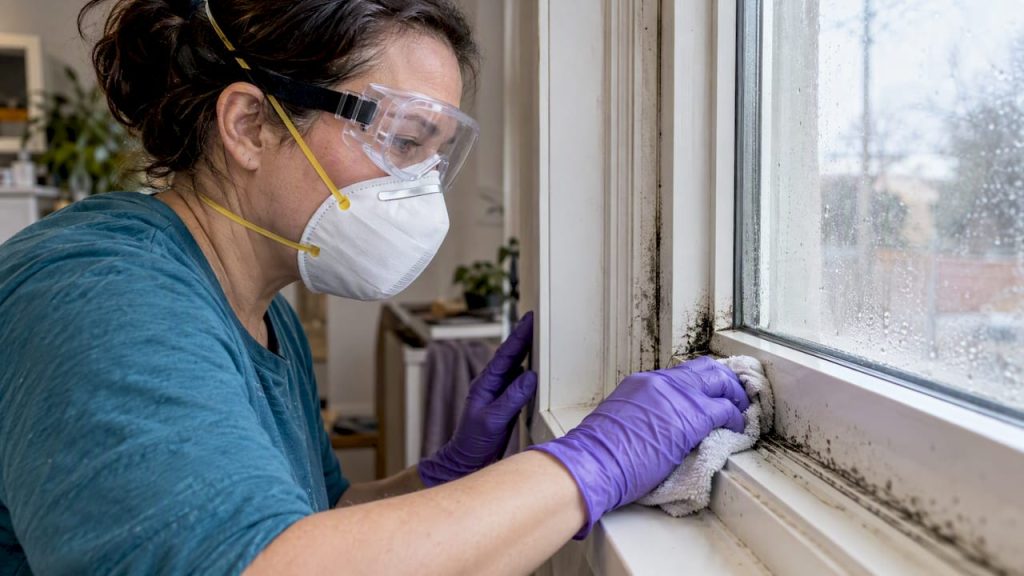
Mildew on window frames is a moisture problem that shows up as a cleaning problem. Small patches on vinyl, aluminum or sealed frames come off with detergent, water and a soft brush. If you skip the cause, which is usually condensation, a leak or high indoor humidity, the spots return within weeks. This guide covers how to clean the frames safely, when the job is bigger than a weekend chore, and how to stop it from coming back.
TL;DR
- Small patches (under 10 square feet) on hard frames are a reasonable DIY job. Wear an N95 respirator, gloves and sealed goggles.
- Start with detergent and water and physical scrubbing. Bleach, if you use it at all, comes after cleaning, and never with ammonia.
- Mildew comes back unless you fix the moisture source: condensation, leaks, or indoor humidity above 50%.
- Wood frames and sills that stay soft or stained after cleaning may be rotting. That calls for a repair, not more scrubbing.
- If you have asthma, lung disease or a weakened immune system, do not do the cleanup yourself.
Table of Contents
- Why mildew grows on window frames
- Is it mildew, mold or just dirt?
- Before you clean: protect yourself
- How to remove mildew from window frames
- Find out where the moisture is coming from
- When DIY is fine and when to call someone
- Our perspective: clean the frame, then look at the whole window
- Keeping mildew from coming back
- Let us handle the frames
- FAQ
- Sources
Why mildew grows on window frames
Windows are the coldest surfaces in most rooms. Warm indoor air carries moisture, and when it touches cold glass or a cold frame, some of that moisture turns to water. That film sits in the corners, along the sash and on the sill, where dust and pollen give mold something to eat.
Mold spores are already in your home. The CDC notes that there is always some mold around, and that spores can enter through open doors, windows, vents and heating and cooling systems. You cannot keep spores out. You can keep the frames dry enough that they never get started.
The usual causes, roughly in order of how often we see them:
- Condensation. Common in winter, in bedrooms where people sleep with the door closed, and in kitchens and bathrooms.
- High indoor humidity. The EPA’s mold and moisture guidance says to keep relative humidity below 60%, ideally between 30% and 50%.
- Leaks. Failed caulk, a cracked seal or water running down the wall behind the trim.
- Cold spots. Older or single-pane windows have colder interior surfaces. The Department of Energy’s windows measure guide points to higher Condensation Resistance (CR) ratings as a way to keep interior surfaces warmer and reduce condensation.
- Dirt buildup. Dust and grime in the tracks and corners hold moisture and feed growth.
Speed matters too. The EPA advises drying wet areas within 24 to 48 hours if possible, because mold can begin to grow in that window. A frame that is wet every morning is never dry for long enough.
Is it mildew, mold or just dirt?
Mildew is a term for mold that grows flat on a surface, often powdery or fuzzy, white, gray, green or black. For cleaning purposes the difference does not matter much. Treat any of it with the same caution.
A quick check helps you decide what you are dealing with:
- Wipes off with a damp cloth and soapy water: surface dirt or light mildew on a hard frame. Easy.
- Dark specks that come back in the same corners within days: active moisture. Look for the source.
- Dark staining that goes into wood grain or paint: the mold has penetrated. Cleaning may fade it but not remove it.
- Soft, spongy or flaking wood: rot. The EPA’s cleanup guide shows a leaky window where mold has started to rot the wooden frame and sill.
Does black mold always smell? No. A musty smell is a clue, but a window frame can be moldy with no odor at all. Judge by what you see and by whether the spot keeps returning.
Before you clean: protect yourself
Mold cleanup throws spores into the air. The CDC’s cleanup guidance calls for at least a NIOSH-approved N95 respirator, rubber or nitrile gloves, and goggles that fully seal the eyes. Avoid goggles with ventilation holes.
The same page warns that some people should not take part in cleanup, or even be nearby while it happens. That includes people with allergies, asthma, underlying lung disease or a weakened immune system. If that is you or someone in your household, hire the work out, and talk to your doctor about any symptoms.
Two more precautions:
- Open the window or run a fan blowing outward so you are not breathing the dust.
- Never mix bleach with ammonia or other cleaners. The EPA warns that it creates a toxic gas, and many glass cleaners contain ammonia.
How to remove mildew from window frames
This method suits hard, non-porous frames such as vinyl, aluminum, fiberglass and well-sealed painted surfaces. Plan on about 15 to 30 minutes per window.
What you need
- N95 respirator, nitrile gloves, sealed goggles
- A bucket of warm water with a little dish soap or household detergent
- Soft-bristle brush or old toothbrush for corners and tracks
- Microfiber cloths and a dry towel
- A small vacuum with a brush attachment (optional, for dry debris)
- Plastic sheeting or old towels to protect floors and sills
Step by step
- Lay down protection. Cover the floor and furniture under the window.
- Dry-remove loose debris. Vacuum dust and dead insects from the track and corners before adding water.
- Scrub with detergent and water. The EPA’s priority is physical removal. Work from the top down, using the brush in the corners where frame meets glass and where the sash meets the sill.
- Wipe with clean water. Use a fresh cloth and rinse it often, so you are lifting mildew away rather than smearing it around.
- Dry thoroughly. Use a dry towel and, if you can, run a fan for an hour. Moisture left behind starts the cycle again.
- Bag the rags. Wash cloths in hot water or throw them out. Put disposable gloves and sponges in a sealed bag.
- Inspect. If stains remain on hard frames, you may then consider a diluted disinfectant. See the next section.
What about bleach, vinegar and peroxide?
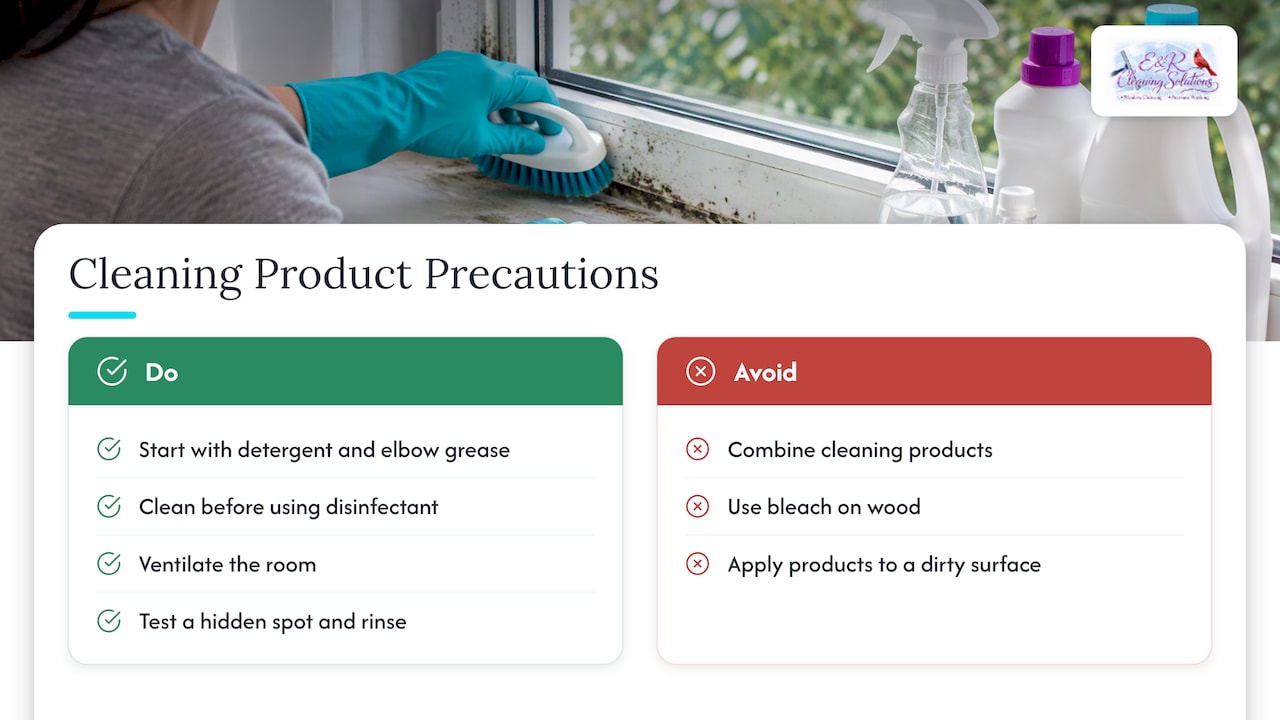
Many of the pages that rank for this search recommend a bleach solution for vinyl and fiberglass, and others push vinegar or hydrogen peroxide. The EPA and CDC take a more cautious line. Detergent and water physically remove mold, which is the real goal. For hard, non-porous surfaces, the guidance allows bleach only after the surface has been cleaned, and the CDC’s bleach fact sheet stresses that soap, bleach or any product will not work well on a surface that still has dirt on it.
Our view: start with detergent and elbow grease. Most window-frame mildew comes off that way. If you want to follow with a diluted disinfectant, keep the room ventilated, never combine products, test a hidden spot first, and rinse. Bleach can discolor some finishes and will not help on wood, where it does not reach the roots.
Wood frames and sills
Porous materials are a different story. The mold’s root-like threads grow into the material, so surface cleaning often fixes only the look. EPA guidance says absorbent materials that cannot be dried promptly often must be discarded. For a wood frame, that can mean sanding and refinishing, replacing a section of trim, or replacing the sash. If you press a screwdriver tip into the wood and it sinks in, stop scrubbing and call a carpenter or window repair specialist.

Find out where the moisture is coming from
Experts keep returning to the same point: the key to mold control is moisture control. Cleaning is half the job. If you scrub the frame and change nothing else, expect the mildew to return.
Condensation checks
Tape a piece of paper or place a dry cloth against a cold windowpane overnight. If the glass is wet in the morning, you have condensation. Then check humidity. A basic hygrometer costs little and tells you whether you are inside the 30% to 50% range the EPA recommends. Persistent readings above 60% explain a lot of moldy windows.
Fixes that work:
- Run bathroom and kitchen exhaust fans during and after showers and cooking, and vent them outside, not into the attic.
- Use a dehumidifier in damp rooms and basements.
- Go easy on humidifiers in winter.
- Keep furniture and heavy curtains a few inches off the glass so air can circulate.
- Open blinds in the morning so the glass can warm up.
- Dry laundry outside or in a vented dryer.
Leak checks
Look for stains below the window, bubbling paint, soft trim, or water marks on the wall after rain. Check the exterior caulk and the flashing above the window. Water can also come from higher up. This explainer on dormer roof leaks is useful if your moldy window sits in a dormer or under a roof line, because a roof or flashing problem can send water down to the frame and leave mold that no amount of cleaning will fix.
If water is getting into the wall, fix the leak first and dry the area. The Building Science Education page on mold and rot also covers gutters and drainage: clean and repair gutters, and make sure the ground slopes away from the building so water does not collect against the walls.
Glass and frame upgrades
If your windows are old, single-pane or have failed seals (fog between the panes), cleaning will keep losing. Newer energy-efficient windows with better condensation resistance keep the interior surface warmer. That is a bigger investment, so rule out humidity and leaks first.
When DIY is fine and when to call someone
The EPA’s rule of thumb is that homeowners can usually handle cleanup themselves when the affected area is under 10 square feet, about a 3 by 3 foot patch. Past that, or with significant water damage, professional remediation is recommended.
| Situation | Reasonable approach |
|---|---|
| A few spots on a vinyl or aluminum frame | DIY with detergent, water and PPE |
| Mildew on frames and sills across several windows, all hard surfaces | DIY if the total is under 10 sq ft, or hire a window cleaning pro |
| Mold on the exterior frame, trim or siding around the window | Professional exterior cleaning |
| Soft, rotting wood or repeated return after cleaning | Repair or replacement, plus fix the moisture source |
| Mold spreading on walls or ceilings, or musty smell with no visible source | Mold professional or building inspector |
| Anyone in the home with asthma, lung disease or immune suppression | Do not do it yourself |
Mold is not always only on the inside. Exterior frames, tracks and the siding around them collect algae and mildew in shaded, damp spots. We cover that side in our guide to removing mold on siding safely.
Our perspective: clean the frame, then look at the whole window
We are a family-run window cleaning and pressure washing company, and frames are where we spend a lot of our time. When a homeowner calls about mildew on window frames, the frame itself is rarely the whole story.
Here is how we see it:
- Dirt is the fuel. Dust, pollen and grime in tracks and corners hold moisture. Regular cleaning of the frame, track and sill takes away what the mildew feeds on. Our 4 step window frame cleaning guide walks through the basics.
- Gentle beats harsh. Strong chemicals and high pressure damage seals, scratch frames and push water where it should not go. We steer homeowners away from pressure washing the windows themselves without understanding the risks.
- Inside and outside both matter. A thorough interior routine fixes most of what people see. Our interior window cleaning routine is where we tell people to start.
- Seasons change the job. Wet spring weather, summer pollen and winter condensation all leave different marks. We explain that in how seasonal dirt affects windows year-round.
- We say so when it is not a cleaning job. If a frame is soft, or the same corner keeps going black, we will tell you to look at a leak or a repair before paying for another cleaning. Honest advice is how a family business keeps its customers.
— Richard
Keeping mildew from coming back
After the frames are clean and dry, a short routine keeps them that way.
Every week in cold or humid months
- Wipe condensation off the glass and frame with a dry towel or squeegee.
- Check the humidity reading in bedrooms and bathrooms.
Every month
- Vacuum dust from tracks and sills.
- Wipe frames with a damp microfiber cloth and dry them.
Twice a year
- Check caulk and weatherstripping for gaps, cracks and gaps in the seal.
- Clean exterior frames and tracks, and clear gutters so water does not run down the walls.
- Look for stains under windows after heavy rain.
One caution on weatherproofing: sealing a house tighter without ventilation can raise indoor humidity. If you air-seal, make sure exhaust fans work and the home can still get fresh air.
Let us handle the frames
If you have mildew on exterior frames, several windows that need a careful clean, or you simply should not be doing mold cleanup yourself, we can help. E and R Cleaning Solutions provides professional window cleaning, including interior and exterior glass, hard water stain removal, screens and frames, plus pressure washing for siding, patios, walkways and building exteriors. We work with homeowners, landlords, property managers and small business owners, with custom quotes for each job and flexible scheduling. Tell us what you are seeing, and we will say honestly whether it is a cleaning job. Request a quote on our site.
FAQ
Why does my window get moldy?
Usually because moisture sits on the frame and does not dry. Condensation from indoor humidity, a leak around the window, or cold glass in a humid room are the typical causes. Dust and grime in the corners give the mold something to feed on.
Will mold go away if it dries out?
No. Drying stops growth, but dead or dormant mold is still there and can still bother sensitive people. Clean it off hard surfaces, and keep the area dry so it does not start again. On wood that stays stained or soft, repair may be needed.
How can I remove black mold from my window frames?
Wear an N95 respirator, gloves and sealed goggles, then scrub with detergent and water and dry the frame fully. For small areas on hard frames, that is often enough. Do not mix bleach with ammonia, and do not do it yourself if you have asthma or a weakened immune system.
Is it safe to clean mildew on window frames myself?
For patches under 10 square feet on hard surfaces, the EPA says homeowners can usually handle it. Larger areas, water damage or health risks in the household are reasons to call a professional.
How do I stop mildew from returning after I clean?
Fix the moisture source. Keep indoor humidity between 30% and 50%, run exhaust fans, wipe off condensation, seal leaks and keep tracks clean. If the mildew returns in the same spot, look for a leak or failed seal.
Sources
- EPA: Tribal IAQ Resource Directory, Mold and Moisture
- CDC: Mold Clean Up Guidelines and Recommendations
- CDC: Mold clean-up after disasters, when to use bleach
- CDC: About mold
- EPA: Mold Cleanup in Your Home
- U.S. Department of Energy: Windows measure guide
- Building Science Education: Mold and Rot Brief Guide