
How Seasonal Dirt Affects Windows Year-Round
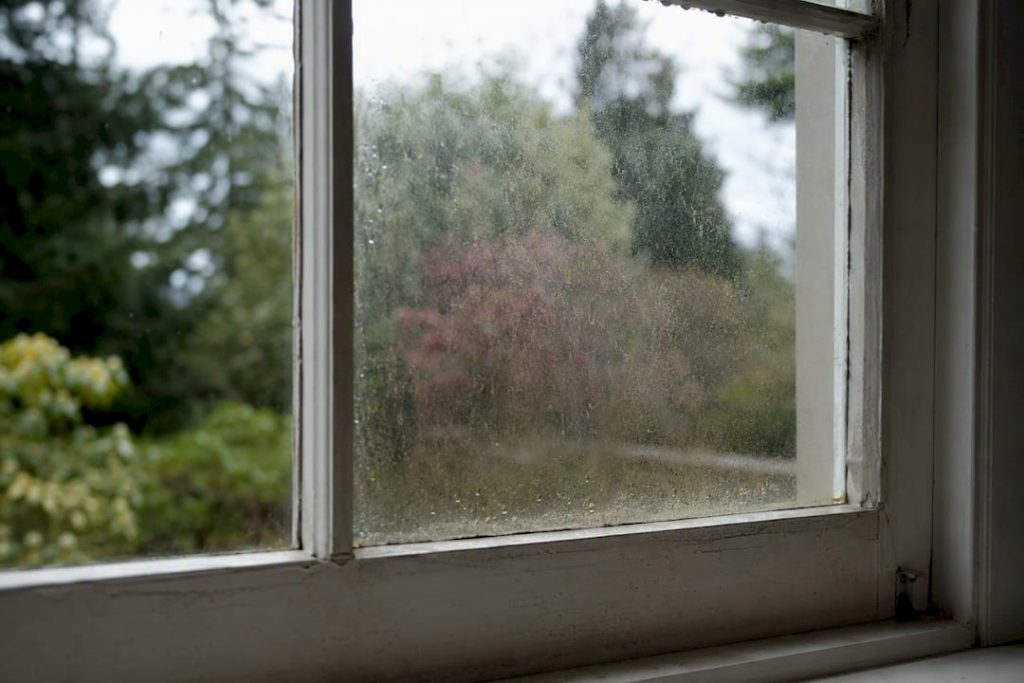
Seasonal dirt affects windows in two distinct ways: it builds a visible film that blocks light, and it can chemically etch glass or accelerate seal and hardware failure if left alone too long. Pollen, hard-water minerals, road salt, bird droppings, and sap don’t just sit on glass. Several of these substances react with it, especially once they’re baked on by heat or left wet for weeks at a time.
The risks compound quietly. A hazy window is a cosmetic annoyance for a season, then a permanent etch mark the next. Seals fail slowly until you notice fog trapped between panes. Hardware corrodes until a lock or crank simply stops turning.
- Reduced natural light and higher energy bills from soiled glass and failing seals
- Permanent etching from mineral deposits, acidic bird droppings, and salt residue
- Fogged double panes from lost seal integrity and escaped insulating gas
- Corroded frames, hinges, and locks from trapped moisture
The baseline fix: a professional deep clean and inspection in spring and fall, with prompt rinsing after storms, salt spray, or heavy pollen events. This single habit, backed by twice-yearly cleaning guidance from This Old House, catches most problems before they become expensive ones.
Key Takeaways
Seasonal contaminants damage windows through two separate mechanisms, surface buildup and chemical reaction, and a twice-yearly deep clean with prompt post-storm rinsing is the single most effective way to prevent both.
| Point | Details |
|---|---|
| Contaminants vary by season | Salt and ice in winter, pollen in spring, baked-on sap in summer, and trapped leaves in fall each need different handling. |
| Etching is often permanent | Mineral deposits and acidic residue can chemically bond to glass, so damage caught early is reversible; damage caught late is not. |
| Follow the twice-yearly baseline | Deep clean and inspect windows in spring and fall, with rinses every 2 to 3 months for high-exposure properties. |
| Know the hiring triggers | Fogging between panes, persistent haze, stuck hardware, or visible rot mean it’s time to call a professional. |
| E and R Cleaning Solutions covers the full cycle | Their residential and commercial service includes seasonal deep cleans, hard-water stain treatment, and frame inspection in one visit. |
Table of Contents
- What Does Each Season Leave Behind on Your Windows?
- Why Does Dirt Actually Damage Glass and Frames?
- How Often Should You Clean and Inspect Your Windows?
- What’s the Safest Way to Clean Each Type of Buildup?
- When Does This Job Need a Professional?
- A Homeowner’s Season-by-Season Guide, In Plain Terms
- Get Your Windows on a Seasonal Schedule
- Sources
What Does Each Season Leave Behind on Your Windows?
Every season hands your windows a different chemical and physical challenge, and treating them all the same way is how homeowners end up with permanent damage instead of a quick wipe-down.

Winter: salt, ice, and freeze-thaw stress
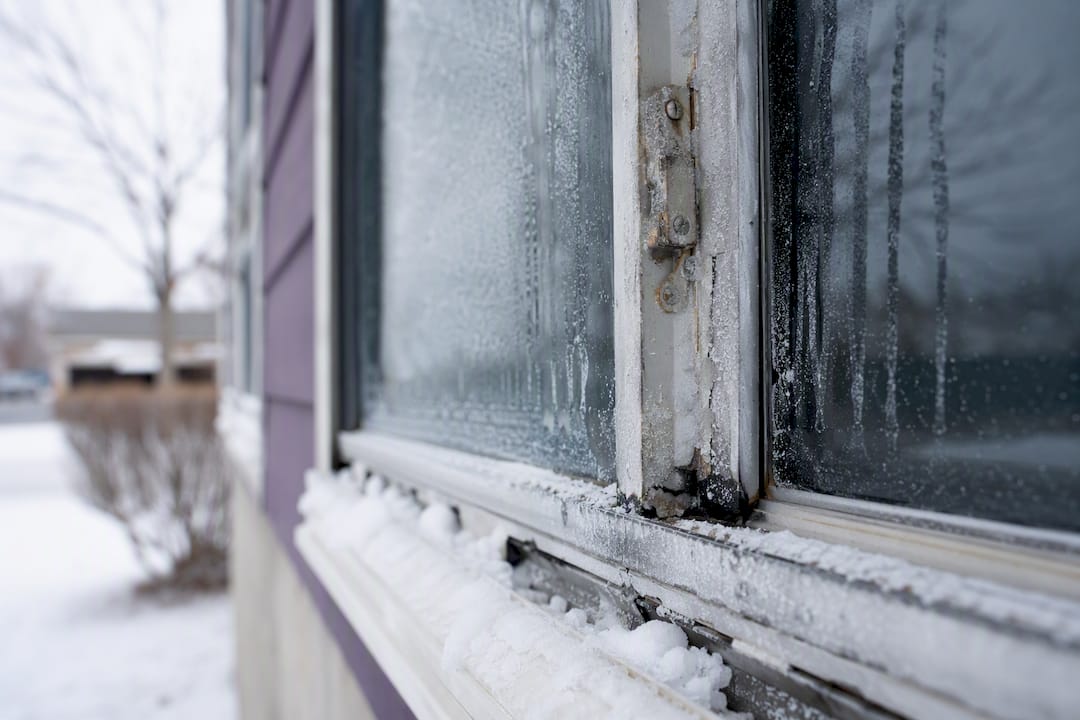
Road salt and de-icing chemicals splash up onto lower-story windows and frames, where they sit and corrode metal hardware if nobody rinses them off. Snow and ice on sills and tracks add another layer of stress, and scraping ice off glass or hardware risks scratching the surface if you’re not gentle about it, a caution Renewal by Andersen of Montana flags specifically for winter upkeep. Avoid pressure washing seals or caulk lines in freezing temperatures. Cold makes rubber gaskets brittle, and forcing water into a compromised seal at that point can do more harm than the dirt ever would.
Spring: pollen, rain, and your best cleaning window
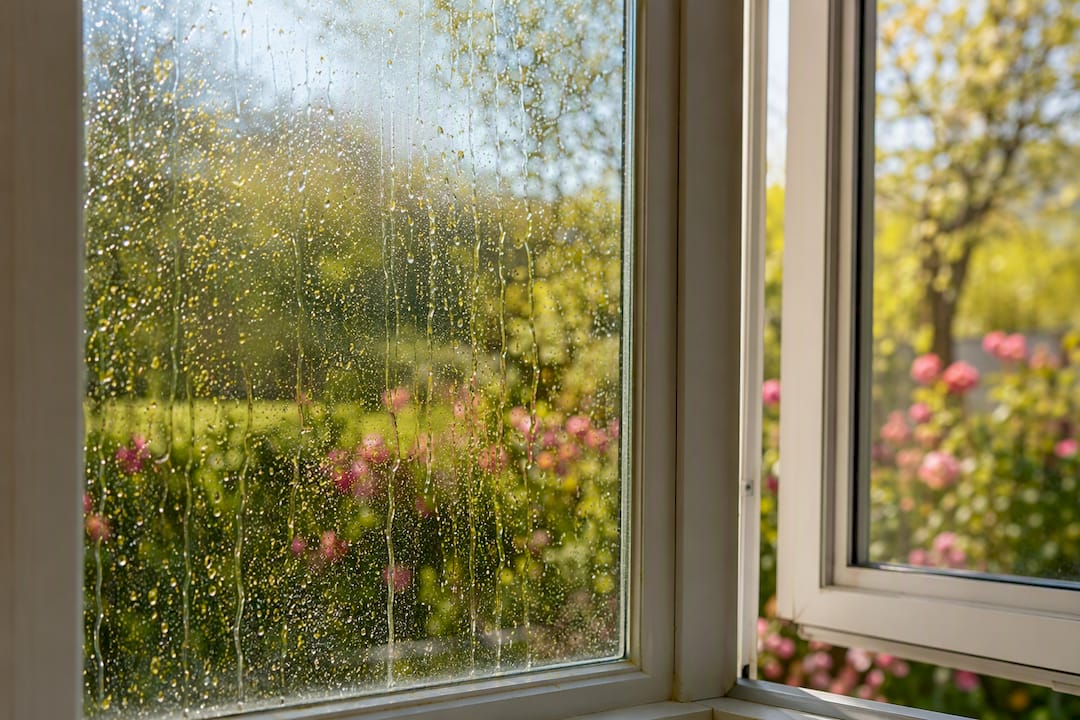
Spring pollen coats glass in a fine yellow-green film that rain often smears rather than rinses, leaving streaks that look worse than the original dust. This is also the season industry guides consistently point to for the year’s first deep clean, since Koalaty Windows recommends a thorough post-winter cleaning and inspection once the freezing weather has passed. It’s the right moment to check weep holes (the small drainage openings along the bottom of window frames) and weatherstripping for winter damage, before summer heat sets any remaining grime.
Summer: baked-on residue and sap
Heat changes the chemistry of dirt on your glass. Pollen, dust, and light residue that would wipe off easily in cooler weather can bake onto the surface under direct sun, turning a five-minute job into a scrubbing session. Tree sap and insect residue add a sticky layer that hardens fast in the heat.
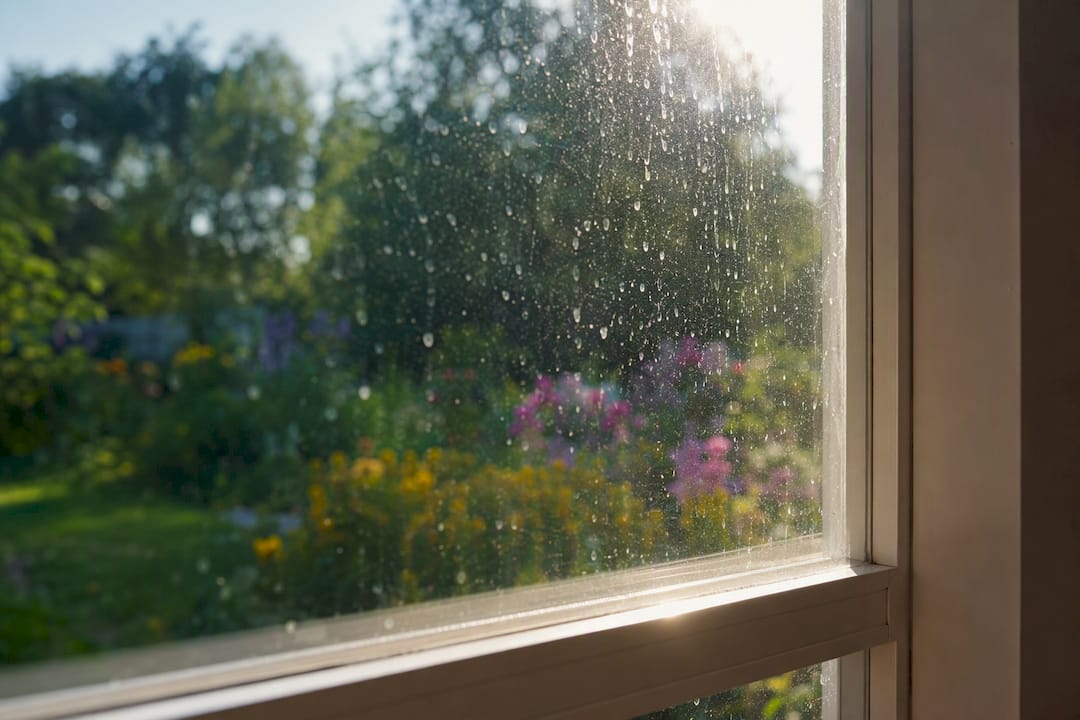
Pro Tip: Clean in the early morning or evening when the glass is cool to the touch. Cleaning solution evaporates too fast on hot glass, leaving streaks and making baked-on grime even harder to lift.
Fall: leaves, moisture, and hidden rot
Falling leaves and organic debris pack into window tracks, screens, and gutters, where they trap moisture against the frame long after the leaf itself has decomposed. That trapped dampness is exactly the condition wood rot and metal corrosion need to take hold. Fall is your window (literally) to clear tracks and screens before winter locks everything in place.
Why Does Dirt Actually Damage Glass and Frames?
Dirt on a window isn’t just sitting on a flat, inert surface. Glass has a microscopic pore structure, and some contaminants settle into it and start reacting chemically rather than staying put as loose debris.
- Hard-water minerals bond to glass over repeated wet/dry cycles, forming spots that shift from removable to permanently etched
- Bird droppings and certain pollutants are acidic enough to weaken protective coatings, not just stain them
- Trapped moisture and packed debris compromise window seals, which can let insulating gas escape from double-pane units and cause the fogging homeowners notice between the panes
- Freeze-thaw cycles expand and contract seals and hardware unevenly, stressing joints that dirt has already weakened
Once etching starts, no amount of scrubbing brings back the original clarity. That’s the core problem with letting seasonal grime accumulate instead of addressing it on a schedule: dirty windows create long-term costs well beyond the price of a cleaning, including permanently marked glass and frames that need full replacement rather than repair.
There’s also a cost you can’t see just by looking. Soiled glass reduces the solar gain your windows are supposed to let in during colder months, and failed seals let conditioned air leak out year round, which shows up on your energy bill long before it shows up as a visible crack. Frame damage compounds the same way. Trapped moisture behind packed leaves or ice buildup gives wood rot and metal corrosion the exact conditions they need, and by the time you can see the rot, the frame’s structural integrity is already compromised.
How Often Should You Clean and Inspect Your Windows?
A predictable schedule beats reacting to visible grime, because etching and seal damage often start before dirt is obvious to the eye.
- Spring and fall baseline. Schedule a full deep clean and inspection twice a year. This is the industry-standard recommendation for most residential properties, and it lines up with the natural transition points between winter salt exposure and summer heat.
- Every 2 to 3 months for high-exposure homes. Properties near busy roads, under heavy tree cover, or along the coast pick up contaminants faster and need light rinses or spot cleans between the two big seasonal jobs.
- Within days after storms or salt exposure. Rinsing salt spray or storm residue quickly reduces the chance of chemical etching before minerals get the chance to bond to the glass.
- Anytime you spot a hiring trigger. Fogging between panes, haze that survives a proper cleaning, hardware that won’t turn or lock, or visible rot and corrosion all mean it’s time for a professional look, not another DIY pass.
Seasonal upkeep isn’t just about appearance. Catching a failed caulk line or a clogged weep hole during a routine spring check is what prevents small issues from turning into leaks and moisture damage that cost far more to fix later.
What’s the Safest Way to Clean Each Type of Buildup?
Different contaminants need different treatments, and using the wrong one can trade a cosmetic problem for a structural one.
- General grime: mild dish soap diluted in water, applied with a microfiber cloth and finished with a squeegee to avoid streaking
- Mineral and hard-water spots: a gentle acid rinse (diluted white vinegar works for most residential glass) applied carefully and rinsed promptly, since leaving acid on the surface too long defeats the purpose
- Sap and sticky residue: a poultice or dedicated adhesive remover rather than scraping, which can scratch coated glass
- Organic buildup from leaves and pollen film: an enzymatic cleaner breaks down the residue instead of just smearing it around
- Salt spray: a fresh-water rinse as soon as possible, before minerals have time to bond to the surface
Avoid ammonia-based glass cleaners entirely if your windows have a low-E (low-emissivity) coating. Ammonia degrades that coating over time, leading to a haze you can’t clean away no matter how hard you scrub. Skip abrasive pads for the same reason: they scratch coatings faster than they remove buildup.
Timing matters as much as product choice. Don’t clean in direct sun or on very hot glass, since cleaning solution evaporates before it can lift residue, and skip cleaning icy or below-freezing surfaces where scraping risks scratching the glass. Wipe down tracks, sills, and screens on the same schedule as the glass itself. Debris left in a track doesn’t stay in the track. It works its way back onto the glass within weeks. For the right supplies to keep on hand, our guide to window cleaning tools breaks down what actually holds up against seasonal grime versus what just spreads it around.
When Does This Job Need a Professional?
Some seasonal damage is a Saturday-morning fix. Some of it is a sign your windows need more than soap and a squeegee, and pushing through with DIY methods at that point usually makes things worse, not better.
E and R Cleaning Solutions handles residential and commercial window cleaning, hard-water stain removal, screens and frames, and pressure washing for driveways, siding, and building exteriors, with scheduling built around exactly the seasonal patterns covered above. Over five years of working with homeowners, property managers, and small business owners, a few situations come up again and again as clear signs to call a professional rather than keep scrubbing:
- Windows on upper stories or awkward angles that aren’t safely reachable from a ladder
- Mineral etching that survives a proper vinegar rinse, meaning the damage has already gone chemical
- Fogging between panes, which signals a failed seal that no cleaning product will fix
- Frame hardware that’s stuck, corroded, or won’t lock properly
- Visible wood rot or metal corrosion around the frame
A professional visit typically includes an inspection of weep holes and seals, targeted treatment for mineral staining that’s beyond a homeowner-grade rinse, hardware lubrication, and specific recommendations for what to watch next season.
Persistent haze after a careful cleaning almost always means the damage has moved past the surface. At that point, the glass or the coating itself has been affected, and no amount of extra scrubbing brings back the original clarity.
If you’re weighing whether your situation calls for a pro, our breakdown of what a residential cleaning visit actually includes walks through the process step by step.
Seasonal grime and moisture buildup don’t stop at the glass, either. Trapped humidity around window frames can spread into surrounding trim and doors, which is part of why energy efficiency losses in older homes so often trace back to worn seals in more than one part of the house.
A Homeowner’s Season-by-Season Guide, In Plain Terms
The conventional advice on window care treats cleaning as cosmetic maintenance, something you do when the glass looks bad. That framing misses the point entirely. By the time hard-water spots or bird droppings are visible enough to bother you, they may have already started etching the surface. The real value of a spring and fall schedule isn’t a clearer view. It’s catching chemical damage while it’s still reversible.
Most homeowners also overcorrect in the wrong direction. They reach for stronger cleaners or more aggressive scrubbing on stubborn spots, when the smarter move is often less contact, applied sooner. A quick rinse after a salt storm beats a heavy scrub session three months later, every time.
If you take one thing from this guide, prioritize the fall inspection over the spring clean. Spring gets the reputation for cleaning; fall is when you catch the packed leaves, clogged weep holes, and worn weatherstripping that would otherwise sit trapped against your frames all winter. That’s where the expensive damage actually starts.
— Richard
Get Your Windows on a Seasonal Schedule
E and R Cleaning Solutions gives homeowners and property managers a fixed, honest alternative to guessing when your windows need attention: a scheduled seasonal deep-clean plan, custom-quoted per property, instead of a one-off call every time buildup gets bad enough to notice. As a family-run business with over five years serving residential and commercial clients, the team treats hard-water stain removal, screens, and frame inspection as part of the same visit, not an upsell.

That matters most for the exact problems covered above. Mineral spots that have gone past a vinegar rinse, weep holes packed with fall debris, or frames showing early corrosion all get caught during a routine visit instead of turning into a repair bill. Property managers overseeing mixed-use sites can also see how commercial windows require a different cleaning approach than a single-family home. Request a quote for a spring or fall deep clean and get your windows on a schedule before the next season’s grime has a chance to settle in.
Sources
This guide draws on seasonal maintenance guidance from This Old House, Renewal by Andersen of Montana, DMV Window Repairs, and Koalaty Windows. For a full seasonal task list, see E and R Cleaning Solutions’ maintenance guide.
- How often should windows be cleaned — This Old House
- Seasonal window maintenance tips to prevent leaks – DMV Window Repairs LLC
- A seasonal guide to window maintenance — Renewal by Andersen of Montana
- Seasonal window maintenance checklist: year-round care guide — Koalaty Windows