Eco-Friendly Cleaning for Businesses: 2026 Guide
Eco-friendly cleaning is the practice of using environmentally responsible products and methods that protect occupant health while minimizing the ecological footprint of commercial cleaning operations. The role of eco-friendly cleaning for businesses extends well beyond environmental goodwill. It directly affects employee health, building asset life, operational costs, and a company’s ability to meet ESG reporting requirements. Standards like EPA Safer Choice, Green Seal, and UL ECOLOGO now define what credible green cleaning looks like, and businesses that adopt these frameworks gain measurable advantages over those that rely on conventional chemical programs.
What are the health and productivity benefits of eco-friendly commercial cleaning?
Green cleaning is primarily an indoor air quality strategy that reduces the workplace irritants responsible for headaches, eye strain, and asthma triggers. Conventional cleaning products release volatile organic compounds, or VOCs, into the air long after application. Low-VOC certified products eliminate that residual chemical load, which directly improves employee focus and comfort throughout the workday.
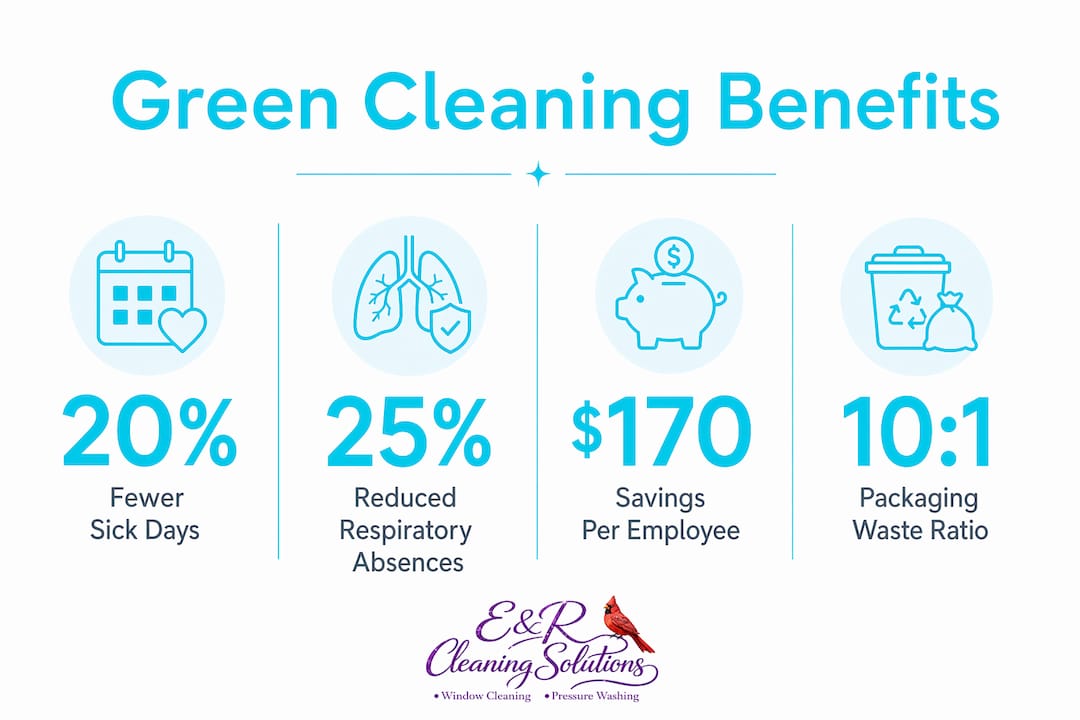
The productivity numbers are concrete. Transitioning to green cleaning reduces sick days by 20% and cuts respiratory absences by up to 25%, saving businesses up to $170 per employee annually. Studies also show productivity gains of 5–10% in green-certified buildings. Those gains compound quickly in labor-intensive environments where absenteeism carries a direct cost.
Cleaning staff benefit as much as office occupants. Repeated skin and respiratory exposure to harsh conventional chemicals causes chronic irritation over time. Switching to certified green products reduces that exposure at the source, which matters for worker retention and liability.
Key health improvements businesses report after switching to green cleaning programs include:
- Fewer cases of Sick Building Syndrome among occupants
- Reduced headaches and eye irritation linked to solvent-based cleaners
- Lower rates of asthma and allergy flare-ups in shared workspaces
- Improved air quality scores in HVAC-monitored facilities
- Reduced chemical odor complaints from staff and visitors
Pro Tip: Pair certified green cleaning products with HEPA-filtered vacuums. HEPA-filtered equipment acts as a dust management system, capturing sub-micron particles that conventional vacuums recirculate back into the air.
How does eco-friendly cleaning impact business costs?
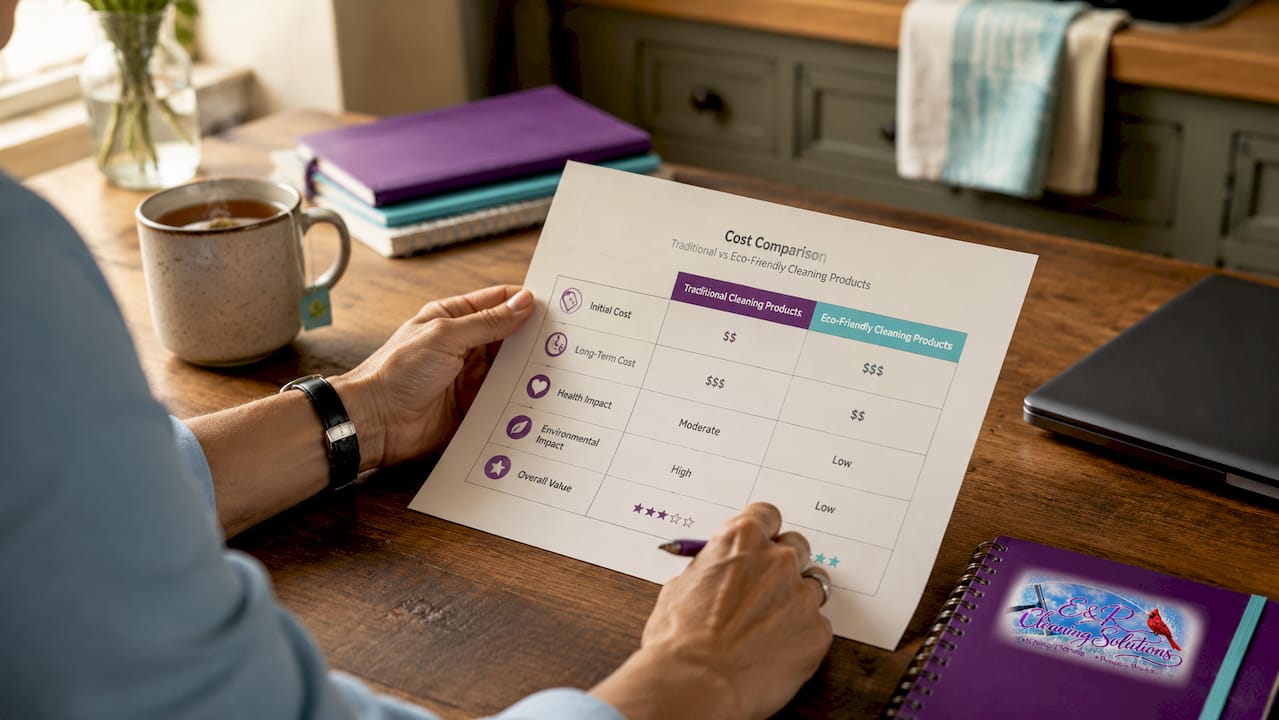
The cost premium for switching to a green cleaning program is real but limited. Green cleaning cost premiums typically run between 5–15% above conventional programs. That gap closes quickly once concentrated formulas and microfiber tools replace single-use and high-volume chemical products.
Concentrated formulas reduce packaging waste per unit cleaned by a ratio of 10:1 or more. That means fewer deliveries, less storage space, and lower disposal costs. Microfiber mops use up to 80% less water and chemicals compared to traditional string mops. The reduction in water and chemical volume alone often offsets the product price premium within the first year.
Asset preservation is an underappreciated cost factor. Harsh chemical cleaners degrade flooring finishes, grout, and surface coatings faster than certified green alternatives. HEPA-filtered vacuums also extend HVAC component life by preventing fine particulate buildup in duct systems. Facility managers who track maintenance costs before and after switching to green protocols consistently report lower repair and replacement spending.
| Cost factor | Traditional cleaning | Eco-friendly cleaning |
|---|---|---|
| Product cost premium | Baseline | 5–15% above baseline |
| Packaging waste per unit | High | 10:1 reduction with concentrates |
| Water and chemical use | Baseline | Up to 80% reduction with microfiber |
| HVAC maintenance frequency | Higher | Lower with HEPA-filtered equipment |
| Surface and flooring wear | Accelerated | Reduced with pH-neutral formulas |
Pro Tip: Install automated dilution systems at chemical dispensing stations. They eliminate over-pouring, which is the single biggest source of unnecessary chemical cost in most commercial facilities.
What certifications make a green cleaning program credible?
Third-party certifications are the only reliable way to verify that a green cleaning product does what it claims. EPA Safer Choice and Green Seal are the two most recognized standards in the United States. UL ECOLOGO covers a broader range of product categories and carries weight in government and corporate procurement processes.
Greenwashing is a genuine risk in this market. Manufacturers frequently use terms like “natural” or “non-toxic” without any third-party verification. A product carrying an EPA Safer Choice label has been reviewed for ingredient safety, biodegradability, and packaging impact. That review process is what separates a credible certification from a marketing claim.
Documentation is equally important. Safety Data Sheets libraries for all cleaning agents create a digital audit trail required for LEED certification and ESG sustainability reporting. Over 70% of Fortune 500 companies require green cleaning in their sustainability mandates, which means suppliers and tenants increasingly face procurement screening that checks for this documentation.
A credible green cleaning program requires the following:
- EPA Safer Choice, Green Seal, or UL ECOLOGO certification on all primary cleaning products
- A complete Safety Data Sheet library for every chemical used on site
- Documented dilution ratios and application protocols for custodial staff
- Audit records showing product usage volumes and waste disposal methods
- Alignment with LEED Operations and Maintenance credits where applicable
Facility managers who maintain this documentation gain a concrete advantage in lease renewals, government tenders, and corporate supplier evaluations. The paperwork is not bureaucratic overhead. It is a business asset.
How can businesses implement eco-friendly cleaning successfully?
Successful implementation starts with staff training, not product purchasing. Switching to eco-friendly cleaning requires retraining custodial staff on new dilution ratios and application techniques. Concentrated products applied at the wrong ratio either underperform or create waste, which defeats the purpose of the switch.
Equipment upgrades follow product selection. Microfiber cloths and mops replace conventional cotton tools and deliver better surface contact with less chemical. HEPA-filtered vacuums replace standard units and prevent fine particle recirculation. Both upgrades pay for themselves through reduced chemical consumption and lower maintenance costs over a 12-month period.
The implementation steps that deliver the fastest results are:
- Audit current cleaning products and identify which carry no third-party certification
- Replace uncertified products with EPA Safer Choice or Green Seal alternatives
- Install automated dilution stations to control chemical concentration at the point of use
- Replace cotton mops and cloths with microfiber equivalents across all cleaning zones
- Upgrade vacuum equipment to HEPA-filtered models certified by the Carpet and Rug Institute
- Retrain all custodial staff on new protocols, with written dilution guides posted at each station
- Begin documenting product usage, SDS records, and cleaning performance metrics
Supply chain consistency is a common challenge. Green-certified products sometimes have longer lead times or narrower supplier networks than conventional alternatives. Building a 30-day product buffer into your inventory plan prevents service gaps during the transition period.
Pro Tip: Monitor and document cleaning performance from day one. Detailed records of product usage, air quality readings, and maintenance costs become your evidence base for commercial cleaning compliance during lease renewals and tender submissions.
Key Takeaways
Eco-friendly cleaning delivers measurable business value through lower absenteeism, reduced operational costs, and the certified documentation that procurement and ESG requirements now demand.
| Point | Details |
|---|---|
| Health and productivity gains | Green cleaning reduces sick days by 20% and delivers 5–10% productivity gains in certified buildings. |
| Cost premium is small | The 5–15% product cost premium is offset by microfiber efficiency and concentrated formula savings. |
| Certifications prevent greenwashing | EPA Safer Choice, Green Seal, and UL ECOLOGO are the only reliable ways to verify product claims. |
| Documentation is a business asset | SDS libraries and audit records support LEED, ESG reporting, and corporate procurement screening. |
| Implementation requires retraining | Staff training on dilution ratios and new equipment is the critical first step, not product selection alone. |
Why I think most businesses underestimate what green cleaning actually does
Facility managers tend to frame eco-friendly cleaning as a cost center with an environmental bonus. That framing is wrong, and it leads to underinvestment. The real value is operational control.
When you switch to certified green protocols, you gain visibility into exactly what chemicals enter your building, at what concentration, and at what frequency. That visibility is something conventional cleaning programs rarely provide. Most facilities have no idea how much chemical volume they consume annually, which means they have no baseline for measuring waste or cost reduction.
The asset preservation angle surprises most people I talk to. Floors, grout, and surface coatings degrade faster under repeated exposure to high-pH conventional cleaners. The replacement cost for commercial flooring in a mid-size office runs into tens of thousands of dollars. A green cleaning program that extends floor finish life by even one additional cycle pays for its premium many times over.
The greenwashing risk is real and underappreciated. I have seen facilities display green cleaning claims in tenant communications while using uncertified products because no one checked the SDS library. That gap creates liability in ESG audits and damages credibility with tenants who do their own verification. Certification without documentation is theater. Documentation without certification is equally hollow. You need both.
The businesses that treat green cleaning as a performance system rather than a marketing position are the ones that see the full return. Sustainability mandates from Fortune 500 tenants and government procurement offices are not going away. Building the certified program now puts you ahead of a compliance curve that will only tighten.
— Richard
How E and R Cleaning Solutions supports your green cleaning program
E and R Cleaning Solutions brings over five years of hands-on experience in commercial and residential cleaning to clients who want results they can see and document.
For facility managers and business owners who need exterior cleaning that meets the same environmental standards as their interior programs, E and R Cleaning Solutions uses responsible methods and transparent pricing on every job. Their commercial window cleaning service is built around the same principles that define credible green cleaning: reduced chemical use, careful application, and consistent results. Whether you manage a single commercial property or a portfolio of buildings, E and R Cleaning Solutions delivers the quality and accountability that sustainability-focused operations require. Contact E and R Cleaning Solutions to discuss your facility’s cleaning needs.
FAQ
What is eco-friendly cleaning in a commercial context?
Eco-friendly commercial cleaning uses products certified by standards like EPA Safer Choice or Green Seal that minimize VOC emissions, reduce chemical waste, and protect occupant health. It also includes equipment choices like microfiber tools and HEPA-filtered vacuums that reduce water and chemical consumption.
How much does switching to green cleaning cost?
The cost premium for green cleaning programs typically runs 5–15% above conventional programs. Concentrated formulas and microfiber tools offset most of that premium through reduced product volume and lower maintenance costs.
What certifications should businesses look for in green cleaning products?
EPA Safer Choice, Green Seal, and UL ECOLOGO are the three most credible certifications for commercial cleaning products in the United States. Each requires third-party verification of ingredient safety, biodegradability, and environmental impact.
Does eco-friendly cleaning actually reduce employee sick days?
Green cleaning reduces employee sick days by 20% and respiratory absences by up to 25%, saving businesses up to $170 per employee annually. The primary mechanism is improved indoor air quality from lower VOC and allergen levels.
Why do businesses need an SDS library for green cleaning?
A Safety Data Sheet library documents every cleaning agent used on site and creates the audit trail required for LEED certification, ESG reporting, and corporate procurement compliance. Without it, green cleaning claims cannot be verified during supplier or tenant audits.