What Does Routine Property Cleaning Include?
Routine property cleaning is defined as a scheduled maintenance service that focuses on high-use, visible surfaces to keep a property hygienic and visually appealing. Understanding what does routine property cleaning include separates realistic expectations from costly misunderstandings. A standard cleaning visit covers dusting, vacuuming, mopping, bathroom sanitizing, and kitchen wipe-downs. It does not include deep restoration work like interior appliance cleaning or grout scrubbing. For homeowners, property managers, and landlords, knowing this distinction upfront is the single most effective way to protect your property budget and avoid disputes.
What tasks are typically included in routine property cleaning?
Routine cleaning covers the surfaces you touch and see every day. The goal is maintenance, not restoration. A standard 3-bedroom home typically requires 1.5–3 hours to complete a full routine visit. That time estimate reflects a focused, surface-level pass rather than a top-to-bottom overhaul.
A complete property cleaning checklist for routine visits includes:
- Dusting: All reachable surfaces including furniture tops, shelves, ceiling fan blades, and baseboards (light pass only)
- Vacuuming: Carpets, area rugs, and upholstered furniture surfaces
- Mopping: Hard floors using appropriate cleaning solutions for tile, hardwood, or laminate
- Bathroom sanitizing: Toilets, sinks, tubs, showers, and mirrors cleaned and disinfected
- Kitchen maintenance: Countertops wiped, exterior appliance surfaces cleaned, sinks scrubbed, and cabinet fronts wiped
- Trash removal: Emptying bins and replacing liners throughout the property
What is included in property cleaning at the routine level stops at exterior surfaces. Routine cleaning excludes interior appliance cleaning, deep grout scrubbing, interior cabinet organization, window washing, and laundry. These tasks fall under deep or specialized cleaning categories.
Pro Tip: Ask your cleaning provider for a written task list before the first visit. A clear scope document prevents the most common source of client disputes: expecting deep cleaning results from a routine service price.

How does routine cleaning differ from deep or specialized cleaning?
Routine cleaning is preventive maintenance. Deep cleaning is restoration. The two serve completely different purposes, and confusing them leads to frustration on both sides of the service agreement.
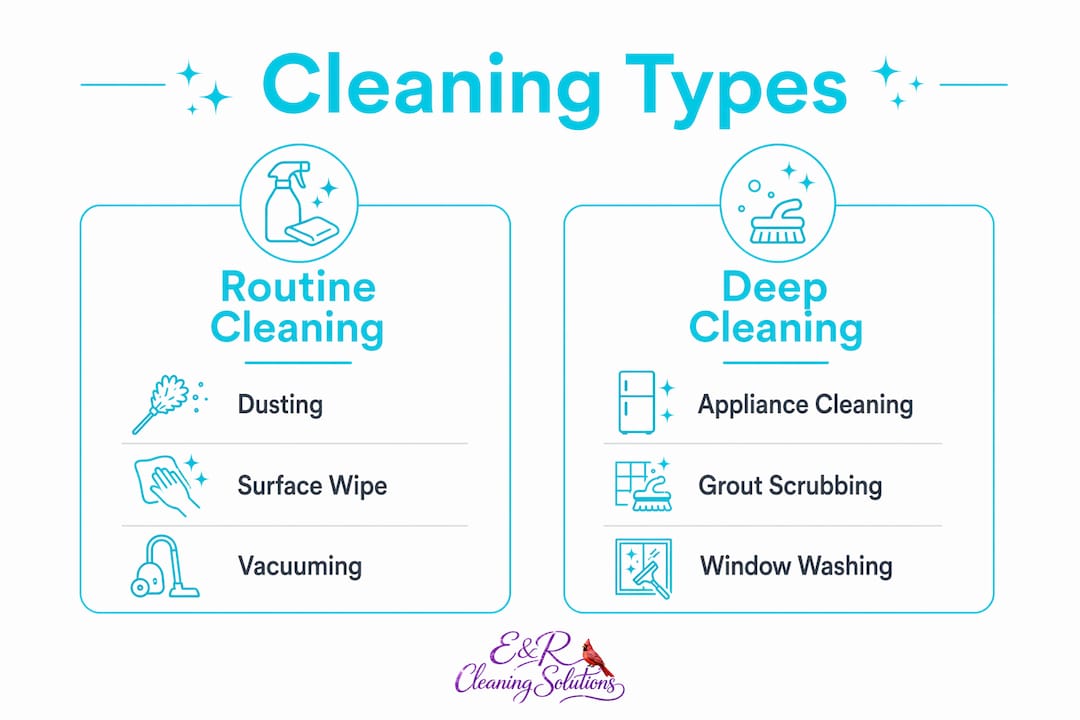
| Task | Routine cleaning | Deep cleaning |
|---|---|---|
| Dusting surfaces | ✓ Included | ✓ Included (more thorough) |
| Vacuuming carpets | ✓ Included | ✓ Included |
| Bathroom sanitizing | ✓ Included | ✓ Included (grout scrubbing added) |
| Interior oven/fridge cleaning | ✗ Excluded | ✓ Included |
| Deep grout scrubbing | ✗ Excluded | ✓ Included |
| Window washing (interior/exterior) | ✗ Excluded | Add-on service |
| Interior cabinet organization | ✗ Excluded | ✓ Included |
| Intensive stain removal | ✗ Excluded | ✓ Included |
Clients frequently expect interior appliance and grout cleaning during routine visits, which creates misunderstandings when those tasks are not completed. This is the most common friction point between property owners and cleaning providers. Routine cleaning keeps a well-maintained property in good shape. It cannot reverse months of neglect.
Deep cleaning also takes significantly longer and costs more. Specialized services like window washing require different equipment and techniques entirely. A residential window cleaning process, for example, involves squeegees, water-fed poles, and specific detergents that a standard cleaning kit does not include.
Pro Tip: Schedule a deep clean before starting any recurring routine cleaning contract. This sets a clean baseline so maintenance visits stay effective and efficient from day one.
How does routine property cleaning benefit homeowners, property managers, and landlords?
Routine cleaning is best understood as preventive maintenance that protects property assets rather than a reactive fix for neglect. The financial case is straightforward: consistent upkeep costs far less than emergency restoration or end-of-tenancy deep cleans.
“Standard cleaning is best viewed as preventative maintenance to protect property assets, not as a reactive fix for neglect. Properties maintained on a regular schedule retain their condition longer and require fewer costly interventions over time.”
The practical benefits for property owners include:
- Preserved property value: Regular surface cleaning prevents buildup of grime, mold, and hard water deposits that degrade finishes over time
- Tenant satisfaction: Clean common areas and units directly affect tenant retention and lease renewals
- Reduced deposit disputes: Kitchen and bathroom hygiene are the leading causes of security deposit conflicts. Routine cleaning keeps these areas consistently presentable
- Lower long-term costs: Avoiding buildup means avoiding the need for expensive restoration services between tenancies
- Compliance support: Many lease agreements and local housing codes require landlords to maintain habitable, clean conditions
Landlords managing turnover properties gain an additional layer of protection through documentation. Photographing key surfaces like stovetops and toilets before and after each cleaning visit creates a clear record. That record justifies any cleaning fees charged to departing tenants and reduces the risk of disputes reaching arbitration.
For property managers overseeing multi-unit buildings, routine cleaning also supports professional reputation. A consistently clean property attracts higher-quality tenants and commands stronger rental rates.
How to establish an effective routine cleaning schedule for your property
The right cleaning schedule depends on three factors: occupancy level, property size, and tenant type. A single-family rental with one long-term tenant needs a different approach than a short-term vacation rental with weekly turnovers.
A practical framework for setting cleaning frequency:
- Assess occupancy and use patterns. High-traffic properties accumulate dirt faster. A vacation rental used weekly needs cleaning after every checkout. A long-term rental typically works well on a biweekly or monthly schedule.
- Prioritize high-use zones. Kitchens and bathrooms require more frequent attention than bedrooms or living rooms. Build your schedule around these areas first.
- Apply a tiered approach for multi-unit properties. Property managers use tiered schedules with daily cleaning for high-traffic lobbies, weekly service for elevators and stairwells, and monthly deep cleans for surface preservation.
- Schedule an initial deep clean before routine service begins. Starting with a deep clean baseline maximizes the effectiveness of every routine visit that follows. Maintenance cleaning works best when it has a clean foundation to maintain.
- Communicate scope in writing. Give your cleaning provider a written task list and confirm which items are included versus excluded. Verbal agreements create gaps. Written scope documents prevent them.
- Review and adjust quarterly. Seasonal changes, new tenants, or renovation work can shift cleaning needs. Revisit your schedule every three months and update accordingly.
Pro Tip: For properties with cleaning frequency questions, treat exterior surfaces like windows and patios as separate line items on your schedule. They follow different cycles than interior routine tasks and require specialized service.
The 1.5–3 hour time standard for a 3-bedroom home gives you a useful benchmark for budgeting. If a quoted visit runs significantly shorter, ask which tasks are being skipped.
Key Takeaways
Routine property cleaning is preventive maintenance focused on visible, high-use surfaces. It requires a clear written scope, a deep clean baseline, and a schedule matched to occupancy level.
| Point | Details |
|---|---|
| Core task scope | Routine cleaning covers dusting, vacuuming, mopping, bathroom sanitizing, and kitchen wipe-downs only. |
| Deep cleaning is separate | Interior appliances, grout scrubbing, and window washing are excluded from routine visits and require separate services. |
| Dispute prevention | Document kitchen and bathroom surfaces before and after each visit to protect against deposit conflicts. |
| Schedule by occupancy | Match cleaning frequency to tenant turnover rate and property size, not a one-size-fits-all calendar. |
| Start with a deep clean | An initial deep clean baseline makes every subsequent routine visit more effective and longer-lasting. |
What I’ve learned about scope mismatches in property cleaning
The single biggest problem I see between property owners and cleaning providers is not price. It is scope. Owners assume routine cleaning means “everything cleaned.” Providers deliver what the service actually covers. Nobody wrote it down, and now there is a dispute.
I have worked with landlords who were genuinely surprised that their weekly cleaning service did not include oven interiors or window washing. Those are not oversights by the provider. They are separate service categories with different equipment, time, and pricing. The fix is simple: get a task list in writing before the first visit, not after the first complaint.
The other pattern I see constantly is skipping the initial deep clean. Property owners want to start routine service immediately to save money. What they actually do is pay for maintenance cleaning on a property that was never properly cleaned to begin with. The routine visits then spend time catching up on buildup instead of maintaining a clean baseline. That costs more in the long run.
My honest advice: treat routine cleaning as a system, not a one-off service. Pair it with periodic patio and exterior cleaning for rental properties, and schedule a deep clean every six months. That combination protects your asset, keeps tenants satisfied, and gives you documentation if a deposit dispute ever arises.
— Richard
How E and R Cleaning Solutions supports your property cleaning needs
E and R Cleaning Solutions works with homeowners, property managers, and landlords who want reliable, clearly scoped cleaning services without the guesswork.

With over five years of experience serving residential and commercial properties, E and R Cleaning Solutions offers honest pricing and written service scopes on every job. Whether you need a one-time deep clean to establish a baseline or ongoing routine maintenance, the team handles each visit with the same attention to detail. For landlords managing rental properties, the patio cleaning service for rentals extends that same standard to exterior spaces. Property managers overseeing commercial buildings can also explore specialized window cleaning as a complement to interior routine services. Contact E and R Cleaning Solutions to discuss a cleaning plan built around your property’s actual needs.
FAQ
What does routine property cleaning include?
Routine property cleaning includes dusting, vacuuming, mopping, bathroom sanitizing, and kitchen surface wipe-downs. It focuses on high-use, visible surfaces and does not include deep restoration tasks like interior appliance cleaning or grout scrubbing.
How often should a rental property be cleaned?
Cleaning frequency depends on occupancy type. Short-term rentals typically need cleaning after every checkout, while long-term rentals work well on a biweekly or monthly schedule for interior spaces.
What is not included in a standard cleaning service?
Standard cleaning excludes interior oven and refrigerator cleaning, deep grout scrubbing, window washing, interior cabinet organization, and laundry. These tasks require separate deep cleaning or specialized service bookings.
Should landlords do a deep clean before routine cleaning starts?
An initial deep clean before routine service begins sets a clean baseline that makes every maintenance visit more effective. Skipping this step means routine cleaning spends time on buildup rather than maintenance.
How can landlords prevent deposit disputes related to cleaning?
Photographing key surfaces like stovetops, toilets, and sinks before and after each cleaning visit creates a clear record. That documentation supports any cleaning fees charged to departing tenants and reduces the risk of formal disputes.