
Dirty Windows Are Quietly Costing You Customers

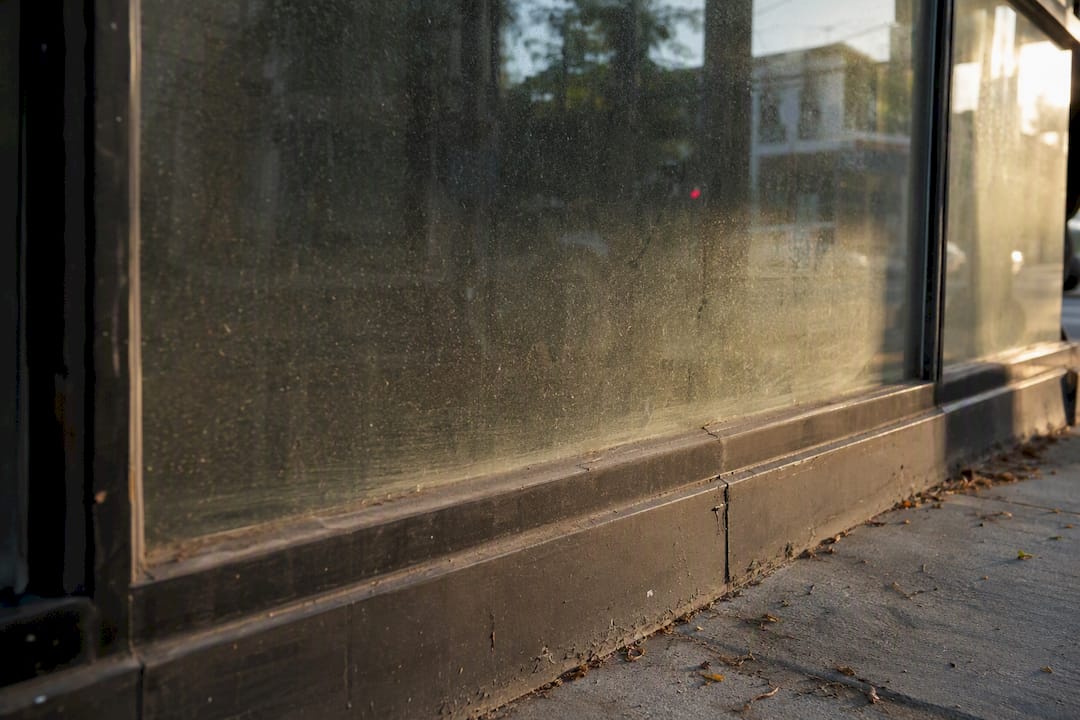
Dirty windows tell customers you don’t care about details, and that judgment forms before anyone walks through your door. Grime on glass cuts visible light by 4 to 10 percent in typical outdoor exposure, dims interiors, hides merchandising, and signals neglect the same way a cracked sidewalk or a burned-out sign does. The fix isn’t complicated.
Here’s what dirty glass actually does to your business:
- Trust drops before a customer reads a single price tag or menu item.
- Displays disappear behind haze, so your merchandising investment stops working.
- Interiors go dim, making product colors and finishes look flat.
- Safety cues weaken since grimy glass reads as “nobody’s watching this place.”
The immediate move: get your storefront glass inspected and cleaned regularly, not just whenever it looks bad enough to notice.
Key Takeaways
Dirty windows work against your business the same way a torn awning or a flickering sign does: quietly, constantly, and in ways customers rarely mention out loud.
| Point | Details |
|---|---|
| First impressions form fast | Customers judge trust and competence from window condition before entering, often subconsciously. |
| Grime cuts real light | Dirt reduces glazing transmittance by roughly 4 to 10 percent, dimming interiors and dulling merchandising. |
| Buildup plateaus in months | Deposits typically peak within 2 to 3 months outdoors, which should set your cleaning cycle. |
| Cosmetic neglect gets structural | Untreated hard-water spotting can etch glass and damage seals over time. |
| Match the job to the risk | Handle surface wiping in-house; hire pros for hard-water removal, high-access work, and seal checks. |
Table of Contents
- How Dirty Windows Impact Customer Perception And First Impressions
- How Grime Cuts Light, Visibility, And Perceived Space
- Foot Traffic, Purchase Intent, And The Revenue Connection
- Sanitation, Structural Risk, And When Grime Stops Being Cosmetic
- What Regular Window Cleaning Actually Costs, And Returns
- How Often Should You Clean Commercial Storefront Windows?
- DIY Window Cleaning Versus Hiring A Professional
- How E And R Cleaning Solutions Approaches Commercial Storefronts
- Take The Next Step On Your Storefront’s Windows
- What The Evidence Actually Supports
- Sources
How Dirty Windows Impact Customer Perception And First Impressions
People decide whether a business looks trustworthy in the first few seconds of seeing it, and window condition is one of the fastest cues they read. This isn’t a conscious audit. It’s the same instinct that makes a stained tablecloth feel worse than a slightly wrong order. Cleanliness cues get processed as proxies for competence, and once a customer files a storefront under “neglected,” everything else about the visit gets judged more harshly.
The inference shifts by industry, which matters if you’re deciding where to spend your cleaning budget first. A retail storefront with streaked glass reads as understocked or closing down, even when the shelves inside are full. A restaurant with grease film on its front windows suggests the kitchen gets the same treatment, a connection customers make instantly and rarely say out loud. Professional service offices, law firms, dental practices, medical suites, take a different hit: dirty glass reads as disorganized, which erodes confidence before a single form gets filled out.
The behavioral fallout is measurable in the ways that matter to owners. Fewer people walk in. The ones who do walk in stay less time and browse less. Cleanliness cues consistently move purchase intent and perceived professionalism in retail environments, which means a smudged window isn’t a cosmetic issue. It’s a conversion issue.
Pro Tip: Walk your own storefront from across the parking lot or street, not from your usual employee entrance. Customers see the glass from that distance first, and it’s the angle most owners never check.
How Grime Cuts Light, Visibility, And Perceived Space
Dirty glass doesn’t just look bad up close, it changes how much light actually makes it inside, and that has consequences you can measure. Field studies on glazing performance find that atmospheric dirt and pollutants reduce visible light transmission by roughly 4 to 10 percent under typical outdoor exposure, with outside dirt responsible for a meaningful share of that loss.
By the numbers: A field survey of hundreds of urban windows found average transmittance losses near 10% on uncleaned glass, with external dirt accounting for roughly half of that reduction in some samples.
A 10 percent light cut sounds small until you picture it inside a store. Colors read duller, product texture flattens under weaker light, and the whole space feels smaller and more closed in than it is. Retailers spend real money on merchandising, and dim, grime-filtered light quietly discounts that investment every single day the windows stay dirty.
Foot Traffic, Purchase Intent, And The Revenue Connection
Direct causal studies tying window cleanliness to sales figures are limited, but the surrounding evidence points the same direction consistently. Trade research on storefront upkeep ties exterior cleanliness directly to walk-in behavior, and the mechanism is intuitive once you picture it: a customer walking down a street with three storefronts, two clean and bright, one hazy and dim, is going to default toward the two that look cared for.
Picture a boutique with a strong window display facing a busy sidewalk. If the glass is streaked or filmed with grime, the display underneath essentially stops working. Passersby’s eyes skip right over it. That’s lost impressions stacking up every single day, not a one-time hit.
A few patterns show up repeatedly in how this plays out for storefronts:
- Passersby self-select out before they’re close enough to evaluate what’s actually inside.
- Window displays lose their return on investment when grime obscures them.
- Repeat customers notice decline faster than new ones, since they have a baseline to compare against.
- Coordinating cleaning with new displays restores the visibility that display was built to earn, since a freshly cleaned window makes a new display work the way it was designed to.
None of this requires a controlled experiment to act on. If your windows are dirty enough that you’ve stopped noticing, your customers haven’t.
Sanitation, Structural Risk, And When Grime Stops Being Cosmetic
Visible grime doesn’t just look unappealing, it reads as a sanitation red flag, particularly for food service and healthcare-adjacent businesses where customers actively scan for cleanliness signals. Dust and residue buildup near frames and sills can also mean allergens are accumulating in spots that get less attention than the glass itself.
There’s a harder cost hiding behind the cosmetic one, too. Hard-water spotting and mineral deposits, if left untreated, can etch into glass and degrade seals over time, which turns a cleaning problem into a repair problem. Watch for these signals that you’ve crossed from cosmetic into structural territory:
- Cloudy or etched patches that don’t wipe away with routine cleaning.
- Visible fogging or moisture between double-pane sections, a sign the seal has failed.
- Frame discoloration or soft spots near the sill.
- Recurring streaks in the same spot even after cleaning, which can point to coating damage.
Any of those four means it’s time to bring in a specialist rather than a routine cleaning crew, since replacing failed seals and treated glazing requires professional-grade methods most in-house teams shouldn’t attempt.
What Regular Window Cleaning Actually Costs, And Returns
Pricing for commercial window cleaning shapes around three variables: building height and access difficulty, glass square footage, and whether hard-water remediation is needed on top of standard cleaning. A single-story strip retail space with easy ground access costs far less per visit than a multi-story office with second-floor glass requiring lifts or rope access.
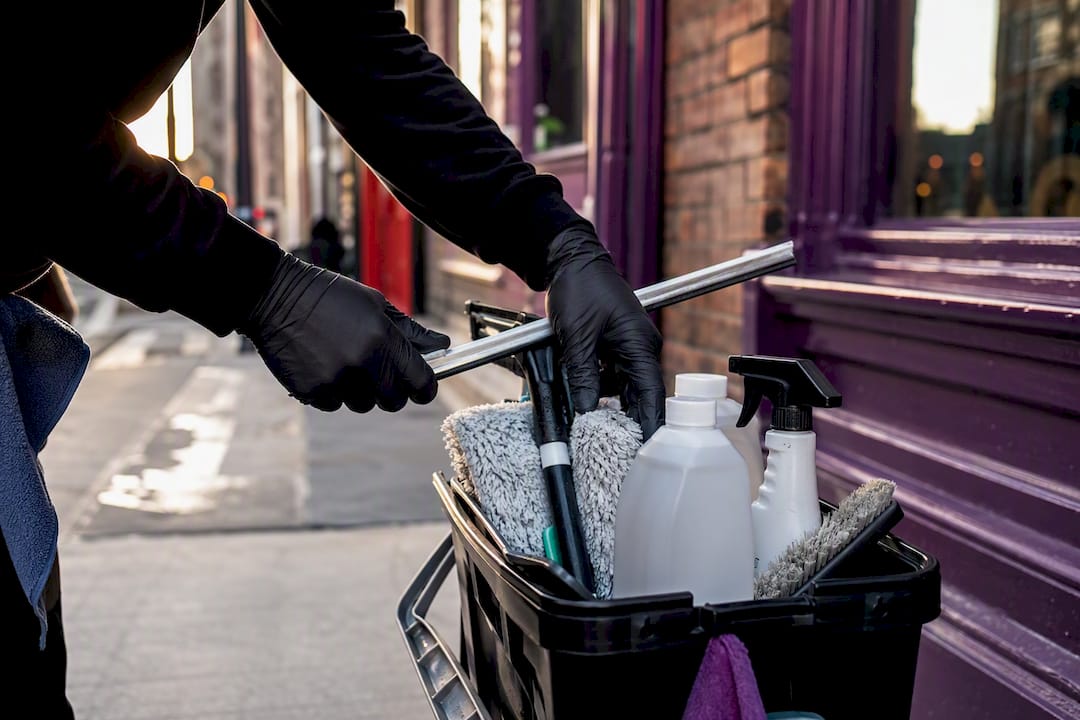
The ROI case is straightforward once you frame it correctly. A modest recurring spend on cleaning is cheap insurance against the larger, harder-to-quantify cost of lost foot traffic, plus it prevents the far more expensive repair bill that comes from neglected hard-water damage or failed seals. Owners who treat window cleaning as a maintenance line item, not a discretionary expense, tend to avoid both problems.
Most commercial accounts fall into one of three contract shapes:
- One-off cleaning for a specific event, sale, or seasonal push.
- Recurring service on a fixed cycle, the most common approach for storefronts with steady foot traffic.
- Seasonal packages that bundle window cleaning with pressure washing for walkways and entrances ahead of peak seasons.
Pro Tip: Ask any vendor quoting a recurring contract whether hard-water treatment is included or billed separately. It’s the line item that surprises property managers most often.
How Often Should You Clean Commercial Storefront Windows?
Dirt and pollutant buildup on exterior glass doesn’t accumulate in a straight line. It climbs to a measurable plateau within roughly 2 to 3 months under typical outdoor exposure, which is exactly why scheduling cleaning around that window prevents the buildup from ever becoming visible to customers. Urban and coastal locations hit that plateau faster than quieter suburban settings, so adjust frequency to your actual environment rather than a generic calendar.
A workable maintenance routine for most commercial storefronts:
- Exterior glass cleaned every 2 to 3 months in urban or high-traffic areas, quarterly in lower-exposure settings.
- Frames and sills wiped down at the same interval to prevent grime transfer back onto clean glass.
- Screens cleaned or rinsed each cleaning cycle since they trap dust that migrates onto interior-facing glass.
- Hard-water spot treatment as a separate line item whenever mineral deposits appear, rather than waiting for the next full cycle.
- Walkway-adjacent cleaning timed alongside window service, since a grimy entrance path undercuts a clean storefront just as fast as dirty glass does.
Log each cleaning date and method used. A simple record lets you spot whether your plateau is arriving faster than 2 to 3 months, which tells you it’s time to shorten the cycle. For larger properties, a detailed commercial cleaning checklist helps standardize this across multiple entrances and floors.
DIY Window Cleaning Versus Hiring A Professional
Routine surface cleaning and quick spot checks are reasonable DIY tasks for most storefronts. Wiping down interior glass, checking frames for debris, and clearing weep holes are all tasks staff can handle safely at ground level.
Hard-water removal, high-access cleaning above the first story, and seal inspections are a different category entirely. Repeated DIY attempts at mineral deposits often scratch protective coatings, turning a cosmetic problem into a permanent one. Staff working from ladders or improvised platforms also take on real fall risk that most commercial insurance policies weren’t built to cover for that purpose.
Before hiring anyone, ask these questions:
- Are they insured for the height and scope of the job?
- What method do they use for hard-water removal specifically?
- How do they handle wastewater and runoff, and do they reclaim it?
- Can they provide references from other commercial or retail clients?
A specialized commercial cleaning approach that includes water reclamation and proper hard-water treatment protects both your glass and your liability exposure at the same time.
How E And R Cleaning Solutions Approaches Commercial Storefronts
E and R Cleaning Solutions built its process around a straightforward idea: commercial glass needs a repeatable workflow, not a one-time scrub. The typical job runs through assessment first, checking for hard-water buildup, seal condition, and access requirements, then targeted cleaning suited to what’s actually on the glass, followed by a scheduled follow-up so buildup never gets the chance to reach that 2 to 3 month plateau.
The company’s family-run structure means every job gets handled with attention to pricing transparency and the specific outcome the client wants, whether that’s a single storefront or a multi-unit commercial property. A few things that shape how the work gets done:
- Custom pricing based on access, height, and glass condition rather than flat per-window rates.
- Hard-water and stain removal treated as a distinct service line, not an afterthought.
- Commercial and residential capacity, so property managers overseeing mixed portfolios work with one vendor.
- Follow-up scheduling built into recurring contracts to keep grime from ever becoming visible.
Property managers looking for a full breakdown of what that workflow covers can review the commercial window cleaning process guide for a step-by-step look at how jobs get scoped and scheduled.
Take The Next Step On Your Storefront’s Windows
The research is consistent on one point: light loss and visible grime compound the longer you wait, and both are cheaper to prevent than to reverse. If it’s been more than three months since your last professional cleaning, that’s your signal.
E and R Cleaning Solutions handles both the routine cleaning cycle and the harder jobs, hard-water removal, high-access glass, seal checks, that most in-house teams shouldn’t attempt themselves. For property managers building out a broader maintenance plan, the large building window cleaning checklist is a solid starting reference, and homeowners handling their own interior touch-ups between professional visits can check the window cleaning tools guide for what actually prevents streaking. If your storefront’s walkways need attention alongside the glass, signs your storefront needs pressure washing covers what to look for there too.
Businesses weighing a broader exterior refresh can also look at how partner companies handle it. Star Window Solutions documents before-and-after cases showing how much interior brightness returns once buildup is professionally removed, a useful reference point if you’re trying to justify the spend to a property owner or board.
What The Evidence Actually Supports
The research here supports a narrower, more useful claim than most cleaning advice suggests: it’s not that dirty windows “look bad.” It’s that grime measurably dims interiors, and that light loss compounds on a predictable 2 to 3 month cycle that most businesses ignore until the difference becomes obvious to customers.
Conventional advice treats window cleaning as reactive, something you handle once someone complains or a display stops working. That’s backward. The transmittance data suggests the smarter move is scheduling around the accumulation curve itself, not around visible dirt, because by the time grime is obvious, you’ve already lost weeks of dimmed merchandising and foot traffic you’ll never measure directly.
If you take one thing from this, prioritize the schedule over the deep clean. A property that gets cleaned every 2 to 3 months rarely needs the expensive remediation that neglected glass eventually requires. Routine beats reactive, every time.
— Richard
Sources
This article draws on field research into glazing transmittance loss, deposit accumulation cycles, and maintenance guidance from building industry publications, alongside E and R Cleaning Solutions’ own commercial cleaning documentation.