Sidewalk Gum Removal: 8 Steps for Owners and Crews to Control Runoff
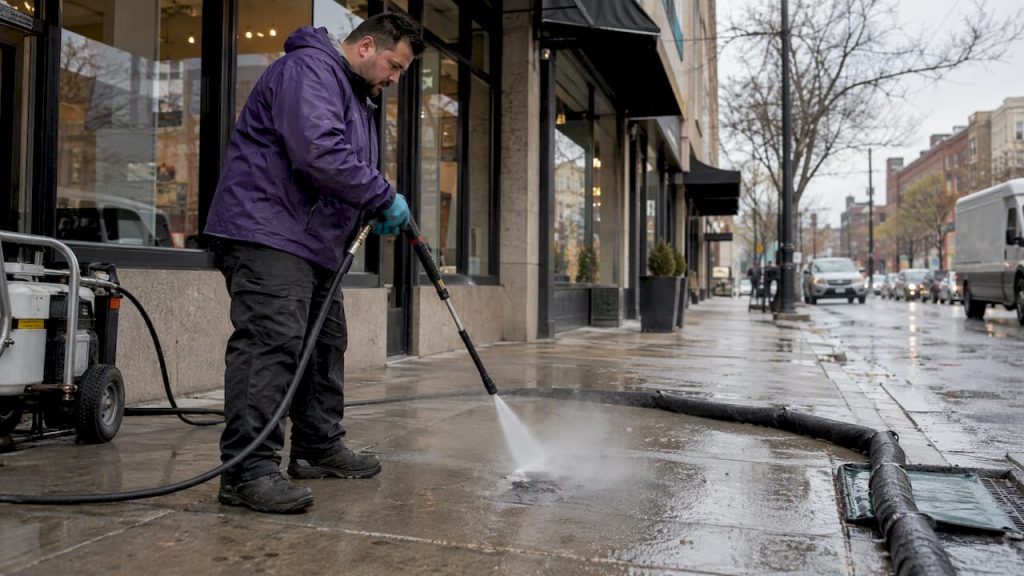
The fastest reliable fix for gum stuck on a sidewalk is hot water pressure washing, since heat softens the polymers that make gum sticky and lets it lift away in one pass. For a single fresh spot, ice and a dull scraper work just as well with no equipment. When you’re facing dozens of deposits, heavy foot traffic, or local rules on wastewater, hiring a crew like ours at E and R Cleaning Solutions saves time and keeps you compliant.
TL;DR:
- Test an inconspicuous patch first; older or porous concrete can scar or discolor, so begin with low pressure and a wide nozzle.
- Sweep or vacuum grit before washing, direct the spray at an angle to lift gum from the surface, and recover washwater near storm drains.
- For fresh deposits, hold ice against gum until brittle, lift its edges with a dull scraper, then remove residue with warm, soapy water.
- Ask contractors whether they carry insurance, contain and recover washwater, and can show results on similar surfaces; request a written quote before work starts.
Table of Contents
- Quick methods at a glance
- Step-by-step: removing gum with hot-water pressure washing
- Low-equipment fix for a few small or fresh deposits
- Environmental and regulatory precautions for runoff and drains
- When hiring a professional makes sense
- What professionals get wrong and how we avoid it
- How E and R Cleaning Solutions can help
- FAQ
- Sources
Quick methods at a glance
Your choice of method depends on how much gum you’re dealing with, how porous the concrete is, and whether you need to manage runoff. A few spots call for a different approach than a storefront entrance covered in years of buildup.
- Hot water pressure washing: best for multiple or embedded spots, works fastest on larger areas.
- Steam or heat guns: useful for isolated deposits near plants, drains, or surfaces that can’t handle pressure.
- Ice plus a dull scraper: ideal for one or two fresh spots with zero equipment cost.
- Commercial gum removers: a last resort when heat and freezing both fail, since they add chemical runoff to manage.
Before committing to any method across a wider area, test it on a small patch first. Porous or older concrete can scar or discolor faster than you’d expect, and catching that on a two-foot test section beats finding out across an entire storefront frontage.
Step-by-step: removing gum with hot-water pressure washing
Hot water pressure washing is the method professionals reach for first because heat weakens the gum’s grip without the brute force that can etch concrete, according to cleaning guidance from Today’s Homeowner. Here’s how a careful job goes from start to finish.
- Sweep or vacuum the area dry first. Loose dirt and grit turn into grinding paste once water hits them.
- Locate nearby storm drains and set up containment, such as a berm or drain cover, before you start.
- Run a test patch on an inconspicuous section to confirm the concrete handles the heat and pressure.
- Heat the water to the hottest setting your machine allows. Heated water often removes gum without any detergent, per Napa County’s surface cleaning guidance.
- Start at low pressure with a wide-angle nozzle, holding the wand a foot or more from the surface, then step closer only if the gum resists.
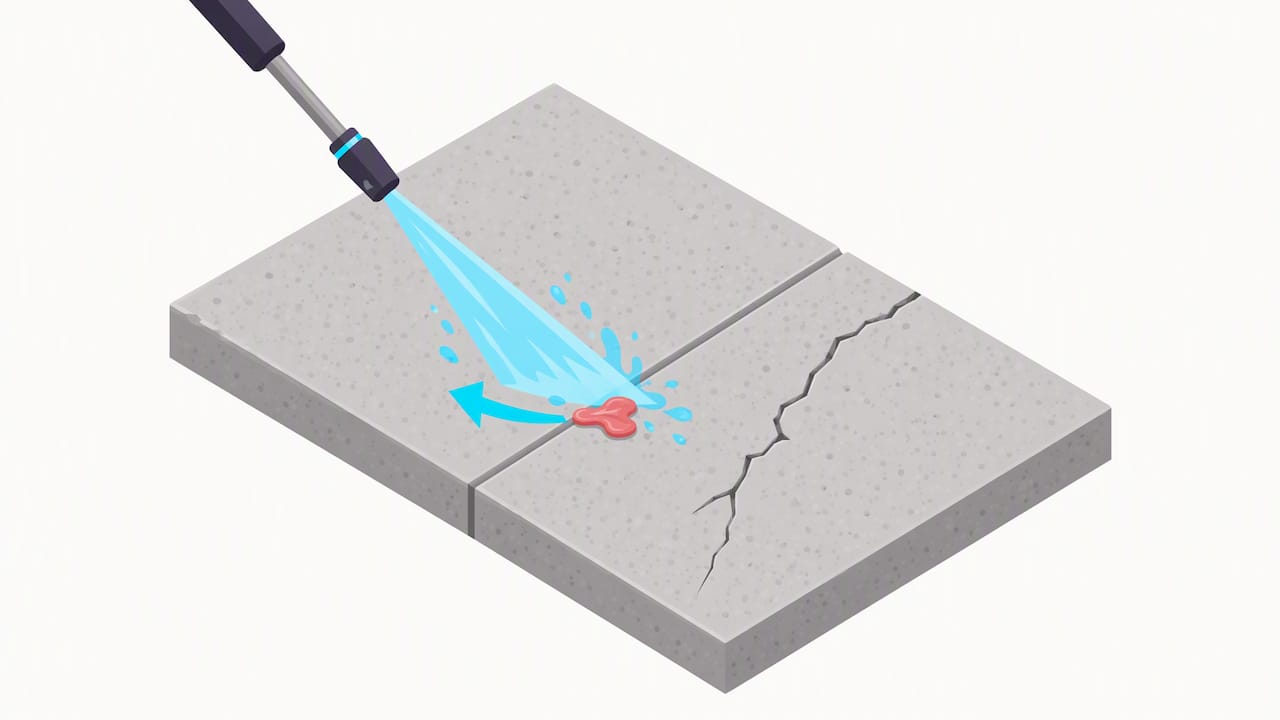
- Work at an angle, not straight down, to lift gum edges instead of driving it deeper into the pores.
- Capture the washwater using a vacuum or pump recovery system where drains are nearby.
- Inspect, let dry, and repeat a second pass only where residue remains.
Concrete-cleaning specifications from the City of Knoxville require removing the stain without damaging sound concrete or leaving a visible clean patch around it, which is exactly why the incremental pressure approach matters more than raw power.
Pro Tip: Angle your spray pass so the water pushes gum toward you, not into a joint or crack where it can re-embed.
If you want a closer look at the full process before deciding whether to DIY, our walkway pressure washing guide walks through equipment choices in more detail.
Low-equipment fix for a few small or fresh deposits
For one or two spots, skip the pressure washer entirely. Freezing makes fresh gum brittle enough to pop off clean, and it’s the method UGA Extension recommends for gum on concrete or masonry.
- Fill a plastic bag with ice and hold it against the gum for several minutes until it hardens.
- Lift the gum with a dull tool, like a plastic scraper or table knife, working at the edges rather than digging in.
- Wipe the spot with warm, soapy water to clear any sticky residue left behind.
- Rinse clean and let the area dry.
This approach beats scraping warm, soft gum, which smears residue and drives staining deeper into the concrete. It’s a fine fit for a handful of deposits around a bench or entryway, but it doesn’t scale to a whole block of storefront sidewalk.
Environmental and regulatory precautions for runoff and drains
Gum removal becomes a compliance issue the moment water starts running toward a storm drain. Contaminated washwater carrying detergents and dissolved gum residue isn’t something most municipalities want entering stormwater systems untreated.
- Dry-clean first: sweep, vacuum, or use absorbents before any water touches the surface.
- Contain before you wash: berms, drain covers, and screens keep washwater from reaching a drain.
- Collect and recover: a vacuum or pump system lets you capture water for proper disposal instead of letting it run off.
- Minimize chemicals: test hot water alone first, since it often does the job without detergent.
Mobile cleaning best practices from the City of Lawrence, Kansas call for sweeping or vacuuming surfaces first, identifying nearby drains, and deploying berms or recovery systems whenever runoff risk exists. Brookhaven, Georgia’s pressure washing guidance adds that low-volume, high-pressure nozzles cut down the total wastewater volume you need to manage in the first place.
If your property deals with recurring drainage headaches beyond gum removal, a permeable surface can reduce runoff risk long term. Partners like Rubberway’s drainage guide cover porous paving options worth knowing about for high-traffic walkways.
When hiring a professional makes sense
DIY works fine for a handful of spots. Hiring a pro makes more sense once you’re looking at dozens of deposits, heavy foot traffic, or a storefront where containment and runoff compliance actually matter.
- Scale: a block of storefront sidewalk takes far longer with a garden hose and ice cubes than with commercial hot-water equipment.
- Containment needs: a pro brings berms, drain covers, and recovery systems built for the job.
- Documentation: insurance and a written quote protect you if anything goes wrong.
- Time and staffing: maintenance crews often have higher priorities than scraping gum for a full afternoon.
Ask any contractor about insurance coverage, how they handle washwater, and whether they can show past results on similar surfaces. We offer pressure washing for sidewalks and other hard surfaces, including containment-capable jobs, through our pressure washing services.
What professionals get wrong and how we avoid it

The most common mistake we see is skipping dry prep and going straight to high-pressure cold water. That combination can etch concrete and still leave gum residue behind, since cold water never softens the polymer bonds the way heat does. Ignoring nearby drains is the other recurring failure, one that turns a routine cleaning job into a compliance problem.
On one storefront job, switching to a lower pressure with hot water and a wider nozzle angle cleared gum that a previous cold-water pass had only smeared further into the concrete.
— Richard
How E and R Cleaning Solutions can help

We handle gum removal and sidewalk cleaning with hot-water pressure washing, proper containment, and a written quote before any work starts. Property managers and homeowners can get a custom quote through our main service page, with scheduling built around your foot traffic and site needs.
FAQ
How to get old gum off sidewalk?
Hot water pressure washing is the most reliable method for gum that’s been ground into concrete over time, since heat breaks down the sticky polymers that cold water and scraping alone can’t touch. For scattered older spots, a steam tool or heat gun followed by gentle scraping also works well.
How can I remove chewing gum from my pavement?
Freeze fresh gum with an ice pack, then lift it with a dull scraper and finish with warm soapy water, following guidance from UGA Extension. For multiple spots or embedded stains, hot water pressure washing clears the job faster.
What chemical removes gum from concrete?
Commercial gum-removal solvents exist, but municipal guidance recommends testing heated water first since it often removes gum without any chemical at all, per Napa County’s surface cleaning guide. Chemicals should be a last resort because they add washwater disposal concerns.
Why is there so much gum on sidewalks?
High foot traffic areas accumulate gum because once a piece gets stepped on and flattened, it bonds into concrete’s pores and resists casual cleaning. Storefronts and transit stops see the heaviest buildup simply from volume of pedestrians over time.
What’s the right way to handle wastewater during cleanup?
Sweep or vacuum the area dry before using any water, then contain runoff with berms or drain covers near storm drains, following practices outlined by Lawrence, Kansas’s mobile cleaning BMPs. Collecting washwater with a vacuum or pump system keeps contaminated water out of storm drains.
Sources
- Remove Stains From Chewing Gum | Textiles — University of Georgia Extension
- Section 65.0 – Cleaning Concrete Surfaces — City of Knoxville
- Pollution from surface cleaning guide — Napa County
- Pressure washing guidance — City of Brookhaven, GA