
Dry First Window Track Cleaning for Homeowners: 20 Minutes, Pro Option
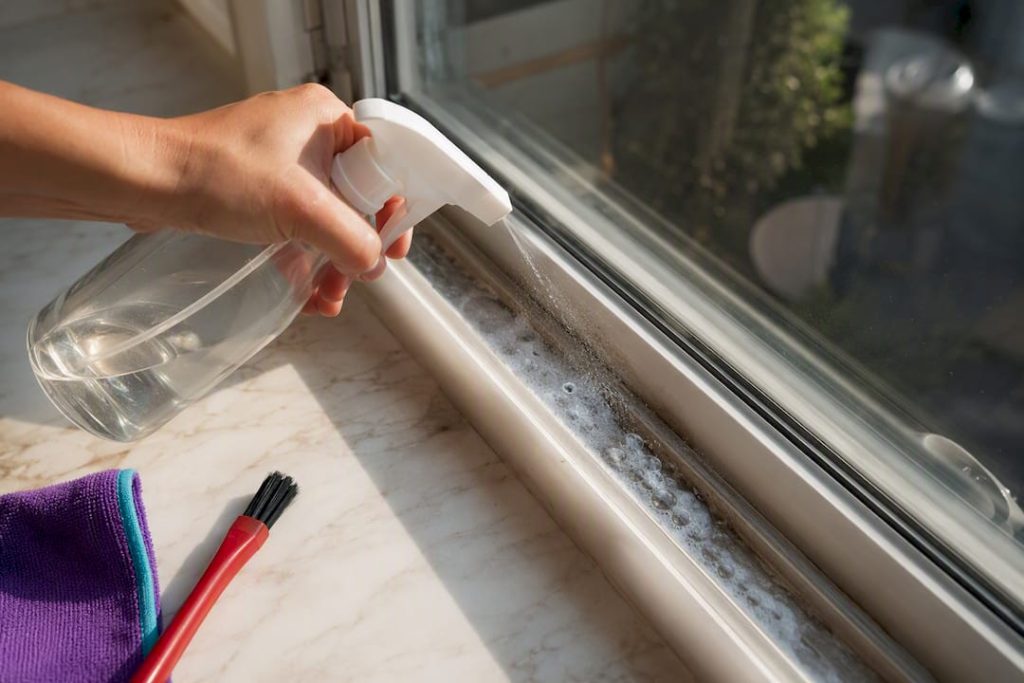
The fastest safe way to clean most window tracks is to vacuum out loose debris first, apply a mild cleaner like baking soda and vinegar or dish soap, scrub with a small brush, then dry the channel and add a thin layer of silicone lubricant. Most tracks take about twenty minutes each. If the grime is caked, sticky, or hiding a clogged weep hole, that’s your cue to consider a professional instead of fighting it for another hour.
TL;DR:
- Vacuum the loose debris from the track before applying any cleaner to prevent creating a paste that can clog weep holes.
- Use a baking soda and vinegar solution to loosen grime, allowing a 5 to 10 minute soak before scrubbing with a brush.
- Deep cleaning with alcohol or degreasers is necessary only on tracks with years of buildup or stubborn grease; always rinse thoroughly afterward.
- Clearing weep holes regularly with a toothpick, cotton swab, or compressed air prevents water pooling and potential internal damage.
- Professional cleaning is recommended when grime is caked, weep holes are consistently clogged, or tracks have surface damage that DIY methods can’t address effectively.
Table of Contents
- What You Need for Window Track Cleaning
- How Do You Clean Window Tracks Step by Step?
- How Do You Deep-Clean Caked-On Window Track Grime?
- Why Do Weep Holes Matter in Window Track Cleaning?
- Which Tools Work Best for Stubborn Window Tracks?
- How Often Should You Clean Window Tracks?
- How Do You Lubricate Window Tracks the Right Way?
- When Should You Call a Professional for Window Tracks?
- An Editorial Take on Window Track Habits
- Get Professional Window Cleaning From E and R Cleaning Solutions
- Sources
What You Need for Window Track Cleaning
Grab a few basic tools before you touch a single track, because half of bad results come from using the wrong material on the wrong surface.
For loose debris and detail work, you’ll want:
- A vacuum with a crevice attachment (this does most of the heavy lifting)
- A small detailing brush or an old toothbrush for corners and grooves
- Microfiber cloths for wiping and drying
- Cotton swabs for tight spots and weep holes
- A plastic scraper or an old credit card edge for caked-on gunk
- A spray bottle for your cleaning solution
For the cleaning agents themselves, white vinegar, mild dish soap, and baking soda cover almost every situation. Baking soda works as a mild abrasive that lifts dirt without much scrubbing, and mixing it with a 50/50 vinegar and water solution creates a light fizzing reaction that loosens grit before you even touch a brush, a combination that works well on most tracks in about twenty minutes.
Skip the bleach on any metal track, since it can pit or discolor aluminum over time. Skip oily lubricants entirely, a point worth remembering for later. And be careful with abrasives on painted or anodized aluminum finishes: baking soda and stiff scrubbing can scratch the coating, so mild soap or straight vinegar solutions are the safer call there. Wood tracks need even less moisture exposure, since standing water can warp or stain the grain. If you’re stocking a cleaning kit from scratch, our guide to window cleaning tools covers what’s worth buying versus what you already have in a kitchen drawer.
How Do You Clean Window Tracks Step by Step?
The order matters more than the products. Skip the dry step and you’ll turn every bit of dust and pollen into a paste that’s harder to remove than the original dirt, and that paste is exactly what clogs weep holes later.
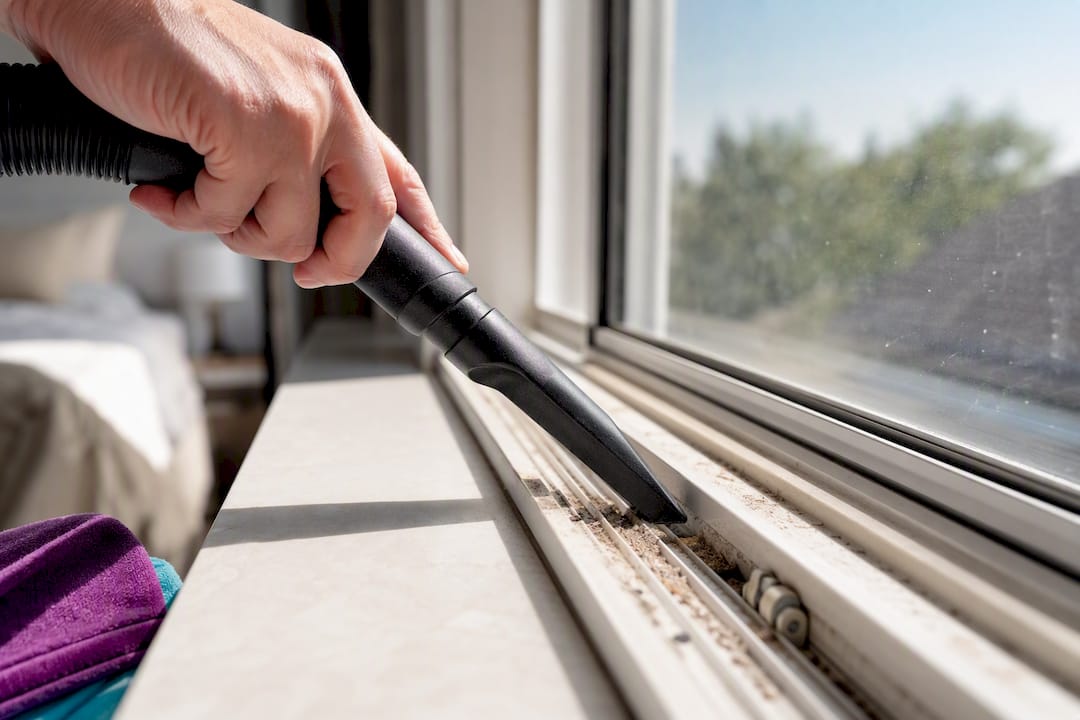
1. Vacuum everything loose first. Run the crevice attachment along the full length of the track, into corners, and around any rollers. This step alone often removes half the visible debris. Skipping it is the single most common mistake homeowners make, since wet cleaner on dry dust creates sludge that’s genuinely harder to clean than what you started with.
2. Sprinkle baking soda along the track. A light, even dusting is enough. You don’t need a thick layer, just enough to react with the vinegar in the next step.
3. Spray a 50/50 vinegar and water mix over the baking soda. It will fizz. That reaction is doing real work, breaking the bond between grime and the track surface. If you’d rather skip the fizz altogether, plain warm water with a few drops of dish soap works almost as well on lighter dirt.
4. Let it sit for 5 to 10 minutes. This soak time matters. Rushing straight to scrubbing means fighting dirt that hasn’t loosened yet.
5. Scrub with your toothbrush or detail brush. Work in short strokes along the length of the track, paying extra attention to corners and the seam where the track meets the frame.
6. Wipe with a damp microfiber cloth. This pulls up the loosened grime and cleaner residue in one pass. Fold the cloth as it gets dirty so you’re not just smearing debris back into the channel.
7. Dry thoroughly. Use a dry section of the cloth or a second cloth entirely. Standing moisture in a track is how mold and mildew get started, especially in humid climates or on lower-floor windows that don’t get much airflow.
8. Verify with two quick tests. Run a fingertip along the channel. It should feel smooth, not gritty. Then slide the sash back and forth. If it glides evenly with no catching, you’re done. If it still drags, there’s likely residue near the rollers you missed.
Pro Tip: Work one window per cleaning session if you’re new to this method. It’s tempting to blitz through an entire house, but rushing the soak time or skipping the dry step on window five because you’re tired is exactly how sludge and water spots creep back in within a month.
How Do You Deep-Clean Caked-On Window Track Grime?
Some tracks need more than a quick pass. Sticky film that resists normal scrubbing, old hardened lubricant residue, or a gray smoke film that won’t budge with soap and water are all signs you’re dealing with buildup that’s been sitting for years, not weeks.
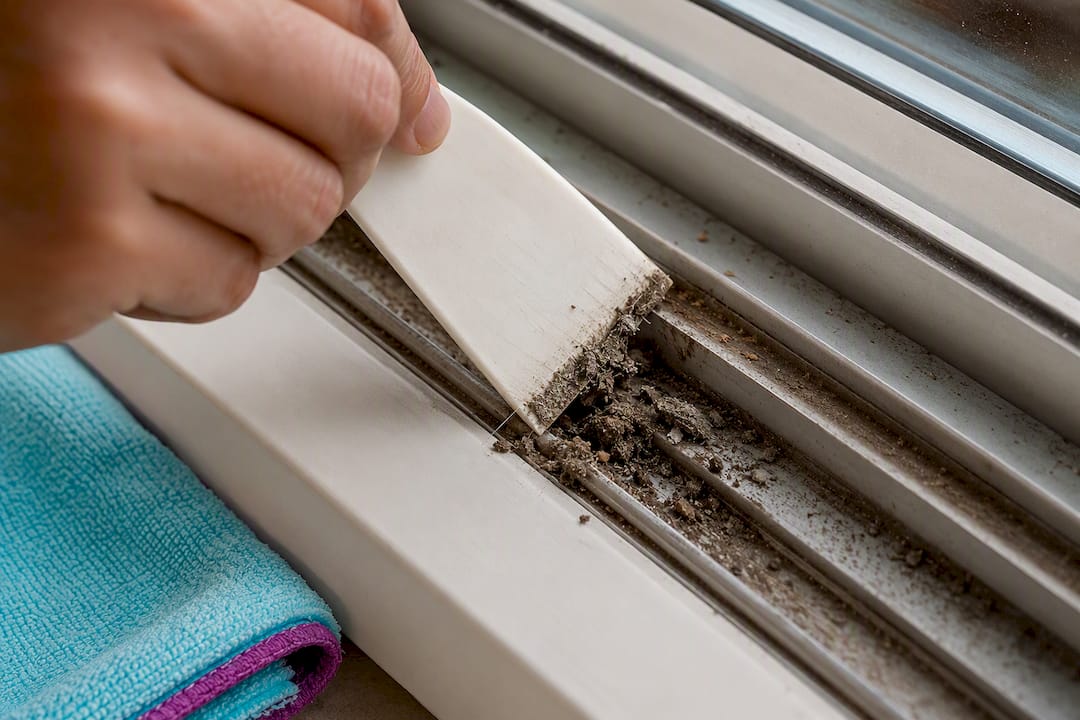
Start with a plastic putty knife or the edge of an old credit card to scrape loosened debris without gouging the track surface. Never use a metal scraper here. Metal will scratch painted finishes and strip anodized coating almost instantly, and once that protective layer is gone, the aluminum underneath corrodes faster.
If your window design allows it, gently lift the sash out of the track for full access to the channel and roller recesses. This is where most of the truly stubborn grime hides, tucked behind the sliding panel where a brush can’t reach. Set the panel on a towel to protect the glass, and keep any small roller hardware in one spot so nothing gets lost. If you’re not confident about how the stops release, don’t force it. A professional can pull the sash without risking a cracked pane or a stripped track.
For grease or old smoke film that soap and vinegar can’t touch, rubbing alcohol on a cloth or a gentle commercial degreaser will usually cut through it. Rinse thoroughly afterward, since leftover degreaser residue attracts dust just as fast as the original grime did.
- Scrape gently with plastic, never metal
- Remove the sash only if you understand the stop mechanism
- Use rubbing alcohol or a mild degreaser on grease, not baking soda
- Rinse, clear the weep holes, and dry completely before reinstalling
Pro Tip: If a track needs alcohol or a degreaser to get clean, that’s usually a sign it’s been more than a year since its last real cleaning. Mark your calendar this time.
Why Do Weep Holes Matter in Window Track Cleaning?
Weep holes are the small openings, usually at the track’s corners or along the bottom rail, that let rainwater and condensation drain out of the frame instead of collecting inside it. A blocked weep hole doesn’t just mean a puddle. It means water sitting against the frame material long enough to cause interior damage, staining, or eventually rot around the sill.
Clearing them is quick:
- Locate each weep hole (small slots or drilled openings along the track bottom).
- Clear debris with a toothpick, cotton swab, or a thin nylon brush.
- For stubborn blockages, a short burst of compressed air often pushes debris straight through.
- Inspect from outside if you can, since weep holes usually exit through the exterior of the frame.
- Run the drain test: pour about a teaspoon of water into the track and confirm it exits within a few seconds.
If water pools instead of draining, clear the hole again or check for debris further inside the channel before you reinstall anything.
Which Tools Work Best for Stubborn Window Tracks?
Not every track needs the full vinegar-and-brush routine. Match the tool to the mess.
Steam cleaners reach into corners and grooves that a brush can’t touch, and the heat cuts through greasy film fast. That makes them useful for kitchen windows or tracks near a grill or smoker. But steam and finished wood don’t mix well, and delicate frame finishes can warp or discolor under that combination of heat and moisture, so save steam for vinyl or metal tracks only.
A handheld shop vac with a narrow crevice nozzle is your best bet for suction-first dirt removal, especially on tracks that are mostly dry debris, sand, pet hair, or pollen rather than grease. Some models handle wet pickup too, which is handy for the rinse stage on a deep clean.
Magic erasers can lift surface stains and scuff marks fast, but they’re a mild abrasive at their core. On painted or anodized finishes, repeated use can dull the coating the same way baking soda scrubbing can. Save them for stubborn spot stains rather than a full-track routine.
- Steam cleaners: best for grease on vinyl or metal, skip on wood
- Shop vac with crevice tool: best for dry debris and pollen season
- Magic eraser: best for isolated stains, not full-length scrubbing
How Often Should You Clean Window Tracks?
Most manufacturers recommend a full deep clean two to four times a year, timed around spring and fall when pollen and yard debris peak. Between those deep cleans, a quick maintenance pass every one to four weeks keeps buildup from setting in, with the exact interval depending on your environment.
Your quick routine takes about five minutes per window:
- Vacuum the crevice with a hand vacuum or attachment
- Wipe the channel with a damp microfiber cloth
- Clear any visible debris from the corners
- Do a fast visual check on the weep holes
Homes near construction, unpaved roads, or heavy pollen zones need that quick pass closer to weekly. Coastal homes deal with salt residue that accelerates corrosion on metal tracks, which pushes deep cleans toward the higher end of that two-to-four range. Pet owners often find hair and dander build up in the corners faster than dust alone would. Seasonal shifts in dirt load are worth tracking, and our breakdown of how seasonal dirt affects windows walks through what changes month to month.
How Do You Lubricate Window Tracks the Right Way?
Once a track is completely clean and dry, a light coat of dry silicone or window-specific silicone spray restores smooth gliding without attracting new dirt. Apply it sparingly along the sides of the track where the sash rollers make contact, not pooled at the bottom where it will just collect grit.
Skip anything oil-based. WD-40, motor oil, or general household oil might feel like they solve the sticking problem for a week, but they act like a magnet for dust and pollen, and you’ll be back to a gummed-up track faster than before you lubricated it at all.
- Test on a small section first to check for any residue or discoloration
- Wipe away excess with a dry cloth after application
- Slide the sash back and forth to work the lubricant in and confirm smooth motion
Pro Tip: If a track was sticky before cleaning and sticky again within a week, the culprit is almost always leftover oily residue from a past lubrication attempt, not a fresh cleaning failure.
When Should You Call a Professional for Window Tracks?
Some jobs cross the line from DIY-friendly to genuinely not worth the time. Persistent sticky grime that survives a proper deep clean, hard-water staining that’s etched into the glass and frame, or a weep hole that stays clogged no matter how many times you clear it usually points to something a homeowner routine can’t fully fix.
Commercial properties and larger residential jobs multiply that math fast. Cleaning forty tracks across an office building or apartment complex is a different scale of work than one kitchen window, and it usually calls for the kind of specialized approach commercial buildings need.
Professionals typically bring a few things a home toolkit doesn’t have:
- Commercial-grade degreasers for smoke film and years of accumulated grease
- Steam equipment calibrated for different frame materials
- Sash removal know-how for tracks with unfamiliar stop mechanisms
- A seal inspection alongside the cleaning, since a track that’s dirty enough to need a pro is often a track with a compromised seal nearby
For stubborn grease or heavy buildup, professionals commonly turn to steam or commercial-grade degreasers followed by mechanical lift and fresh lubrication, the same sequence a determined homeowner would use, just with stronger tools and more practice recognizing what a track actually needs.
An Editorial Take on Window Track Habits
Most window track advice focuses on the cleaning chemistry. What actually determines whether your tracks stay clean is habit, not product choice. The homeowners with the best-looking tracks aren’t the ones with the fanciest vinegar ratio. They’re the ones who do a thirty-second pass every few weeks instead of letting six months of pollen and grit compact into something that needs a putty knife.
A simple trigger works better than a calendar reminder. Clean one track every time you open a new roll of paper towels, or every time you change your furnace filter. Both happen often enough to matter and rarely enough not to feel like a chore.
The mistakes that cause the most damage aren’t about which cleaner you pick. They’re sequencing errors. Spraying liquid onto a dusty track before vacuuming, reaching for a metal scraper because it feels more effective than plastic, or grabbing WD-40 because it’s already in the garage. Each of those choices creates more work a month from now, not less.
— Richard
Get Professional Window Cleaning From E and R Cleaning Solutions
If your window tracks have crossed from “needs a scrub” into “needs a professional,” E and R Cleaning Solutions is the straightforward alternative to spending another weekend fighting hardened grime with a toothbrush.

Window cleaning services for residential and commercial properties — including hard-water stain removal, screens, and frames — alongside pressure washing for driveways, patios, and building exteriors are commonly offered by professional cleaning companies. Many professional cleaning providers offer custom pricing rather than one-size-fits-all rates, aiming to reflect the actual condition of windows and tracks instead of applying flat fees.
If you’re staring down tracks with years of buildup, sash removal you’re not confident tackling, or a whole property’s worth of windows, our residential window cleaning process page walks through what a typical job looks like and how to get a quote started.
Sources
- How to clean and lubricate window hardware — Centra Windows
- How to clean window tracks, screens, and frames — The Clean Tips
- How to clean window tracks in 7 easy steps — Window Gurus
- How to clean window and door tracks — Martha Stewart
- How to clean window tracks — Fuller