
Property managers, 5 questions to vet storefront window cleaners
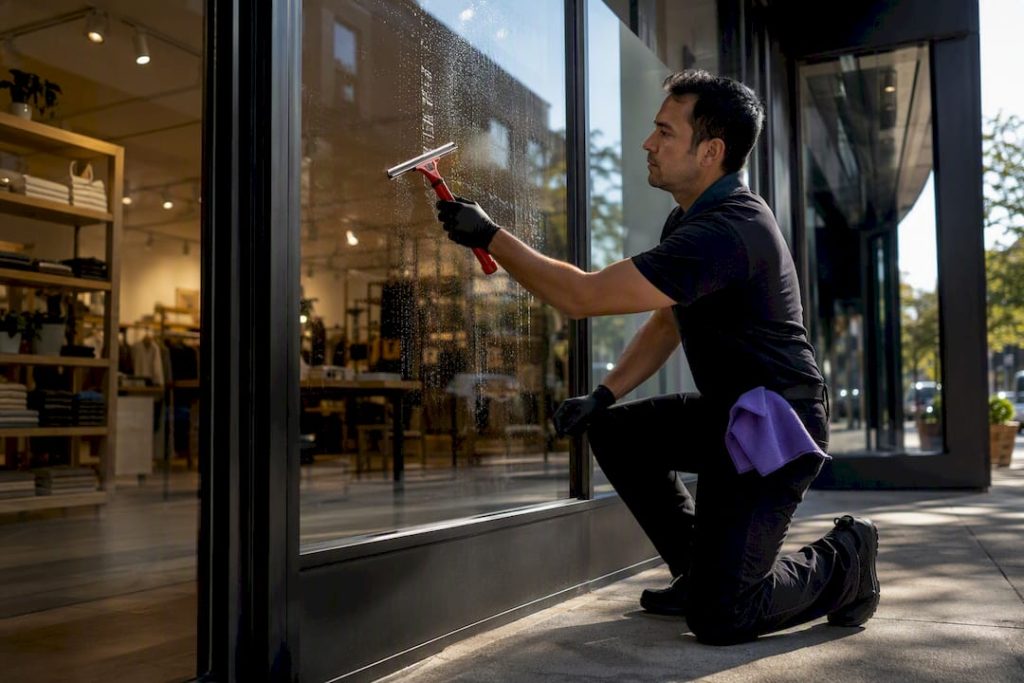
Hire a professional storefront window cleaning service any time your glass faces customers, shows hard-water staining, or sits above the reach of a standard ladder. A trained crew catches frame damage and seal problems before they turn into replacement bills, and clean glass simply sells better than dirty glass. Ask any provider for a written, itemized quote or a site visit before committing.
TL;DR:
- Price per pane for street-level glass generally ranges from $2 to $10, but costs can increase for difficult access or specialty restoration work.
- Proper cleaning includes not only the glass but also frames, sills, tracks, and hinges, with restoration as a separate, higher-cost service.
- Regular cleaning frequency varies from weekly for high-traffic retail to quarterly for low-exposure storefronts, depending on environmental conditions.
- When selecting a provider, verify insurance coverage, safety practices, and their experience with coated or tinted glass to avoid damage.
- Staff can maintain appearance by weekly wiping of high-touch areas, monthly seal checks, and avoiding abrasive tools on coated glass.
Table of Contents
- What Does Professional Storefront Window Cleaning Include?
- How Much Does Storefront Window Cleaning Cost?
- How Often Should a Storefront Get Professionally Cleaned?
- What Should You Ask Before Hiring a Window Cleaning Company?
- What Can Staff Do Between Professional Cleanings?
- What Do Window Cleaning Technicians Notice First?
- Book Storefront Window Cleaning With E and R Cleaning Solutions
- Sources
- FAQ
What Does Professional Storefront Window Cleaning Include?
A proper storefront job covers a lot more than spraying glass and wiping it down. Most reputable providers scope the work around three zones: the glass itself, the surrounding hardware, and the access method needed to reach it safely.
Full-service storefront cleaning typically includes:
- Exterior glass cleaning on every accessible pane, with interior display glass offered as an add-on for retail windows
- Frame, sill, mullion, and track detailing, since grime builds up in these grooves faster than on flat glass
- Assessment and spot treatment for hard-water deposits, overspray, or bonded film that a standard squeegee pass won’t touch
- Threshold and door-glass cleaning where foot traffic leaves the heaviest buildup
- Access via water-fed poles, lifts, or ladders depending on height and layout, chosen to match the building rather than convenience, following storefront pressure washing best practices to ensure safety and effectiveness
Glazing repairs, caulking, and structural seal replacement usually fall outside the scope of a cleaning contract. A full storefront service that covers frames and tracks along with glass matters because glass-only cleaning tends to re-soil within days, while attention to the peripheral hardware stretches the interval between visits. If a bid only mentions “glass cleaning,” ask what happens to the tracks and sills.
How Much Does Storefront Window Cleaning Cost?
Pricing for storefront glass rarely follows one formula. Providers typically quote using one of four models: per pane or per window, per linear foot of glass, an hourly rate, or a flat site-based bid after a walk-through.
Storefront window cleaning pricing typically runs in a modest range per pane for street-level glass, according to industry pricing data, with hourly and per-window charge models varying by region and by how the crew accesses upper floors. A few factors push the number up or down:
- Access difficulty (second-story glass, awnings, or tight alley placement raises labor time)
- Bonded mineral stains or restoration chemistry, which can add a separate line item entirely
- Recurring service discounts, since providers often shave 10 to 20 percent off one-time rates for monthly or biweekly contracts
- Travel distance and minimum service fees for smaller storefronts
Restoration work, the kind that strips baked-in hard-water etching, costs more than routine maintenance because it requires specialty chemistry and extra dwell time. Ask any provider to break the bid into line items: base cleaning, frame and track detailing, and restoration if needed. A single flat number with no breakdown is the easiest way to get overcharged or undersold on scope. If a quote comes in dramatically below everyone else’s, ask what’s being skipped, because that’s usually the tracks, the sills, or insurance coverage.
How Often Should a Storefront Get Professionally Cleaned?
The right cadence depends on foot traffic, weather exposure, and what’s happening around the building. Here’s a practical starting point:
- High foot-traffic retail (restaurants, downtown storefronts, mall entrances): weekly to biweekly cleaning keeps fingerprints, exhaust residue, and grime from building visibly between visits.
- Standard retail and office storefronts: a monthly clean usually holds up well for moderate traffic and typical weather exposure.
- Low-exposure or seasonal storefronts: quarterly service is often enough if the location sees light traffic and minimal environmental buildup.
- Adjust for local conditions: sprinkler overspray, coastal salt air, pollen season, or nearby construction dust can all justify a shorter interval regardless of business type.
Practitioners generally recommend a tighter schedule right after a restorative clean, then easing back to a maintenance cadence once the glass is stable. Many providers offer recurring plans and can work around night or weekend windows to avoid disrupting business hours.
What Should You Ask Before Hiring a Window Cleaning Company?
Vetting a storefront window cleaner takes about five minutes of questions, and it saves you from the two most common problems: shoddy work and liability exposure if someone gets hurt on your property.
Before signing anything, ask for:
- Proof of insurance and bonding, specifically coverage that applies to work at height, not just general liability
- Worker safety practices, including whether technicians follow OSHA’s workplace safety standards for fall protection and ladder use
- A written scope of work that spells out what’s included, glass, frames, tracks, sills, and what triggers an extra charge
- Before/after photos and references from similar storefront jobs, ideally with a business type close to yours
- Confirmation they know how to handle coated, tinted, or low-E glass, since the wrong chemistry can permanently damage these coatings
Red flags are usually obvious once you know to look for them: vague scopes that never mention frames or tracks, refusal to produce an insurance certificate, cash-only payment demands, or a bid with no itemization at all. Any of those should end the conversation.
Pro Tip: Ask specifically whether the crew uses ammonia-free, pH-neutral cleaners on tinted or coated glass. Ammonia breaks down certain films and low-E coatings over time, and once that damage is done, no amount of cleaning fixes it. For a deeper look at why specialized handling matters, see why commercial windows need specialized cleaning.
What Can Staff Do Between Professional Cleanings?
Keeping a storefront presentable between visits doesn’t take much, just a handful of quick checks your team can build into a weekly routine.
- Daily or weekly: wipe down high-touch areas like door glass and handles, brush away loose grit from sills, and note any new chips, cracks, or fogging.
- Monthly: clear weep holes along the bottom of window frames so water drains properly, inspect gaskets and seals for gaps, and check that door hardware still operates smoothly.
- Call a professional or glazier when: you spot persistent fog trapped inside a double-pane window (a sign the seal has failed), a crack that’s visibly growing, or hard-water spots that look etched rather than surface-level.
- Never use razor blades on coated or tinted glass, and stick to pH-neutral cleaners rather than ammonia-based products, which can strip protective films over time.
A regional maintenance guide built around weep hole checks and seal inspections is a useful reference if you want to formalize this into a monthly checklist your staff actually follows. For simple hands-on tools your team can use safely, homeowner-tested window cleaning tools offer a reasonable starting point, though anything beyond routine dusting is worth handing to a pro.
What Do Window Cleaning Technicians Notice First?
Most damage we see didn’t start as damage. It started as a small habit: someone scraping a razor across coated glass, sprinklers hitting the same corner every morning, weep holes packed with debris until water had nowhere to go. Technicians check frames, seals, and tracks on every visit because that’s where problems actually begin. Clients are often surprised that better light and fewer emergency glass replacements follow from something as simple as consistent, correct cleaning.
— Richard
Book Storefront Window Cleaning With E and R Cleaning Solutions
Some cleaning businesses build their service around honest, itemized pricing and crews that treat your storefront like it matters, because customers judge it before they ever walk through the door. Whether you need exterior glass, frame and track detailing, or a full hard-water restoration, the scope gets written down before any work starts, not guessed at afterward.

When you request a quote, include a few photos of the storefront, the approximate number of panes, any access challenges (awnings, second-story glass, tight alley spacing), and how often you’d like service. On the day of the visit, just make sure the area near the windows is clear and someone’s reachable if the crew has questions about interior access. For property managers juggling multiple sites, it’s worth reviewing what to demand in office window cleaning bid line items before comparing providers side by side. Ready to get started? Request a quote or schedule a site visit directly through E and R Cleaning Solutions and get a straight answer on scope and cost.
Sources
- How Much to Charge for Window Cleaning: 2026 Price Guide
- The Complete Guide to Storefront Window Cleaning for Modern Businesses – Dallas CARB testing
- Storefront Glass Maintenance: A Sacramento Business Guide (2026) | Capital Glazing
- OSHA laws and regulations
FAQ
How Much Do Window Cleaners Charge for Storefronts?
Storefront glass cleaning typically runs $2 to $10 per pane depending on access and condition, based on current U.S. pricing data. Some providers quote custom pricing after reviewing photos or a site visit, so ask for an itemized estimate rather than a flat number.
How Do You Properly Clean Storefront Windows?
Proper storefront cleaning covers the glass, frames, sills, and tracks using pH-neutral, ammonia-free products on coated or tinted surfaces. Professionals also clear weep holes and inspect seals during the same visit to prevent fast re-soiling.
What’s the Difference Between Routine Cleaning and Stain Restoration?
Routine cleaning removes surface dirt and film, while restoration targets hard-water deposits etched into the glass by heat and sun exposure. Restoration requires specialty chemistry and usually costs more, so ask providers to quote it as a separate line item.
Do People Still Professionally Clean High-Rise and Skyscraper Windows?
Yes, high-rise window cleaning remains an active trade, using suspended rigs, water-fed poles, or rope access depending on building height and design. Technicians working at height must follow OSHA fall-protection standards, which is worth confirming with any provider handling elevated storefront or building glass.
How Often Should a Retail Storefront Be Cleaned?
Most retail storefronts do well with monthly cleaning, while high foot-traffic locations like restaurants often need weekly or biweekly service. Environmental factors like sprinkler overspray or coastal salt air can shorten that interval regardless of business type.