Skylight Cleaning for Homes and RVs: Stay Grounded, Call a Pro
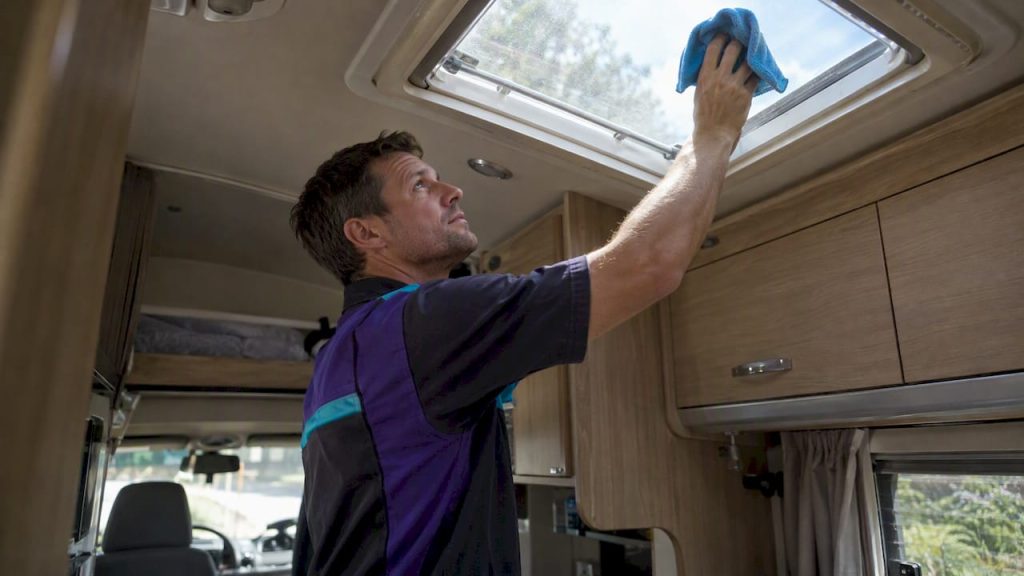
Many interior skylights can be cleaned safely with mild soap and a soft cloth, no special equipment required. Exterior skylights that need roof access, show heavy staining, or have mold deserve a professional with proper fall protection. A professional skylight cleaning typically adds a modest fee per panel to a window-cleaning visit, buying both safety and specialized stain removal that DIY tools rarely match.
TL;DR:
- OSHA rules treat skylights as roof openings, so workers more than 6 feet above a lower level need guardrails, covers, or personal fall arrest systems.
- For interior cleaning, check manufacturer instructions, dust first, then use mild soap and a soft cloth; acrylic and polycarbonate domes scratch easily.
- Exterior cleaning should start from the ground with telescoping tools; avoid pressure washing, and never stand on a dome or walk across a skylight.
- A skylight cleaning charge typically adds $20 to $30 per panel, with height, roof pitch, staining, and safety equipment affecting the price.
- Manufacturer guidance commonly calls for a full cleaning and inspection once a year, plus a visual check after major storms; follow the unit’s instructions.
Table of Contents
- Your Skylight Cleaning Toolkit and Decision Checklist
- Safety Rules and Fall Protection You Need to Know
- How to Clean Skylights From the Inside
- Cleaning Skylights From the Outside Without Climbing the Roof
- Removing Mold, Lichen, and Hard-Water Stains
- Annual Inspection Checklist to Catch Leaks Early
- Professional Tips From Richard at E&R Cleaning Solutions
- When to Hire a Professional and What It Costs
- Finding the Right Balance Between DIY and Professional Care
- Let E&R Cleaning Solutions Handle the Roof Work
- FAQ
- Sources
Your Skylight Cleaning Toolkit and Decision Checklist
Before you grab a ladder, figure out whether this is a ground job or a roof job. Interior cleaning needs almost nothing fancy.
- Interior tools: mild dish soap, soft microfiber cloths, a squeegee, a chamois, and an extension pole for high ceilings.
- Exterior tools: a telescoping brush or squeegee, a garden hose for rinsing, and ground-based reach poles instead of roof walking.
- Protective gear: gloves, eye protection, and an N95 respirator if you see mold; never climb a ladder alone.
- Stop signs: fogging between panes, cracked flashing, a steep roof pitch, or a dome you’d have to stand on to reach.
Pro Tip: If reaching the glass means stepping onto the roof itself, that’s your cue to call a professional instead of improvising, since learning how to walk on a metal roof safely requires proper technique and equipment.
Safety Rules and Fall Protection You Need to Know
Skylights are treated as roof openings, not just windows, and that distinction drives the safety rules. Under 29 CFR 1926.501, workers more than 6 feet above a lower level need guardrails, covers, or a personal fall arrest system before working near a skylight.
A skylight marketed as “OSHA-compliant” is a manufacturer’s claim, not an official approval. OSHA interpretation letters make clear that employers still have to verify that any cover or skylight meets the load and testing criteria required for fall protection.
If mold is part of the job, the CDC’s cleanup guidance applies: use proper dilution ratios, wear PPE, and skip the fan, since moving air can spread spores through the room.
- Never work alone on a steep or wet roof.
- Tie off ladders and check their footing before climbing.
- Leave lifts or powered access equipment to trained operators.
How to Clean Skylights From the Inside
Interior cleaning is the safest starting point for most homeowners and RV owners, and it’s where routine maintenance belongs.
- Check your manufacturer’s care instructions first. VELUX guidance recommends soft water or a nonabrasive cleaner and a lint-free cloth.
- Protect flooring and furniture below with a towel or drop cloth before you start.
- Dust the glass or dome first to avoid grinding grit into the surface.
- Wash with mild soap and water, working top to bottom.
- Rinse with a damp cloth, then dry with a squeegee or chamois to avoid streaking.
Acrylic and polycarbonate domes, common on RVs, scratch more easily than glass. Stick to mild cleaners and a soft cloth, and skip solvents or anything abrasive that can cloud the plastic permanently.
Pro Tip: If fogging appears between the panes no matter how well you clean, that’s a sign the seal has failed, not that the glass needs more scrubbing.
Cleaning Skylights From the Outside Without Climbing the Roof
Exterior grime builds up faster than interior dust, but roof access is where the real risk lives. Start from the ground whenever you can.
- Clear leaves and debris from the flashing and nearby gutters before you touch the glass.
- Inspect the seals and frame for cracks or gaps while you’re at it.
- Rinse gently with a garden hose to loosen dirt.
- Scrub with a mild soap solution on a telescoping brush.
- Rinse again, then squeegee or wipe dry from the ground if your pole reaches.
- Avoid high-pressure washing directly on skylight glazing; it can force water under seals.
- Never step on a dome or walk across a skylight to reach it.
- If a telescoping tool can’t reach, a professional with lifts or fall-protection gear is the safer route.
Removing Mold, Lichen, and Hard-Water Stains
Stubborn deposits need targeted treatment, not just more scrubbing.
- Mold: the CDC recommends up to 1 cup of household bleach per gallon of water on hard, nonporous surfaces, with gloves, eye protection, and no fans running nearby.
- Hard-water stains: try a diluted vinegar solution or a commercial hard-water remover, and test a small area first; skip abrasive pads.
- Sap or paint spatter: a solvent or careful razor scraping works only if your manufacturer’s care guide allows it; otherwise, leave it for a professional.
- Lichen: persistent growth usually needs repeat treatment and gentle brushing rather than aggressive scraping that can etch the glazing.
If stains keep coming back or the surface looks etched or pitted, stop and get a professional inspection instead of pushing harder.
Annual Inspection Checklist to Catch Leaks Early
A cleaning session is the perfect time to check for small problems before they become expensive ones.
- Look at flashing and seals for gaps, cracks, or separation from the frame.
- Check the ceiling below for brown patches, a common early sign of a leak.
- Inspect fasteners and insect screens for looseness or damage.
- Clear debris from weep holes so water can drain instead of pooling.
Trapped leaves and grit around flashing accelerate seal and frame damage over time, so clearing them during every cleaning matters. Manufacturer guides generally recommend a full visual check after major storms and a thorough clean and inspection once a year, though some suggest spacing deeper inspections every 2 to 3 years depending on the unit.
Pro Tip: A quick check after every big storm catches small flashing problems before they turn into ceiling stains.
Professional Tips From Richard at E&R Cleaning Solutions
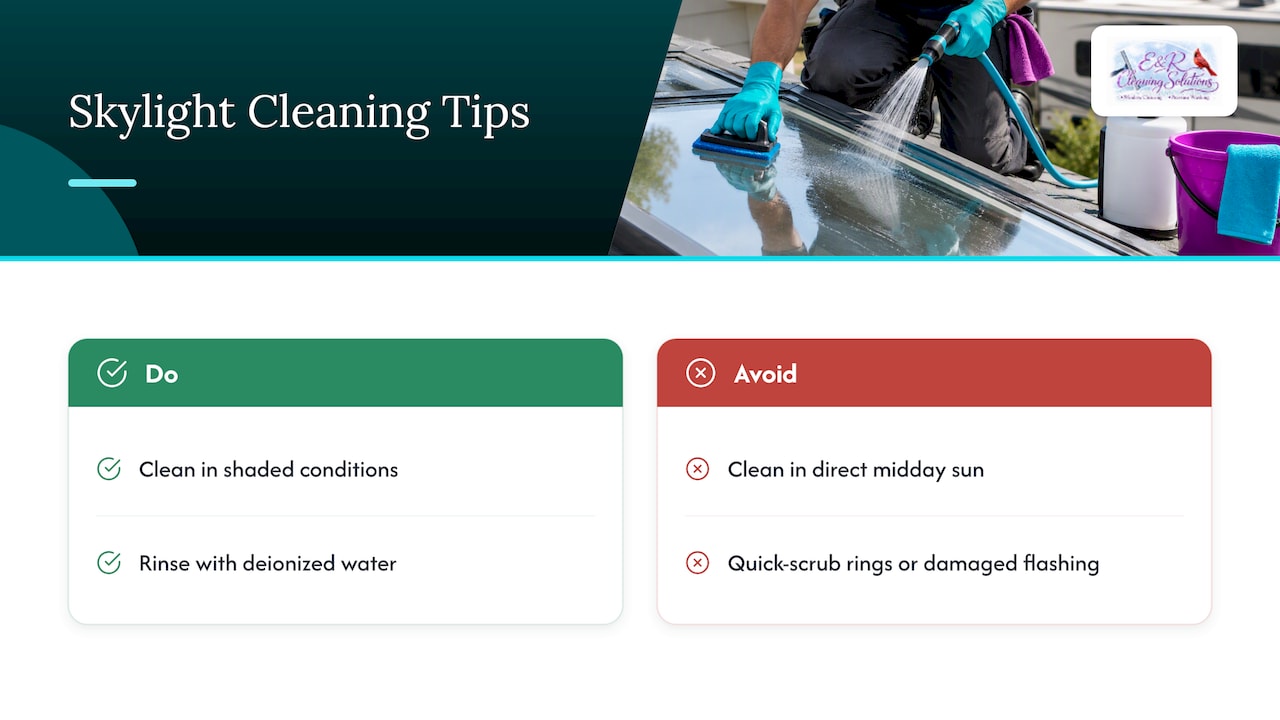
Streak-free results often come down to timing and technique more than elbow grease. Crews working on skylights tend to favor shaded conditions over direct midday sun, since cleaning solution dries too fast in the heat and leaves soap residue behind. A deionized water rinse, when available, also cuts down on the mineral spotting that regular tap water leaves on glass.
Hard-water rings and damaged flashing are two of the most common issues that show up during a cleaning job, and both call for a careful approach rather than a quick scrub. We built our business around honest pricing and clear communication, so homeowners know what a job involves before any work starts.
Skylights reward patience more than muscle. The right angle on a squeegee and the right time of day often matter more than the cleaner you use.
— Richard
When to Hire a Professional and What It Costs
Some jobs are better left to a crew with the right training and equipment. Hire a professional when:
- Reaching the skylight requires roof access, a tall ladder, or a steep pitch.
- Staining is heavy, or mold remediation is involved.
- Seals have failed and you need an assessment before deciding on repair or replacement.
- You don’t have safe, stable access to the exterior glass.
Professional window-cleaning visits average $150 to $302 per visit, with skylight cleaning commonly added as a line item in the $20 to $30 per panel range. Price depends on the number of skylights, their height, roof pitch, and whether fall-protection equipment or stain remediation is needed. For many homeowners, the combination of safety and specialized tools like deionized water rinses makes that add-on cost worth it compared to the risk of a DIY roof climb.
Finding the Right Balance Between DIY and Professional Care
Cleaning the glass you can reach from inside keeps your skylight performing well with minimal effort. The moment the job involves a roof, a ladder taller than you’re comfortable with, or mold, the math changes: a professional visit costs far less than a fall or a botched seal repair. Routine interior care and periodic professional exterior checks work best as a pair, not a substitute for each other.
Let E&R Cleaning Solutions Handle the Roof Work
We offer professional skylight cleaning alongside our window cleaning services, so you get the interior shine and the exterior safety work handled by one crew. Our team brings the training, tools and fall-protection equipment that heavy staining and roof access call for, with honest pricing and clear communication at every step.

- Tell us how many skylights you have, their height, and any access notes when you request a quote.
- We handle hard-water removal, flashing checks, and exterior access.
- Scheduling is flexible around your property’s needs.
Get a quote for your window and skylight cleaning and let us take the roof risk off your plate.
FAQ
What is the best way to clean skylights?
The safest approach is to clean reachable interior glass with mild soap, water, and a soft cloth or squeegee, following your manufacturer’s care instructions. For exterior glass that needs roof access, ground-based tools like telescoping brushes are safer than climbing, and heavy staining is best left to a professional.
How much does it cost to clean a skylight?
Skylight cleaning is commonly added to a window-cleaning visit for about $20 to $30 per panel, while full professional visits average $150 to $302 depending on scope. Height, roof pitch, and whether stain removal or fall-protection equipment is needed all affect the final price.
How do I remove mold from my skylight?
For mold on hard, nonporous surfaces, the CDC recommends a solution of up to 1 cup of bleach per gallon of water, applied with gloves and eye protection. Avoid mixing bleach with other cleaners and skip running fans nearby, since that can spread mold spores into the room.
How do I remove lichen from my skylight?
Lichen usually needs repeated gentle brushing with a mild soap solution rather than one aggressive scrub, since hard scraping can etch the glazing. If it keeps returning after a few cleaning cycles, a professional assessment can determine whether the surface or seal needs attention.
How often should I clean and inspect my skylights?
A full clean and inspection once a year is a common recommendation, with a quick visual check after major storms to catch flashing or seal issues early. Manufacturer guides vary, so check your specific skylight’s instructions for its suggested cadence.
Sources
- 29 CFR 1926.501 – Duty to have fall protection
- Mold cleanup and remediation
- 4 tips for cleaning skylights from the inside to the outside
- Self-Flashing Vented Skylight Care & Maintenance Guide
- Window cleaning cost in 2026: a homeowner’s guide