
Second Story Windows: Homeowners Clean From the Ground First
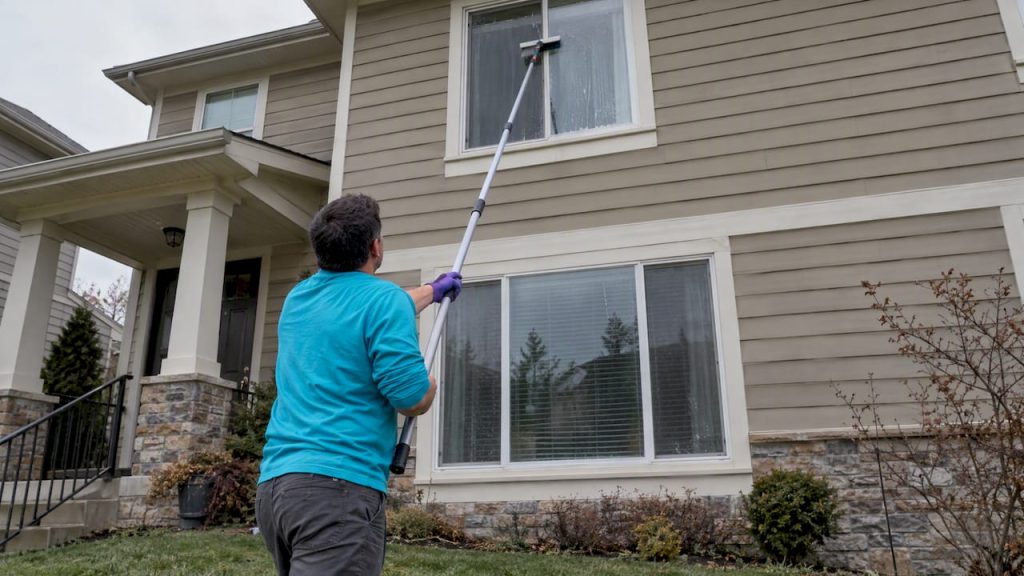
The safest way to clean most second-story windows is from the ground, using a telescoping pole or a water-fed pole system rather than climbing a ladder. If your windows tilt inward, clean them from inside instead. Ladders raise your fall risk and bring OSHA precautions into play, so save that option for windows a pole genuinely can’t reach, and call a professional when a window is damaged or impossible to access safely.
TL;DR:
- Inward tilting sashes let you clean both panes indoors; magnetic or robotic cleaners suit light upkeep only, require compatible glass, and need a safety tether.
- Consumer Reports puts second floor pole kits at about $100 and hose fed water systems at about $140; purified water dries without mineral spots.
- Pressure washers can crack glass or damage seals; if used on glass, choose the lowest pressure, a wide angle nozzle, and spray at an angle.
- For ladder work, OSHA requires one foot out per four feet of height, three feet above the landing, and three points of contact.
- Hire a professional for cracked glass, damaged frames, or windows that require a ladder on uneven ground; do not stretch beyond a pole’s safe reach.
Table of Contents
- Which safe method fits your windows?
- Choosing the right poles, heads, and safety gear
- How to wash second-story windows from the ground
- Cleaning tilt-in windows from inside your home
- Why pressure washers are a poor fit for windows
- Ladder safety rules when a pole won’t reach
- What I’d tell a neighbor about cleaning their own windows
- Let us handle the windows a pole can’t reach
- FAQ
- Sources
Which safe method fits your windows?
Most homes have more than one option for getting second-story glass clean, and the right choice depends on the window type, how dirty the glass is, and how comfortable you are handling equipment at a distance.
- Telescoping pole with mop and squeegee: the best balance of safety, cost, and control for most homeowners, since you stay on the ground the entire time.
- Water-fed pole systems: deliver a professional, spot-free finish using purified water, with less wiping and drying needed afterward.
- Magnetic or robotic cleaners: work from inside the house on certain glass types, useful for light, routine maintenance rather than heavy grime.
- Tilt-in sash cleaning: the fastest interior method when your windows support it, since both sides of the glass come to you.
- Ladder or professional help: reserved for cracked or glazed-over glass, oddly angled windows a pole can’t reach, or any situation involving structural concerns.
A telescoping pole handles the vast majority of second-story jobs because it reaches most standard window heights without exposing you to a fall. Water-fed pole systems take that a step further: Consumer Reports notes that a telescoping pole with interchangeable heads is the best way to clean outside high windows, and that pressure washers can work on glass only with low pressure and careful technique. Magnetic and robotic cleaners fill a narrower niche: they’re convenient for upkeep between deeper cleanings, but they depend on compatible glass and won’t cut through months of built-up grime. Tilt-in sashes, where available, remove the second-story problem entirely since you never have to reach outside at all. When none of these apply, a ladder or a professional crew is the honest answer, not a workaround.
Choosing the right poles, heads, and safety gear
Buying the right equipment up front saves you from streaks, dropped tools, and unnecessary risk.
A telescoping pole should extend high enough to reach your second-floor windows, so check your actual window height before buying. Look for a secure locking mechanism at each section and a pole light enough to control one-handed while the other hand steadies your stance. A pole that flexes or wobbles at full extension is harder to control and more likely to slip.
Cleaning heads matter as much as the pole itself:
- Soft brush heads work loosened dirt and cobwebs off the glass without scratching the surface.
- Microfiber mop heads handle general soil gently and hold more water than a sponge.
- Squeegee attachments finish the job, pulling water off in clean, streak-free passes.
Water-fed pole systems use deionized or purified water, which leaves no mineral residue behind, so the glass air-dries spot-free without a final wipe. Consumer Reports reports that pole kits reaching a second floor typically start around $100, while hose-fed water systems start around $140, giving homeowners a reasonable entry point before considering a full professional rig. Our guide to window cleaning tools homeowners need for streak-free results breaks down specific models and maintenance tips if you want to go deeper on gear.
Magnetic and robotic cleaners work only on compatible glass thickness and are best for light upkeep rather than deep cleaning; many models include a safety tether or string, which you should always attach before running the unit near a second-story window.
Keep consumables in good shape: rinse and dry squeegee blades after each use, replace rubber blades once they start skipping, and launder microfiber heads separately from fabric softener, which clogs their fibers. For safety gear, wear eye protection and gloves when mixing solutions, choose non-slip shoes, and have a second person nearby as a spotter whenever you’re working at height, even from the ground.
Pro Tip: Test your pole’s full reach and balance dry, before adding water, so you’re not fighting an unfamiliar tool while it’s wet and heavier.
How to wash second-story windows from the ground
Cleaning exterior second-story glass from below is straightforward once you’ve got the sequence down.
- Inspect first. Check the glass for cracks, look at frames and putty for deterioration, and scan overhead for wiring or tree branches before you extend anything.
- Clear the area. Move furniture, planters, or vehicles out of the drip zone beneath the window.
- Assemble and test. Lock every pole section firmly, attach your chosen head, and test the balance and reach dry before adding any cleaning solution.
- Wet the glass. Apply your cleaning solution generously to loosen dirt and grime before scrubbing.
- Scrub top to bottom. Work the brush or mop head from the top of the pane downward, so dirty runoff doesn’t recoat areas you’ve already cleaned.
- Squeegee in overlapping passes. Pull the squeegee in vertical strokes, overlapping each pass slightly, wiping the blade dry after every stroke to prevent streaks.
- Finish and inspect. Buff any remaining edges with a microfiber cloth, wipe down sills and frames, then step back and check for streaks or missed spots before moving to the next window.
Timing affects your results as much as technique. Avoid cleaning in direct sun or strong wind, both of which dry solution too fast and leave streaks behind; cool, shaded hours in the morning or late afternoon give you the best working window.
Pro Tip: Wipe the squeegee blade dry after every single stroke, not just at the end. It’s the single biggest difference between a streaky job and a clear one.
Cleaning tilt-in windows from inside your home
If your second-story windows tilt inward, you can skip exterior access altogether. Check for small latches or tabs along the top of the sash, since most tilt-in windows release with a simple pull or twist, and confirm the mechanism against your manufacturer’s instructions if you’re unsure.
- Remove loose debris from the track and sash before tilting the window in.
- Spray cleaner and wipe one side with horizontal strokes and the other with vertical strokes, a trick from Martha Stewart’s guide that makes it easy to spot which side a streak is on.
- Clean the exterior-facing pane fully while the sash is tilted toward you, then rock it back into place.
- Keep both feet planted on the floor throughout, ask a helper to steady wider sashes, and never lean your body out past the frame to reach a corner.
Why pressure washers are a poor fit for windows
Pressure washers concentrate water at a force that glass and window seals aren’t built to handle. Aimed directly at a pane, they can crack glass, damage weatherstripping, or force water past closed seals and into the wall cavity behind the frame.
If you choose to use one anyway, keep the settings conservative:
- Select the lowest psi setting available and a wide-angle spray nozzle, never a narrow jet.
- Spray at an angle rather than straight on, and keep windows latched tightly closed throughout.
- Save pressure washing for siding, sills, and trim, and switch to a soft-brush water-fed pole for the glass itself.
For heavy build-up that a pole alone won’t shift, our pressure window washing safety guide covers safer settings in more detail, or you can bring in a pro with equipment built for controlled, low-impact cleaning.
Ladder safety rules when a pole won’t reach
Some windows (deeply recessed, oddly angled, or blocked by landscaping) genuinely need a ladder. When that’s the case, OSHA’s ladder standard sets the baseline: position the base one foot out for every four feet of height, extend the top of the ladder at least three feet above the landing point, and maintain three points of contact at all times.
- Inspect the ladder for cracks, loose rungs, or damaged feet before every use.
- Confirm the ladder’s load rating covers your weight plus tools and never substitute a chair, box, or makeshift platform.
- Set the base on firm, level ground, away from any overhead power lines.
- Use a ladder with nonconductive rails if you’re working anywhere near electrical wiring.
- Have a spotter hold the base steady, and carry tools in a belt or raise them on a line instead of climbing with hands full.
OSHA’s extension ladder fact sheet recommends choosing a ladder rated for at least four times your intended load and training anyone who uses one to recognize these hazards before they climb. If a window still feels out of reach or risky after following every precaution, that’s the signal to stop and call a professional rather than push further up the ladder.
What I’d tell a neighbor about cleaning their own windows
Given the choice, I reach for a water-fed pole over a standard pole on most jobs. The deionized water dries completely spot-free, which cuts out the wiping step entirely and saves real time on a house with a lot of glass.
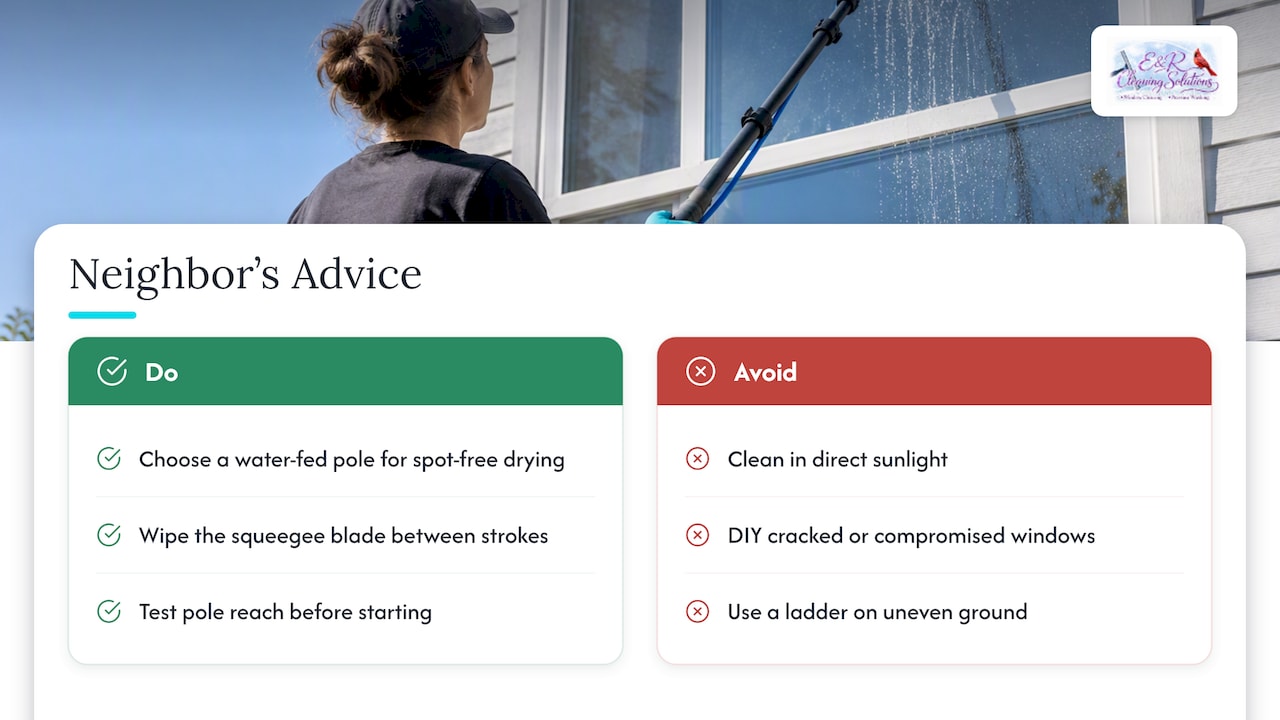
The mistake I see most often is skipping the dry wipe on the squeegee blade between strokes; that one habit causes more streaking than any product choice. A close second is working in direct sunlight, which dries solution before you can squeegee it off. Test your pole’s reach against your actual window height before you start, not after you’re halfway up the side of the house.
If a window is cracked, the frame is compromised, or you genuinely can’t reach it without a ladder on uneven ground, that’s not a DIY call anymore. Bringing in a pro at that point isn’t overkill, it’s just the safer trade.
— Richard
Let us handle the windows a pole can’t reach

Not every second-story window is a safe DIY job, and that’s exactly where we come in. We handle exterior and interior window cleaning, hard-water stain removal, and screen and frame cleaning for homes and commercial properties, with pressure washing available for the siding, sills, and walkways around them.
Hiring us makes the most sense when:
- A window is awkwardly angled, recessed, or simply out of safe pole range.
- Hard-water stains or mineral buildup haven’t come off with standard cleaning solutions.
- A frame or seal looks damaged and needs a careful hand rather than more scrubbing.
As a family-run team, we price every job honestly and walk you through what we find before we start. If any of the above sounds like your house, request a quote from E and R Cleaning Solutions and we’ll get your windows clear without you ever touching a ladder.
FAQ
What is the best way to clean windows on a second story?
The safest method for most homes is a telescoping pole with a mop and squeegee head, worked from the ground in overlapping vertical passes. If your windows tilt inward, cleaning them from inside is even easier since both sides of the glass come to you.
What is a fair price to charge for window cleaning?
Pricing varies widely by region, window count, and condition, so it’s best quoted per project rather than as a flat rate. We provide custom quotes based on your specific windows rather than a one-size price, which you can request through our site.
What is the best tool to clean windows in a two-story house?
A telescoping pole that reaches your second-story windows, fitted with a soft brush or microfiber head plus a squeegee attachment, handles many windows safely. Consumer Reports also recommends water-fed pole systems for a spot-free finish with less wiping.
How do you clean a second story window without a ladder?
Use a telescoping pole from the ground, wetting the glass, scrubbing top to bottom, and finishing with overlapping squeegee strokes. For tilt-in windows, skip the exterior approach entirely and clean both sides from inside the house.
When should I check a window before cleaning it?
Always inspect the glass, frame, and putty for damage, and look overhead for wiring or branches before extending any pole or ladder. If restoration-level damage turns up on an older wood window, a specialist like Gepetto Millworks may be the right call instead of cleaning alone.
Sources
- 1926.1053 – Ladders. | Occupational Safety and Health Administration
- What’s the Best Way to Clean High Windows? – Consumer Reports
- How to Wash Second-Story Windows Without a Ladder