Sap on Windows: How to Remove It Without Scratching
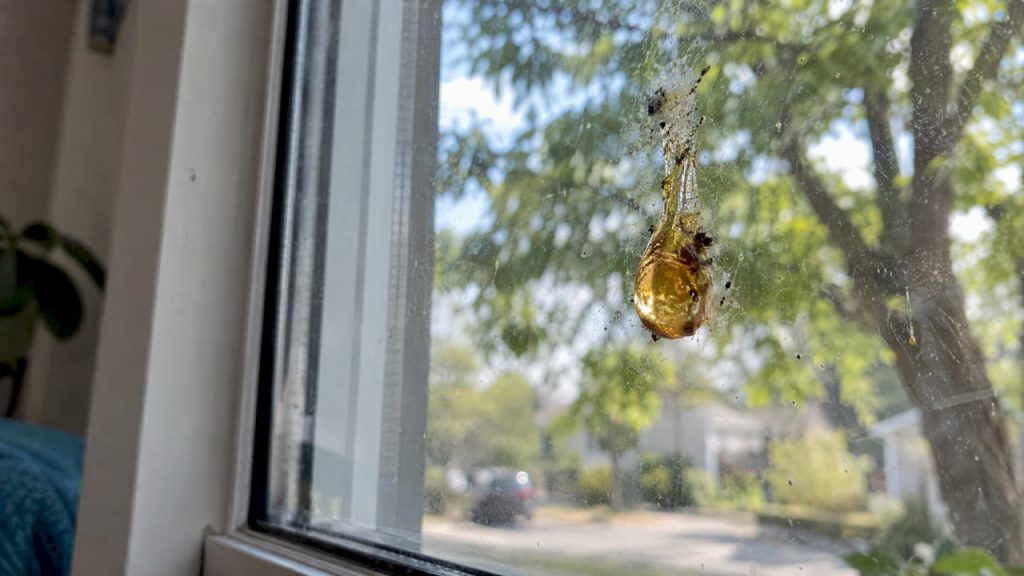
Tree sap on a window comes off with patience, not force. Wash the glass first, soften the sap, wipe it gently, then rewash. Most scratched windows come from scraping hardened sap while the glass is dry. (If you landed here looking for SAP software on Windows, that is a different topic: SAP GUI is the software company’s client program. This guide is about the sticky stuff from trees.)
We are a family-run window cleaning and pressure washing company, and sap, bug residue and baked-on spots are part of our daily work on homes, rentals and storefronts. Here is how we think about them, and where DIY stops making sense.
TL;DR
- Wash off grit first, then soften the sap. Never scrape dry glass.
- Rubbing alcohol is the most commonly recommended solvent for glass. Test it away from frames, and rewash afterward.
- Sap on frames, screens and tracks is a different job than sap on glass. Painted, vinyl and aluminum finishes can discolor.
- Pre-1978 homes may have lead paint on sills and frames, so use wet methods and never dry-scrape trim.
- Large storefront panes, second-story glass and rental turnovers are usually worth a professional quote.
Table of Contents
- Why sap sticks so stubbornly to glass
- How to remove tree sap from windows, step by step
- Household tricks: what helps and what causes haze
- Sap on frames, screens and tracks
- Older homes and rentals: the lead paint question
- Choosing cleaning products you will use again and again
- Bug splatter on windows: same logic, different clock
- When sap is a job for a pro
- Our perspective: treat the surface, not just the stain
- Window cleaning and pressure washing from E&R
- FAQ
- Sources
Why sap sticks so stubbornly to glass
Sap is a sugary, resinous liquid. It lands on a window as a droplet, dries into a tacky film, and then collects dust, pollen and grit. Glass is hard and nonporous, so the sap sits on the surface rather than soaking in. That is good news: it means the deposit can be dissolved and lifted without damaging the glass, as long as you do not grind the grit in the process.
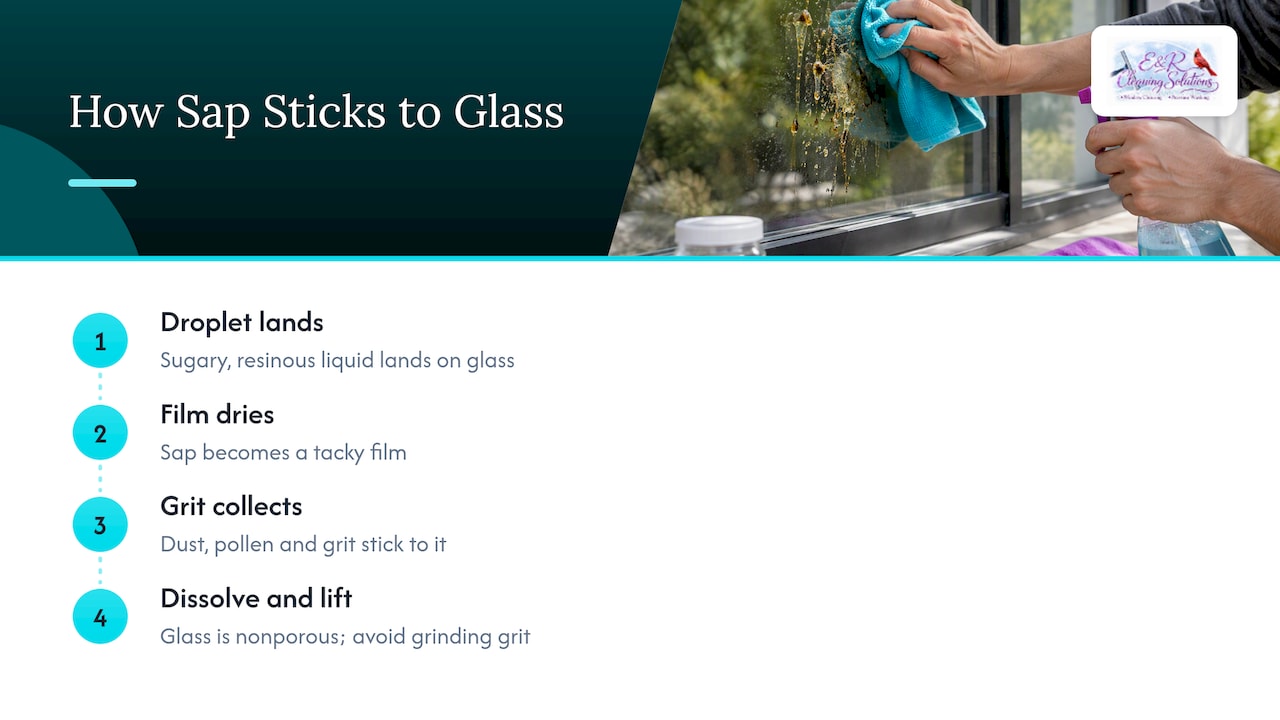
The trouble starts when people try to speed things up. Pressing hard with a dry cloth smears sap into a haze. Scraping with an old blade drags trapped grit across the pane. On a small bathroom window, one scratch is annoying. On a large storefront pane, it is visible from the sidewalk every day.
The principle we work by is simple: soften before force.
How to remove tree sap from windows, step by step
This sequence suits ordinary residential or commercial glass. It follows the general approach in Angi’s guidance on removing tree sap.
- Work in shade, on cool glass. Solvents evaporate quickly on hot glass and leave streaks. Early morning or a cloudy day is best.
- Wash the area first. Use warm water with a small amount of detergent and a soft microfiber cloth. This removes loose dust and grit, which is what scratches glass. Angi recommends this for initial spots.
- Soften the sap. For dried, stubborn sap, apply a little isopropyl (rubbing) alcohol to a cloth and hold it on the spot. Angi suggests letting alcohol work for about 5 to 10 minutes on delicate surfaces like windows before wiping. Other glass-care guidance uses much shorter contact times, so treat the time as a range that depends on the product, the temperature and how old the sap is. Check the spot every minute or two.
- Wipe gently. Use light pressure and fold the cloth often so you are always using a clean face. The sap should lift or smear into a film you can wipe away. If it does not move, soften it again rather than pressing harder.
- Rewash and dry. Wash the spot with soapy water, rinse, and squeegee or buff dry with a clean microfiber cloth. Any alcohol or sap residue left behind attracts dust.
What about a razor blade?
Sometimes a hardened bead of sap will not budge. A razor scraper can work, but only under strict conditions. The glass must be wet, the blade must be new, and pressure must be light. Never use one on dry glass. Do not use abrasive steel wool on tinted glass, and avoid any blade near window film, coatings or frames. If you are not sure whether your glass is tinted or coated, stop and have someone look at it.

Household tricks: what helps and what causes haze
People suggest all sorts of alternatives for sap: baby oil, mineral oil, mayonnaise, white spirit, and a 1:1 mix of vinegar and water. Some of these work on bare glass. None is equally suitable for every window system.
| Method | Where it helps | Watch out for |
|---|---|---|
| Soapy warm water | Fresh, soft sap and the first wash | Won’t shift dried, hardened sap |
| Isopropyl alcohol | Dried sap on bare glass | Test on frames and sealants first; ventilate |
| Vinegar and water, 1:1 | Light residue after sap is removed | Weak on hardened sap |
| Oils (mineral, baby) | Softening sticky sap | Leaves a film that must be cleaned off completely, or you get haze and streaks |
| White spirit | Heavy residue on glass | Fumes; can harm painted or plastic surfaces |
The cleaning brand HG, in its advice on removing tree sap from windows, warns readers to test first and to ventilate and take care with white spirit around painted or plastic surfaces. That is sensible whichever product you use. Oily methods always need a thorough follow-up wash.
The lesson is that the glass is rarely the problem. The surroundings are.
Sap on frames, screens and tracks
Glass is hard and nonporous. Frames are not always. Painted wood, vinyl, anodized aluminum and composite frames each react differently to solvents. A solvent that cleans glass in a minute can dull a painted frame or leave a pale patch on vinyl.
EPA product-label guidance emphasizes nonabrasive cleaning on hard, nonporous surfaces and testing painted surfaces first. Here is how we apply that in practice:
- Identify the frame material before choosing a product.
- Test in an inconspicuous corner and wait to see the result.
- Keep solvent on the cloth, not sprayed, so it does not run onto trim or sealant.
- Treat screens and tracks separately. Sap in a track collects grit, and wiping it dry pushes that grit toward the glass.
If your frames also look dull or stained, our four-step window frame cleaning guide covers the frame side in detail.
Older homes and rentals: the lead paint question
This is the part most sap guides skip. In homes built before 1978, window sills and frames may carry lead-based paint. The EPA’s parent’s reference guide on lead lists lead-based paint as the most common household lead hazard, and says it is a hazard when peeling, chipping, chalking or cracking.
What that means for sap removal:
- Do not dry-scrape sap that is stuck to painted sills or frames. That can create chips and dust.
- Use wet methods. EPA’s guidance recommends wet cleaning to control lead dust.
- If paint is already flaking around the sap, stop and get advice before disturbing it.
- Landlords and property managers should note the age and condition of suspect surfaces before scheduling any aggressive cleaning or restoration.
If you suspect lead paint in a pre-1978 property and the paint is deteriorating, contact a certified lead professional or your state or local health department before cleaning the area yourself.
Choosing cleaning products you will use again and again
A one-off spot is easy. Recurring work, such as a rental portfolio or a row of storefronts, makes product choice matter more. The strongest product is not automatically the best one. The EPA notes that cleaning products can pose eye, skin and respiratory concerns and recommends looking for ecolabels such as Safer Choice rather than trusting vague claims like “environmentally friendly.”
For a broader look at habits that cause trouble in home cleaning, this guide to common house cleaning mistakes is a useful read. For the specific case of sap, the rule holds: use the mildest product that works, ventilate, and rinse thoroughly.
Bug splatter on windows: same logic, different clock
People who search for sap on windows often have bug residue too, especially on first-floor glass near lights, hedges and driveways. The approach is nearly identical: wash, soften with a soapy solution, then wipe gently and rewash. AAA notes that insect remains can become acidic and damage vehicle paint if left on. The same scheduling lesson applies to exterior glass. Fresh residue wipes away. Residue baked on by sun and wind takes much more effort.
Our practical tip: do not wait for the next big clean. Sap and bug residue are easiest to remove within days, not seasons.
When sap is a job for a pro
DIY is reasonable for a few spots on easy-to-reach glass. Call a professional when:
- The glass is large. Storefront panes show every scratch and streak.
- The windows are out of reach. Second-story glass should not be tackled from a ladder with a solvent in one hand. See why homeowners are better off cleaning from the ground first.
- Sap is mixed with other deposits. Hard water marks, paint overspray or mineral stains need different treatment. Our guide on removing paint overspray safely shows how quickly a small job can become a costly repair.
- The home is pre-1978 and the trim is painted or deteriorating.
- You manage several properties and need consistent results at turnover.
- Sap is dripping from above. If a tree is dropping sap again each week, the cleaning is only half the answer. Sap may also be landing on siding, walkways and driveways, which pressure washing handles.
Our perspective: treat the surface, not just the stain
We have been cleaning windows and pressure washing homes and businesses for over five years, and the most common mistake we see is a strong fix applied to the wrong surface. Someone sees a sticky spot, grabs the harshest product in the garage, and ends up with a hazy pane, a dull frame or a scratch.
Our approach is the opposite. We look at the whole window first: glass, frame, screen, track and sill. We ask what the frames are made of and how old the property is. We start with the gentlest method and move up only when we have to. Honest pricing matters to us here, too. A single sap spot should not be sold as a major restoration, and if a window needs more than cleaning, we would rather tell you.
For property managers and landlords, the same rule scales. Repeated work means repeated exposure for crews and for tenants, so surface compatibility and ventilation come before strength. Prompt removal, before sap bakes on, usually means less work and less cost.
— Richard
Window cleaning and pressure washing from E&R
If the sap is on glass you would rather not scratch, or it has spread to siding, patios and walkways, we can help. We clean windows inside and outside, including hard water stain removal, screens and frames, and we pressure wash driveways, sidewalks, patios, siding, roofs and building exteriors for homes and commercial properties. Pricing is custom per project, with flexible scheduling for one-time or recurring jobs. Request a quote from E&R Cleaning Solutions and tell us what the frames are made of and roughly how old the building is.
If you manage rentals, our guide to pressure washing between tenancies shows how exterior cleaning fits turnover.
FAQ
What dissolves tree sap on glass?
Rubbing (isopropyl) alcohol is the most common choice for dried sap on bare glass. Wash the area first, let the alcohol soften the sap, wipe gently, and rewash. Test it away from frames and sealants before you use it near them.
Will sap damage my windows if I leave it?
Sap on glass is mainly a surface problem, but it collects dust and grit and gets harder to remove over time. The bigger risk comes from rushing the removal with a dry scraper, which can scratch the glass. Removing it sooner is easier and safer.
Can I use a razor blade on sap?
Only on plain glass, and only with the glass wet, a new blade and light pressure. Never use one dry, on tinted glass, near window film, or on painted frames. If you are unsure, ask a professional.
How do I remove sap from window frames or screens?
Identify the material first, since painted, vinyl and aluminum finishes react differently to solvents. Start with warm soapy water and a soft cloth, and test any stronger product in a hidden spot. On pre-1978 painted trim, use wet methods only and do not scrape.
Does the same method work for bug splatter?
Yes, mostly. Soak with a soapy solution, give it time to soften, wipe gently and rewash. Fresh residue comes off easily, so do not let it bake on in the sun.
Sources
- How To Take Off Tree Sap, Angi
- How do you remove tree sap from windows? HG
- US EPA pesticide product label, CSP-46
- Lead In Your Home: A Parent’s Reference Guide, US EPA
- Identifying Greener Cleaning Products, US EPA
- SAP GUI Family, SAP Community
- AAA Automotive