
Window Cleaning After Storms: What Homeowners and Managers Should Ask
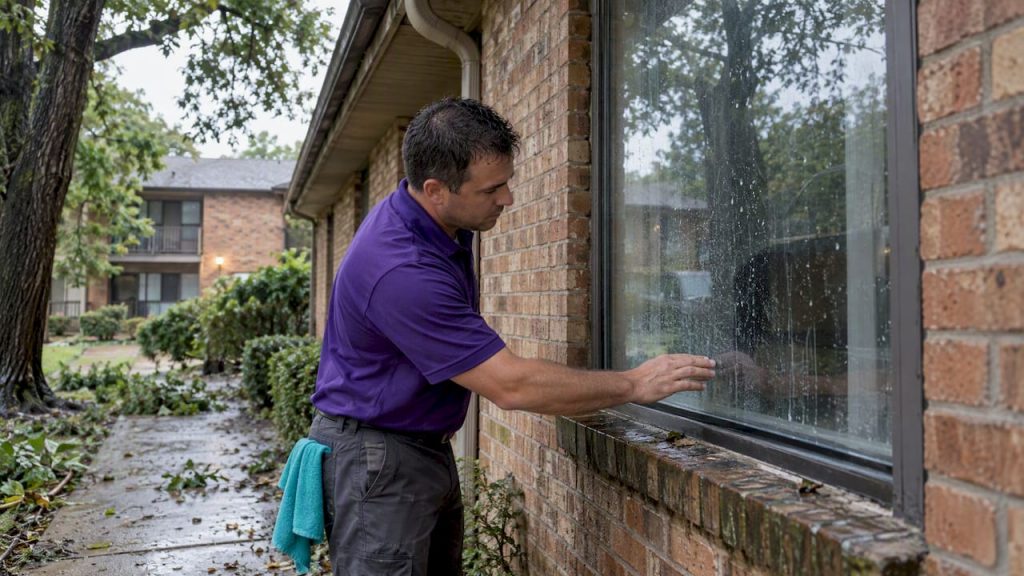
Cleaning your windows around rain is usually worth it when the job removes dirt, hard water deposits, or frame grime that rain would otherwise smear across the glass. Skip a quick pane-only wipe right before a heavy downpour since fresh runoff will likely undo it. If you need hard-water stain removal, multi-story access, or full frame and screen work, book a professional; for light spotting, a repellent or a purified-water rinse followed by a 24 to 48 hour check after the storm usually does the trick.
TL;DR:
- Rainwater can leave mineral and pollutant residues on windows, especially after heavy storms that wash pollutants from roofs and gutters.
- Most professional crews will not work in heavy rain due to safety risks and the likelihood of streaks or spots appearing after the glass dries.
- For hard-water stains and full scope cleaning, scheduling a professional is recommended, as rain generally does not remove built-up mineral deposits or grime effectively.
- DIY cleaning is suitable for light, ground-level spots and can be improved with water repellents or ceramic coatings that prevent water spots.
- Request a clear, written rain policy and multiple quotes with the same scope to avoid surprises and ensure proper scheduling.
Table of Contents
- Can window cleaners work in the rain safely?
- Why rain doesn’t always mean clean glass
- What to put in a quote request and what it typically costs
- DIY steps and products that cut down on rain spotting
- How a reputable crew handles rain-related window problems
- A simple rule for timing your next window cleaning
- Getting your windows cleaned after a storm
- FAQ
- Sources
Can window cleaners work in the rain safely?
Most crews will still handle interior cleaning and sheltered exterior panes during light drizzle, but heavy rain and slick ladder conditions usually mean a reschedule. Working at height on wet aluminum or fiberglass ladders raises real fall risk, and most reputable companies will not trade safety for a finished job. Beyond safety, quality suffers too: water sheeting down a pane while you work makes it nearly impossible to judge streaks until the glass dries, so what looks clean in the moment can show spots an hour later.
Before booking, ask a few direct questions so you know what to expect:
- What’s your policy for rain on the scheduled day, and is rescheduling free?
- Do you complete interior work even if exterior panes get postponed?
- What counts as “fair weather” for a guaranteed final finish?
Pro Tip: Ask for a same-week rain date option in writing before you pay a deposit, so a sudden storm doesn’t push your job to the back of the queue.
Why rain doesn’t always mean clean glass
Rain is not pure water falling from a filter. A 2025 study that sampled seven precipitation events in Athens, Georgia found measurable nitrate, sulfate, and phosphate levels in the rainwater, along with a mix of organic pollutants. That means raindrops pick up gases, ions, and particles on the way down, so a storm can leave the same kind of residue it’s supposed to wash away.
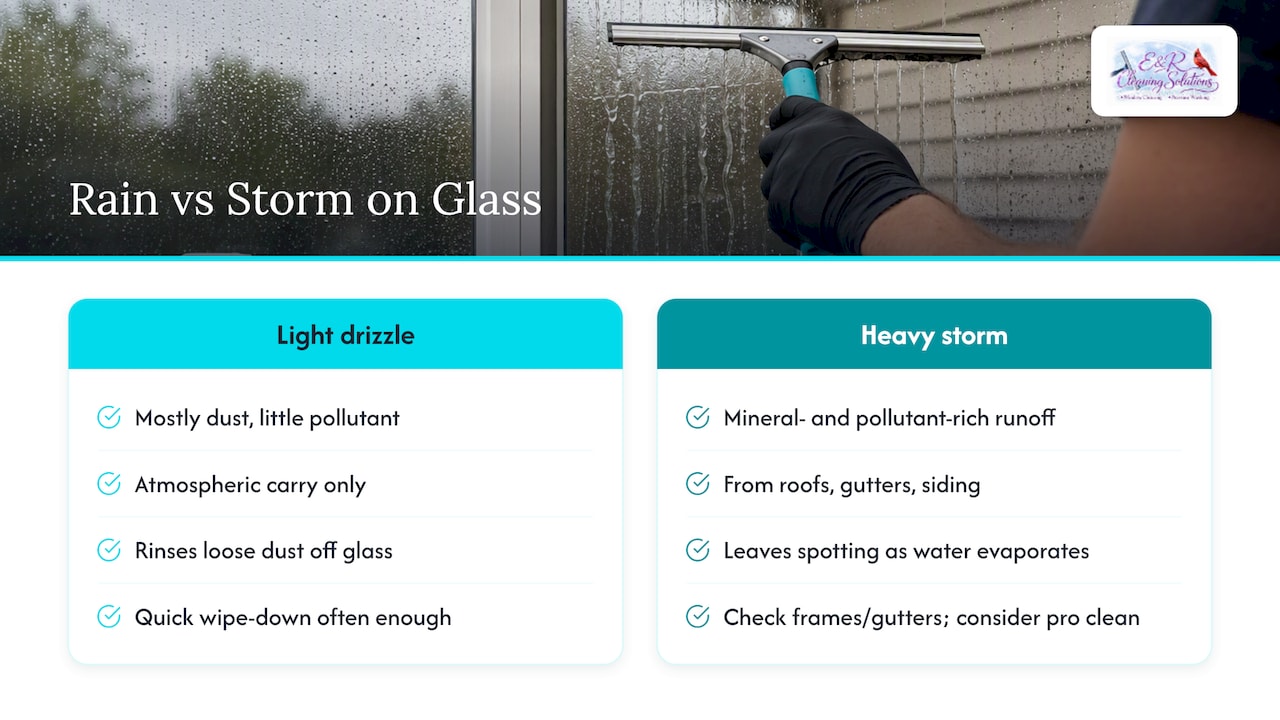
A 2025 Georgia study detected measurable levels of nitrate and sulfate in sampled rainwater, according to the same rainwater chemistry research. A light drizzle mostly rinses loose dust off glass with little harm done. A heavier storm, though, washes mineral- and pollutant-rich runoff from roofs, gutters, and siding straight across your windowpanes, frames, and sills. The USGS review of rainwater chemistry backs this up, noting that rainwater composition and pH vary by region and season and routinely include calcium, magnesium, sodium, and chloride ions, all of which can contribute to spotting as the water evaporates.
The practical move after a storm is to check your frames, gutters, and any overhanging trees before deciding whether you need a professional clean or just a quick wipe-down.
What to put in a quote request and what it typically costs
Getting comparable quotes from different cleaners starts with giving each one the exact same scope. Share this list with anyone you ask for pricing:
- Total window count and whether you want interior, exterior, or both.
- Number of stories and any access challenges, like steep roof lines or locked gates.
- Whether screens, frames, and tracks need cleaning too.
- Any visible hard-water staining, plus photos if you have them.
- Notes on nearby runoff sources, such as overhanging gutters or trees.
Residential window cleaning typically averages around $221 per visit, with a common range between $150 and $302, and add-ons shift that number quickly.
| Service item | Typical cost impact |
|---|---|
| Base window cleaning (interior and exterior) | $150 to $302 per visit |
| Screen cleaning | Added per-screen or per-window fee |
| Track and sill cleaning | Added per-window fee |
| Hard-water stain removal | Added fee, priced by severity and area |
Pricing guidance from Angi also notes that comparing full scope rather than headline price matters most, since a low quote that skips screens or hard-water removal can look cheaper and still cost more once those items get added back in. If storm runoff is a recurring problem, bundling window cleaning with gutter cleaning or pressure washing removes the source material before it has a chance to streak your glass again, and recurring service plans often bring the per-visit price down; this is why professional balcony repair services can also help maintain the exterior and prevent weather-related damage that contributes to runoff issues.
DIY steps and products that cut down on rain spotting
DIY cleaning works fine for ground-level windows with light dust or occasional spotting. Multi-story homes, visible mineral staining, or windows near sprinklers and gutters are better left to a professional, since those jobs usually need equipment and stain-removal methods most homeowners don’t keep on hand.
Rain repellents and ceramic or clear coatings make water bead and roll off glass instead of sheeting and drying into spots. They hold up for weeks to a few months depending on exposure and need periodic reapplication, and they won’t remove mineral deposits that are already baked onto the glass.
For a cleaner DIY finish:
- Wipe down frames and sills first so dirt doesn’t drip back onto clean glass.
- Use a purified-water final rinse when possible to avoid adding new mineral spots.
- Use a proper squeegee technique, pulling in overlapping strips and wiping the blade after each pass.
- Recheck your windows every 24 to 48 hours after heavy storms and touch up as needed.
Pro Tip: Keep a microfiber cloth in your squeegee kit specifically for wiping frame edges, since drips from there cause most repeat spotting.
For a fuller walkthrough of tools and technique, our homeowner window cleaning tools guide covers the supplies worth keeping on hand.
How a reputable crew handles rain-related window problems
A thorough job treats the window and its surroundings as one system. We pair window cleaning with pressure washing so that gutters, siding, and nearby runoff sources get addressed before the final rinse, not after, which cuts down on how fast spots come back once it rains again.
What a reputable crew typically does:
- Uses a purified-water rinse for a streak-free finish, especially on exterior panes exposed to runoff.
- Applies targeted treatment for hard-water staining rather than a single all-purpose cleaner.
- Documents the scope with photos and line items so add-ons like screens or frames are never a surprise.
- Sets a clear rescheduling or re-clean policy for jobs disrupted by weather.
Our residential window cleaning process guide walks through what a typical visit looks like from scoping to final inspection.
A simple rule for timing your next window cleaning
Here’s the rule I give homeowners and property managers alike: if you’re dealing with hard-water staining, multi-story access, or visible runoff from gutters or trees, call a professional rather than fighting it yourself. If your situation is ground-level and the spotting is light, apply a repellent, do a purified-water rinse, and reassess in 24 to 48 hours once the storm passes. For the DIY route, our homeowner tools guide covers what to keep on hand; for everything else, request a quote and let a crew handle it properly.
— Richard
Getting your windows cleaned after a storm
Professional window cleaning, hard-water stain removal, and pressure washing services cover most of what rain leaves behind on glass, frames, and nearby surfaces.

To get an apples-to-apples quote, send over the scope checklist from earlier: window count, interior or exterior, access details, screens and frames, and any visible staining or runoff sources. We’ll walk you through pricing and scheduling, including how we handle weather delays, before any work starts.
- Request a quote through our main services page for window cleaning or pressure washing.
- Ask about bundling gutter-adjacent pressure washing with window cleaning to cut down on repeat spotting.
FAQ
Is it worth having your windows cleaned when it’s raining?
It depends on the job: full-scope cleaning that removes hard-water stains or frame grime is usually worth scheduling since rain alone won’t fix those issues. A quick pane-only clean right before a heavy storm is generally not worth it, since fresh runoff can leave new spots within hours.
How much should I pay for my windows to be cleaned?
Residential window cleaning typically averages around $221 per visit, within a range between $150 and $302, though screens, tracks, and hard-water stain removal add to that base cost. Getting quotes based on the same scope checklist is the best way to compare prices fairly.
Can a window cleaner work in the rain?
Many crews will still complete interior work or sheltered exterior panes during light drizzle, but heavy rain and unsafe ladder conditions typically lead to rescheduling. Ask any company you’re considering about their specific rain policy and whether rescheduling comes with a fee.
Is rainwater good for cleaning windows?
Not reliably. A 2025 study found measurable nitrate, sulfate, and phosphate levels along with organic pollutants in sampled rainwater, and the USGS notes rainwater composition varies regionally, so a rinse from the sky can leave residue instead of removing it.
Sources
- Molecular and Ionic Signatures in Rainwater: Unveiling Sources of Atmospheric Pollution
- Rainwater as a chemical agent of geologic processes: A review (USGS)
- How Much Does Window Cleaning Cost? 2026 Data | Angi