
Hire Right: Water Fed Pole Window Cleaning for Homeowners & Landlords
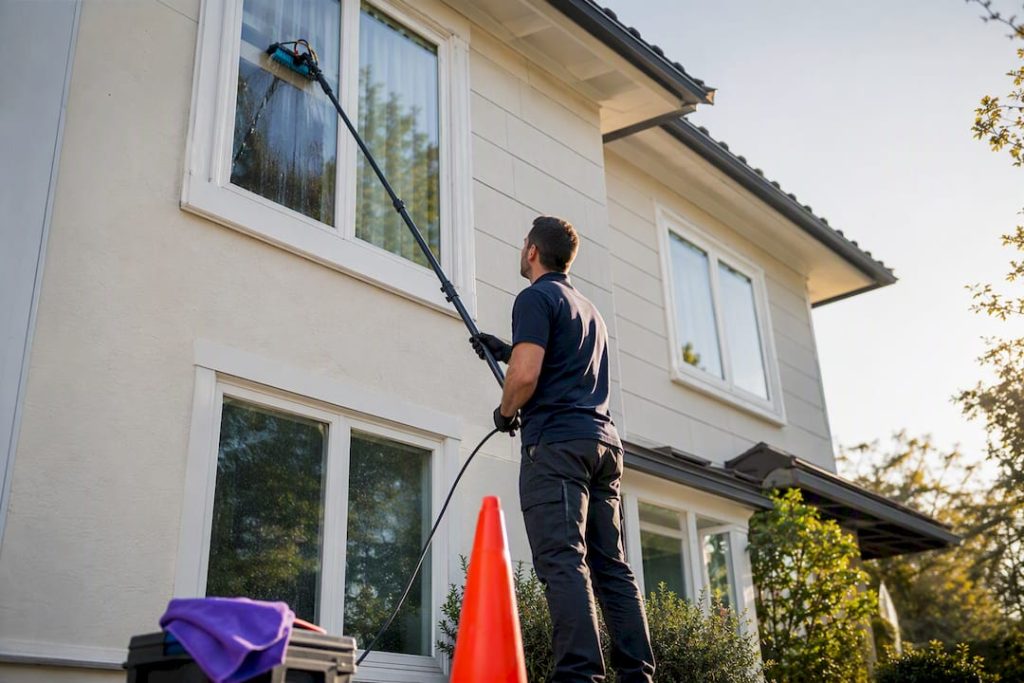
Yes, hiring a professional for water fed pole window cleaning is the right call for most homeowners, landlords, property managers, and small business owners with reachable exterior glass. It costs less than ladder-based crews in most cases, keeps technicians on the ground instead of on your roofline, and leaves windows spot-free because the water itself has nothing left in it to dry into streaks. Below, you will find who it fits, what a visit actually looks like, what drives the price, and exactly what to ask before you book.
TL;DR:
- Water fed pole cleaning is ideal for ground-level reachable windows on low- to mid-rise properties, with poles extending between 30 and 70 feet.
- The method uses purified water that dries streak-free without detergents, but requires proper maintenance of filtration systems to ensure quality results.
- Access challenges, window height, and failed seals can limit the effectiveness of this cleaning method and may require alternative solutions.
- Scheduling flexibility is essential, as wind, freezing weather, or difficult landscaping can delay or cancel appointments.
- Property owners should verify experience, insurance, purification system details, and see proof of water quality checks before hiring a professional.
Table of Contents
- What Is Water Fed Pole Window Cleaning and How Does It Work?
- Is Your Property a Good Fit for This Method?
- What Happens During a Water Fed Pole Cleaning Visit?
- What Determines the Price of Window Cleaning?
- How Do You Vet a Water Fed Pole Professional?
- How Should You Prepare Your Property Before the Crew Arrives?
- What Are the Safety and Environmental Considerations?
- How Do You Keep Windows Looking Clean Between Visits?
- What Challenges Come Up During a Water Fed Pole Job?
- Why This Method Earns Its Place in the Toolkit
- Ready to Book a Water Fed Pole Cleaning?
- Sources
- FAQ
What Is Water Fed Pole Window Cleaning and How Does It Work?
A water fed pole system pairs a soft-bristle brush head with purified water pushed through a telescoping pole, usually made of carbon fiber or fiberglass. The technician scrubs the glass from the ground, then rinses it with the same purified water. Because that water has gone through reverse osmosis or deionization filtering, it carries little to no dissolved mineral content, so it air-dries without leaving spots or streaks behind. No squeegee pass, no towel drying, no chemical residue.
Carbon fiber poles run lighter and stiffer, which helps on taller two- and three-story jobs. Fiberglass poles cost less and hold up fine for single-story homes and storefronts. Either way, the technician never climbs a ladder to reach second-floor glass.
The practical upside stacks up fast:
- Technicians work from solid ground, cutting the fall risk that comes with extension ladders.
- Purified water cleans frames, sills, and screens along with the glass, not just the pane.
- Jobs move quickly since there is no setup or breakdown of ladders between windows.
- No detergents or chemical runoff hits your landscaping, siding, or storm drains.
Is Your Property a Good Fit for This Method?
Most low-rise and mid-rise properties qualify without any complications. Good candidates share three traits: exterior glass a pole can physically reach, window seals in decent shape, and enough clear ground space around the building to route a hose and stand a pole.
Reach is the real ceiling here. Most water fed pole systems extend between roughly 30 and 70 feet, depending on the pole and the technician’s setup. Past that height, crews typically switch to rope access or a lift, which is a different service with a different price tag.
Watch for these situations before you request a quote:
- Windows higher than the technician’s stated pole reach, common on taller commercial buildings.
- Failed seals, cracked glazing, or delaminated double-pane units where water intrusion is already a risk (a related concern worth understanding is why water sometimes leaks around a window even when the glass itself looks fine).
- Interior-only cleaning requests, since a pole works the exterior side and can’t reach inside panes.
- Tight side yards, dense landscaping, or long hose runs from the nearest water source.
What Happens During a Water Fed Pole Cleaning Visit?
A typical visit follows a predictable sequence, and knowing it ahead of time makes it easy to spot a crew that’s cutting corners.
- Arrival and walk-through. The technician checks window count, access points, and any trouble spots you flagged in advance.
- Water quality check. A TDS meter confirms the purified water is reading low enough in parts per million to dry spot-free before work starts.
- Agitation and rinse. The brush head scrubs loosened dirt and grime, then a clean rinse pass removes it top to bottom.
- Frames and sills. Screens, tracks, and frames get the same purified-water treatment, since streaks there are just as visible as streaks on glass.
- Final inspection. The crew walks the property once more, checking for spots, missed panes, or drips.
Pro Tip: Ask the crew to run the TDS check where you can see the reading. A number near zero is your proof the water will dry clear, not your word against theirs.
Timing depends heavily on property size. Many residential jobs wrap up in about one to two hours, while storefronts and larger commercial buildings scale up from there based on window count and access complexity. Once the crew packs up, you should get a chance to inspect the work and review the invoice against the original quote before anyone leaves.
What Determines the Price of Window Cleaning?
Pricing varies more by property than by provider, and the biggest swing factor is usually access, not the number of panes. A single-story ranch with ground-level windows costs far less to service than a three-story building with tight side-yard clearance, even with a similar window count.
The main cost drivers include:
- Total window count and whether panes are single- or double-hung.
- Height and reach, since taller jobs need longer poles and more setup time.
- Access difficulty, including fences, landscaping, or limited parking near the property.
- Hard water staining that needs extra scrubbing time to break down mineral buildup.
- Travel distance and whether the job is a one-time visit or part of a recurring schedule.
Quotes tend to follow one of three models: per-window pricing, a flat rate for the whole job, or hourly billing for larger or unpredictable sites. A fair quote spells out what’s included, whether frames and screens are part of the price, and what triggers an added charge. If a quote reads as one lump number with no breakdown, ask what it actually covers before you sign off.
How Do You Vet a Water Fed Pole Professional?
A few direct questions on the phone tell you more than any website badge ever will.
- How long have you been running water fed pole equipment specifically? Experience with this method matters more than general cleaning years.
- Are you insured, and can you send proof? A legitimate provider hands this over without hesitation.
- What water purification system do you use, and do you check TDS on site? Clients increasingly expect providers to explain and log this purity check as part of the job.
- Can I see recent photos or talk to a past client? Real testimonials and before-and-after shots beat generic marketing copy.
- What’s included in the written quote? Frames, screens, sills, and any exclusions should all be spelled out.
Pro Tip: A provider that maintains its own DI/RO filtration cartridges and swaps them on schedule tends to produce fewer callback jobs than one running old, saturated resin.
Trust signals worth expecting: a written quote before work starts, a visible TDS check, clear safety protocols, and testimonials you can actually verify. Red flags include vague pricing, no insurance documentation on request, or evasive answers about the purification method. Property managers handling multiple buildings should also demand itemized line items in commercial bids rather than accepting a single bundled number.
How Should You Prepare Your Property Before the Crew Arrives?
A little prep on your end keeps the visit short and avoids avoidable damage.
- Clear walkways and move patio furniture, planters, or grills away from windows the crew needs to reach.
- Cover or relocate delicate plants near the building line, and turn off sprinklers that could soak the work area.
- Secure pets indoors or in a separate part of the yard during the visit.
- Point out any known cracked seals, loose frames, or problem windows before work begins.
- Share parking and gate access instructions ahead of time, especially for commercial sites.
What Are the Safety and Environmental Considerations?
Purified water is the whole point of this method environmentally. Because reverse osmosis and deionization strip out dissolved minerals, the rinse leaves nothing behind to eliminate with chemicals, and most jobs use no detergents at all. That also means less runoff into your soil, storm drains, or nearby plants.
A quick reference on what to expect:
- Technicians use a TDS meter to confirm purity before starting, targeting a low ppm reading.
- Wind, freezing temperatures, and heavy rain all reduce effectiveness or make the work unsafe, so scheduling flexibility matters.
- Ground-based poles remove ladder fall risk, but reputable crews still follow standard safety procedures around electrical lines, unstable footing, and pedestrian traffic.
Working from ground level is the single biggest safety upgrade this method offers over ladder-based cleaning, and it’s a big part of why insurance-conscious property managers prefer it for multi-story sites.
How Do You Keep Windows Looking Clean Between Visits?
Windows cleaned with purified water tend to stay clear longer because there’s no soap film left behind to attract dust. Still, a few habits stretch the time between professional visits.
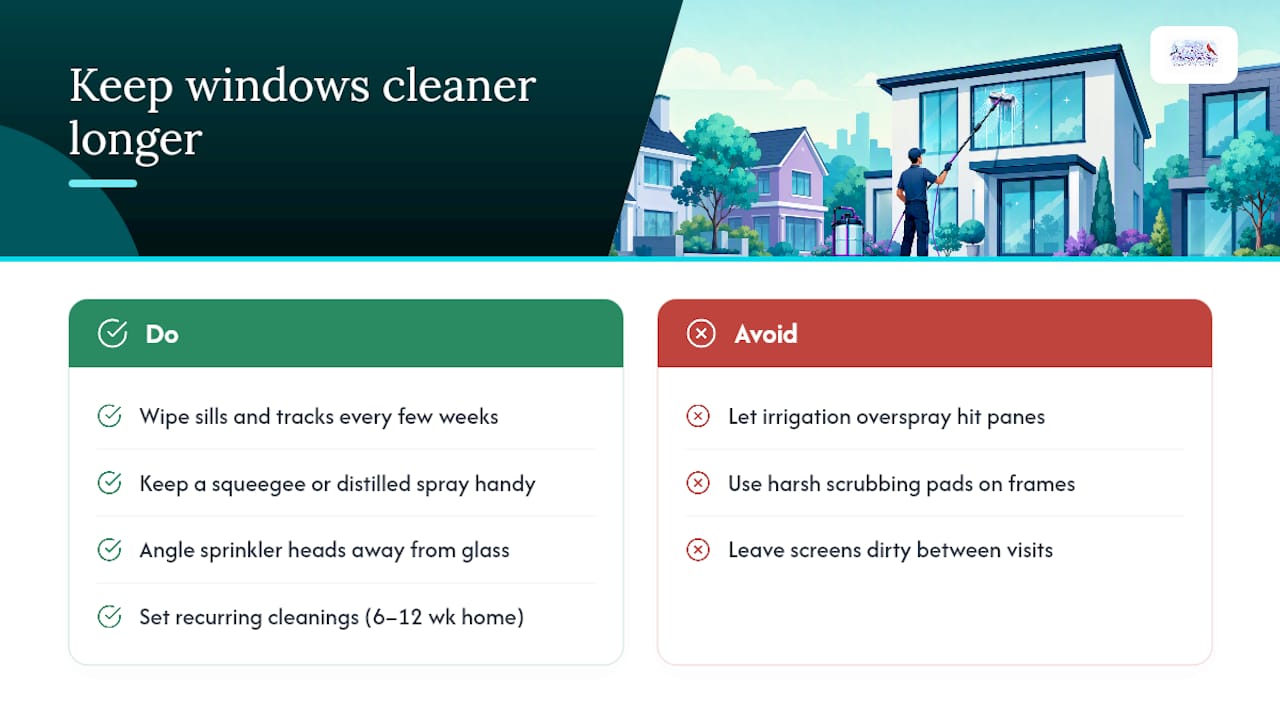
Wipe down sills and tracks every few weeks with a damp microfiber cloth. Dust and pollen collect there first, and once it’s wet from rain or sprinklers, it turns into grime that migrates onto the glass. If you keep a squeegee or a spray bottle of distilled water on hand between visits, you can knock down light dust on ground-floor panes yourself without risking streaks, similar to the tools a homeowner would use for touch-ups.
Watch your sprinkler heads. Hard water spots from irrigation overspray are one of the fastest ways windows look dirty again just weeks after a cleaning. Angling sprinkler heads away from the glass line, or shortening watering cycles near the house, does more for window appearance than most people expect.
Screens deserve a second look too. If they weren’t removed and rinsed during the visit, dust trapped in the mesh will streak back onto clean glass the next time it rains. Ask your provider whether screen cleaning is part of the standard visit or an add-on.
For frames, especially painted wood or vinyl trim around windows, avoid harsh scrubbing pads between professional visits. A soft cloth and mild soap keeps the finish intact; anything abrasive can dull or scratch the surface over time, the same logic that applies to cleaning painted interior surfaces without damaging them.
Setting a recurring schedule, whether every 6 to 12 weeks for a home or monthly for a storefront, keeps mineral buildup and grime from compounding, which usually means faster, cheaper visits over time compared to letting windows go a full year between cleanings.
What Challenges Come Up During a Water Fed Pole Job?
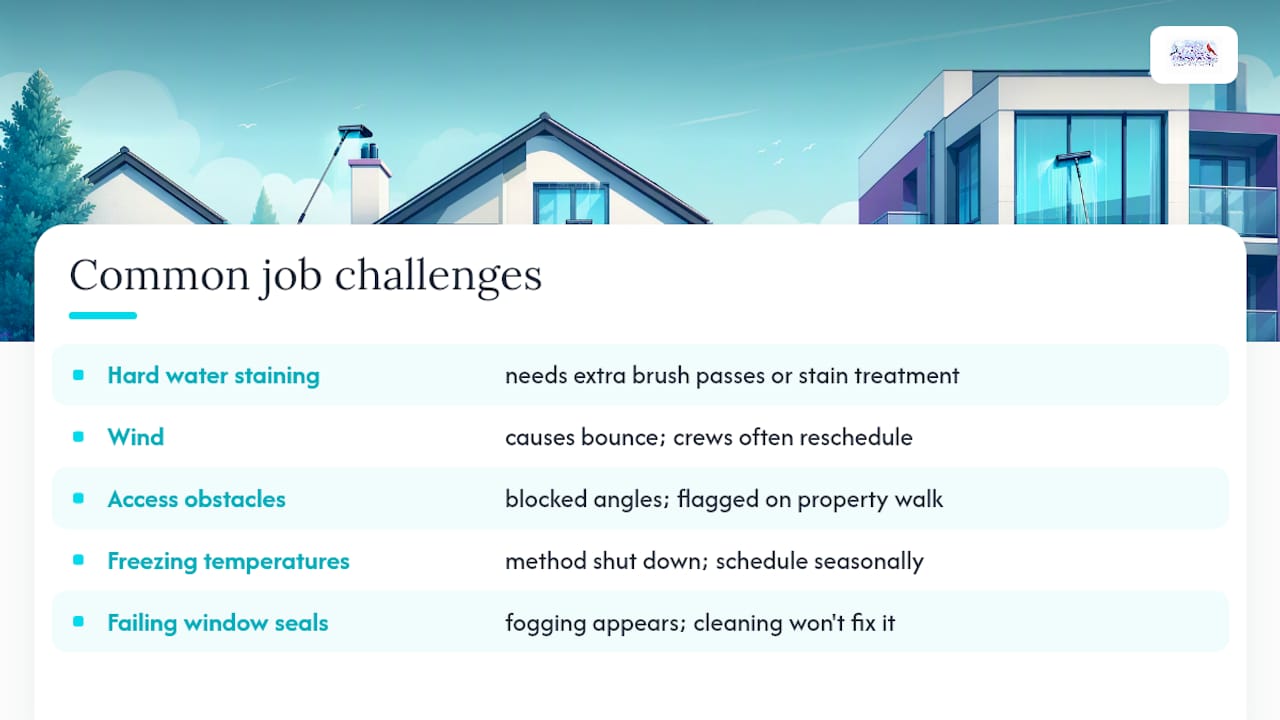
Hard water staining is the most common obstacle crews run into, especially on homes near sprinkler lines or in regions with mineral-heavy municipal water. Mineral deposits bond to glass over time and resist a simple rinse, so technicians often need extra brush passes or a specialized stain treatment to break the bond before the purified water can do its job.
Wind is the next biggest headache. Gusty days make it hard to control a pole at full extension, and the brush can bounce instead of scrub evenly. Most crews reschedule rather than risk a sloppy job or a dropped pole, which is a fair trade for glass that actually turns out clean.
Access obstacles show up constantly on older properties. Overgrown landscaping, security bars, or window air conditioning units block a clean angle for the brush head. Experienced technicians usually walk the property first specifically to flag these issues before pricing the job, rather than discovering them mid-visit.
Freezing temperatures shut the method down entirely in some regions, since water on the pole or glass can ice over and create a slip hazard. Reputable providers build seasonal flexibility into their scheduling rather than pushing through unsafe conditions.
Finally, older or failing window seals sometimes reveal themselves during cleaning, when trapped moisture or fogging between panes becomes obvious against a freshly cleaned surface. A good technician will point this out rather than ignore it, since it’s a glass problem, not a cleaning problem, and no amount of purified water fixes a broken seal.
Why This Method Earns Its Place in the Toolkit
The gap between how water fed pole cleaning is marketed and how it actually performs isn’t huge, but it’s worth naming. Some providers oversell it as a fix for every situation, including tall commercial towers or windows with genuinely failed seals. It isn’t. What the method does exceptionally well is the job it was built for: ground-level access to reachable glass, done fast, done safely, and done without a single streak.
What gets underestimated is the maintenance side of the equation. A crew that swaps its DI/RO cartridges on schedule and actually checks TDS before starting produces noticeably better, longer-lasting results than one running on old, exhausted resin. That’s not a marketing detail. It’s the entire mechanism the method depends on.
E and R Cleaning Solutions builds its process around that discipline, backed by proof points shared in its own guides for property managers and homeowners alike. As a family-run business with over five years in the field, the company leans on honest, upfront pricing and written quotes rather than vague estimates, and on verified customer testimonials rather than empty promises. If you’re weighing whether to request a quote, ask about the purification setup and the TDS check first. That answer tells you more about the outcome than anything else on the estimate.
*— Richard
Ready to Book a Water Fed Pole Cleaning?
If your property has reachable exterior glass and you want reliable service with the right equipment, a professional cleaning company can handle this kind of job, alongside pressure washing for driveways, siding, and building exteriors when your property needs more than just clean glass.

Every visit starts with a clear, written scope so you know what’s included before anyone touches a pole. Ask about the purification method and TDS checks up front, and request proof of insurance before you book, the same vetting steps covered above apply here too. Hard water staining, streaky frames, and grimy sills are the kind of stubborn problems the crew handles as a matter of course, not an upsell.
Ready to see what your property needs? Request a quote or schedule a visit and get a written scope back before you commit to anything.
Sources
- How Does a Water Fed Pole System Work for Window Cleaning
- What Clients Should Expect From Professional Window Water‑Fed Pole Cleaning
- Water‑Fed Pole Window Cleaning Explained
- Water‑Fed Pole Window Cleaning: A Beginner’s Guide – Spot Free Rinse
FAQ
How Often Should You Get Windows Cleaned Professionally?
Most homes do well with a professional visit every 6 to 12 weeks, while storefronts and commercial buildings often benefit from monthly cleaning due to street-level grime and traffic. Properties near sprinklers or in hard water regions may need more frequent visits to stay ahead of mineral staining.
Does Water Fed Pole Cleaning Use Any Chemicals?
No, the method relies on purified water run through reverse osmosis or deionization filtering, which leaves no residue behind as it dries. That’s what produces the spot-free finish without detergents.
How Long Does a Typical Cleaning Visit Take?
Many residential jobs finish in about one to two hours, depending on window count and how easy the property is to access. Larger commercial sites take longer and are typically quoted based on total glass area and complexity.
How Much Does E and R Cleaning Solutions Charge for Window Cleaning?
Pricing is custom-quoted based on window count, access, and property type, so current rates are listed after a site walk-through rather than as a flat published price. You can request a quote directly to get exact numbers for your property.
Can a Water Fed Pole Reach Every Window on My Property?
Not always. Most systems reach between roughly 30 and 70 feet, so taller buildings beyond that range typically need rope access or a lift instead. A technician can confirm reach during an initial property walk-through.