Commercial Exterior Cleaning Before Inspection: 2026 Guide

Commercial exterior cleaning before inspection is the process of removing dirt, mold, grease, and contaminants from a building’s exterior surfaces to meet health, safety, and aesthetic standards set by inspectors. Failing to address exterior sanitation can directly result in failed inspections and costly penalties. Property managers who treat pre-inspection exterior cleaning as a scheduled discipline, not a last-minute scramble, consistently achieve better outcomes. E and R Cleaning Solutions works with commercial property managers and business owners to make that process repeatable and stress-free.
What areas are critical to clean before a commercial property inspection?
Inspectors do not start inside. Inspectors often focus on dumpster areas, sidewalks, entryways, and façade cleanliness during pre-inspection walkthroughs. That means the exterior sets the tone before a single interior door opens. Neglecting these zones is one of the fastest ways to trigger a failed report.
The surfaces that draw the most inspector attention fall into a predictable pattern:
- Building façade: Stucco, EIFS, brick, and painted concrete all accumulate biological growth, pollution staining, and efflorescence. Each material requires a different cleaning approach.
- Windows: Dirty or streaked glass signals deferred maintenance. Commercial windows need specialized cleaning to remove hard water deposits and film that standard wiping cannot address.
- Sidewalks and entryways: Grease, gum, and biological staining on concrete walkways are direct health and safety flags.
- Dumpster pads: These are among the most cited exterior violations. Grease buildup and standing water create slip hazards and attract pests.
- Parking lots and driveways: Oil stains, tire marks, and debris accumulation are visible from the street and noted in exterior condition reports.
- Drains and gutters: Blocked drains cause water pooling, which inspectors flag as a structural and safety concern.
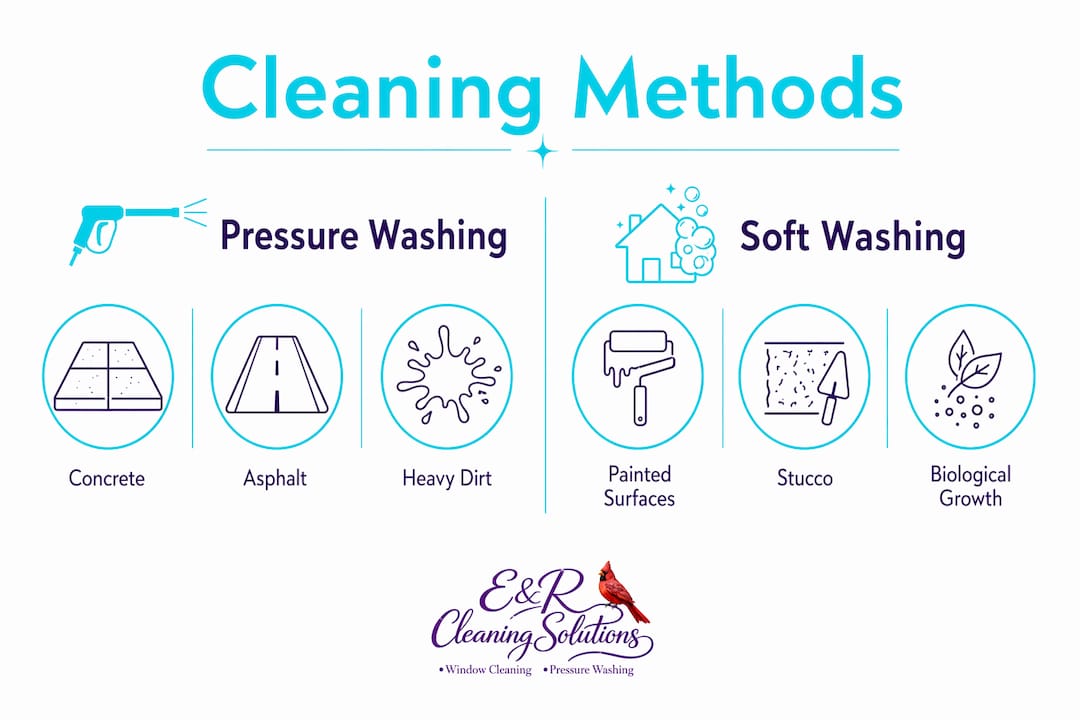
Surface type determines the right cleaning method. Concrete and asphalt tolerate high-pressure washing. Painted surfaces, EIFS, and stucco do not. Using the wrong method on a delicate substrate can cause immediate damage that inspectors flag as deferred maintenance, compounding the original problem. Knowing your surface types before scheduling any cleaning work is not optional. It is the starting point for every effective pre-inspection plan.
Which cleaning methods work best for commercial exterior cleaning before inspections?
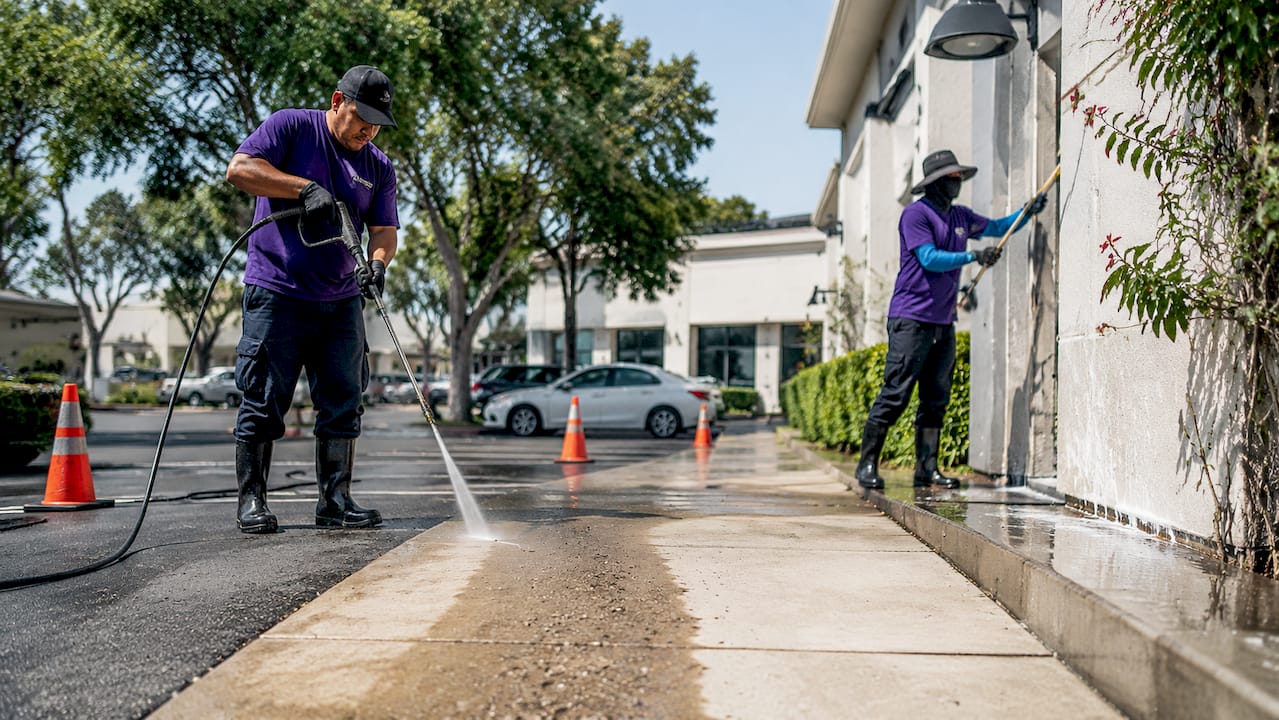
The two primary methods in commercial building cleaning are pressure washing and soft washing. Each has a specific role, and using them interchangeably causes damage.
Pressure washing delivers water at high PSI to strip heavy contamination from hard, durable surfaces. Concrete sidewalks, dumpster pads, parking lots, and brick walls respond well to pressure washing. The mechanical force removes grease, biological growth, and embedded grime that chemical treatments alone cannot lift.
Soft washing uses low pressure combined with biodegradable, EPA-approved chemicals to clean surfaces that would crack, pit, or delaminate under high pressure. Soft washing is the safest method for stucco, EIFS, painted wood, and older masonry. The chemical solution kills mold and algae at the root, which prevents faster regrowth compared to pressure alone.
| Surface type | Recommended method | Key concern | Inspection outcome |
|---|---|---|---|
| Concrete sidewalks | Pressure washing | Grease and biological staining | Pass: removes slip hazards |
| Stucco / EIFS | Soft washing | Pressure damage risk | Pass: no substrate damage |
| Painted façade | Soft washing | Paint delamination | Pass: color and finish preserved |
| Brick and block | Pressure washing | Efflorescence and mold | Pass: clean, uniform appearance |
| Windows | Specialized window cleaning | Hard water and film | Pass: clear, streak-free glass |
| Dumpster pads | Pressure washing + degreaser | Grease and odor | Pass: no pest or slip violations |
Commercial-grade equipment for this work includes hot-water pressure washers, surface cleaners with vacuum recovery, soft-wash systems with chemical injection, and water-fed pole systems for upper-story windows. Professional services carry this equipment as standard. In-house maintenance teams rarely do, which is why professional exterior cleaning services consistently produce more thorough and compliant results.
Pro Tip: Never pressure wash stucco or EIFS at any PSI above 500. Even “low” pressure on these substrates causes micro-fractures that trap moisture, leading to mold growth and structural flags on your next inspection.
How do you build a cleaning schedule and checklist for inspection readiness?
A cleaning schedule is not a calendar reminder. It is a documented system that assigns tasks, frequencies, and accountability to specific surfaces and areas. Cleaning schedules should be customized by property size, traffic volume, and compliance deadlines, with documented task frequencies to enforce accountability.
Most commercial contracts run 12 months with explicit service day and frequency definitions for every task. That structure exists because vague schedules produce inconsistent results, and inconsistent results produce inspection failures.
Build your exterior cleaning checklist using this sequence:
- Audit every exterior surface. Walk the full perimeter and catalog each surface type, its current condition, and its proximity to high-traffic or high-risk zones like loading docks and dumpster areas.
- Assign a cleaning frequency to each surface. Sidewalks and entryways near food service may need weekly attention. Façade washing may be quarterly. Windows on a busy street may need monthly service.
- Document the cleaning method for each surface. Specify pressure washing or soft washing, chemical type, and any access equipment required. This prevents the wrong method being applied under time pressure.
- Set inspection-aligned deadlines. Work backward from your known inspection dates. Schedule the full exterior clean at least 7 days before the inspection to allow time for spot corrections.
- Assign vendor and internal responsibilities clearly. Define which tasks your cleaning vendor handles and which your maintenance staff covers. Overlap without ownership creates gaps.
- Build in a pre-inspection walkthrough. Conduct your own exterior review 48 hours before the inspection date. Use the same checklist an inspector would use.
Routine property cleaning should cover these exterior tasks as standard, not as add-ons. Properties that treat exterior maintenance as a core operational function, rather than a reactive response, spend less time and money on remediation.
What mistakes cause inspection failures in commercial exterior cleaning?
The most common failure is not a dirty surface. It is a dirty surface that nobody documented, tracked, or assigned to anyone. Neglecting to document cleaning activities and failing to review vendor service level agreements leads to surprise inspection failures and remediation delays.
These are the specific mistakes that property managers repeat most often:
- Using pressure washing on delicate surfaces. Incorrect cleaning methods cause immediate exterior damage that inspectors flag as deferred maintenance. Stucco and painted facades are the most common victims.
- Ignoring dumpster pads and drains. These areas accumulate the fastest and are inspected closely. A clean building face with a filthy dumpster pad still fails.
- Skipping documentation. Inspectors may ask for cleaning logs. A verbal assurance that “it was cleaned last week” carries no weight. A dated service record does.
- Vague vendor contracts. According to BOMA, vague contract terms cause 60% of disputes between facility managers and cleaning providers. A contract without defined service level agreements lacks enforcement power.
- Last-minute scheduling. Booking a full exterior clean the day before an inspection leaves no time to address damage found during cleaning or areas that need a second pass.
- Overlooking upper-story surfaces. Ground-level cleaning is visible and gets attention. Upper floors, window sills, and roofline areas accumulate biological growth that inspectors with binoculars or drones will catch.
For last-minute spot cleaning, focus on the inspector’s entry path first: the parking lot approach, the main entryway, the building face at street level, and the dumpster enclosure. These four zones account for the majority of exterior inspection citations.
Pro Tip: Before signing any cleaning contract, request a written scope of work that lists every surface, the cleaning method, the frequency, and the quality standard. A detailed scope of work is your only enforcement tool if service quality falls short before an inspection.
Key Takeaways
Regular, documented exterior cleaning is the single most reliable way to pass commercial property inspections and protect long-term asset value.
| Point | Details |
|---|---|
| Start with surface identification | Know your surface types before selecting a cleaning method to avoid damage that triggers inspection flags. |
| Match method to surface | Use pressure washing on concrete and brick; use soft washing on stucco, EIFS, and painted facades. |
| Document every cleaning task | Dated cleaning logs and written scopes of work are your proof of compliance when inspectors ask. |
| Schedule 7 days before inspection | Build in time for a pre-inspection walkthrough and spot corrections after the main clean. |
| Prioritize dumpster pads and entryways | These zones generate the most exterior inspection citations and are checked first. |
What I have learned from years of pre-inspection cleaning work
Property managers often call us two days before an inspection. I understand the pressure, and we do what we can. But the properties that consistently pass without drama are the ones that scheduled cleaning three months ago, not three days ago.
The reactive approach costs more in every direction. Emergency scheduling costs more than planned service. Remediation after a failed inspection costs more than prevention. And the reputational cost of a failed health or safety inspection is harder to quantify but very real.
What I have also noticed is that the properties with the cleanest exteriors are not necessarily the newest or the most expensive. They are the ones managed by people who treat exterior cleanliness as a non-negotiable operating standard, not a cosmetic concern. Regular exterior cleaning reduces inspection risks and protects long-term property value. That is not a sales point. It is what the data and the inspection reports confirm repeatedly.
The other thing I would push back on is the assumption that in-house maintenance can handle commercial exterior cleaning at inspection standard. It can handle light upkeep. It cannot replicate the equipment, the chemical knowledge, or the surface-specific technique that professional cleaning requires. Trying to close that gap with a consumer pressure washer and a garden hose is how stucco gets damaged and inspections get failed.
Invest in a proactive plan. Get a written scope of work. Schedule your exterior clean far enough in advance to fix what the cleaning reveals. That is the entire system.
— Richard
How E and R Cleaning Solutions prepares commercial properties for inspections
E and R Cleaning Solutions brings over five years of hands-on experience in commercial exterior cleaning to property managers who need inspection-ready results without the guesswork.

The team handles pressure washing, soft washing, and specialized commercial window cleaning across all exterior surface types, using the right method for each substrate. Every job comes with honest, upfront pricing and a clear scope of work so you know exactly what is being cleaned, how, and when. For property managers who need a documented cleaning record before an inspection, E and R Cleaning Solutions provides service logs that hold up to inspector scrutiny. Reach out to schedule your pre-inspection exterior clean and get a written quote tailored to your property’s specific surfaces and compliance needs.
FAQ
What is commercial exterior cleaning before inspection?
Commercial exterior cleaning before inspection is the process of removing dirt, mold, grease, and biological growth from a building’s exterior surfaces to meet health, safety, and aesthetic standards before an official property inspection.
How far in advance should I schedule exterior cleaning before an inspection?
Schedule the full exterior clean at least 7 days before your inspection date. This gives you time to identify and correct any damage or missed areas before the inspector arrives.
What exterior areas do inspectors check most often?
Inspectors typically focus on dumpster pads, sidewalks, entryways, and façade cleanliness first. These zones generate the most exterior citations and are evaluated before inspectors enter the building.
Is pressure washing safe for all commercial exterior surfaces?
Pressure washing is safe for concrete, brick, and asphalt. It is not safe for stucco, EIFS, or painted surfaces, where soft washing with low pressure and EPA-approved chemicals is the correct method.
Do I need documentation of cleaning for a commercial inspection?
Yes. A dated cleaning log and a written scope of work from your cleaning provider serve as verifiable proof of maintenance. Verbal assurances carry no weight with inspectors reviewing compliance records.