
Screen Cleaning’s Role in Window Care: 2026 Guide
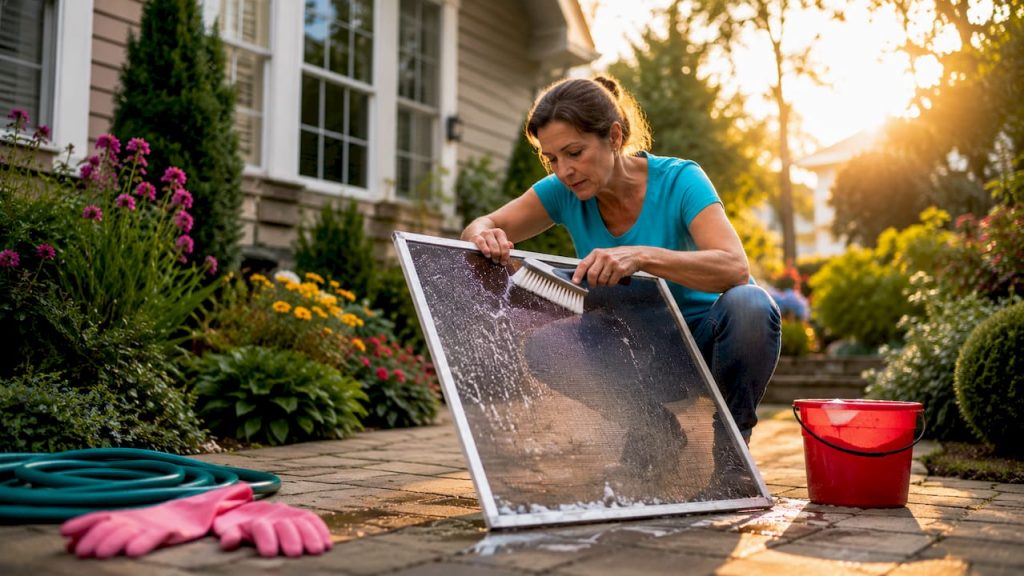
Screen cleaning is defined as the routine removal of dust, pollen, debris, and biological buildup from window screen mesh and frames to preserve window clarity, airflow, and structural integrity. The role of screen cleaning in window care goes far beyond aesthetics. Dirty screens deposit contaminants directly onto glass, reduce natural light transmission, and cut airflow by 20–40%. E and R Cleaning Solutions works with homeowners and property managers who consistently underestimate this connection, and the results of neglect show up fast: blotchy glass, stale indoor air, and screens that fail years ahead of schedule.
How does screen cleaning affect window clarity and streak-free results?
Dirty screens are the hidden cause of most streaky, hazy windows. Pollen, dust, and tree sap collect on mesh fibers and transfer to glass every time wind or rain pushes through the screen. That film is nearly invisible on the screen itself but shows up clearly on the glass as a dull, uneven coating that resists standard cleaning.
Clean screens improve natural light transmission in two ways. First, they stop the transfer of contaminants to glass. Second, they allow air to move freely through the mesh without pushing debris against the pane. The result is brighter rooms and windows that stay cleaner between washes.
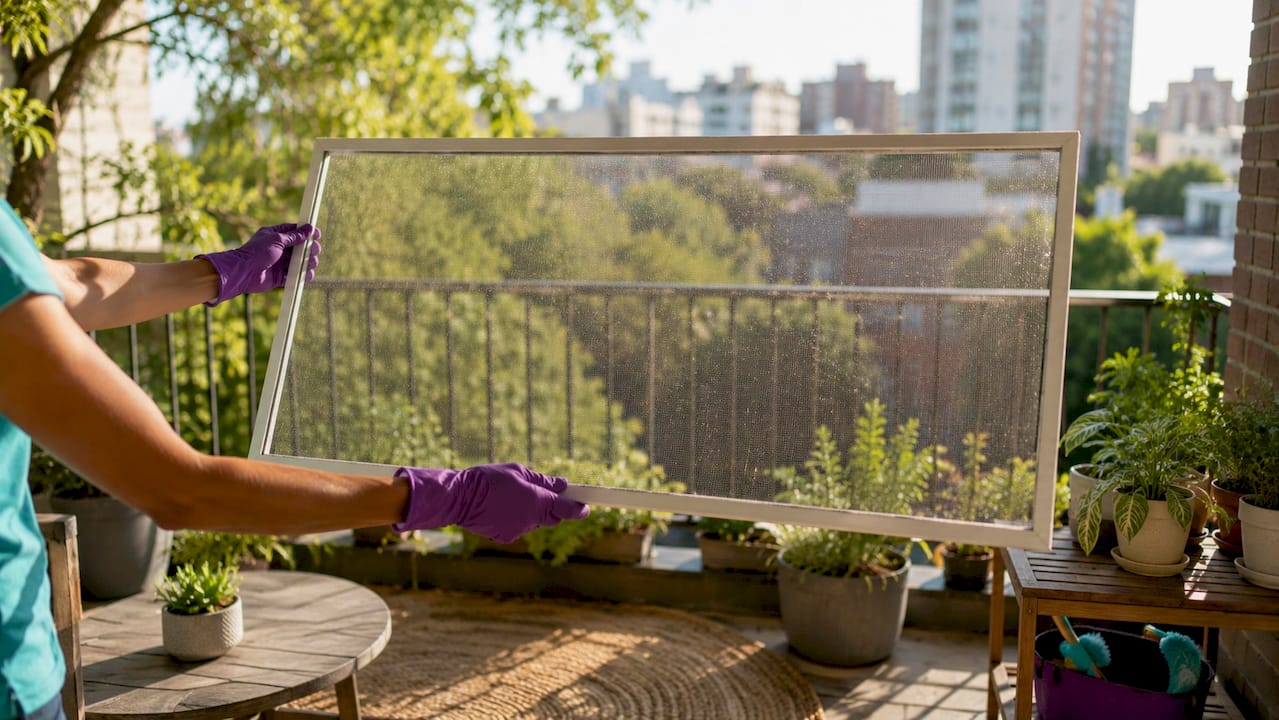
Airflow drops 20–40% when screens become heavily clogged with pollen and dust. That reduction matters beyond comfort. Restricted airflow traps humidity near the glass, which accelerates hard water spotting and can promote mold growth on frames and sills.
The benefits of clean window screens extend to indoor air quality as well. A clogged screen acts as a pollen reservoir, releasing allergens into the home every time a window opens. Regular screen maintenance breaks that cycle and keeps both the glass and the air inside noticeably cleaner.
Pro Tip: After cleaning your screens, hold each one up to direct sunlight before reinstalling it. Light reveals remaining debris or mesh damage that is invisible in shade.
What are the best practices for cleaning window screens?
The standard recommendation is to clean window screens at least twice a year, typically in spring and fall. Homeowners in high-debris environments, such as properties near trees, construction zones, or high-traffic roads, should clean screens three to four times annually. That schedule keeps buildup from hardening and protects both the mesh and the glass behind it.
The right technique matters as much as frequency. Follow these steps for a thorough, damage-free clean:
- Remove the screen from the window frame carefully and lay it flat on a clean surface or prop it against a wall.
- Vacuum both sides with a brush attachment to lift loose dust and pollen before introducing any moisture.
- Mix a mild soap solution using a few drops of dish soap in a bucket of warm water.
- Scrub gently with a soft-bristle brush, working in small circular motions from the center outward.
- Rinse thoroughly with a low-pressure garden hose, keeping the nozzle at least 12 inches from the mesh.
- Air dry completely before reinstalling to prevent moisture from trapping debris on the frame.
Excessive water pressure or abrasive scrubbing stretches the mesh or dislodges the spline, causing permanent damage that no amount of cleaning can reverse. Most screen damage results from improper technique, not age. That fact alone justifies using a soft brush and low pressure every time.
For monthly upkeep between deep cleans, a lint roller or vacuum brush attachment removes surface dust in under two minutes per screen. This simple habit extends the time between full washes and keeps pollen from building up into a hardened layer.
Pro Tip: Label each screen with a piece of painter’s tape and a marker before removing it. Screens are custom-fitted to their specific openings, and swapping them causes poor seals that let insects through.
A professional cleaning of an accessible screen takes 5–10 minutes per unit using basic tools. That time estimate helps homeowners plan a full-house screen cleaning session realistically, especially in larger properties with 20 or more windows.
What problems arise when screen maintenance is neglected?
Neglected screens cause damage that spreads well beyond the mesh itself. The effects of dirty screens on windows compound over time, and by the time most homeowners notice a problem, repair costs have already grown.
The most common consequences of skipped screen maintenance include:
- Mesh degradation: Hardened dirt and biological growth weaken mesh fibers. Brittle mesh tears easily and allows insects to enter.
- Frame corrosion: Moisture trapped by debris accelerates rust on aluminum frames and warping on vinyl frames. Both issues affect how well the screen seals against the window opening.
- Increased allergen load: A clogged screen releases pollen and mold spores into the home each time the window opens. This is a direct indoor air quality problem, not just a cosmetic one.
- Glass contamination: Debris transfers from screen to glass during rain and wind, creating a film that standard glass cleaners cannot fully remove without first addressing the screen.
Homeowners should schedule a professional deep inspection of screen frames and mesh every 2–3 years to detect corrosion, brittle mesh, or spline failure before those issues compromise insect protection and window function.
Frame damage is the most expensive consequence of neglect. A warped or corroded frame cannot hold the screen flat, which creates gaps that insects exploit and reduces the screen’s ability to filter airborne debris. Catching frame issues early through regular inspection saves the cost of full screen replacement.
Property managers face a compounded version of this problem. Across a multi-unit building, neglected screens on even a fraction of windows create maintenance backlogs, tenant complaints, and repair bills that dwarf the cost of a twice-yearly cleaning schedule.
How does integrating screen cleaning with other window care tasks improve results?
Screen cleaning delivers the best results when it is part of a coordinated window care routine, not an isolated task. The residential window cleaning process works most effectively when screens, tracks, frames, and glass are addressed together in sequence.
The table below shows how pairing tasks improves outcomes compared to treating each one separately.
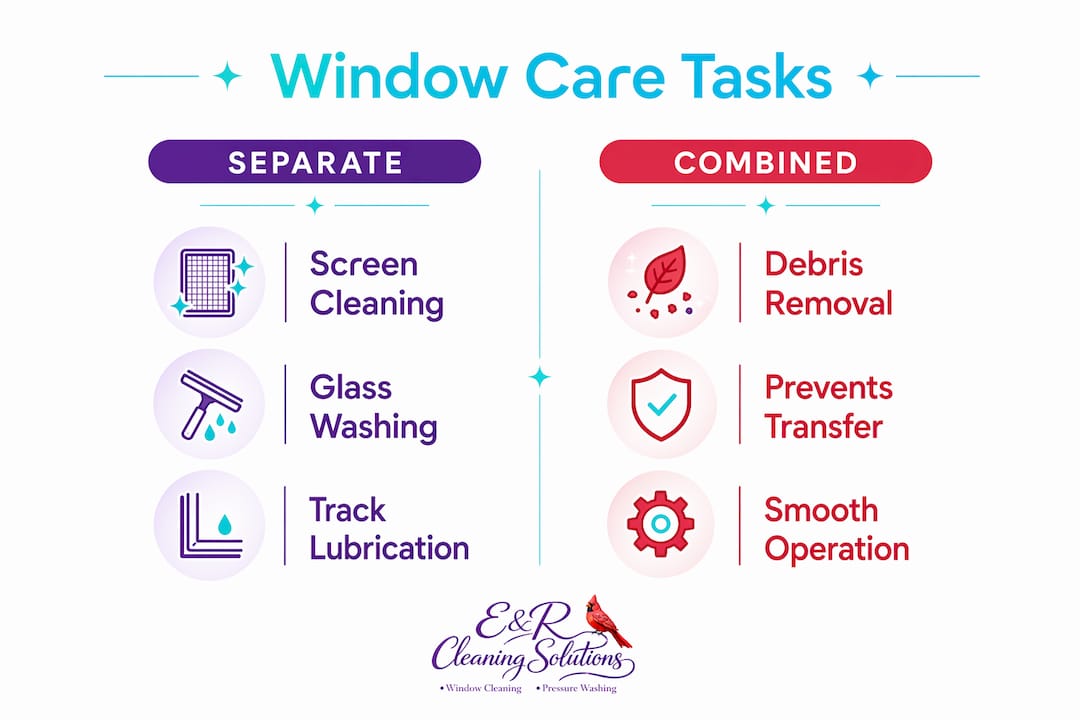
| Task | Done alone | Done together |
|---|---|---|
| Screen cleaning | Removes debris from mesh | Also prevents glass contamination |
| Track lubrication | Reduces sticking | Prevents frame stress that warps screens |
| Frame wiping | Removes surface dirt | Reveals corrosion or seal gaps early |
| Glass cleaning | Removes surface smudges | Achieves streak-free results when screen is clean first |
Lubricating window tracks alongside screen cleaning improves window operation and prevents the frame stress that causes warping over time. Gritty tracks force windows to drag, which puts lateral pressure on frames and eventually pulls screen splines loose.
The right sequence for a coordinated clean is: remove screens, clean tracks and sills, clean frames, wash glass, then clean and reinstall screens. This order prevents cleaned glass from being contaminated by debris dislodged during track or frame work.
Timing these tasks seasonally makes the process efficient. A spring clean removes winter grime and prepares screens for peak pollen season. A fall clean clears summer buildup and prepares windows for closed-window months when indoor air quality depends more heavily on clean screens and frames.
Pro Tip: When storing screens off-season, use cardboard separators between stacked frames to prevent bending and warping. A warped screen will never seal properly after reinstallation.
For homeowners who want the right equipment for this full-sequence approach, the window cleaning tools guide from E and R Cleaning Solutions covers the specific brushes, solutions, and squeegees that work without damaging mesh or frames.
Key Takeaways
Screen cleaning is the foundation of effective window care: clean screens prevent glass contamination, protect frames from corrosion, and maintain the airflow and air quality that dirty screens consistently degrade.
| Point | Details |
|---|---|
| Clean screens protect glass | Debris transfers from mesh to glass during wind and rain, causing haze that resists standard cleaning. |
| Clean twice yearly at minimum | High-debris environments need 3–4 cleanings per year to prevent hardened buildup and mesh damage. |
| Gentle technique prevents damage | Most screen damage comes from improper cleaning, not age. Use soft brushes and low-pressure rinsing only. |
| Inspect frames every 2–3 years | Professional inspection catches corrosion and brittle mesh before they compromise insect protection. |
| Coordinate with full window care | Cleaning screens, tracks, and glass together in sequence produces better results than each task done separately. |
What I’ve learned after years of cleaning windows the wrong way first
Most homeowners treat screen cleaning as the last step in window care. They wash the glass, admire the result, and then remember the screens. That sequence is backwards, and it explains why so many windows look streaky again within a week.
The screen goes back on the window before the glass dries. Any debris still on the mesh transfers immediately to the clean pane. You have not cleaned the window. You have just moved the dirt around.
The second mistake I see constantly is using too much pressure. A garden hose on full blast feels efficient, but it bulges the mesh and loosens the spline in ways you cannot see until the screen starts sagging or letting insects through. The damage is permanent. A replacement screen costs far more than the five minutes saved by skipping the gentle technique.
Labeling screens before removal is the one habit that separates homeowners who maintain their windows well from those who do not. Screens are fitted to specific openings. Swapping two screens that look identical creates small gaps at the edges. Those gaps are enough for mosquitoes, and they also let in the fine dust that defeats your glass cleaning effort.
The integrated approach, screens cleaned before glass, tracks lubricated, frames wiped down, produces results that last noticeably longer. I have seen windows on the same house where one side was done in sequence and the other was not. The difference in clarity after two weeks of normal weather is striking.
— Richard
How E and R Cleaning Solutions helps you get streak-free windows
Achieving genuinely clear, streak-free windows requires more than a good squeegee. It requires the right sequence, the right tools, and screens that are clean before the glass work begins.

E and R Cleaning Solutions brings over five years of residential and commercial window care experience to every job. The team handles screen cleaning, track maintenance, and glass washing as a coordinated process, not separate tasks. Homeowners and property managers who want lasting results without the guesswork can find the full list of professional-grade tools and methods used on every service visit. For a complete overview of what a professional residential clean covers, the homeowner’s cleaning guide walks through every step in plain language.
FAQ
How often should window screens be cleaned?
Clean window screens at least twice a year, in spring and fall. Properties near trees, construction, or high-traffic roads need 3–4 cleanings annually to prevent hardened buildup.
Why do my windows look streaky even after cleaning?
Dirty screens transfer pollen, dust, and sap to glass during wind and rain. Cleaning the glass before the screen means contaminants return to the pane almost immediately.
What cleaning method is safe for window screen mesh?
Use a mild soap solution and a soft-bristle brush, then rinse with a low-pressure hose. Pressure washers and abrasive scrubbing stretch the mesh and dislodge the spline permanently.
How do I know when a screen needs replacing rather than cleaning?
Inspect frames and mesh every 2–3 years. Signs that replacement is needed include torn mesh, visible frame corrosion, a sagging or bulging surface, or gaps at the edges that insects can pass through.
Does screen cleaning actually improve indoor air quality?
Yes. A clogged screen holds pollen and mold spores and releases them indoors each time the window opens. Regular cleaning removes that reservoir and reduces allergen levels inside the home.