Why Commercial Cleaning Requires Specialized Equipment
Commercial cleaning requires specialized equipment because standard residential tools cannot meet the scale, hygiene standards, or durability demands of professional facilities. A mop and bucket that works fine in a home bathroom fails completely in a 50,000-square-foot office building with hundreds of daily occupants. The gap between consumer-grade tools and professional-grade equipment is not just about size. It covers power requirements, contamination control, regulatory compliance, and long-term cost. Facility managers and business owners who understand these differences make better purchasing decisions and run cleaner, safer buildings.
Why commercial cleaning requires specialized equipment
Specialized commercial cleaning equipment is defined as professional-grade tools engineered specifically for the contamination loads, surface types, and operational demands of commercial facilities. This category includes HEPA-filtered vacuums, ride-on floor scrubbers, color-coded microfiber systems, and industrial pressure washers. Each tool addresses a specific failure point that consumer products cannot handle.
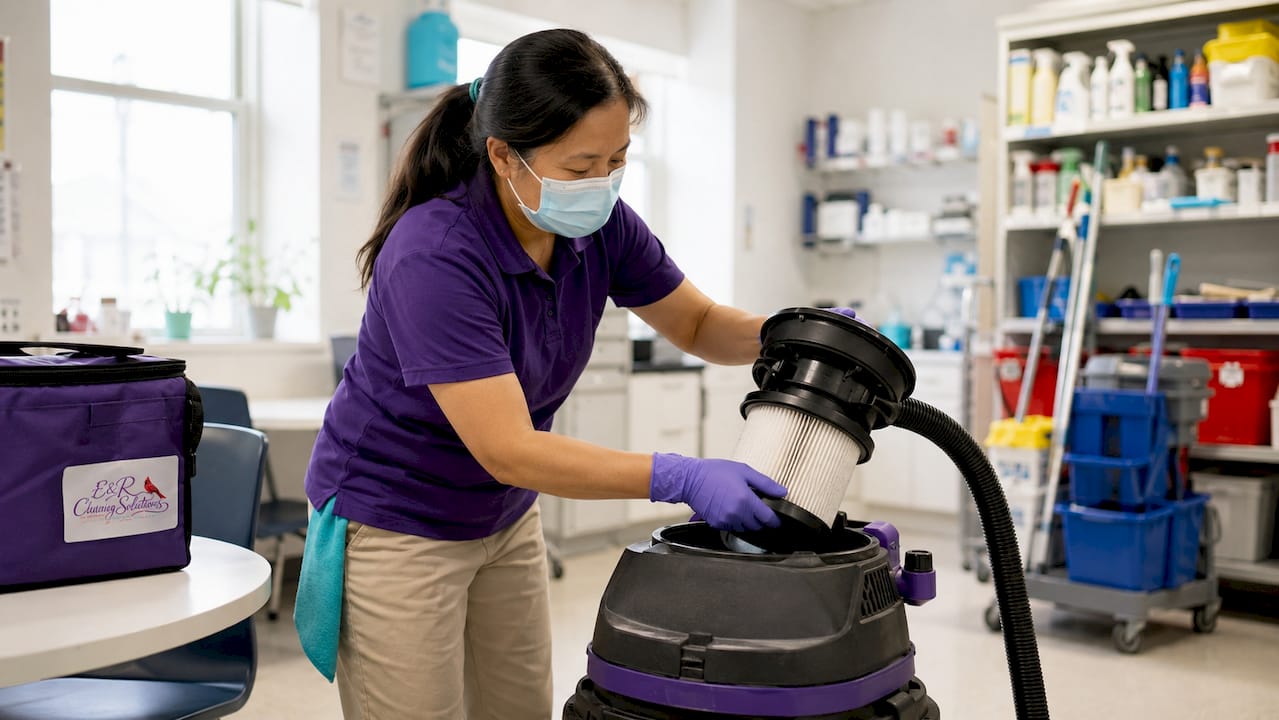
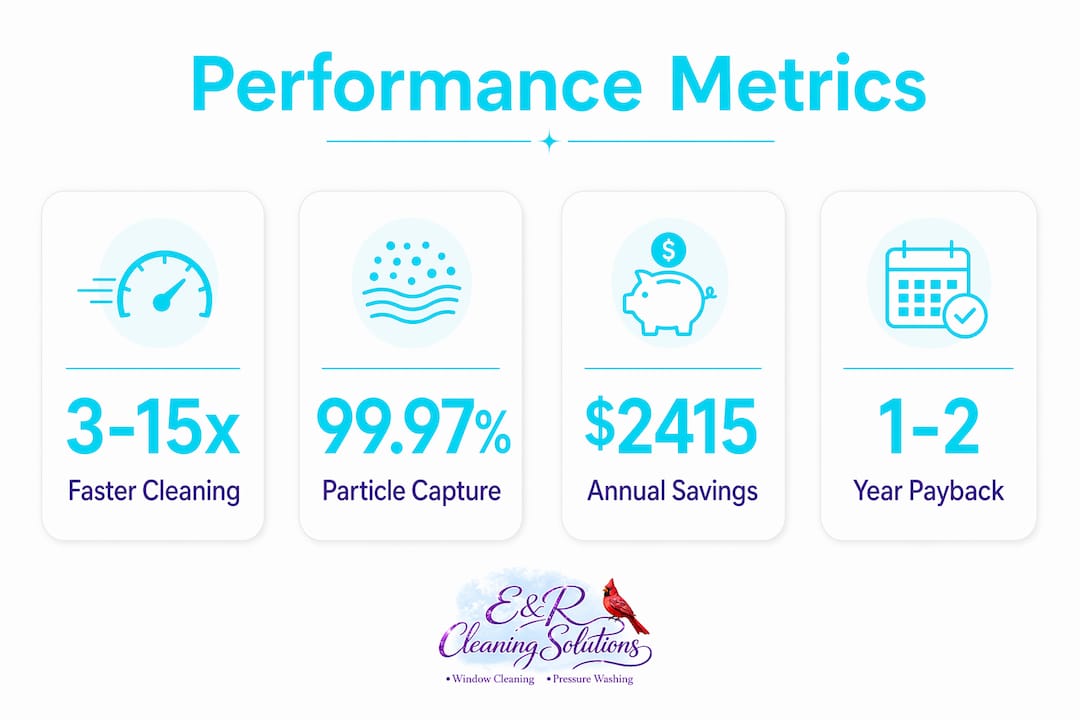
The clearest example is air quality. HEPA-filtered vacuums capture 99.97% of particles 0.3 microns or larger. That means allergens, mold spores, and fine dust are trapped inside the machine rather than recirculated into the air your employees breathe. A standard vacuum misses most of those particles entirely.
Cross-contamination is the second major failure point. Color-coded cleaning systems assign specific mop heads and cloths to restrooms, kitchens, and office areas. This prevents bacteria from restrooms reaching food prep surfaces or shared workspaces. Without that system, a single mop can spread pathogens across an entire floor.
Pro Tip: Implement a color-coded tool system from day one. Assign red for restrooms, blue for general areas, and yellow for kitchens. Post the color key in your supply closet so every staff member follows the same protocol.
How does professional-grade equipment outperform standard tools?
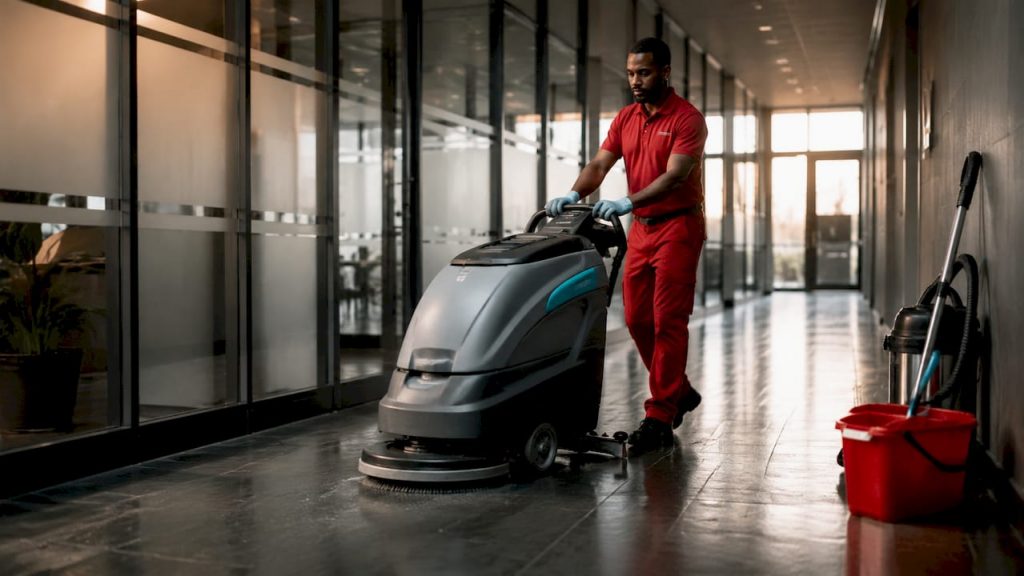
The performance gap between commercial and residential tools shows up most clearly in floor care. Commercial floor scrubbers clean 3 to 15 times faster than manual mopping and use 60–80% less water. That speed difference is not a minor convenience. It means a cleaning crew can cover a large facility during off-hours without disrupting business operations.
Water reduction matters beyond cost savings. Wet floors create slip hazards. A floor scrubber applies solution, scrubs, and vacuums the water up in a single pass. Manual mopping leaves floors wet for 20 to 30 minutes. That window is when slip-and-fall incidents happen, and those incidents carry real liability for building owners.
The table below shows how key performance metrics compare across cleaning methods.
| Metric | Manual mopping | Commercial floor scrubber |
|---|---|---|
| Cleaning speed | Baseline | 3–15x faster |
| Water usage | High | 60–80% less |
| Floor dry time | 20–30 minutes | Near-immediate |
| Pathogen removal | Inconsistent | Controlled and repeatable |
| Labor hours per shift | High | Significantly reduced |
Surface sanitation also improves with the right equipment. Industrial pressure washers remove biofilm and embedded grime from exterior surfaces, loading docks, and parking structures that no manual scrubbing can reach. E and R Cleaning Solutions uses professional-grade pressure washing equipment specifically because consumer units lack the pressure consistency and flow rate needed for thorough commercial results.
What power and durability standards do commercial tools require?
Commercial cleaning equipment runs on 208 to 480-volt, three-phase power to support heavy-duty motors built for continuous operation. Residential tools run on standard 120-volt single-phase circuits. That voltage difference is not just a technical detail. It determines whether a machine can run for eight hours straight without overheating or shutting down.
The durability gap shows up in several ways:
- Motor design: Commercial motors use thermal protection systems and higher-grade windings that handle sustained loads without degrading.
- Cleaning path width: Commercial floor machines cover 20 to 32 inches per pass. Residential units cover 12 to 14 inches. That difference multiplies across thousands of square feet.
- Tank capacity: Commercial wet-dry vacuums hold 15 to 30 gallons. Consumer models hold 3 to 6 gallons, requiring constant emptying during large jobs.
- Frame construction: Commercial equipment uses steel or reinforced polymer frames rated for daily use over years, not occasional weekend tasks.
- Brush pressure: Commercial scrubbers apply consistent, calibrated pressure across the full cleaning path. Manual tools rely entirely on operator effort, which varies.
Using consumer-grade tools in demanding commercial environments also creates hidden risks. In regulated environments like food processing or healthcare facilities, standard sponges and consumer tools can cause micro-scratching on surfaces, creating grooves where biofilm forms and pathogens survive repeated cleaning cycles. That is a compliance failure, not just a cleaning failure.
What are the financial benefits of commercial cleaning equipment?
The financial case for specialized tools is direct. Backpack vacuums alone save over $2,415 per employee annually through labor efficiency gains. That figure comes from faster cleaning paths, reduced fatigue, and fewer passes needed to cover the same area. Multiply that across a cleaning team of five and the annual savings exceed $12,000.
The ROI of professional cleaning machines comes from three sources:
- Labor savings: Automated and high-efficiency equipment reduces the hours needed per square foot of cleaned space. Fewer labor hours mean lower payroll costs for the same output.
- Reduced water and chemical use: Professional machines control dispensing precisely, cutting water and chemical consumption. That lowers operating costs and reduces environmental compliance risk.
- Infrastructure protection: Harsh manual scrubbing and incorrect chemicals damage floor finishes, grout, and surfaces over time. Professional equipment prevents premature floor degradation, pushing major refinishing or replacement costs years further out.
Commercial floor scrubbers typically reach payback within 1 to 2 years from efficiency gains alone. After that point, every month of use generates net savings compared to manual methods. For facility managers managing tight maintenance budgets, that payback window is short enough to justify the capital expense in most annual planning cycles.
Ignoring professional equipment is a false economy. The upfront cost of a quality floor scrubber or backpack vacuum system looks large on a single line item. The true cost of not buying it shows up in labor overruns, slip-and-fall claims, and floor replacement bills spread across several budget years.
How should you select and maintain commercial cleaning equipment?
Choosing the right equipment starts with an honest assessment of your facility. Square footage, traffic volume, floor types, and cleaning frequency all determine what tools you actually need. A 5,000-square-foot office with carpet and tile needs different equipment than a 40,000-square-foot warehouse with sealed concrete.
Key selection criteria for facility managers:
- Match equipment to floor type: Ride-on scrubbers suit large open concrete floors. Walk-behind models work better in tighter spaces with mixed surfaces. Carpet extractors handle high-traffic carpeted areas.
- Size tanks to your facility: Undersized tanks mean constant refilling, which kills the time savings that thank the purchase.
- Factor in entry matting: High-quality entry matting traps up to 85% of soil before it reaches interior floors. That reduces the cleaning burden on your equipment and extends its service life.
- Plan for training: Equipment only performs at its rated capacity when operators know how to use it correctly. Budget for initial training and refresher sessions when staff turns over.
Maintenance is where most facilities lose the value they paid for. Filters clog, brushes wear down, and squeegee blades harden. A missed filter change on a floor scrubber turns a clean machine into one that smears dirty water across your floors. Set a written maintenance schedule and assign ownership to a specific team member.
Pro Tip: Keep a maintenance log attached to each piece of equipment. Record filter changes, brush replacements, and service dates. When something breaks, that log tells a technician exactly what has been done and cuts diagnostic time significantly.
For commercial window cleaning, the same principle applies. Professional-grade squeegees, water-fed poles, and purified water systems produce results that consumer window cleaning kits cannot replicate at commercial scale.
Key Takeaways
Specialized commercial cleaning equipment outperforms consumer tools because it is built for the scale, power demands, and hygiene standards that commercial facilities require.
| Point | Details |
|---|---|
| HEPA filtration matters | HEPA vacuums capture 99.97% of particles, protecting indoor air quality that standard vacuums miss. |
| Floor scrubbers deliver fast ROI | Scrubbers clean up to 15x faster and use 60–80% less water, with payback periods of 1–2 years. |
| Power requirements differ | Commercial equipment runs on 208–480-volt three-phase power, enabling continuous operation that residential tools cannot sustain. |
| Labor savings are measurable | Backpack vacuums alone save over $2,415 per employee annually through efficiency gains. |
| Entry matting reduces equipment load | Quality matting traps up to 85% of incoming soil, extending equipment life and cutting chemical use. |
What I’ve learned after years of watching facilities cut corners on equipment
Facility managers who resist upgrading their cleaning equipment almost always cite the same reason: the upfront cost. I understand that instinct. A commercial floor scrubber costs several times more than a mop and bucket. But the comparison is wrong from the start.
The real comparison is between the total cost of manual cleaning over three years versus the total cost of a scrubber over the same period. When you run those numbers honestly, including labor hours, water bills, chemical costs, and floor refinishing, the scrubber wins every time. The facilities I’ve seen that run the tightest, cleanest operations are not the ones with the biggest budgets. They are the ones that bought the right tools once and maintained them properly.
The other misconception I see constantly is treating specialized equipment as optional for smaller facilities. A 10,000-square-foot office is not small. It has hundreds of contact surfaces, multiple floor types, and people who spend eight hours a day breathing the air inside it. Consumer tools are not designed for that responsibility. Professional equipment is.
The importance of specialized cleaning tools extends beyond the obvious tasks. Even window cleaning at commercial scale requires purified water systems and professional squeegee technique to avoid streaking and mineral buildup that damages glass over time. Every surface in a commercial building deserves the right tool for the job.
— Richard
E and R Cleaning Solutions brings professional-grade results to your facility
E and R Cleaning Solutions applies the same principle this article describes: the right equipment for the job, every time. Their professional window cleaning and pressure washing services use commercial-grade tools that deliver results no consumer product can match.
Whether you manage a small office building or a large commercial property, E and R Cleaning Solutions brings over five years of hands-on experience and honest pricing to every job. Their team understands the difference between a clean-looking surface and a genuinely clean one. For facility managers who want commercial cleaning done right, E and R Cleaning Solutions is the call worth making.
FAQ
Why can’t residential tools handle commercial cleaning jobs?
Residential tools lack the motor power, tank capacity, and durability for continuous commercial use. Commercial equipment runs on 208–480-volt three-phase power and is built for sustained daily operation that consumer tools cannot sustain.
What equipment is needed for commercial cleaning?
Core commercial cleaning equipment includes HEPA-filtered vacuums, floor scrubbers, industrial pressure washers, color-coded microfiber systems, and entry matting. The specific mix depends on facility size, floor types, and traffic volume.
How much can commercial cleaning equipment save in labor costs?
Backpack vacuums alone save over $2,415 per employee annually through efficiency gains. Floor scrubbers reduce labor hours further by cleaning 3 to 15 times faster than manual mopping.
What is a color-coded cleaning system and why does it matter?
A color-coded cleaning system assigns specific mop heads and cloths to different zones, such as red for restrooms and blue for offices. It prevents cross-contamination between high-risk and low-risk areas, which is a core health and safety requirement in commercial facilities.
How long does it take for commercial cleaning equipment to pay for itself?
Commercial floor scrubbers typically reach payback within 1 to 2 years through labor savings, reduced water and chemical use, and lower floor maintenance costs.