
Water Reclamation in Commercial Cleaning: 2026 Guide
Water reclamation in commercial cleaning is defined as the process of capturing, containing, and legally disposing of or reusing contaminated wash water to prevent environmental harm and meet regulatory requirements. The role of water reclamation in commercial cleaning has shifted from optional best practice to a baseline operational requirement, particularly for pressure washing operations that generate contaminated runoff. Local environmental mandates now enforce containment and disposal as non-negotiable standards. Facility managers and business owners who ignore this face fines, restricted cleaning methods, and reputational damage. The good news is that a well-designed reclamation system also cuts costs and supports genuine sustainability goals.
How do water reclamation systems work in commercial cleaning?
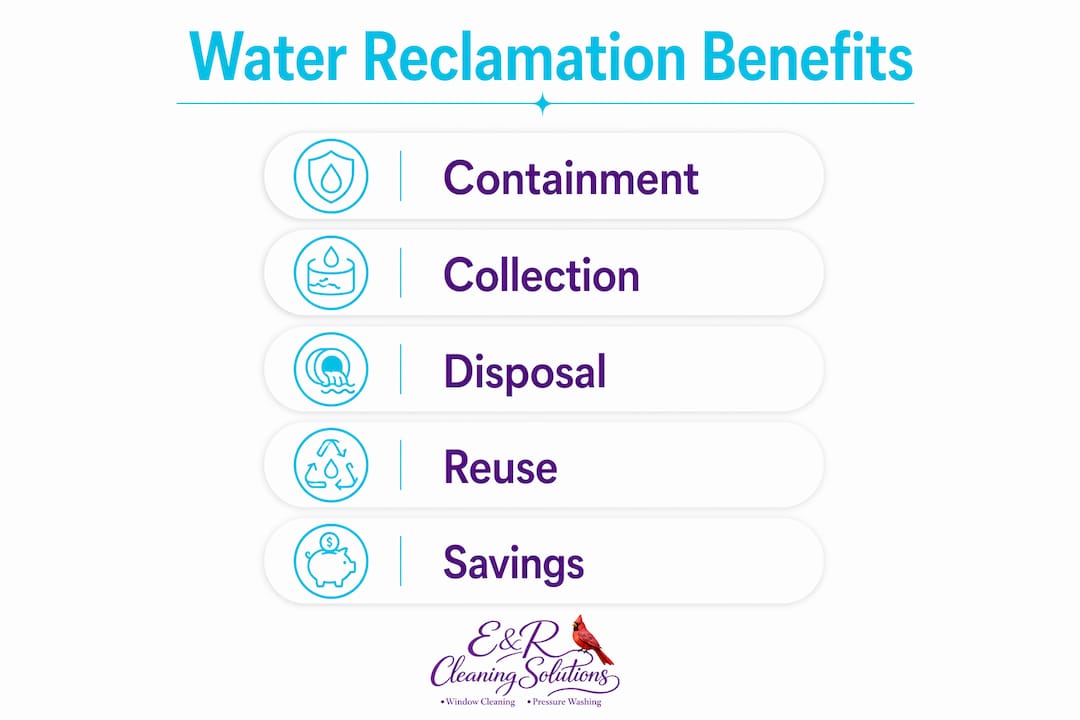
A compliant water reclamation system has three core components: containment, collection, and legal disposal or reuse. Each component does a distinct job, and skipping any one of them creates both regulatory and operational problems.
Containment is the first line of defense. Physical barriers like berms, drain covers, and inflatable dams prevent wash water from entering storm drains or soaking into the ground. Containment is often more challenging than filtration, yet it receives less attention during system planning. A facility that invests in expensive filters but neglects physical barriers will still fail a site inspection.
Collection follows containment. Vacuum systems, wet/dry vacuums, and pump systems pull the contained water into a holding tank. The choice of collection equipment depends on the volume of water generated and the type of surface being cleaned. A parking garage wash generates far more runoff than a storefront window cleaning job, so the pump capacity must match the operation.
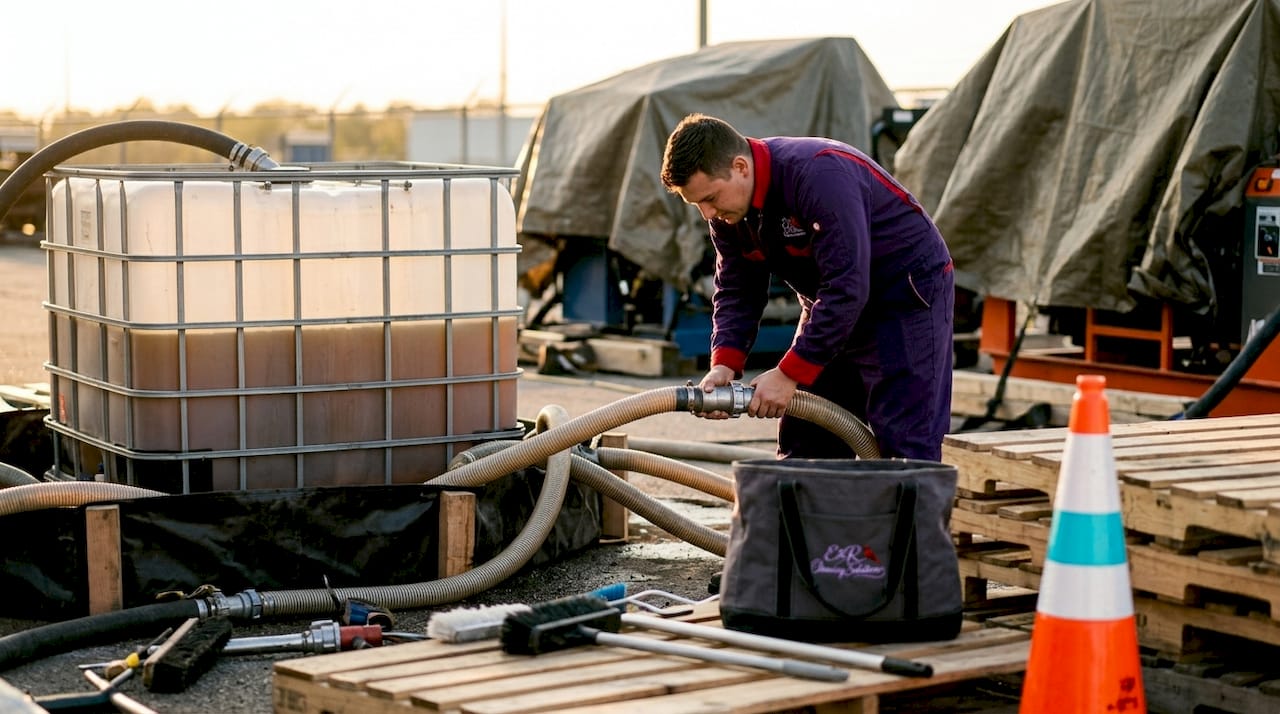
Disposal or reuse is the final step. Collected water can go to a sanitary sewer with proper authorization, be hauled by a licensed third-party disposal service, or be treated and reused for non-potable applications like site irrigation. The right choice depends on local permits, water quality after collection, and the volume generated per job.
| Equipment Type | Primary Function | Typical Application |
|---|---|---|
| Berms and drain covers | Physical containment | Parking lots, loading docks |
| Wet/dry vacuum systems | Water collection | Small to mid-scale jobs |
| Pump and tank systems | High-volume collection | Large commercial sites |
| Evaporators | Volume reduction up to 90% | Sites without reuse options |
| Water recyclers | On-site filtration and reuse | High-frequency operations |
Pro Tip: Prioritize your containment setup before purchasing filtration equipment. Regulators check whether water reached a drain, not whether you filtered it first.
What are the environmental and financial benefits of water reclamation?
The environmental case for water reclamation is quantifiable. Implementing sustainable cleaning protocols can reduce Global Warming Potential by 47.7%, cut chemical consumption by 82.6%, and lower energy use by 49.5%. Those numbers come from a study of an 8,260 square meter facility. They show that cleaning method choices have a measurable climate impact, not just a water impact.
The financial case is equally strong. The strongest business case for water reclamation exists where wastewater is captured close to the point of use. Hauling contaminated water long distances to a disposal facility adds transportation costs that erode profit margins quickly. On-site containment and local disposal or reuse eliminates that cost entirely.
The top benefits of a well-run reclamation system include:
- Reduced water procurement costs through reuse of treated wash water for irrigation or industrial cooling
- Lower disposal fees by reducing wastewater volume before transport
- Avoided fines from regulatory violations related to illegal discharge
- Access to high-pressure, hot-water cleaning methods that are prohibited without reclamation in many urban areas
- Improved sustainability scores that support green building certifications and corporate ESG reporting
Industrial water reuse is projected to grow eightfold by 2040, potentially unlocking $340 billion in investments globally. Facility managers who build reclamation capacity now position their operations ahead of that curve rather than scrambling to retrofit later.
What are the compliance requirements for water reclamation?
Compliance in water reclamation is not a single standard. It is a layered set of local, state, and federal requirements that vary by location, industry, and the type of contaminants in your wash water. The common thread across most jurisdictions is this: contaminated water cannot enter storm drains, waterways, or unpermitted ground discharge points.
A widespread misconception is that reclamation means filtration. Physical containment is the key compliance challenge, not water quality after treatment. Inspectors check whether your setup prevented runoff from reaching prohibited areas. A filtered but uncontained system still fails.
Documentation is equally non-negotiable. Maintaining a disposal manifest that proves legal discharge of reclaimed water is required during site inspections to avoid violations. That manifest must show the volume disposed, the disposal method, and the receiving facility or sewer authorization.
Critical compliance steps for facility managers:
- Identify the specific local and state regulations governing wastewater discharge at each job site before work begins.
- Install physical containment barriers rated for the expected water volume and surface type.
- Use collection equipment with sufficient capacity to handle peak flow without overflow.
- Obtain written sanitary sewer authorization or a licensed hauler contract before disposal.
- Maintain a disposal manifest for every job, including date, volume, and disposal destination.
- Schedule quarterly audits of all containment and collection equipment for wear or failure.
Pro Tip: Audit your reclamation equipment before every major contract, not just annually. A failed berm seal or a cracked tank discovered mid-job creates both a compliance violation and a costly cleanup.
How can facility managers integrate water reclamation effectively?
Effective integration starts with matching system capacity to operation scale. A facility manager overseeing a single-story retail strip needs a different setup than one managing a multi-level parking structure. Undersized equipment creates overflow risk. Oversized equipment wastes capital. The right fit comes from calculating peak water volume per job and selecting collection and containment gear rated above that threshold.
Equipment selection also depends on contamination type. Wash water from window cleaning carries different contaminants than runoff from fleet washing or concrete cleaning. Higher contamination levels require more robust filtration before reuse or disposal. For operations where immediate reuse is not feasible, evaporators can reduce disposal volumes by up to 90%, cutting logistics costs significantly.
Reclaimed water opens reuse opportunities that offset municipal water costs. The goal of reclamation is using the right water for the right use, such as site irrigation or industrial cooling. A facility that reclaims and reuses wash water for landscape irrigation reduces its potable water draw without sacrificing cleaning quality.
Scheduling and workflow also benefit from a planned reclamation approach:
- Batch cleaning schedules reduce the number of containment setups per week, lowering labor time.
- Dedicated reclamation zones on large sites allow water to be collected centrally rather than moved from multiple points.
- Pre-job site assessments identify drain locations and ground slope, which determines where containment barriers must be placed.
- Coordination with commercial cleaning specialists ensures that reclamation protocols align with the specific cleaning methods used on each surface type.
Sustainable cleaning practices and reclamation systems reinforce each other. Lower chemical concentrations in wash water reduce treatment complexity. Biodegradable cleaning agents simplify disposal authorization. Choosing the right cleaning chemistry from the start makes the entire reclamation workflow faster and cheaper.
Key Takeaways
Water reclamation in commercial cleaning reduces costs, prevents regulatory violations, and enables higher-quality cleaning methods that contaminated runoff rules would otherwise prohibit.
| Point | Details |
|---|---|
| Three core components | Every compliant system requires containment, collection, and legal disposal or reuse. |
| Containment over filtration | Physical barriers are the primary compliance checkpoint, not water quality after treatment. |
| Documentation is mandatory | A disposal manifest proving legal discharge is required at every site inspection. |
| Financial returns are real | Capturing wastewater near its source eliminates transportation and disposal costs that cut into margins. |
| Reuse extends value | Reclaimed water used for irrigation or cooling offsets municipal water costs beyond basic compliance. |
Why water reclamation is worth more than the compliance checkbox
I have seen facility managers treat reclamation as a paperwork problem. They buy the minimum equipment, file the right forms, and move on. That approach works until it doesn’t. A failed containment setup during a high-volume job, a missing disposal manifest during a surprise inspection, or a fine that arrives months after a violation can cost more than a full system upgrade would have.
What I find more interesting is the operational upside that most people overlook. Without reclamation systems, many urban cleaning operations are restricted to low-pressure or dry cleaning methods. That limits what you can actually clean and how well you can clean it. A compliant reclamation setup unlocks high-pressure, hot-water methods that produce dramatically better results on concrete, glass, and metal surfaces.
The sustainability angle is also becoming a real competitive differentiator. Corporate tenants and property owners increasingly ask about environmental practices before signing service contracts. A facility manager who can point to a documented reclamation program, verified disposal manifests, and measurable water reuse numbers has a concrete answer. One who cannot is losing bids to those who do.
Emerging technologies like smart flow controls and compact evaporators are making reclamation systems easier to deploy on smaller jobs. The cost barrier that once made reclamation impractical for mid-size operations is dropping. My advice is to build the habit now, before regulations tighten further and before the equipment becomes a requirement rather than a differentiator.
— Richard
Sustainable cleaning services from E and R Cleaning Solutions
E and R Cleaning Solutions brings over five years of hands-on experience in commercial and residential cleaning, with a direct focus on responsible water use and results that hold up to scrutiny.

Whether you manage a commercial property or run a business that needs regular exterior maintenance, E and R Cleaning Solutions applies pressure washing and window cleaning methods that respect both your surfaces and local environmental standards. Their family-run approach means transparent pricing and no shortcuts on compliance. For a closer look at how specialized commercial cleaning works in practice, the team’s commercial window cleaning guide covers the methods and standards applied on every job. Reach out to E and R Cleaning Solutions to discuss a cleaning plan that fits your site and your sustainability goals.
FAQ
What is water reclamation in commercial cleaning?
Water reclamation in commercial cleaning is the process of capturing contaminated wash water, preventing it from entering storm drains, and legally disposing of or reusing it. Compliant systems include physical containment, collection equipment, and documented disposal.
Why is containment more important than filtration?
Regulators check whether contaminated water reached a prohibited drain or ground area, not whether it was filtered afterward. Physical barriers like berms and drain covers are the primary compliance requirement in most jurisdictions.
What documentation do I need for water reclamation compliance?
A disposal manifest showing the volume, date, and legal destination of reclaimed water is required during site inspections. Written sanitary sewer authorization or a licensed hauler contract must accompany every disposal event.
Can reclaimed water be reused instead of disposed of?
Yes. Treated wash water can be reused for non-potable applications like site irrigation or industrial cooling, which offsets municipal water costs. The feasibility depends on local permits and the contamination level of the collected water.
What happens if I operate without a reclamation system?
Operations without reclamation systems in regulated urban areas are typically restricted to low-pressure or dry cleaning methods, limiting cleaning effectiveness. Violations can result in fines, stop-work orders, and mandatory remediation costs.