
Exterior Cleaning Frequency for Businesses: 2026 Guide

Exterior cleaning frequency for businesses is defined as the scheduled rate at which a commercial property’s outside surfaces, windows, facades, walkways, and high-contact zones receive professional cleaning to maintain appearance, safety, and compliance. The right schedule depends on your property type, geographic location, traffic volume, and surrounding environment. Get it wrong in either direction and you either overspend on unnecessary service calls or let grime accumulate until it causes permanent damage. This guide breaks down every major factor so you can build a schedule that fits your property and your budget.
1. How exterior cleaning frequency for businesses varies by property type
Business type is the single strongest predictor of how often your exterior needs attention. A fast-casual restaurant with outdoor seating faces entirely different contamination pressures than a suburban office park.
High-traffic retail and restaurant exteriors benefit from monthly cleaning to maintain curb appeal and meet hygiene standards. That monthly cadence is not a luxury. It reflects the volume of foot traffic, food residue, and daily exposure those surfaces absorb.
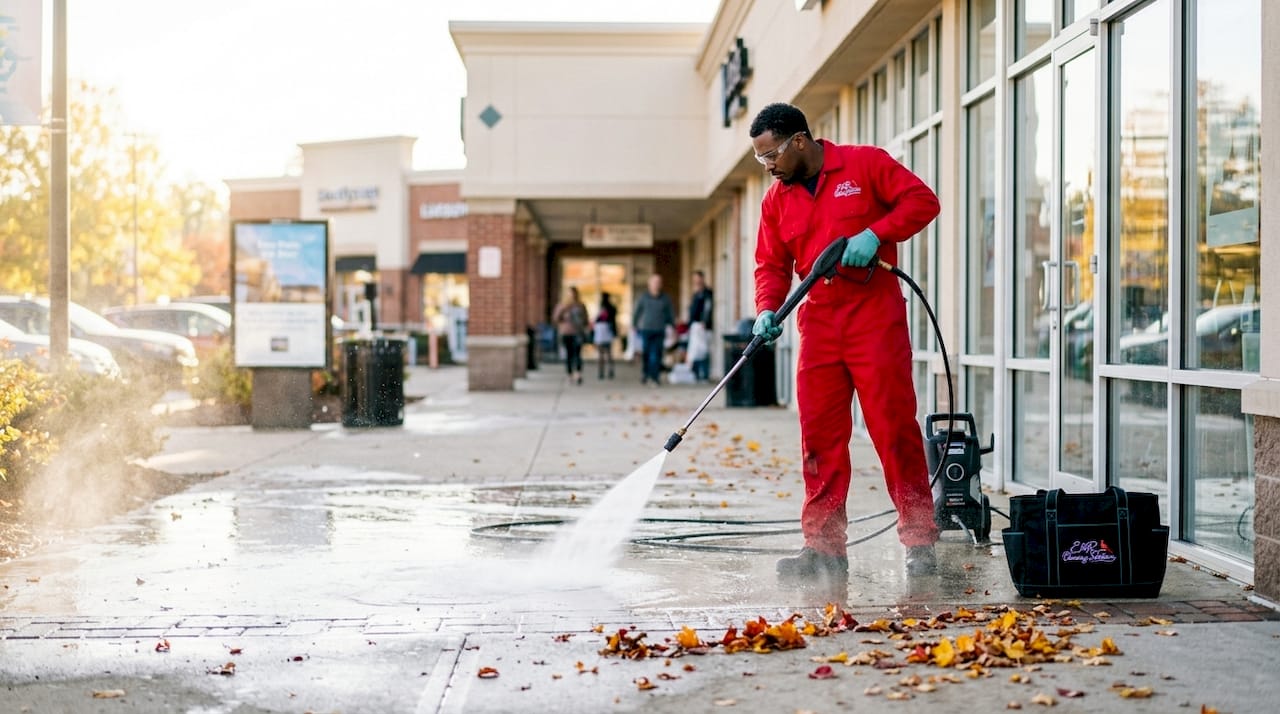
Office building exteriors sit at the other end of the spectrum. Office buildings typically need cleaning every 3–6 months, depending on traffic and environmental factors. Lower foot traffic and fewer contaminant sources make quarterly or bi-annual service the standard baseline.
Here is a practical frequency map by business type:
- Full-service restaurants and food retail: Monthly facade and entrance cleaning; bi-weekly for outdoor dining zones
- High-traffic retail storefronts: Monthly entrance and window cleaning
- Medical and professional offices: Quarterly exterior and window cleaning
- Light industrial and warehouse: Bi-annual facade cleaning; monthly for loading areas
- Mixed-use commercial buildings: Quarterly for upper facades; monthly for ground-level retail zones
Pro Tip: Treat your loading dock and refuse area as a separate cleaning zone. Dumpster pads and drive-through lanes require monthly to bi-weekly cleaning to prevent odors and health code violations. Folding these zones into your main facade schedule almost always results in under-cleaning them.
2. How windows fit into your commercial exterior cleaning schedule
Windows are the most visible surface on any commercial building, and they carry their own frequency logic. Commercial windows typically require professional cleaning quarterly, but that baseline shifts upward for properties with high environmental exposure or heavy foot traffic at street level.
Ground-floor windows in retail settings collect fingerprints, exhaust residue, and splash-back from rain on dirty sidewalks. These surfaces often need monthly attention while upper-floor glass holds to a quarterly schedule. Understanding why commercial windows need specialized cleaning matters here. Hard water mineral deposits and salt film require different chemistry and technique than standard residential glass cleaning.
Mixing window cleaning into your broader facade schedule creates efficiency. A vendor who pressure washes your entrance walkway can often clean ground-floor windows in the same visit, reducing mobilization costs.
3. Environmental and geographic factors that change your cleaning schedule
Location overrides almost every other variable when setting cleaning frequency. Two identical buildings in different climates will need dramatically different schedules.
Coastal properties require 25–40% more frequent cleaning than inland counterparts. Salt air accelerates corrosion on metal fixtures, etches stone surfaces, and leaves a film on glass that compounds with every passing week. A quarterly schedule that works perfectly for a Denver office building will leave a Miami storefront looking neglected.
Dense vegetation creates a separate problem. Properties surrounded by heavy tree coverage accumulate organic contaminants at a rate 40–60% higher than open-site buildings. Bird droppings, leaf tannins, and trapped moisture create conditions where algae and mildew establish quickly.
The table below shows how environmental factors adjust baseline cleaning frequency:
| Environmental factor | Baseline adjustment | Primary concern |
|---|---|---|
| Coastal or high-humidity location | +25–40% more frequent | Salt corrosion, mineral film |
| Dense tree or vegetation coverage | +40–60% more frequent | Organic debris, tannin staining |
| Shaded or north-facing walls | +30–50% more frequent | Algae, mildew, moss growth |
| Irrigation overspray exposure | +20–30% more frequent | Hard water mineral deposits |
| Arid, low-traffic inland site | Baseline or reduced | General dust accumulation |
Pro Tip: Walk your property and note which walls receive direct sun and which stay shaded most of the day. Shaded and north-facing walls can need 30–50% more cleaning than sun-exposed surfaces on the same building. A single blanket schedule misses this entirely.
4. Seasonal timing and its role in cleaning effectiveness
Aligning your cleaning schedule with seasonal transitions is one of the most underused cost controls in commercial property management. Seasonal alignment reduces emergency cleaning costs and keeps appearances consistent year-round without reactive spending.
Each season creates a distinct cleaning priority:
- Spring: Clear winter grime, road salt residue, and biological growth that accumulated during cold months. This is the highest-impact cleaning of the year and the best time to assess surface damage before leasing season.
- Summer: Monitor for algae and mildew growth driven by heat and humidity. Soft washing, which uses low-pressure water with cleaning agents rather than high-pressure blasting, works best for biological growth removal without surface damage.
- Fall: Remove leaf debris, tannin staining, and organic buildup before it gets trapped under winter moisture. This visit also prepares drainage areas and walkways for freeze-thaw cycles.
- Winter: Focus on salt and de-icing chemical residue removal from concrete, metal, and glass surfaces. Even a single mid-winter cleaning prevents accelerated corrosion on metal fixtures and railings.
Scheduling these four anchor cleanings first gives your vendor coordination a fixed structure. You then add zone-specific visits on top of that foundation based on traffic and environmental factors.
5. The irrigation overspray problem most property managers overlook
Sprinkler systems cause more exterior surface damage than most property managers realize. Irrigation overspray increases cleaning frequency by 20–30% by depositing mineral-rich water on windows, facades, and concrete. Those minerals dry into white calcium and magnesium deposits that bond to surfaces and require chemical treatment to remove.
The fix is straightforward. Adjust sprinkler heads so they direct water onto landscaping, not building surfaces or walkways. This single change can eliminate an entire cleaning visit per quarter for affected zones. For the exterior cleaning ROI calculation, preventing mineral buildup is often worth more than the cost of the sprinkler adjustment itself.
6. Optimizing your schedule through vendor coordination
A predictable cleaning schedule benefits your vendor as much as it benefits you. Recurring cleaning schedules improve budgeting predictability and service consistency for property managers. Vendors who know your schedule in advance can allocate equipment and crew efficiently, which often translates to better pricing and faster response times.
Follow these steps to build and maintain an effective vendor relationship:
- Audit your property zones. Walk the full perimeter and document each surface type, its traffic exposure, and any existing staining or biological growth.
- Map frequency by zone. Assign a cleaning interval to each zone based on business type, environmental factors, and seasonal needs.
- Request a written schedule. Ask your vendor to confirm service dates in writing at least one quarter in advance. This creates accountability and simplifies budget forecasting.
- Review and adjust annually. Reassess the schedule each spring. Changes in tenant mix, landscaping, or local weather patterns may shift your frequency needs.
- Address irrigation and drainage first. Fix any overspray or drainage issues before locking in a cleaning schedule. Cleaning surfaces that will be immediately re-contaminated wastes money.
For commercial concrete surfaces like parking lots and loading areas, include surface condition in your annual audit. Concrete that shows oil staining or biological growth needs more frequent attention than clean, sealed surfaces.
Key takeaways
The most effective commercial exterior cleaning schedule combines property type, environmental exposure, and seasonal timing into a zone-specific plan reviewed annually.
| Point | Details |
|---|---|
| Business type sets the baseline | Retail and restaurants need monthly cleaning; offices typically need quarterly service. |
| Location multiplies frequency | Coastal and heavily vegetated sites need 25–60% more frequent cleaning than inland properties. |
| Seasonal anchors reduce costs | Four seasonal cleaning visits create a structure that prevents emergency spending. |
| Irrigation overspray adds hidden cost | Adjusting sprinkler heads can eliminate 20–30% of unnecessary cleaning visits. |
| Vendor coordination improves consistency | Written schedules and annual reviews keep service quality and budgets predictable. |
What I’ve learned from years of watching property managers get this wrong
Most property managers set a cleaning schedule once and never revisit it. They pick quarterly because it sounds reasonable, apply it uniformly across every surface, and then wonder why the north-facing wall looks green by month two.
The properties that look consistently sharp share one habit: they treat different zones as different problems. The entrance gets cleaned monthly. The shaded rear wall gets cleaned more often than the sun-drenched south facade. The loading dock operates on its own schedule entirely. That zone-specific thinking is what separates a building that looks maintained from one that looks managed.
The other mistake I see constantly is ignoring microclimates until the damage is visible. By the time algae is obvious on a shaded wall, it has already been growing for weeks. A proactive schedule based on where your building sits, what surrounds it, and which surfaces stay wet longest will always outperform a reactive one.
Vendor relationships matter more than most property managers admit. A vendor who knows your property, understands your zones, and has a confirmed schedule will catch problems early. One who shows up on call, without context, will clean what is obvious and miss what is developing. Build the relationship before you need the emergency call.
— Richard
E and R Cleaning Solutions for your commercial exterior schedule
Property managers who want a cleaning schedule that actually fits their building, not a generic quarterly template, get better results with a vendor who understands zone-specific needs.

E and R Cleaning Solutions provides professional window cleaning and pressure washing services tailored to commercial properties of all sizes. With over five years of experience working with property managers and small business owners, the team builds schedules around your specific zones, environmental exposure, and budget. Whether your building needs monthly storefront attention or a seasonal deep clean, E and R Cleaning Solutions delivers honest pricing and consistent results. Learn more about specialized commercial window cleaning and how a customized schedule protects your property year-round.
FAQ
How often should a business exterior be cleaned?
Most commercial exteriors need cleaning every 1–3 months, depending on business type, traffic volume, and location. High-traffic retail and restaurant properties benefit from monthly service, while office buildings typically follow a quarterly schedule.
What does commercial cleaning frequency mean?
Commercial cleaning frequency refers to how often a business property’s exterior surfaces receive professional cleaning. The right interval depends on factors like foot traffic, environmental exposure, and the specific zones within the property.
Do coastal businesses need more frequent exterior cleaning?
Yes. Coastal properties require 25–40% more frequent cleaning than inland buildings because salt air accelerates deterioration on metal, stone, and glass surfaces.
How does seasonal timing affect exterior cleaning schedules?
Aligning cleaning visits with seasonal transitions, particularly spring and fall, removes the heaviest contamination loads and prevents buildup from compounding. This approach also improves vendor coordination and reduces unplanned cleaning costs.
What is soft washing and when should businesses use it?
Soft washing uses low-pressure water combined with cleaning agents to remove algae, mildew, and biological growth without damaging surfaces. It is the preferred method for summer cleaning cycles when heat and humidity accelerate organic growth on facades and rooflines.