
12 Rental Curb Appeal Improvements That Cost Under $100
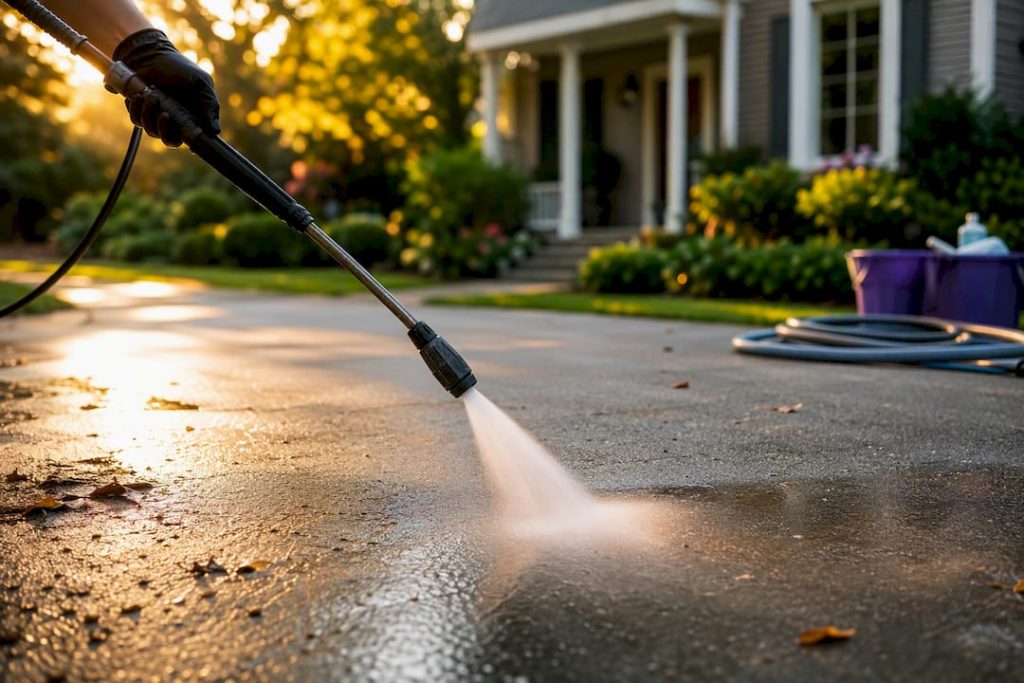
Twelve fixes account for most of the visual difference between a rental that gets a second look and one that sits vacant: pressure washing, a repainted front door, new hardware, potted plants, solar path lights, and fresh house numbers top the list. Most of these examples of rental curb appeal improvements fall between $0 and $100, and several take under an hour.
Here’s the quick shortlist, with cost bands and who typically needs to sign off:
- Pressure wash driveway/walkway — $0–$75 (rental) or $100–$300 (pro) — 1–3 hours — tenant-allowed in most leases
- Repaint front door — $20–$40 — 2–4 hours — landlord permission usually required
- New door hardware/house numbers — $15–$50 — 30–60 minutes — check lease for drilling
- Potted plants at entry — $20–$60 — 30 minutes — tenant-allowed
- Solar path lights — $20–$50 for a set of 6–8 — 1 hour — tenant-allowed (no wiring)
- Clean gutters — $0 DIY or $75–$150 pro — 1–2 hours — landlord responsibility on most leases
- Repaint mailbox — $10–$20 — 1 hour — landlord permission
- New doormat — $15–$35 — 5 minutes — tenant-allowed
- Trim overgrown shrubs — $0 DIY — 1–2 hours — tenant or landlord, per lease
- Mulch flower beds — $30–$60 — 1–2 hours — tenant-allowed with landlord notice
- Window and screen cleaning — $0–$40 in supplies — 1–3 hours — tenant-allowed
- Wash siding (soft wash) — $150–$400 pro — half day — landlord responsibility
According to research on budget curb-appeal projects, most of these instant-impact moves genuinely do cost less than $100, which is why they show up on nearly every practical landlord and tenant checklist.
Key Takeaways
Low-cost cleaning, entry-door refreshes, and consistent lighting deliver the highest visual return per dollar among rental curb appeal improvements.
| Point | Details |
|---|---|
| Start with cleaning | Pressure washing driveways, walkways, and siding creates the fastest visible change for the lowest cost. |
| Prioritize the entry | A repainted door, new hardware, and house numbers make the biggest difference in listing photos. |
| Match plants to neglect tolerance | Choose drought-tolerant, low-maintenance species so landscaping survives between tenants. |
| Know the permission line | Cosmetic and reversible changes are usually tenant-approved; anything structural needs landlord sign-off. |
| Call a pro for height or staining | E and R Cleaning Solutions handles pressure washing and window cleaning when hard-water stains, algae, or ladder work make DIY risky. |
Table of Contents
- Exterior Cleaning: What to Wash Before Anything Else
- What’s the Fastest Way to Refresh a Front Door?
- Which Plants Actually Hold Up in Rental Landscaping?
- Where Should Outdoor Lighting Go First?
- Small Decorative Fixes That Signal Real Upkeep
- Do Clean Windows Really Change First Impressions?
- Fixing Walkways, Driveways, and Fences on a Budget
- What Actually Raises Rent vs. What’s Just Cosmetic
- When Does a Rental Curb Appeal Job Need a Professional?
- Who Pays for What: Tenant vs. Landlord Rules
- A Cleaner’s View: What Actually Moves the Needle
- Ready to Book a Professional Exterior Cleaning?
- Sources
Exterior Cleaning: What to Wash Before Anything Else
Pressure wash the driveway first. It’s the single largest visual surface on most rental properties, and grime buildup reads as neglect faster than almost anything else on the lot. From there, work outward: siding, walkways, gutters, deck boards, and the area around trash and recycling bins all benefit from the same treatment.
Renting a pressure washer runs about $40–$75 for a half-day at most hardware stores, and a driveway plus walkway usually takes 1 to 3 hours depending on square footage and how long it’s been since the last cleaning. Hiring a professional for a full exterior package (driveway, walkway, siding) typically costs $150–$400 and gets done in half a day, with the added benefit of proper detergent dilution for mixed surfaces like brick, concrete, and vinyl.
A pre-showing cleaning checklist should hit:
- Driveway and walkway surfaces
- Siding, especially north-facing walls prone to algae
- Gutters and downspouts
- Deck or patio boards
- Trash and recycling enclosure area
- Entry mat and porch flooring
Pro Tip: Never point a pressure washer at a roof, climb higher than a step stool without proper fall protection, or blast aging or painted siding at close range. Soft washing (lower pressure, cleaning solution) is the safer call for fragile surfaces, and it’s exactly the kind of job where a professional pressure washing service earns its fee.
Take before-and-after photos of every surface you clean. They’re useful for listing photos, and they double as documentation if a security deposit dispute ever comes up. Exterior cleaning done right before a showing tends to shorten vacancy periods because prospective tenants notice a clean exterior within seconds of pulling up.
What’s the Fastest Way to Refresh a Front Door?
Paint or refinish the door. It’s the single highest-visibility square footage on the front of the house, and a fresh coat in a saturated color (think deep navy, forest green, or classic black) reads as intentional even on an otherwise plain rental. Paint and a decent brush run about $20–$40, and a standard door takes 2 to 4 hours including drying time between coats.
Once the door itself is handled, layer in the smaller details that make the entry feel finished by exploring interior door upgrade ideas for added style and impact:
- New handle set or lever with matching finish: $25–$50
- House numbers in a modern font, mounted near the door or on the house facade: $15–$40
- Repainted or replaced mailbox: $10–$25
- Durable outdoor doormat: $15–$35
- Two matching potted plants flanking the door: $30–$60
Installation on hardware and numbers is usually a 20 to 40 minute job with a screwdriver and a level. Choose finishes that resist fading and rust, brushed nickel or matte black tend to hold up better than polished brass in direct sun and rain.
Here’s where permissions matter: painting the door, drilling new holes for house numbers, or swapping the lockset almost always needs landlord sign-off, since these are semi-permanent changes to a fixture the landlord owns. Potted plants, doormats, and anything that sits rather than attaches are typically fine without asking. When in doubt, a quick text to the landlord asking “Can I repaint the front door to [color], reversible with primer if needed?” usually gets a fast yes.
Which Plants Actually Hold Up in Rental Landscaping?
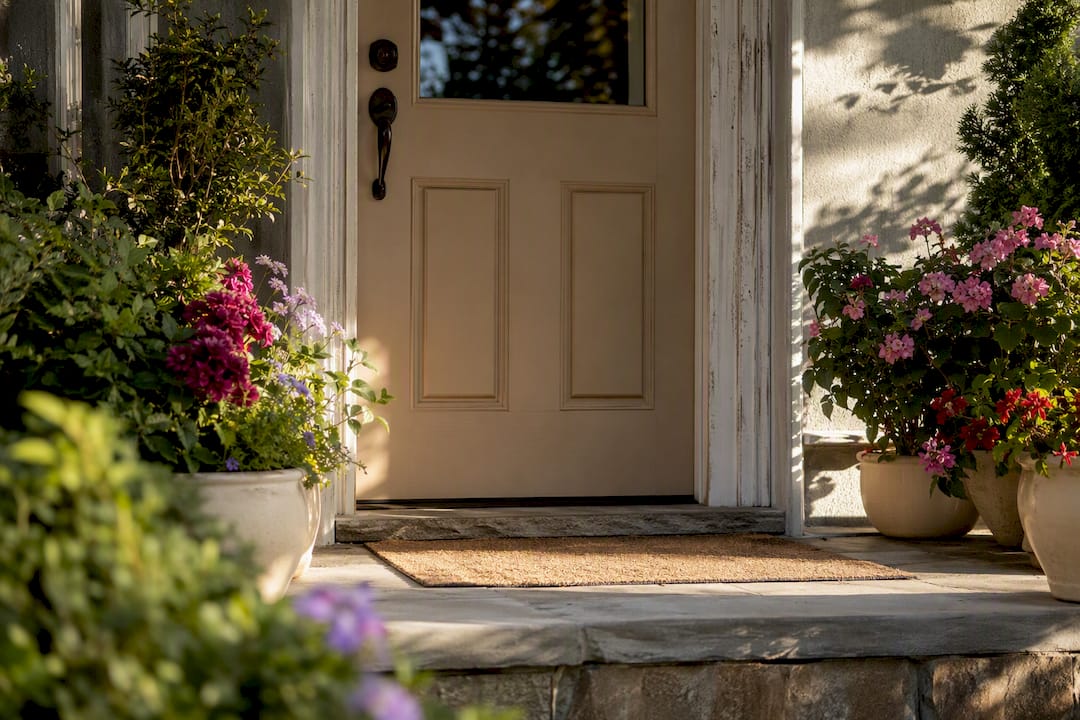
Use low-maintenance, drought-tolerant plants in containers and beds instead of anything that needs regular pruning or precise watering. Renters move, landlords don’t want a garden that dies the moment a lease ends, and both sides benefit from plant choices that survive some neglect.
Reliable, low-water options for most climates include:
- Sedum and other succulents for containers
- Lavender for beds with good drainage
- Ornamental grasses like blue fescue
- Boxwood or dwarf holly for structure near entries
- Marigolds or zinnias for seasonal color that reseeds easily
- Native perennials suited to your region (check a local extension office for exact species)
A simple container arrangement, one thriller plant in the center, two or three fillers, and a trailing plant at the edge, costs about $40–$80 total including a mid-size pot, potting soil, and plants. Refreshing mulch on existing beds runs $30–$60 for a few bags and takes an hour or two, and it instantly hides bare dirt and suppresses weeds.
Landlords should supply working outdoor spigots and basic drainage; tenants can handle the rest with a simple watering schedule (early morning, 2 to 3 times a week for containers) and a monthly deadheading pass to keep flowering plants looking tidy. Curb-appeal renovations built around low-maintenance landscaping consistently show up in guidance on increasing perceived property value without ongoing labor costs.
Where Should Outdoor Lighting Go First?
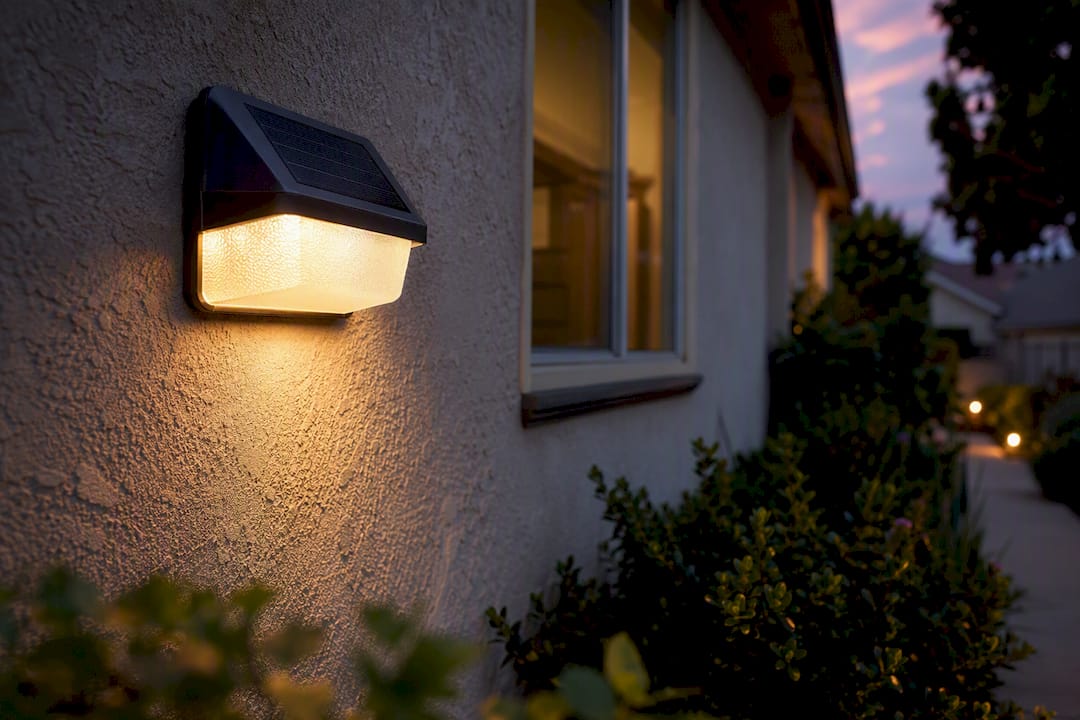
Add lighting along the pathway and at the entry door, then check that every existing fixture has a working bulb. Burned-out porch lights are one of the fastest ways a rental starts looking abandoned, and it costs almost nothing to fix.
Reasonable options by budget:
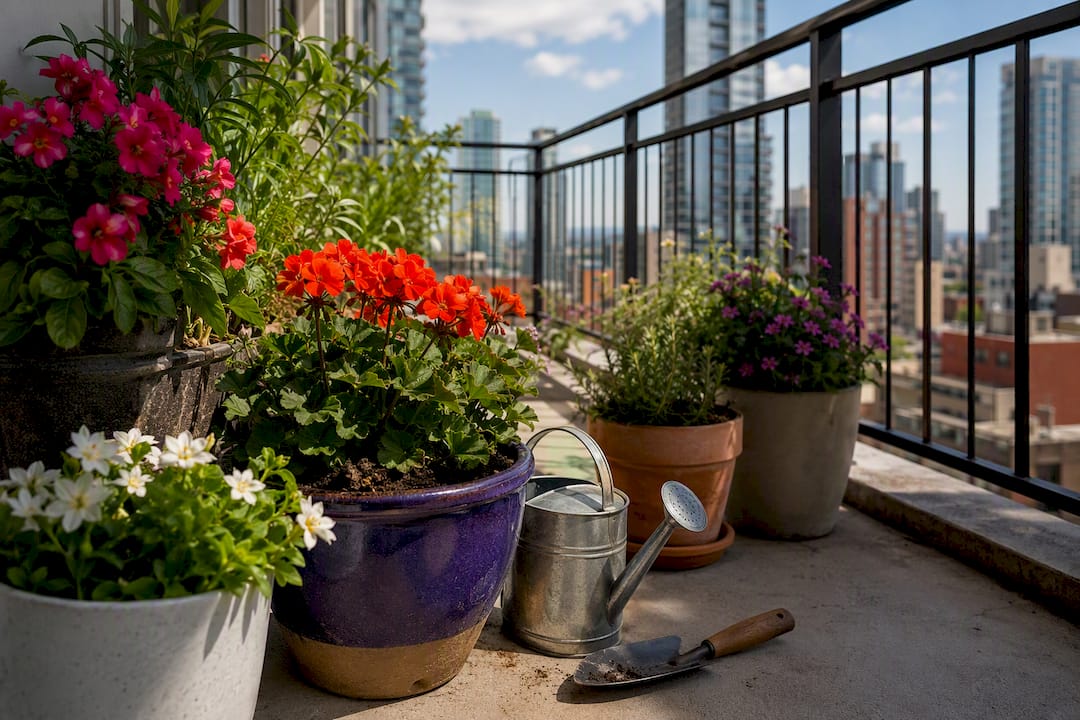
- Solar stake lights along a walkway: $20–$50 for a set of 6–8
- Plug-in string lights for a porch or patio: $15–$30
- Motion-sensor porch fixture: $30–$60, plus installation if hardwiring is involved
Placement matters more than fixture cost. Light the path from the driveway or sidewalk to the door, the door itself, the mailbox if it’s a shared walk-up, and any parking area shared by multiple units. Stick to one color temperature across all fixtures (warm white, around 2700K, looks more inviting than cool white) so the property doesn’t look like it’s lit with mismatched bulbs.
Pro Tip: Solar and plug-in fixtures need no permission and no electrician. Anything that requires cutting into existing wiring, a new hardwired sconce, replacing a junction box, does need a licensed electrician and, depending on your city, a permit. Local permitting rules vary, so check before any hardwired work begins.
Small Decorative Fixes That Signal Real Upkeep
Replace the house numbers, repaint or replace the mailbox, and consider adding shutters or a window box. These are small, inexpensive changes, but they’re the details a prospective tenant notices in the first ten seconds of looking at a property.
- House numbers: modern brushed metal numbers, $15–$40, mounted in 20 minutes with a drill and level
- Mailbox: a fresh coat of exterior paint costs under $15 and takes an hour; a full replacement runs $30–$80
- Shutters: vinyl shutters cost $25–$50 per pair and mount in under an hour with basic hardware
- Window boxes: $20–$40 for the box, plus $15–$25 in soil and plants, install with brackets in 30 minutes
Before/after comparisons on these small fixes are dramatic precisely because the cost is so low relative to the visual change: a $15 mailbox paint job next to peeling, rusted metal is a night-and-day difference in listing photos.
Stick to a neutral base palette (white, gray, navy, black) with one accent color repeated across two or three elements, door, shutters, mailbox, so the changes read as a coordinated update rather than a patchwork of unrelated colors. That consistency is what separates a curated-looking rental from one that just has “some stuff added.”
Do Clean Windows Really Change First Impressions?
Yes, and it’s one of the cheapest fixes on this entire list. Clean windows and repaired screens make a property look cared-for in a way that’s disproportionate to the effort involved, especially in listing photos where glare and streaks are highly visible.
A basic cleaning checklist covers:
- Exterior and interior glass
- Window tracks and sills, where dirt accumulates fastest
- Screen frames, wiped down and checked for tears
Supplies run $10–$25 for glass cleaner, microfiber cloths, and a squeegee, and a full pass on a small to mid-size rental takes 1 to 3 hours. Torn screens can often be re-screened for $10–$20 per panel in materials, or replaced outright for $15–$35 each if the frame is damaged.
For renter-friendly upgrades that don’t violate a lease, removable window film for privacy or light diffusion ($15–$30 per window) and tension-rod blinds ($20–$40 per window) both install and remove without tools or damage. Streak-free window cleaning tends to be the fastest single project on this list in terms of cost-to-visual-impact ratio.
Fixing Walkways, Driveways, and Fences on a Budget
Pull weeds from every crack, re-sand paver joints, and patch obvious cracks before doing anything cosmetic. Cracked, weedy hardscaping is one of the clearest visual signals of deferred maintenance, and it’s usually a half-day fix.
- Weed removal: $0–$15 in tools, 1–2 hours
- Paver joint re-sanding: $15–$30 in polymeric sand, 1–2 hours
- Crack filler for concrete or asphalt: $10–$25 per tube, 30 minutes plus cure time
- Power washing before sealing: covered in the earlier cleaning section, do this first
- Seal coating a driveway: $50–$150 in materials for a DIY job, or $200–$500 professionally for a standard driveway
Watch for trip hazards (heaved pavers, uneven concrete slabs) and drainage problems where water pools near the foundation. These aren’t just cosmetic; they’re liability issues, and anything involving structural concrete repair, foundation-adjacent drainage, or a driveway that’s cracking from underneath needs a licensed contractor, not a DIY fix.
Pro Tip: Fence refreshes are often the most overlooked cheap win: a $30–$50 can of exterior stain and a weekend afternoon can take a gray, weathered fence back to looking new, and tightening loose hardware (hinges, latches) costs almost nothing and prevents a bigger repair later.
What Actually Raises Rent vs. What’s Just Cosmetic
Landscaping, exterior paint, and lighting tend to influence leasing speed and achievable rent, according to guidance on multifamily curb-appeal renovations, while one-off decorative touches like a seasonal wreath mostly affect how a property photographs rather than what it rents for. Properties with stronger curb appeal generally lease faster and command higher rents, with landscaping and fresh paint delivering some of the strongest returns relative to their cost.
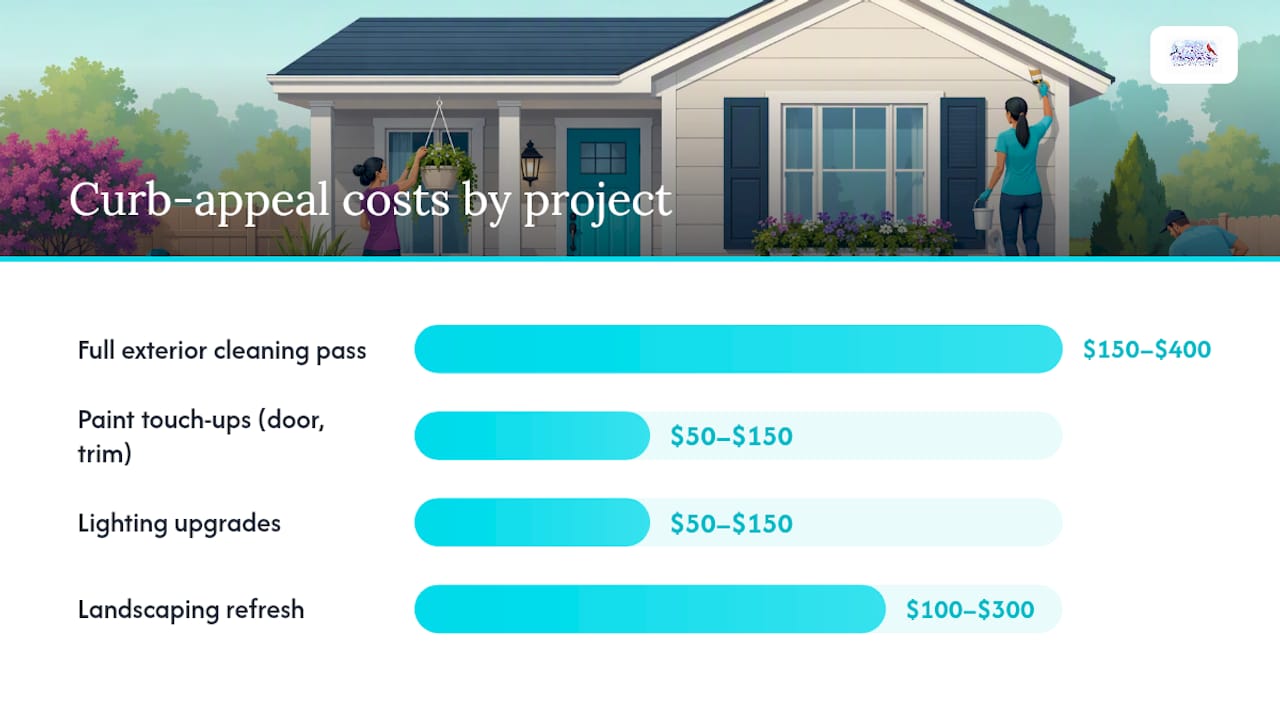
Realistic cost and timeline bands for common projects:
- Full exterior cleaning pass: $150–$400, half a day, moderate rent impact through better first impressions
- Paint touch-ups (door, trim, mailbox): $50–$150, one weekend, moderate impact
- Lighting upgrades: $50–$150, a few hours, meaningful impact on safety perception and evening showings
- Landscaping refresh (mulch, containers, trimming): $100–$300, a weekend, strong impact relative to cost
- Major repairs (driveway resurfacing, fence replacement): $500 and up, multiple days, necessary but largely cosmetic beyond restoring baseline condition
On a limited budget, prioritize in this order: cleaning first, then lighting and entry-door details, then landscaping, then decorative extras. Consistent upkeep tends to cost less over time than catching up after deferred maintenance compounds into bigger, pricier problems.
One caution: don’t over-improve relative to the neighborhood. A $3,000 landscaping overhaul on a property surrounded by modest starter homes rarely returns that investment in rent, while the same budget spread across cleaning, paint, and lighting across multiple units usually does more for occupancy.
When Does a Rental Curb Appeal Job Need a Professional?
Hire a professional when the job involves height (second-story windows, roof lines), fragile or aging siding, heavy algae or hard-water staining, or when you simply don’t have the weekend to spare. These are the situations where DIY risk outweighs the savings.
A quick vetting checklist before accepting any quote:
- Confirm the company carries liability insurance
- Ask for references or recent local work examples
- Clarify whether they use soft washing (lower pressure, safer for siding and roofing) or standard pressure washing (better for concrete and masonry)
- Ask what warranty or guarantee applies if stains reappear
- Get the full scope in writing before work starts
A typical quote should break down surface prep, the cleaning method, any stain or hard-water treatment, ladder or lift work if needed, and debris disposal. For a single-family rental, expect $150–$400 for a full exterior package; for multi-unit or commercial buildings, costs scale with square footage and the number of window panes involved.
Pro Tip: Ask specifically how a company handles hard water spotting on windows. It’s a different treatment than standard glass cleaning, and not every provider does it well.
E and R Cleaning Solutions is a family-run business with more than five years specializing in exactly this kind of work, window cleaning and pressure washing for homeowners, property managers, and small business owners, with transparent, custom pricing rather than one-size-fits-all packages. If a driveway or set of windows is past the point where a garden hose helps, the walkway pressure washing process page walks through what a proper job actually involves.
Who Pays for What: Tenant vs. Landlord Rules
Cosmetic, reversible changes are usually fine for tenants to make without asking; anything structural, permanent, or that alters a fixture the landlord owns needs sign-off first. That’s the rule of thumb that resolves most disputes before they start.
Tenant-friendly upgrades that typically need no permission:
- Potted plants and container gardens near the entry
- Temporary adhesive hooks for lightweight decor
- Removable window film for privacy
- A new doormat
- Solar stake lighting along a walkway (no wiring involved)
Landlords should keep a simple checklist for what they’ll pre-approve, and put it in writing so tenants aren’t guessing:
- Door paint color: pre-approve a short list of acceptable colors
- Hardware swaps: require the original hardware be kept and reinstalled at move-out
- Planting in ground beds: specify which areas are tenant-manageable
- Anything involving drilling, wiring, or structural fixtures: requires written approval
A short permission email a landlord can adapt: “Thanks for asking. You’re welcome to repaint the front door as long as it’s a neutral or dark tone and you keep a can of primer on hand to restore it at move-out if needed. Let me know the color before you start.” Clear, documented lease-compliant maintenance practices protect both sides if a security deposit question comes up later.
A Cleaner’s View: What Actually Moves the Needle
The fastest win we see, consistently, is a driveway and walkway pressure wash. Homeowners expect a subtle improvement and end up shocked at how much brighter the whole property looks once years of grime, oil residue, and algae lift off the concrete.
One recurring pattern: landlords call us right before a turnover expecting a full renovation quote, and we end up recommending a same-day cleaning instead, siding, walkway, windows, because the property was structurally fine, just dirty. The visual transformation from that single visit is usually enough to get listing photos taken the same week.
Professionalism matters more than people expect going in. A trustworthy crew shows up with the right equipment for the surface, not just a pressure washer set to maximum, and explains what they’re doing before they start.
Ready to Book a Professional Exterior Cleaning?
If you’ve gone through the checklist above and the driveway still looks gray instead of white, or the windows still show streaks after a wipe-down, that’s usually the line where DIY stops working and a professional visit pays for itself. E and R Cleaning Solutions handles exactly that gap for renters, landlords, and property managers who want the visual impact without spending a weekend on it.

Services relevant to rental curb appeal include driveway and walkway pressure washing, soft-wash siding cleaning for painted or delicate exteriors, and interior and exterior window cleaning with hard-water stain removal. Every quote is custom to the property, so a small single-family driveway and a multi-unit parking area get priced differently, based on square footage, staining severity, and access. Most jobs are scheduled within a week and completed the same day, which fits neatly into a tenant turnover timeline between move-out and the next showing.
Because E and R Cleaning Solutions is family-run, quotes come with straightforward answers instead of upsell pressure, and the focus stays on the two services done well rather than a long menu done adequately. If hard water spotting has been building on your windows for a season or two, the role of pressure washing between tenancies page explains timing and typical costs, or you can request a custom quote directly for your property’s exterior cleaning needs.
Sources
- 25 Ways to Get Instant Curb Appeal for Less Than $100
- What Good Curb Appeal Actually Does for a Multifamily Property
- Multifamily Curb Appeal Renovations That Increase Value
- Rental Property Curb Appeal Upgrades | Lifetime PM