Avoid Stormwater Permits: Commercial Algae Removal With Safer Choice
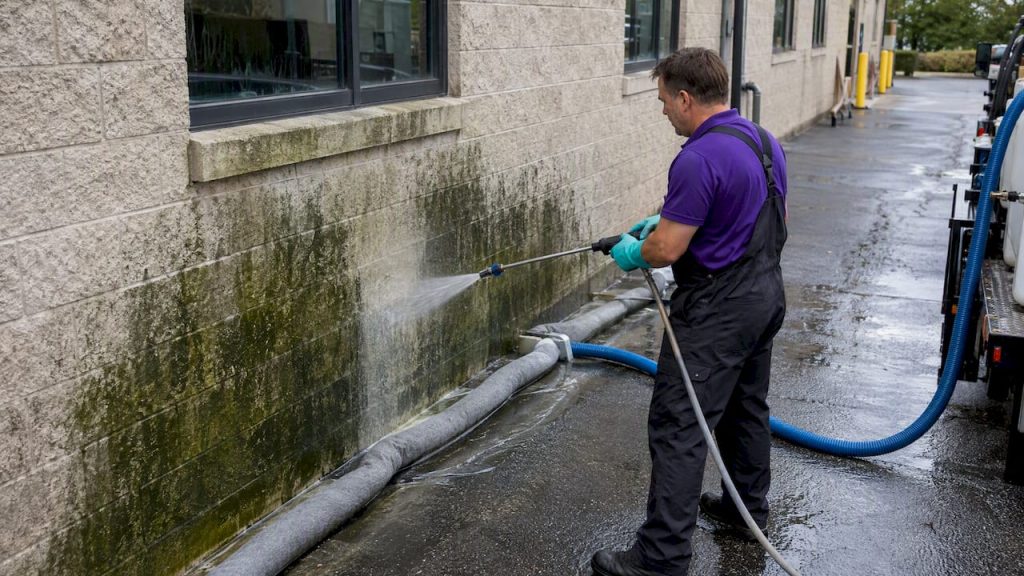
For most commercial building exteriors and concrete, an eco-friendly soft wash using a professional biocide applied at low pressure is the safest and most durable way to remove algae. Done correctly, it clears visible growth and keeps surfaces cleaner for months to years, depending on the product and site conditions. Before any water touches the building, confirm runoff controls and check whether local stormwater permits apply.
TL;DR:
- Using a professional biocide soft wash provides long-lasting algae removal, with results lasting from two to ten years depending on the surface and site conditions.
- Proper runoff control measures, such as containment and filtration, are essential for regulatory compliance and environmental safety during exterior cleaning.
- Regular maintenance steps like gutter cleaning, vegetation trimming, and inspections can extend the interval between professional treatments and prevent regrowth.
- Large-scale or repeat algae growth, stained surfaces, or slip hazards generally require hiring a licensed contractor with proper equipment and product knowledge.
- A site assessment and documentation, including product details and containment plans, are crucial before scheduling any commercial exterior algae treatment.
Table of Contents
- Why algae grows on commercial buildings and why it matters
- Comparing algae removal methods for different surfaces
- Staying compliant with runoff and stormwater rules
- Preventing algae regrowth between treatments
- Deciding when to hire a professional crew
- What field experience teaches about commercial algae jobs
- A property manager’s checklist before the crew arrives
- Honest pricing and real containment from E&R Cleaning Solutions
- FAQ
- Sources
Why algae grows on commercial buildings and why it matters
Algae needs three things to colonize a building: moisture, shade, and a porous surface to grip. Commercial sites often supply all three without anyone noticing: irrigation overspray keeps north-facing walls damp, mature landscaping blocks sun from drying masonry, and dust or organic debris gives spores something to hold onto. Once established, algae spreads fast across concrete, stucco, and painted siding because these materials absorb moisture rather than shedding it.
The risk goes beyond appearance. Algae on walkways and loading areas creates a genuine slip hazard, which matters for liability on commercial property. Left untreated, it also traps moisture against the substrate, speeding up spalling in concrete and paint failure on siding.
The surfaces we see affected most often on commercial properties include:
- Concrete walkways, parking structures, and loading docks
- Masonry and stucco facades, especially on shaded elevations
- Painted or fiber-cement siding
- Metal railings, downspouts, and HVAC housings exposed to runoff
Comparing algae removal methods for different surfaces
Not every surface calls for the same approach, and picking the wrong one can cost more in repairs than the algae itself ever would.
- Soft washing with a biocide. A low-pressure sprayer applies a cleaning solution, often an EPA Safer Choice certified product, that is left to dwell on the surface for a period specified on the label before a gentle rinse. This method penetrates porous masonry and painted siding without stripping paint or eroding mortar joints.
- Low-pressure rinse alone. Effective for light surface dust but rarely enough for established algae colonies, since it does not kill the organism at the root.
- Hot-water or mechanical scrubbing. Reserved for heavy, slip-hazard buildup on industrial-grade concrete that can tolerate higher pressure and abrasion without damage.
- Spot-treatment chemicals. Household bleach or muriatic acid can kill surface algae quickly, but both are hard on paint, metal fixtures, and landscaping, and neither addresses regrowth the way a dwell-time biocide does.
Specialized mist-applied biocide systems illustrate the gap between quick fixes and lasting results. One documented professional soft-wash case study reports facades staying free of green algae for two to five years and of black lichen for six to ten years under the conditions tested, a timeline that spot bleach treatments simply cannot match.
Pro Tip: Test any biocide on a small, hidden section of the facade first. Porous stone and certain painted finishes react differently than standard stucco or concrete.
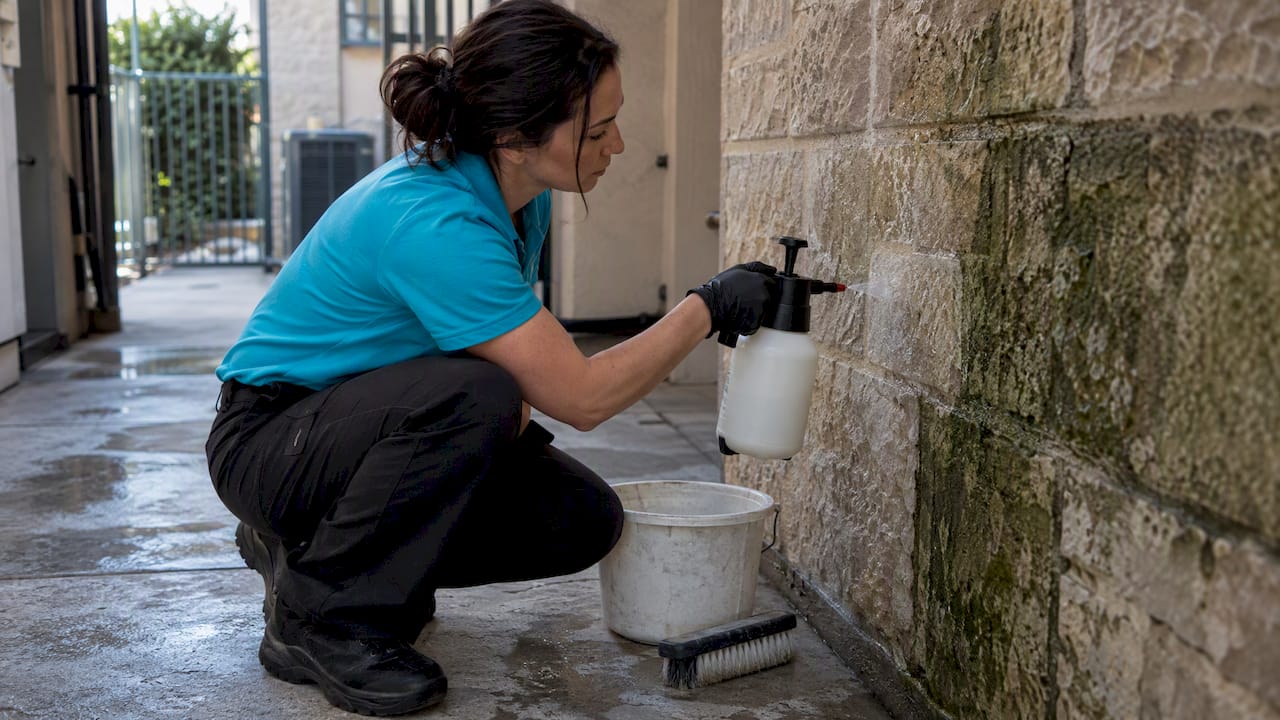
For most property managers, light dust and small spot regrowth are reasonable to handle in-house with a low-pressure rinse. Full-building soft washing, anything involving ladders or lifts, or sites with repeat heavy growth belong with a licensed contractor who carries the right biocide, equipment, and insurance. Our guide to soft washing for commercial buildings goes deeper into technique and equipment choices.
Staying compliant with runoff and stormwater rules
Wash water is not just dirty water. Once it carries detergent or biocide residue into a storm drain, it becomes a regulated discharge in many jurisdictions. The proposed 2026 Multi-Sector General Permit restricts washwater discharges and calls for filtration, detention, or documentation whenever detergents or hazardous cleaning products are involved. Site-specific stormwater plans go further: one EPA-reviewed SWPPP attachment lists building washdown as an authorized discharge only when detergents are avoided or adequate control measures are in place.
Practical controls that keep a job on the right side of these rules include:
- Dry-prep sweeping to remove loose debris before any water is applied
- Berms, vacuum trucks, or containment mats to capture wash water
- On-site filtration or pumped collection instead of storm-drain discharge
- Written records of product labels, dwell times, and disposal method
Using an EPA Safer Choice biocide and documenting the full process is one of the more reliable ways to limit both environmental impact and regulatory exposure, since Safer Choice labeling itself specifies lower-impact formulations and clear application guidance. For larger sites or anywhere near a waterway, loop in a local environmental consultant before the first permit question comes from a regulator instead of from your own team. Our water reclamation guide covers containment setups in more detail.
Preventing algae regrowth between treatments
A soft wash buys time, not immunity. The surfaces that stay cleanest longest are the ones where moisture and shade get addressed directly afterward.
- Redirect irrigation and downspouts away from walls and walkways
- Trim back trees and shrubs that shade north-facing facades
- Clean gutters regularly so overflow stops streaking siding
- Remove leaf litter and organic debris before it decomposes against concrete
Sealants can extend the interval between treatments on concrete and masonry, but compatibility matters: a sealant applied over a biocide residue that has not fully weathered off can trap moisture instead of blocking it. A quarterly walk-through, checking shaded corners, drainage paths, and gutter lines, catches new growth while a light treatment still handles it.
| Maintenance step | Frequency | Primary benefit |
|---|---|---|
| Visual inspection of shaded facades | Quarterly | Catches regrowth early |
| Gutter and downspout cleaning | Twice yearly | Reduces streaking and moisture |
| Vegetation trimming near walls | Twice yearly | Increases sun exposure, reduces shade |
| Full soft-wash reapplication | As needed by inspection | Resets protection interval |
Our article on how algae spreads on rental properties breaks down these same mechanics for residential portfolios.
Deciding when to hire a professional crew
In-house staff can usually manage small spot cleaning, but several conditions point toward bringing in a professional:
- Scale. Full facades, multi-story buildings, or large parking structures need equipment and lift access most maintenance teams do not carry.
- Repeat growth. Algae returning within a few months usually means the root cause was never treated, which calls for a biocide application rather than another rinse.
- Staining or slip risk. Dark streaking on stucco or slick walkways near entrances raise liability concerns that justify a documented professional job.
When requesting bids, ask each contractor to specify the product name or Safer Choice certification they plan to use, their washwater containment and disposal plan, proof of insurance, references from similar commercial jobs, and any workmanship warranty. A typical commercial soft-wash project runs from a single day for a small facade to several days for a full complex, with deliverables that should include before-and-after photos and copies of product labels used.
What field experience teaches about commercial algae jobs
Across the jobs we run, the combination that holds up best is soft washing paired with upfront runoff planning rather than a quick pressure blast. We document every commercial job with photos, product labels, and containment notes so property managers have a clear record for their own files or for a future permit question. That paper trail has saved clients time more than once when questions came up after the fact.
A property manager’s checklist before the crew arrives
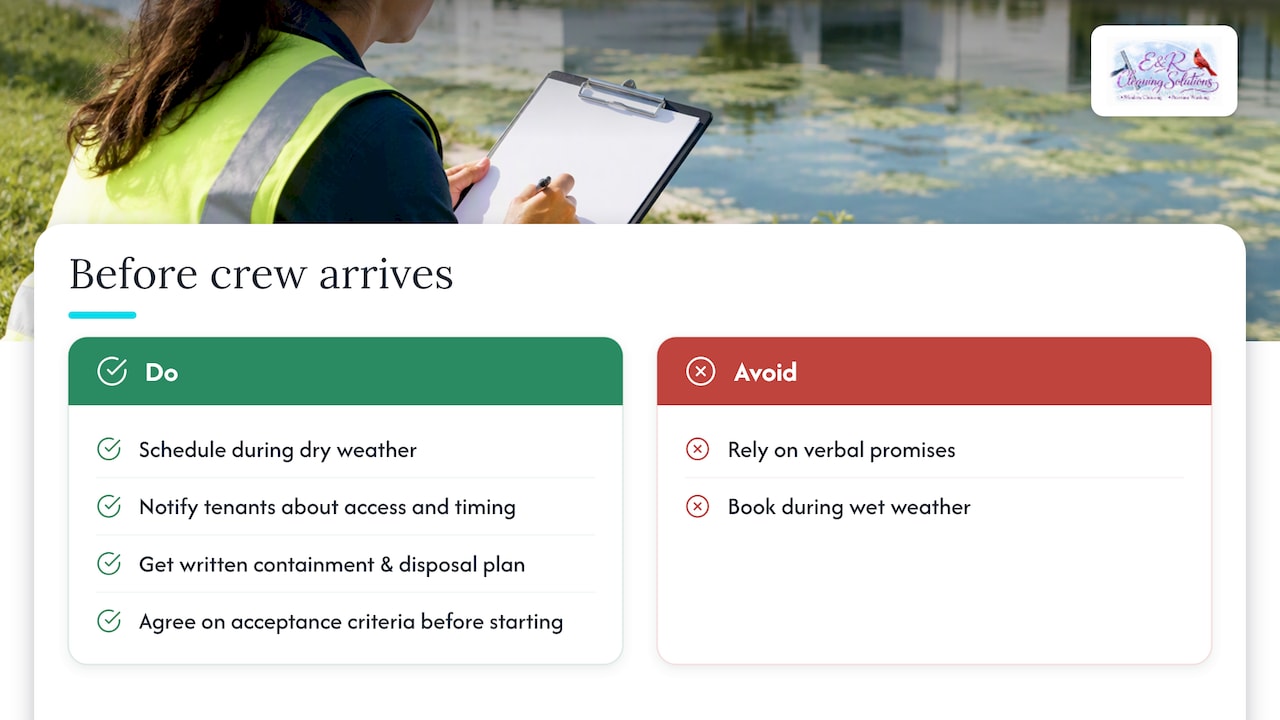
Before we book a commercial soft wash, we walk through a short list: schedule for a stretch of dry weather so the biocide has time to work, notify tenants about access and timing, confirm in writing how wash water will be contained and disposed of, and agree on what “done” looks like before the first spray hits the wall.
Founder tip: insist on an EPA Safer Choice-rated biocide and a written runoff control plan in the bid, not just a verbal promise.
— Richard
Honest pricing and real containment from E&R Cleaning Solutions
Commercial algae removal generally involves soft washing, concrete cleaning, and full runoff containment with documentation that clients can keep on file. A written quote typically spells out the product planned for use, the containment approach, and the expected timeline before any work starts.

If your building has visible algae or recurring slip hazards on walkways, the next step is a site assessment. Visit our Window Cleaning and Pressure Washing page to request a quote and get a plan built around your property.
FAQ
What dissolves green algae?
A dwell-time biocide formulated for exterior surfaces, often an EPA Safer Choice certified product, breaks down green algae at the surface and root level rather than just scrubbing it away. Household bleach can kill it on contact but does not offer the same lasting protection and can damage paint or landscaping nearby.
What is the best cleaner for green algae on concrete?
A Safer Choice-labeled biocide applied at low pressure with an appropriate dwell time works well on concrete because it penetrates the porous surface rather than sitting on top of it. Muriatic acid can remove algae too, but it etches concrete and is generally considered a harsher option than a dedicated biocide treatment.
What kills algae on metal?
Metal surfaces, like railings and downspouts, generally do best with a diluted biocide wash followed by a thorough low-pressure rinse to avoid pitting or corrosion from harsher acids. Spot treatments should be tested first since some metal finishes react to certain cleaning chemicals.
What kills algae on walls?
For painted siding, stucco, or masonry walls, a soft-wash biocide application at low pressure removes algae without stripping paint or damaging mortar joints. High-pressure washing on these same surfaces often does more harm than the algae itself by forcing water behind siding or eroding soft masonry.
How much does professional algae removal cost for a commercial building?
Pricing depends on the size of the building, the surfaces involved, and the containment requirements for the site, so an accurate figure comes from a quote rather than a flat rate. We provide custom pricing after a site assessment through our Window Cleaning and Pressure Washing services.
Sources
- Xylem Moosfrei case study (2024)
- EPA Safer Choice product listing / label example
- Proposed 2026 MSGP – Permit Parts 1-7 (EPA)