Types of Commercial Cleaning Service Contracts: 2026 Guide

What are the main types of commercial cleaning service contracts?
Three structural types cover nearly every commercial cleaning arrangement you will encounter, and knowing which one fits your situation changes both your risk exposure and your budget predictability.
- One-time service agreements cover discrete, bounded jobs: move-in/move-out cleans, post-construction handoffs, or a single deep clean before a facility inspection. Scope is narrow, duration is short, and liability exposure is limited. The tradeoff is no price certainty beyond that single event.
- Recurring service agreements are the most common format in commercial facilities. They establish a fixed schedule (nightly, three times per week, weekly) with defined scope and stable pricing. The catch is auto-renewal language that can extend your obligation without any affirmative action on your part.
- Master service agreements (MSAs) with statements of work apply to large or complex facilities, multi-site portfolios, or government accounts. The MSA sets general legal terms once; individual statements of work define specific locations, frequencies, and standards. This structure keeps the legal overhead low while allowing scope to vary by site.
Contracts in this industry carry different risk profiles depending on type. One-time agreements offer minimal long-term exposure but zero pricing stability. Recurring agreements lock in costs but require careful attention to renewal windows. MSAs give the most flexibility across a portfolio but demand disciplined scope management at the statement-of-work level.
Pro Tip: Before you sign any recurring agreement, locate the auto-renewal clause and note the notice window. A 90-day notice requirement buried in section 12 has caught more than a few facility managers off guard.
What every commercial cleaning contract must include
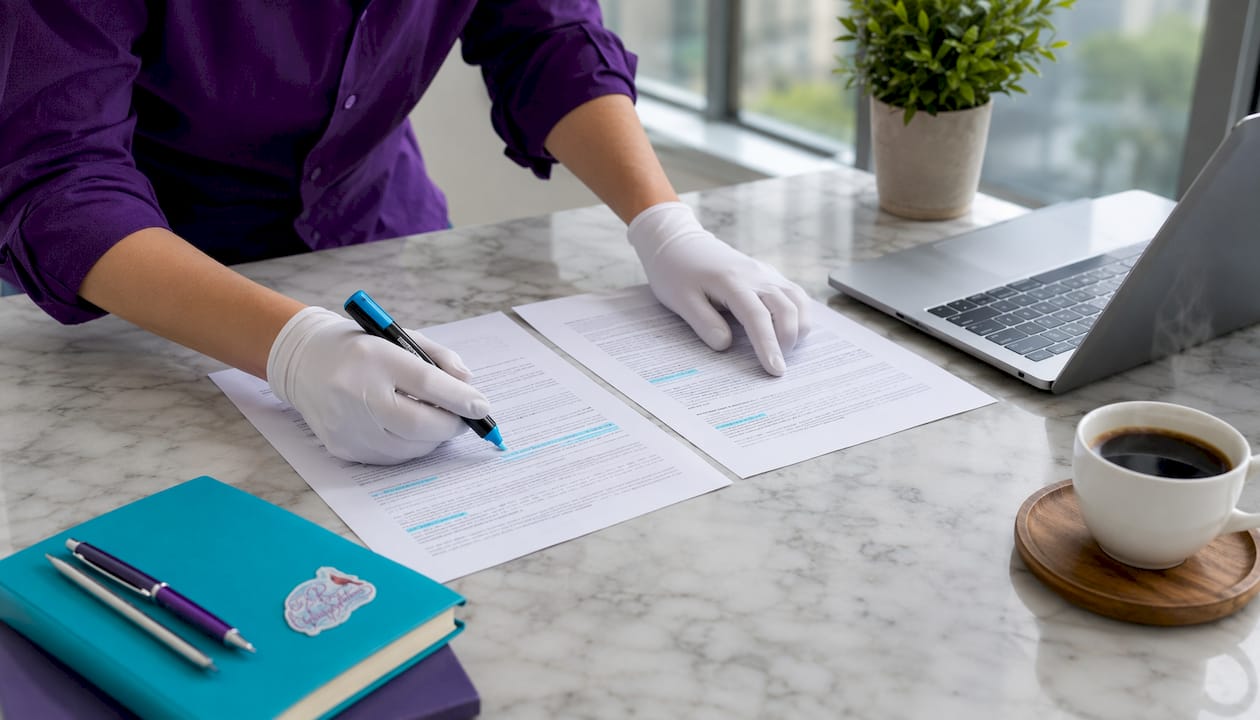
A poorly defined scope causes most contract disputes. The fix is a task-and-frequency grid: rows for tasks, columns for frequency (daily, weekly, monthly, quarterly). “Clean restrooms” is not a scope item. “Sanitize all fixtures, restock dispensers, mop floors with EPA-registered disinfectant, and wipe partitions nightly Monday through Friday” is enforceable.
Beyond scope, a solid cleaning service agreement covers:
- Licensing, insurance, and bonding. A well-structured contract requires general liability at $1M per occurrence (with your company named as additional insured), workers’ compensation for every worker on site, and a janitorial fidelity bond covering theft. Background checks and key/access control protocols belong here too.
- Quality assurance and KPIs. Monthly joint walkthroughs scored against the scope, a complaint response window (issues acknowledged within four business hours, corrected within 24), a re-clean clause for failed work, and a named account manager rather than a call center. Inspection programs tied to measurable outcomes protect you from service degradation over the contract life.
- Cure periods. Documented failures trigger a cure window, typically 10–30 days. Repeated failure after the cure period allows early termination without penalty.
- Communication protocols. Name the supervisor responsible for your account. Escalation paths should be written, not assumed.
- Confidentiality and data protection. Any provider with after-hours access to your facility needs a confidentiality clause covering security codes, personnel information, and sensitive materials.
- Dispute resolution. Specify whether disputes go to mediation, arbitration, or litigation, and in which jurisdiction.
For a practical contract clause checklist covering these elements, facility managers can reference E and R Cleaning Solutions’ property manager resources.
How commercial cleaning contracts are priced
Commercial cleaning contracts use four main pricing structures, each shifting risk differently between client and provider.
- Fixed monthly fee. One rate for the defined scope. The provider absorbs labor cost overruns; you get budget predictability. This only works if the scope grid is airtight, because anything outside it gets billed as an extra.
- Per square foot. Pricing typically runs $0.05–$0.25 per square foot per visit, depending on facility type and cleaning frequency. Offices sit at the lower-middle of that range; medical, kitchen, and specialized facilities sit at the top. Dividing every bid down to a per-square-foot number is the fastest way to compare commercial cleaning service quotes on equal footing.
- Time and materials (T&M). Actual labor hours plus supply costs, sometimes with a not-to-exceed cap. Suited for post-construction cleanup, disaster restoration, or irregular project work. The efficiency risk shifts to you: a slow crew costs more.
- Performance-based. Payment tied to inspection scores, ATP surface test results, or occupant complaint rates. Increasingly common in healthcare and government settings.
Labor represents a large share of cleaning costs, and profit margins vary by contract type. Specialized contracts carry higher margins but also greater onboarding risk, which is why providers price them accordingly.
A few line items that belong in every pricing section:
- Add-on rates for carpet extraction, floor refinishing, and pressure washing, stated explicitly rather than left to a future quote.
- Consumables responsibility. Who buys paper products and liners? A supplier pricing arrangement with a markup cap is standard.
- Annual escalation. Tie increases to CPI-All Urban Consumers with a hard cap (3–5% is reasonable). Language like “prices subject to change” is not enforceable and should be struck before signing.
Pro Tip: Even if a vendor quotes a monthly total, ask them to break it down to cost per cleanable square foot. That single number lets you run a true apples-to-apples comparison across every bid you receive.
For context on how scope-of-work documents connect to cost control, E and R Cleaning Solutions’ commercial property cleaning guide covers the relationship in detail.

Best practices for negotiating and managing cleaning contracts
Define scope before you discuss price. Negotiating price on a vague scope pushes providers to reduce service invisibly to protect their margin. Lock every task and frequency first, then negotiate the number. This is the single most protective move you can make when you negotiate recurring cleaning service contracts.
- Normalize bids before comparing. If one vendor includes mat cleaning and interior window washing and another does not, you cannot compare their price lines directly. Add line-item costs to the narrower bid for missing tasks, or ask for a resubmission. Bid normalization by dividing total cost by cleanable square footage is the standard method for a true vendor comparison.
- Time your renegotiation. Your leverage is highest 90–120 days before renewal, when the provider knows the account is in play. Use that window to document service gaps or request scope enhancements backed by your inspection records.
- Use a trial period with an exit clause. A provider who refuses a short trial period with a clean exit is signaling something. Confidence in service quality shows up as easy exits, not lock-ins.
- Require GPS shift verification. Contract language should specify that the provider maintains GPS-verified check-in and check-out records for all service locations, with client access to trailing 90-day history on demand.
- Include service credit provisions. If a contracted task is missed, the client receives a prorated credit equal to the per-task value, applied to the following month’s invoice. This clause makes accountability concrete.
- Protect your termination rights. A 12-month term with a 30-day termination-for-convenience clause is the healthiest standard structure. It gives the provider enough runway to invest in your account while keeping accountability through an easy exit. Multi-year lock-ins with steep early-exit fees are a red flag unless deep pricing concessions justify them.
Legitimate leverage points when negotiating include offering a longer term in exchange for a lower annual rate, bundling multiple sites for volume pricing, and presenting documented competitive alternatives. What you should never trade away: monthly inspection reports, GPS verification, service credit provisions, and the 30-day termination right. Price is negotiable. Accountability infrastructure is not.
For guidance on how cleaning services are evaluated against professional standards, E and R Cleaning Solutions’ professional evaluation resource walks through non-price metrics that matter most to facility managers.
Property owners managing cleanout arrangements can also find useful scope-of-work guidance from Ohana Property Services, which covers task lists and inspection schedules in detail.
When you’re ready to put your contract to work
E and R Cleaning Solutions brings over five years of hands-on experience serving commercial property managers and business owners who need honest pricing and documented results. Whether you need a one-time exterior clean before a facility inspection or a recurring window cleaning and pressure washing program with a clear scope and measurable outcomes, the team at E and R Cleaning Solutions builds every agreement around transparency.
Learn why commercial windows need specialized cleaning and how a properly scoped service agreement protects your investment from the first visit forward.
Key Takeaways
The most effective commercial cleaning contracts define scope at the task level before any price negotiation begins, pair a 12-month term with a 30-day termination-for-convenience clause, and tie quality assurance to documented monthly inspections.
| Point | Details |
|---|---|
| Three contract structures | One-time, recurring, and MSA with statements of work each carry different risk and pricing profiles. |
| Scope drives everything | A task-and-frequency grid prevents disputes; anything not written down will eventually not happen. |
| Per-square-foot normalization | Pricing ranges $0.05–$0.25 per square foot per visit; divide every bid to this unit for fair comparison. |
| Termination clause matters | A 12-month term with a 30-day convenience exit balances vendor investment and client accountability. |
| Negotiate scope first | Locking tasks and frequencies before discussing price prevents invisible service reductions later. |