
Window Cleaning Time: 2–5 Minutes Per Pane, Book Accurately
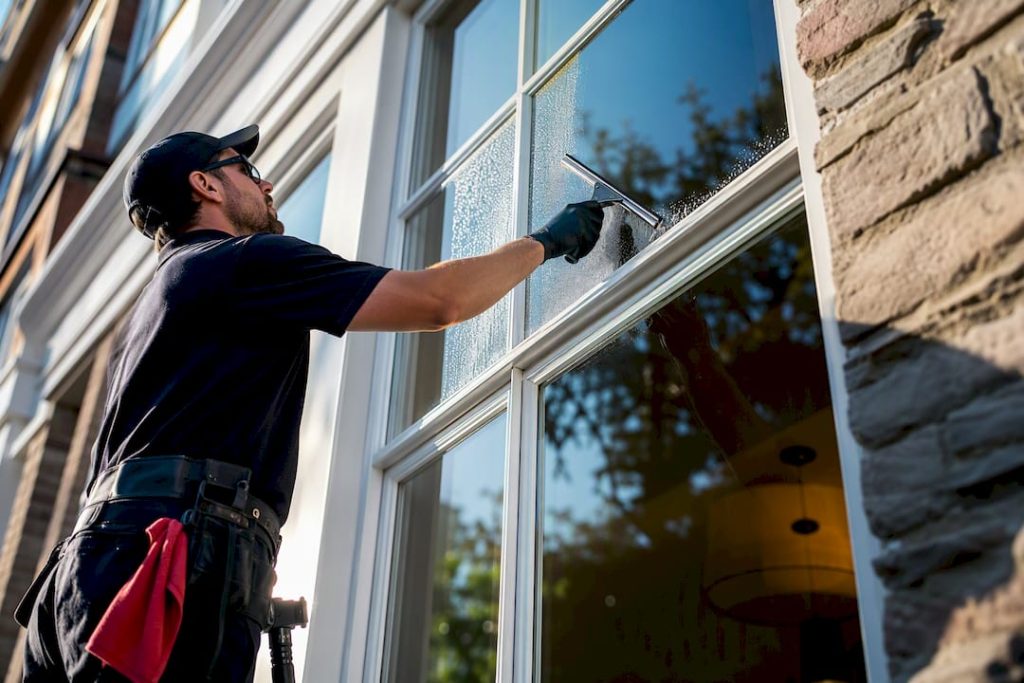
Most residential window cleaning takes a few hours for a maintenance visit, 4 to 7 hours for a first-time deep clean, and 4 to 8 hours for a typical low-rise commercial building. The biggest swing factors are pane count, access difficulty, crew size, and whether hard-water stains or screens need attention.
TL;DR:
- First-time deep cleans for homes with many panes or heavy buildup can take up to 7 hours or more, especially when dealing with hard-water stains or paint overspray.
- Crew size significantly affects scheduling; a two-person team can complete 40 to 60 percent more jobs per day than a solo technician, especially on larger or multi-story properties.
- Weather conditions, such as direct sunlight or high wind, can add extra time by causing streaking and requiring rework, so scheduling during overcast periods is recommended.
- Commercial jobs above three stories, or with traffic control needs, typically require specialized equipment and can extend beyond standard 8-hour windows.
- Preparatory steps like unlocking gates, moving furniture, and identifying problem areas can reduce the overall job duration and help ensure accurate quotes.
Table of Contents
- Estimated Window Cleaning Times at a Glance
- Why Residential Jobs Take the Time They Do
- Commercial Timelines and What Changes Them
- The Factors That Add the Most Time
- How Crew Size and Equipment Change the Clock
- Setting Realistic Scheduling Expectations
- Getting Your Property Ready Before the Crew Arrives
- What E and R Cleaning Solutions Sees on Real Jobs
- Recurring Service Beats One-Off Restores
- Book a Time Estimate That Matches Your Actual Job
- Sources
- FAQ
Estimated Window Cleaning Times at a Glance
Professionals typically budget 2 to 5 minutes per pane for routine maintenance and closer to several minutes per pane on a first clean, where hard water, dust buildup, and sticky tracks slow everything down. That math scales fast once you look at a whole house.
- Small home (20–30 panes): 1.5 to 3 hours for maintenance; up to 4 hours for a first clean
- Medium home (40–60 panes): 2.5 to 4 hours for maintenance; 5 to 6 hours for a first clean
- Large home (80–100+ panes): 4 to 6 hours for maintenance; 7+ hours for a first clean
- Low-rise commercial building: 4 to 8 hours for exterior-only cleaning, depending on glazing area
- High-rise or specialty access jobs: quoted separately, often over multiple days
Community averages back this up closely: window cleaners on trade forums report first-time residential jobs running 4 to 7 hours, with follow-up maintenance dropping to a few hours once the hard grime is already gone.
Why Residential Jobs Take the Time They Do
The math behind a quote is simpler than it looks. Multiply pane count by minutes per pane, then adjust for scope and condition.
- 30-pane home, maintenance clean: roughly 30 panes × 3 minutes = about 90 minutes, plus setup and cleanup
- 50-pane home, maintenance clean: 50 panes × 3 minutes = around 2.5 hours
- 100-pane home, first-time deep clean: 100 panes × 7 minutes = close to 12 cleaner-hours, often split across a two-person crew to finish in half a day
That last example is why first cleans cost more and take longer. Mineral deposits, cobwebs in corners, and paint overspray from a recent build all add friction that a routine wipe-down never encounters. Add-ons stack the time further: track cleaning typically adds 15 to 20 minutes per window, screen removal and rinsing adds 5 to 10 minutes per screen, and hard-water restoration work can double or triple the time for affected panes alone. A step-by-step look at the residential cleaning visit shows how these pieces fit together on a typical appointment.
Commercial Timelines and What Changes Them
Low-rise commercial exteriors, think single-story retail strips up to three-story office buildings, commonly land in the 4 to 8 hour range for exterior cleaning alone. Add interior glass and that number climbs.
- Single-story storefront: 2 to 4 hours depending on glass area and frontage
- Two- to three-story office building: 4 to 8 hours, exterior only
- Buildings needing traffic control or sidewalk closures: add 1 to 2 hours for setup and safety staging
- Anything above three stories: typically quoted separately with rope access, lifts, or specialized rigging
Height is the single biggest variable. Every additional story means more setup time for ladders or lifts, more safety checks, and often a second technician just for spotting. Buildings near busy streets or shared parking lots also need cone-outs and pedestrian routing, which eats into the schedule before a single window gets touched. Property managers dealing with these variables should check a commercial process guide built for exactly this scenario before locking in a service date.
The Factors That Add the Most Time
A few conditions consistently push jobs past their estimated window. Knowing them ahead of time helps you set realistic expectations with whoever you hire.
- Difficult access (locked gates, furniture blocking sills, upper-story windows with no ladder clearance): adds 10 to 30 minutes per problem area
- Hard-water and mineral buildup: can multiply cleaning time per pane by 2 to 3 times since it often requires a separate acid-safe solution and extra agitation
- Direct sun or high wind: slows drying and increases streaking, which forces rework
Pro Tip: Schedule cleanings for overcast mornings or late afternoons when possible. Direct sunlight evaporates cleaning solution unevenly and causes streaks that force a technician to redo panes, which adds real time to the visit.
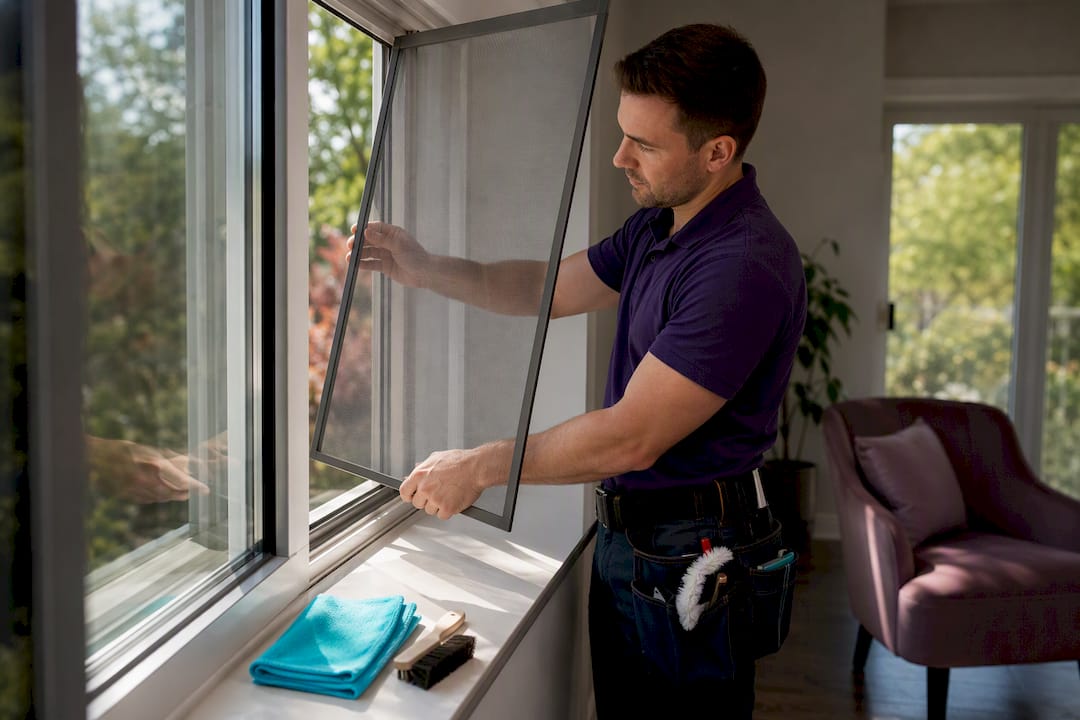
Interior work adds its own line items: screens typically run 5 to 10 minutes each to remove, clean, and rehang, while sills and tracks add another 10 to 15 minutes per window if they’re heavily soiled.
How Crew Size and Equipment Change the Clock
A two-person crew doesn’t just double the speed. It usually improves it, since one person can wash while the other dries and moves ladders, cutting dead time between panes.
- Solo technician: steady but slower on large or multi-story homes
- Two-person crew: commonly finishes 40 to 60% faster on the same job
- Water-fed pole systems: let technicians clean many two-story exteriors from the ground with purified water, often shortening onsite time compared with ladder-and-squeegee work, since there’s no repeated setup and teardown
- Ladders, lifts, or rope access: slower by design, since every safety step (harnessing, stabilizing, spotting) has to happen before cleaning starts
Pro Tip: If your home has a lot of second-story glass, ask whether the crew uses a water-fed pole. It’s often faster and safer than ladder work for that height range, and it usually means less foot traffic through your yard.
Setting Realistic Scheduling Expectations
Route density matters as much as crew skill. A tightly clustered route can turn wasted drive time into an extra completed job, which is why some companies quote tighter windows in dense neighborhoods than in spread-out rural areas.
- Solo technician: typically completes 3 to 5 residential jobs per day
- Two-person crew: typically completes 5 to 8 residential jobs per day, depending on size and access
- Commercial crews: often handle just one or two low-rise buildings per day given setup time
Booking windows usually run a few hours wide even for a job estimated at 90 minutes, since travel and unexpected add-ons need buffer room. Expect a call or text when the crew is on the way.
Getting Your Property Ready Before the Crew Arrives
A few minutes of prep on your end can shave real time off the visit and keep the quote accurate.
- Clear access points: unlock gates, move vehicles, and pull furniture away from windows
- Secure pets indoors or in another room before the crew arrives
- Decide upfront whether you want interior cleaning, screens, or track work included
- Point out any panes with heavy hard-water buildup so the crew can plan for it
Pro Tip: Track cleaning is often sold as a fast add-on rather than a full-service item. Many companies, including a 20-minute dry-first track cleaning option, can knock out grimy tracks without adding a full hour to your visit.
Scheduling around weather helps too. Avoid booking during peak midday sun or high wind, since both conditions slow drying and increase the odds of streaking that requires a second pass.
What E and R Cleaning Solutions Sees on Real Jobs
Field timing at E and R Cleaning Solutions tracks closely with the ranges above: most residential maintenance visits wrap in a few hours, while first cleans on homes with heavy hard-water buildup or post-construction dust run longer. Post-construction jobs, in particular, tend to need extra pass time since drywall dust and paint overspray behave differently than seasonal grime.
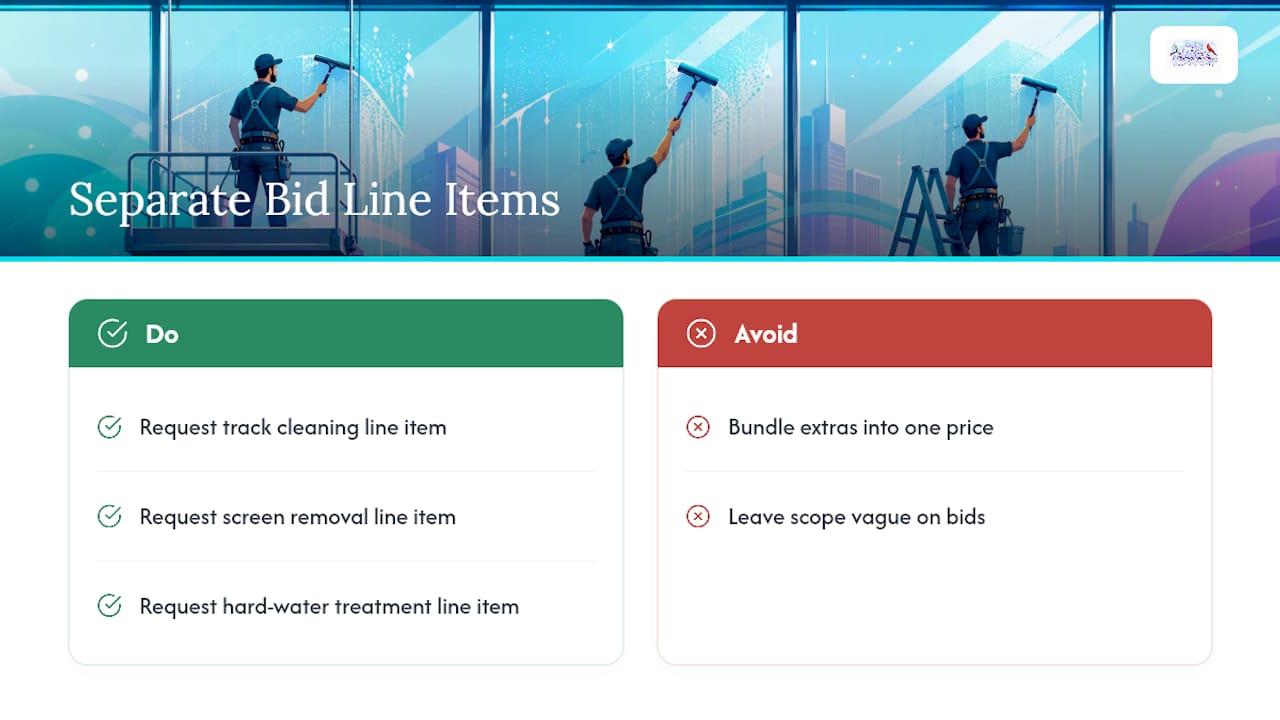
For property managers writing bids, it helps to request line items for track cleaning, screen removal, and hard-water treatment separately. Clear scope on the front end means the quoted duration actually matches what happens onsite.
Recurring Service Beats One-Off Restores
Homes and buildings cleaned on a regular cadence almost never need the long, expensive restoration jobs that hard water and years of neglect create. A biannual schedule keeps most window cleaning at the low end of the maintenance range instead of tipping into deep-clean territory.
My take: skipping cleanings to save money usually backfires. You end up paying for a longer, harder job later, plus the seasonal buildup that made it worse in the first place gets a full explanation in this breakdown of year-round window grime. Twice a year for most homes, quarterly for high-traffic commercial storefronts, is the sweet spot.
— Richard
Book a Time Estimate That Matches Your Actual Job
Some window cleaning services provide custom estimates based on your actual pane count and access, rather than a generic flat rate that leaves you guessing what’s included.

Getting an accurate time estimate starts with a few details: how many panes, whether you want interior included, and any known problem areas like hard-water buildup or hard-to-reach screens. Photos help speed up the process even further. E and R Cleaning Solutions handles both window cleaning and pressure washing for residential and commercial properties, with pricing built around your property instead of a one-size-fits-all package. If you manage a commercial space, the commercial process guide walks through what a typical bid should include. For homeowners planning a first-time deep clean, the residential process guide shows exactly what to expect on the day of service. Reach out with your property details to get a realistic time and price estimate before you schedule anything.
Sources
Timing guidance in this article draws on trade forum averages, commercial cleaning industry data, and operational insights on route density and crew capacity, cross-checked against E and R Cleaning Solutions field experience.
- The Right Time to Clean Windows — Real Simple
- Time Check – how long does it take you? — r/WindowCleaning
FAQ
How Long Does Window Cleaning Take for a Typical House?
A maintenance clean on a typical home takes a few hours, while a first-time deep clean often runs 4 to 7 hours depending on pane count and buildup. Larger homes or those with heavy hard-water staining fall on the higher end of that range.
How Many Houses Can a Window Cleaner Do in a Day?
A solo technician typically completes 3 to 5 residential jobs per day, while a two-person crew often handles 5 to 8, depending on home size and travel distance. Tighter, clustered routes let crews squeeze in extra stops by cutting drive time between jobs.
What Is the 20-Minute Rule for Window Track Cleaning?
Some companies offer track cleaning as a fast, standalone add-on rather than a full-service job. E and R Cleaning Solutions lists a dry-first track cleaning option designed to run around 20 minutes per set of tracks without extending the full visit by an hour.
Do Window Cleaners Clean Inside and Out?
Most professional window cleaners offer both interior and exterior cleaning, but interior access has to be arranged ahead of time since it usually adds time for moving furniture and covering sills. Specifying interior scope before the crew arrives keeps the quoted time accurate and avoids surprise charges on the day of service.